
Yemen’s Houthi rebels declared a naval blockade on Saudi Arabia Monday, threatening the kingdom’s last working oil route while the Strait of Hormuz sits closed. Houthi military spokesman Brig. Gen. Yahya Saree said the ban would take effect immediately, and combined with Iran’s grip on Hormuz, it could choke off roughly a quarter of the world’s oil and gas supply if it holds, according to Al Jazeera’s account of the announcement.
Two governments are working hardest to stop that outcome: Qatar and Pakistan, the mediators ferrying ceasefire proposals between Washington and Tehran. Neither is a disinterested referee. Qatar’s gas exports have cratered since Iran shut Hormuz in March, and Pakistan’s economy runs on a Gulf remittance pipeline that a wider war could sever. The Washington Times, which first detailed the mediators’ quiet diplomacy, reported Monday that the talks continue even as the Houthis open a new front.
A Second Chokepoint Closes on Saudi Arabia’s Last Exit
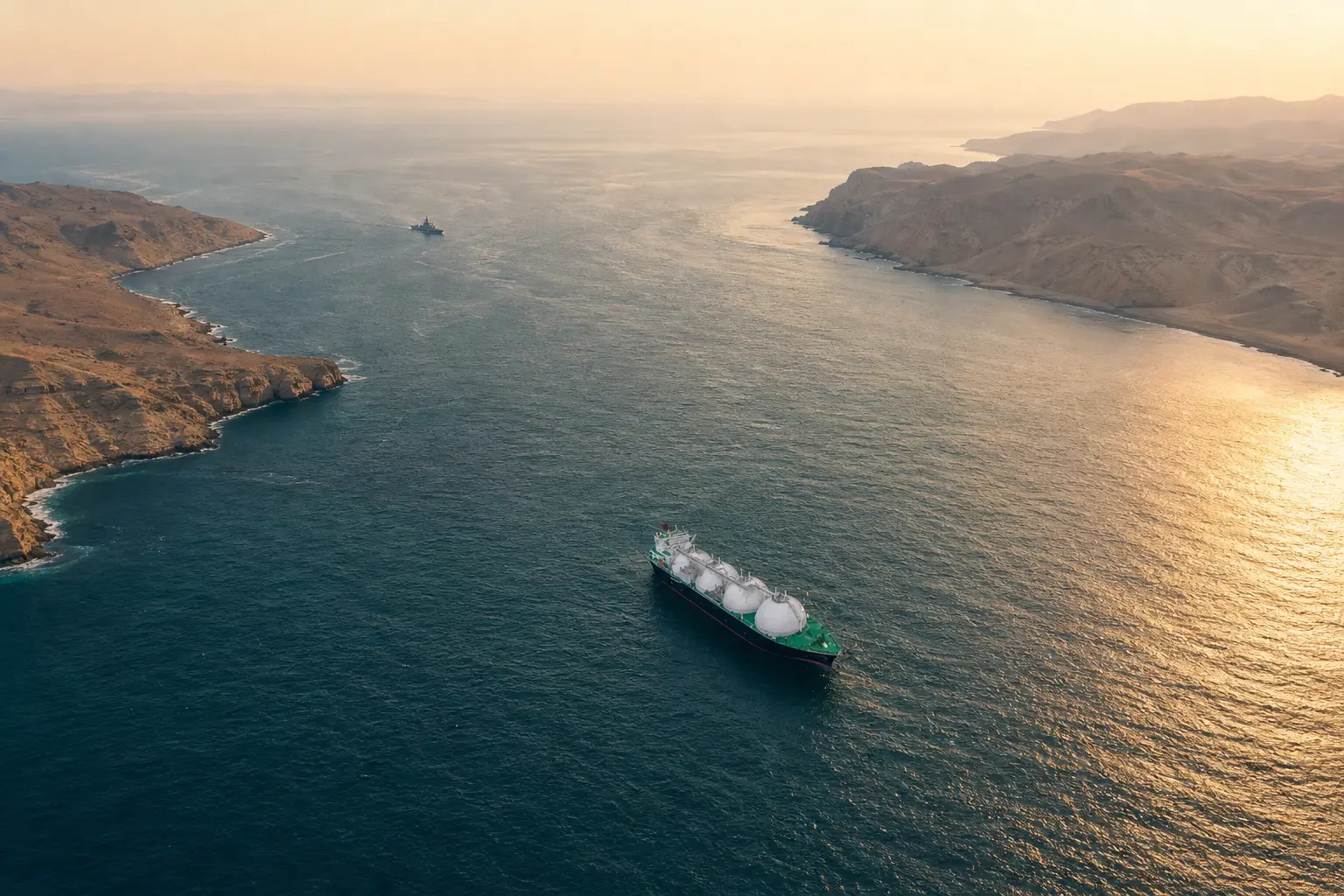
Saudi Arabia has spent months routing crude around Hormuz through its East-West Pipeline, known as Petroline. Built in the 1980s, the 1,201 kilometer line runs from the Abqaiq oil field to the Red Sea port of Yanbu and pumps about seven million barrels a day. From Yanbu, tankers carry that oil out through Bab al-Mandeb toward Asia and beyond.
Shipments out of Yanbu had climbed to roughly four million barrels a day in recent weeks, up from about 973,000 barrels a day a year earlier, according to tracking data from Kpler and Signal Ocean cited by Al Jazeera. That was the workaround. Monday’s announcement targets the workaround itself.
Markets barely flinched at first. Brent crude jumped nearly 4% overnight to break $90 a barrel after news that American service members had died in the fighting, CNBC reported, before prices eased when Tehran signaled it was still open to talks. Traders, for now, are pricing in threats more than closures.
| Chokepoint | Flow at Stake | Status as of July 20 | Remaining Bypass |
|---|---|---|---|
| Strait of Hormuz | About 20 million barrels a day of oil, roughly 20% of global supply | Kept largely closed by Iran since March | 3.5 to 5.5 million barrels a day via Saudi and UAE pipelines |
| Bab al-Mandeb | Up to 7 million barrels a day moved via Petroline to Yanbu | Houthi blockade declared July 20, enforcement unconfirmed | Reroute around the Cape of Good Hope |
The International Energy Agency’s own tracking puts the Hormuz numbers in stark terms: only Saudi Arabia and the UAE have operational pipelines that can bypass the strait at all, and that combined capacity covers a fraction of what normally transits by sea.
An Eye for an Eye, a Decade in the Making
Houthi-affiliated media framed the blockade as retaliation for what the group called Saudi Arabia’s illegal blockade on Yemenis for over ten years. The grievance dates to 2015, when the Saudi-led coalition imposed an air and sea blockade on Yemen after Houthi forces seized Sanaa and pushed the government into exile. A truce followed in 2022, and it has been fraying for days.
The immediate trigger was an airstrike on Sanaa International Airport last week, which the Houthis blamed on Saudi Arabia even though Yemen’s internationally recognized government claimed responsibility, saying it was meant to stop an Iranian plane from landing. The Houthis responded by firing missiles and drones at Saudi Arabia’s Abha International Airport. Saree said the group would meet any further Saudi action with what he called a comprehensive and decisive escalation.
Iran had reportedly asked its Houthi allies to stand ready to close the Red Sea route if the United States struck Iranian power infrastructure, Reuters reported last week, according to the defense outlet TWZ. Rear Admiral Vasileios Gryparis, commander of the European naval mission EUNAVFOR ASPIDES, had already warned in comments to TWZ before Monday’s declaration that the security situation in Bab al-Mandeb remains fragile and highly sensitive to regional escalation.
- What we know: Saree announced the blockade in a video statement, effective immediately, and the Houthis retain effective command of the Bab al-Mandeb Strait.
- What we know: Saudi Arabia had issued no public response as of Monday, according to NBC News.
- What’s unconfirmed: Whether Houthi forces can physically enforce a blockade against tanker traffic rather than simply threaten it.
- What’s unconfirmed: Whether shipping insurers will treat the threat alone as reason enough to halt transits, and who patrols the strait now that the multinational Prosperity Guardian coalition has lost France, Spain and Italy.
Even a threat that never becomes an attack can work. Insurers and shipping firms spooked by the prospect of a hit are often enough to stall traffic on their own, without a single shot fired.
Doha’s Diplomacy Doubles as Damage Control
Qatar sits at the center of the mediation effort and near the bottom of its own energy rankings this year. Iranian strikes in March hit Qatar’s Ras Laffan complex, the world’s largest single LNG processing and export facility, and the country has struggled to move its gas ever since. Qatar shipped 18.7% of all LNG traded globally in 2025, edging ahead of Australia’s 18.4%, according to a report from the International Gas Union, but both trailed the United States by a wide margin.
Qatar has no pipeline that bypasses Hormuz. Every molecule of its LNG has to sail through the same strait Iran has kept largely shut. The U.S. Energy Information Administration’s own figures show Qatar alone exported about 9.3 billion cubic feet of gas a day through Hormuz in 2024, accounting for nearly all Persian Gulf LNG flows through the waterway.
One research group put it plainly. An analysis from the Al Habtoor Research Centre found Qatar positioned as the principal strategic loser of the Hormuz shutdown, while the United States has emerged as the chief beneficiary as buyers lock in longer contracts with American suppliers instead. Qatar is mediating a war that is actively costing it market share it may never fully recover.
Pakistan’s Peacemaking Comes With a Remittance Bill
Pakistan’s Prime Minister Shehbaz Sharif announced the original Islamabad Memorandum of Understanding in June, calling it an honor to endorse the deal as mediator. That framework has since collapsed, and Islamabad is back at the table pushing new proposals. Its motives are not purely diplomatic.
Pakistan’s economy leans hard on workers in the Gulf. Saudi Arabia and the UAE alone account for roughly 44% of the country’s remittance inflows, 23.5% and 20.6% respectively, according to Dr. Abid Qaiyum Suleri, executive director of the Sustainable Development Policy Institute’s research on Gulf-linked remittance risk. Pakistan pulled in a record $41.6 billion in remittances in the fiscal year that just closed, per State Bank of Pakistan data.
SDPI’s own modeling warns that a prolonged conflict could keep roughly half a million new workers from migrating to the Gulf this year, while a similar number could be forced to return home, a combined hit that could shave $3 billion to $4 billion off remittances annually. That is not an abstract risk for a mediator. It is next year’s budget math.
Pakistan and Qatar are not the only ones absorbing costs meant for someone else:
- Jordan intercepted three Iranian missiles Monday, one of several smaller states catching fire aimed at American forces.
- Bahrain and Kuwait were named by Iran’s Revolutionary Guard as targets Monday, hosting U.S. facilities used for drone maintenance and naval preparation.
- South Asian gas buyers, including Pakistan itself, are exposed on the import side too, since gas-fired plants supply a large share of the region’s electricity.
- American drivers could see gasoline prices climb if Saudi Arabia, the world’s largest oil exporter, loses more of its export capacity.
Everyone touched by this war is also, in some way, negotiating to end it.
The War Keeps Finding New Fronts
American forces struck Iran overnight for the eighth consecutive day, hitting desalination plants, power infrastructure, radar sites, surveillance hubs and command centers. U.S. Central Command has maintained the goal is to degrade Iran’s ability to hit ships in Hormuz. Iran’s Revolutionary Guard said Monday its forces had struck U.S. military facilities in Bahrain and Kuwait, damage the Pentagon has not confirmed.
The Saudi-led coalition’s earlier pledge to protect Red Sea shipping now faces its sharpest test since the Houthi campaign that ran through last September. Weekend strikes killed two U.S. soldiers in Jordan, with a third reported missing; CENTCOM said unidentified remains were found at the site and verification is ongoing. A separate strike killed another service member in Iraq during the controlled detonation of a downed Iranian drone. Some outlets, including CNBC, reported the toll at three by Monday morning, though the Pentagon had not formally confirmed the third death.
At least 17 Americans have been killed in combat since the war began Feb. 28, according to Pentagon data, with more than 400 wounded. President Trump escalated his rhetoric Monday, directing defense officials to retaliate for every American death.
Every time Iran kills an American soldier, they will pay for that killing many times over! This directive has been passed on to Secretary of War Pete Hegseth, Chairman of the Joint Chiefs of Staff Daniel Caine, and every leader in the military.
Trump wrote the statement on Truth Social Monday. Jordan’s military separately reported intercepting three Iranian missiles the same day, and Iranian drones and missiles have struck targets in Bahrain, Kuwait, Jordan, Syria and Iraq since fighting resumed this month.
Why Hasn’t the Ceasefire Reopened Hormuz?
The Islamabad Memorandum, signed by Trump and Iranian President Masoud Pezeshkian on June 17, promised a 60-day ceasefire, a toll-free reopening of Hormuz, an end to the U.S. naval blockade of Iranian ports and a $300 billion reconstruction fund contingent on a final deal. It reopened nothing for long. By April there was no sign the blockade lift was being implemented, and Iran’s own vice president said Tehran would retain control over the strait and might charge ships for safe passage.
The pressure this has placed on Saudi Arabia’s pipeline lifeline has only grown since. The framework left Iran’s nuclear program, its ballistic missile arsenal and its regional militias entirely unaddressed, deferring the hardest questions to a 60-day negotiating window that has now blown well past its deadline.
Iran’s Foreign Ministry spokesman Esmaeil Baqaei confirmed Monday that Tehran had received several proposals tied to a potential 10-day ceasefire, delivered through Pakistani and Qatari channels. He tied Iran’s diplomatic posture directly to its military one and declined to share details.
“I reiterate that the diplomatic apparatus, in coordination with the defenders of the homeland in the Armed Forces, is pursuing its duties,” Baqaei said, according to state-affiliated media. “The proposals put forward through mediators have been conveyed to us, and we have received them. However, I would rather not go into their details at this stage.”
For now, the mediators have proposals on the table and no public deadline. The Houthis have a blockade with no confirmed enforcement behind it yet. Markets are pricing in neither outcome with much conviction, which may be the clearest sign of how uncertain this war has become.
Frequently Asked Questions
Why does the Bab al-Mandeb Strait matter so much to global trade?
The strait carries roughly 12% of global trade and about a quarter of all container traffic bound for the Suez Canal, according to shipping data cited in regional reporting. It is the only sea gate between the Red Sea and the Gulf of Aden, which makes it a single point of failure for any cargo moving between Europe, the Mediterranean and Asia.
Has Saudi Arabia responded to the Houthi blockade?
As of Monday evening, Saudi Arabia had issued no public response to the blockade declaration, NBC News reported. The kingdom leads the coalition that has backed Yemen’s internationally recognized government since 2015 and previously vowed to defend Red Sea shipping during the earlier Houthi campaign against commercial vessels.
How much farther would tankers have to travel to avoid the strait?
Rerouting around the Cape of Good Hope in South Africa adds about 2,700 miles, or roughly 4,345 kilometers, to a voyage from Saudi Arabia to the United States, based on U.S. government estimates. That detour adds significant time and fuel cost, which is often enough on its own to push freight rates higher even without a formal closure.
Is the Islamabad Memorandum a binding treaty?
No. Legal analysts, including those at the publication Lawfare, have noted that memoranda of understanding are less formal than treaties and are generally not considered legally binding under international law. That is part of why both Washington and Tehran have been able to walk provisions back without triggering a formal breach.
