
Egypt’s water minister, Hani Sewilam, opened an official visit to Japan on Monday by touring the dam, canal and flood-control network that keeps water flowing to Greater Tokyo. He carried a number that explains the trip: Egypt’s per-capita water supply has fallen to 500 cubic metres a year, according to the country’s water ministry, less than half the United Nations scarcity threshold.
The visit lands months after Egypt’s top diplomat said years of talks with Ethiopia over its new Nile dam had gone nowhere. With that diplomatic track stalled, Cairo is testing a different lever: squeezing more use out of the water it already has.
Inside the Tone River Tour
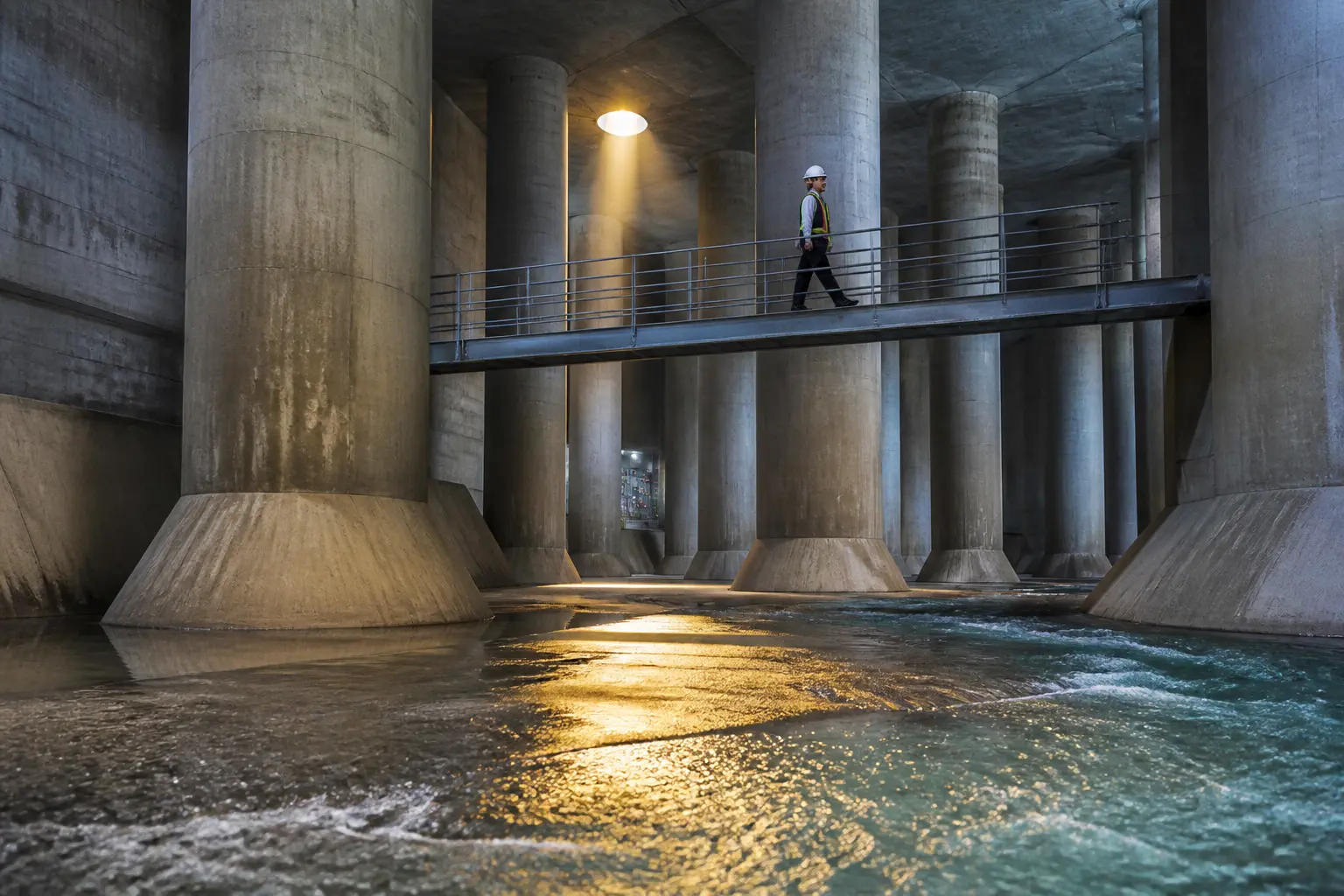
Japanese officials walked Sewilam through the Tone River system on Monday, the integrated network of dams, barrages, canals and flood-protection facilities that supplies water to the Greater Tokyo area.
The Japan Water Agency, which manages the Tone River’s dams, barrages and canal network, briefed him on how real-time monitoring and operational control systems tie the whole network together.
Sewilam also reviewed Japan’s approach to integrated water resources management: allocation across competing users, remote monitoring, decision-support software and early warning tools built to improve efficiency and flood resilience. The two sides compared notes on allocating water across sectors and tracking the river’s environmental condition, Egypt’s water ministry said.
“The visit provides an opportunity to learn from Japan’s distinguished experience in managing and operating water infrastructure and assess how these practices can support the modernization of Egypt’s water resources management system under the Second Generation Water System (2.0),” Sewilam said in a ministry statement.
Thirteen Years of Nile Talks, Nothing to Show
Ethiopia inaugurated the Grand Ethiopian Renaissance Dam (GERD) on September 9, 2025, after more than a decade of construction that never produced a binding water-sharing agreement with Egypt or Sudan. Cairo has repeatedly called the dam’s unilateral filling illegal.
Talks broke down again in December without a deal.
We talked for 13 years and we reached nothing.
Badr Abdelatty, Egypt’s foreign affairs minister, made the comment after that round collapsed, accusing Ethiopia of acting as a “non-negotiating team.” The following month, U.S. President Donald Trump offered to mediate the Nile dispute, a sign of how far the bilateral track had drifted.
Egypt has paired that frustration with its outreach to Tokyo. EgyptToday reported that Cairo rejected unilateral measures on the Nile while welcoming water cooperation with Japan in the same statement.
Ethiopia sees the dam differently. Analysts at the Middle East Council on Global Affairs describe tensions mounting along the Nile now that the reservoir operates at scale, while a Foreign Policy Research Institute review called the standoff a lesson in failed water governance for the wider Nile Basin.
Addis Ababa casts the dam as a sovereign development project central to electrification and poverty reduction.
Egypt’s Widening Water Gap
Egypt’s own figures explain the urgency behind the trip. Ahram Online reported that annual water demand has pushed well past what the country’s renewable resources can reliably supply, citing the latest ministry data.
The government’s official information portal separately states that the Nile supplies 98% of Egypt’s total water resources, leaving the country almost nothing to fall back on when upstream flow tightens.
| Metric | Figure | Context |
|---|---|---|
| Per-capita annual water supply | 500 cubic metres | Less than half the United Nations scarcity threshold |
| Annual water demand | 88.55 billion cubic metres | Farming, industry and household use combined |
| Renewable water resources | 65.35 billion cubic metres | Nile flow, rainfall and groundwater recharge |
| Structural shortfall | About 23 billion cubic metres a year | Bridged by reuse, groundwater pumping and desalination |
Closing that gap without more Nile water is the entire logic behind the Japan trip.
What Water System 2.0 Builds
The ministry says it wants to expand technical cooperation with the Japanese institutions that run the Tone River system, particularly around smart facility operation, integrated water resources management, digital transformation and technical training.
- Second Generation Water System (2.0) – Egypt’s digital-transformation program for water management, pairing satellite monitoring, predictive modelling and smart irrigation with new treatment plants such as New Delta, Bahr El-Baqar and El-Mahssama
Cairo has run a similar technology partnership elsewhere. The ministry opened five new water-technology schools built with Italy this year, training engineers as the Nile’s flow tightens, another sign Cairo is importing operational know-how while the Nile talks stay frozen.
Why Is Egypt Looking to Japan’s Water Playbook?
Japan runs one of the world’s most tested flood and supply networks on the Tone River, pairing dams and canals with real-time sensors and decision-support software. Egypt wants that operational discipline to squeeze more use out of a Nile supply that is not getting bigger, since Japan cannot hand over water it does not have.
Sewilam’s schedule in Japan runs through several fixed points, according to Egypt’s water ministry:
- An international ceremony marking the 50th anniversary of Japan’s Water Day
- Bilateral talks with Yoko Kamikawa, the Japanese prime minister’s special envoy to the 2026 UN Water Conference, and senior Japanese officials
- The signing of a memorandum of understanding between Egypt and Japan
- Visits to Japanese water facilities and research centres
The invitation for the trip came jointly from Kamikawa and Yasushi Kaneko, Japan’s minister responsible for water policy. The memorandum is expected to formalize the cooperation Sewilam has been describing, though neither government has released its exact terms.
Where the Bet Runs Into Limits
Digital tools can stretch a water budget. They cannot create water Egypt does not have, and the country’s existing stopgaps carry their own costs.
Desalination capacity climbed from 86,000 cubic metres a day in 2015 to 680,000 in 2022, part of an expansion that engineering researchers have projected to reach 1,250,000 cubic metres a day.
The rest of the shortfall is covered by reusing agricultural drainage water and pumping non-renewable groundwater from aquifers as deep as 1,500 metres, a source that won’t refill on any timescale that matters to policy.
That is why Cairo describes the Japan trip as one piece of a wider strategy that still leans on desalination and groundwater to close a gap efficiency alone cannot.
The Next Marker Is the UN Water Conference
The clearest test of the relationship comes later this year. Kamikawa and Sewilam are due to co-chair the Third Interactive Dialogue at the 2026 United Nations Water Conference, a role Egypt’s foreign ministry outlined after preparatory talks in Tokyo in June.
For a ministry that spent thirteen years at the table with Ethiopia without a deal, a signed memorandum with Japan is at least a document Cairo can point to.
