
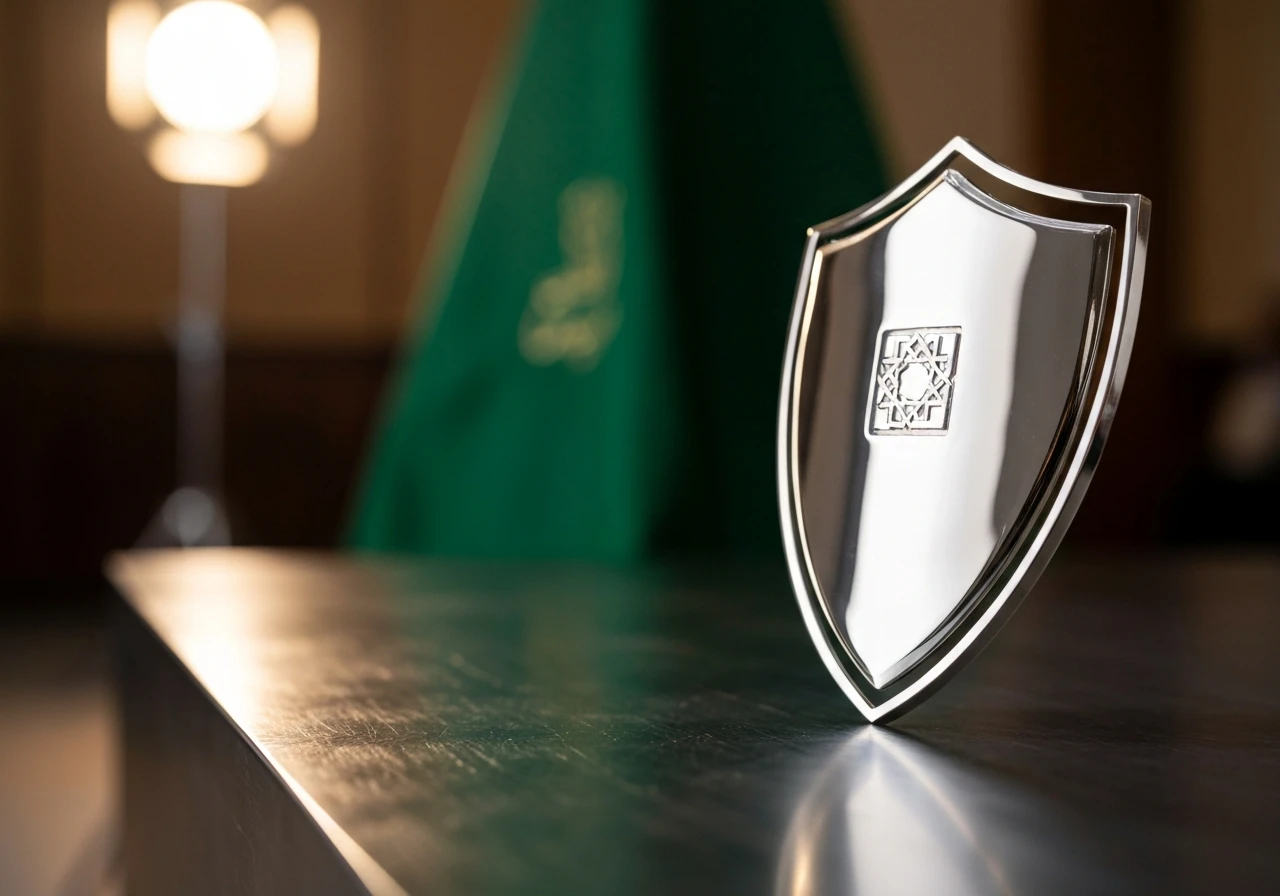
Egypt’s Hajj mission has won the Silver Shield at Saudi Arabia’s Labbaytum Excellence Award for the first time, recognised in the Hajj Affairs Offices category after the mission served more than 78,000 Egyptian pilgrims during the season. The award honours national missions that meet Saudi benchmarks for pilgrim services, logistics and operational performance.
That recognition arrived inside a competition most pilgrims never see. Saudi Arabia now grades national Hajj missions on a four-level ladder, and only about 30 countries cleared the entry bar to compete this cycle out of more than 100 represented at the ceremony.
Egypt Takes the Silver Shield in a 30-Nation Field
The medal lands in a specific bracket. Egypt’s mission was placed at the Silver level in the Hajj Affairs Offices category, the slot that measures how a national delegation runs its on-the-ground office work during the pilgrimage: registration, accommodation handovers, transport scheduling and compliance with the Saudi operating calendar.
Ashraf Abdel Mo’ty, Assistant Minister of Interior for Administrative Affairs and head of the executive body of the ministerial Hajj committee, said the result reflected the combined work of Egypt’s three specialised missions: Public Lottery, Social Solidarity and Tourism. Those three bodies handle different streams of Egyptian pilgrims and reported into a single coordination structure for the season.
According to Abdel Mo’ty, strict adherence to the operational timetable set by Saudi authorities for Hajj Affairs Offices was the decisive factor behind the Silver Shield. In a graded system, hitting the calendar is not a courtesy; it is the scoring criterion.
For a delegation that ranks among the largest at the pilgrimage, a first-ever placement on the board carries weight beyond the metal. It tells Cairo where it sits against a field that includes long-running, heavily resourced Hajj operations from across the Muslim world.
How the Labbaytum Ladder Ranks Hajj Missions
The award is run by Saudi Arabia’s Ministry of Hajj and Umrah (MOHU, the body that licenses and supervises every foreign mission operating at the holy sites). It scores missions across a banded ladder, with each band signalling how close a delegation came to the Kingdom’s service ceiling.
| Tier | What it signals | Example recipients |
|---|---|---|
| Diamond | Top band; near-flawless management across the full checklist | Turkiye, Iraq, Malaysia’s Tabung Haji |
| Gold | High performance with minor service gaps | Awarded to leading national missions |
| Silver | Strong compliance and service delivery | Egypt, Oman, Brunei |
| Bronze | Met the qualifying standard | Iran, Somalia, Tunisia |
The bands are not handed out on a single impression. Missions are assessed against a checklist that runs the length of the pilgrimage, and a delegation can score well on one dimension while losing points on another.
- Planning and logistics ahead of arrival, including transport and housing readiness
- Healthcare provision and emergency response for pilgrims
- Religious guidance and awareness programmes on rituals and rules
- Compliance with Saudi Hajj regulations and the official timetable
- Comfort and technology used to smooth the pilgrim journey
Where Egypt Lands Among the Delegations
Read against the wider board, Silver places Egypt in respectable company without putting it at the summit. Recent Labbaytum cycles have sent the Diamond band to missions widely regarded as the gold standard of Hajj organisation, while a broad middle of countries cleared the qualifying threshold.
The spread of recent recipients shows how international the contest has become:
- Diamond: Turkiye’s Presidency of Religious Affairs, recognised in the Most Successful Hajj Organization category, alongside Iraq’s delegation and Malaysia’s Tabung Haji
- Silver: Egypt in Hajj Affairs Offices, with Oman and Brunei also placed in the silver band in recent editions
- Bronze: Iran, recognised for the first time, with Somalia and Tunisia
- Multiple wins: India’s mission collected two awards for coordination and communication, while Pakistan was honoured in back-to-back years
The takeaway for Egypt is direction, not just placement. A first appearance at Silver gives the mission a clear gap to close, and the criteria that decide the gap are published rather than guessed. The same season saw Saudi Arabia complete the mass movement of pilgrims to Arafat, the single largest logistical test of the calendar that every mission is measured against.
The Three Missions Behind the Result
Egypt did not run a single Hajj operation this year. It ran three, stitched together. The Public Lottery mission handles pilgrims selected through the state ballot, Social Solidarity covers a welfare-linked stream, and Tourism manages the commercial operator channel. Historically those streams have moved on separate tracks.
What changed, by the mission’s own account, was the level of coordination between them and the bodies responsible for Egyptian pilgrims back home.
The achievement reflects an unprecedented level of coordination between the various bodies responsible for Egyptian pilgrims, alongside awareness programmes designed to guide pilgrims through Hajj regulations and rituals.
That summary came from Abdel Mo’ty, who tied the result directly to the awareness campaigns and the discipline of staying on the Saudi clock. Awareness work matters in scoring because a mission whose pilgrims understand the rules generates fewer compliance failures, and compliance is exactly what the Hajj Affairs Offices category grades.
The logistics tail stretches well past the rituals themselves. Getting more than 78,000 people home on schedule is its own operation, visible this season in EgyptAir’s return airlift for tens of thousands of pilgrims, which ran for weeks after the standing at Arafat.
Saudi Arabia’s Drive to Grade the Pilgrimage
The award is easy to read as a courtesy. It is better understood as a management tool. By scoring missions on a published checklist and ranking them in public, Saudi Arabia turns Hajj operations into a measurable, competitive performance system, and it does so at a moment when the Kingdom is trying to move many more people through the same holy sites.
The numbers behind that ambition explain why standardisation matters so much now.
- 30 million pilgrims a year by 2030 is the headline capacity target under Saudi Arabia’s pilgrim-experience push
- More than 18.5 million pilgrims visited the Kingdom in 2024, the bulk of them for Umrah
- Roughly 1.67 million performed Hajj in 2025, the bracket Egypt’s delegation competed within
- Around 30 national missions cleared the bar to compete for a Labbaytum tier this cycle
Riyadh has paired that scaling with hard operating controls and new technology, from the drone-based medicine delivery cleared for the holy sites to tighter permit gates on vehicles and pilgrims. The award sits inside the same logic set out in the Pilgrim Experience Program goals under Vision 2030, where lifting service quality is treated as a growth lever, not a side project, as part of Saudi Arabia’s wider economic diversification agenda.
For Egypt, the Silver Shield is both a reward and a marker on a longer climb. If the mission holds its calendar discipline and tightens the gaps the Hajj Affairs Offices category penalises, the same scorecard that handed it Silver this year is the one that could move it up the ladder next cycle; if coordination slips back to the old three-track habit, the band is just as likely to hold or fall.
Frequently Asked Questions
What Is the Labbaytum Excellence Award?
The Labbaytum Excellence Award is a recognition presented by Saudi Arabia’s Ministry of Hajj and Umrah to national Hajj missions and organisations that demonstrate high standards in pilgrim services, logistics and operational performance during the annual pilgrimage.
What Award Did Egypt’s Hajj Mission Win?
Egypt’s Hajj mission won the Silver Shield in the Hajj Affairs Offices category, the first time the country has received the distinction. Saudi officials cited Egypt’s adherence to the Hajj operating timetable as the decisive factor.
What Are the Labbaytum Award Tiers?
The award is granted across four levels: Diamond at the top, followed by Gold, Silver and Bronze. Each band reflects how closely a mission met the Kingdom’s full service and compliance checklist.
How Many Countries Compete for the Award?
More than 100 countries are represented at the ceremony, but only about 30 national missions met the qualifying criteria to compete for a tier in this cycle.
How Many Egyptian Pilgrims Performed Hajj This Season?
The Egyptian Hajj Mission reported that more than 78,000 Egyptian pilgrims travelled to Saudi Arabia, placing Egypt among the largest national delegations within the roughly 1.67 million pilgrims who performed Hajj in 2025.
Which Countries Won the Top Diamond Tier?
Recent Diamond-tier recipients include Turkiye’s Presidency of Religious Affairs, Iraq’s delegation and Malaysia’s Tabung Haji, missions widely regarded as among the best-organised Hajj operations in the world.
