
Latvian carrier airBaltic and Israel’s El Al have signed a codeshare agreement that takes effect on July 1, 2026, the same day airBaltic plans to restart nonstop Riga-Tel Aviv flights. El Al will place its LY designator code on airBaltic’s Riga-Tel Aviv service and on ten additional routes from Riga, while airBaltic’s BT code will appear on El Al flights from Tel Aviv to seven European cities. airBaltic says it is returning to Tel Aviv because demand is growing, “as the situation in the Middle East stabilises”, and is tying the restart to European Union Aviation Safety Agency (EASA) guidance and insurer requirements. The carrier joins a wider cohort of European operators gradually restoring Ben Gurion service after pulling out at the end of February.
How the Codeshare Is Structured
The codeshare, which takes effect on the same day airBaltic resumes Riga-Tel Aviv, is structured in two directions and centres on Riga as a connecting hub. El Al’s LY code will appear on airBaltic-operated flights from Riga to Tel Aviv for both point-to-point and transit passengers, running three times a week. airBaltic’s BT code will sit on El Al-operated flights from Tel Aviv to seven European cities, also restricted to transit passengers connecting via Riga.
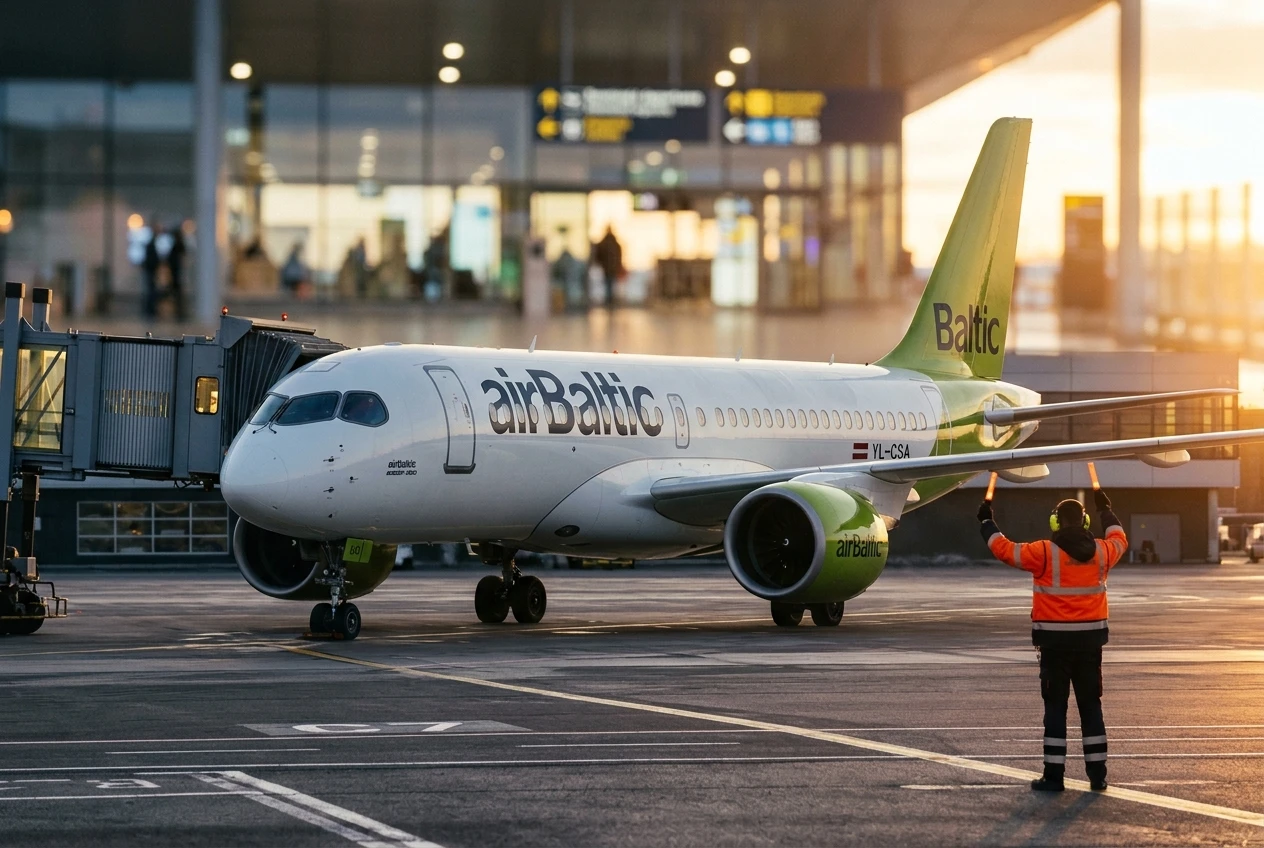
The arrangement is built around transfer traffic in both directions, with the El Al-coded Riga routes available only for passengers connecting to or from Tel Aviv via Riga, not for sale as standalone tickets. airBaltic’s broader network connects the Baltic states to more than 80 destinations across Europe and beyond, a footprint the carrier has been working to expand. The airBaltic-operated side of the codeshare will be flown by the carrier’s single-type Airbus A220-300 fleet. airBaltic and El Al set out the codeshare terms in a joint announcement.
| Riga routes carrying El Al’s LY code | Tel Aviv routes carrying airBaltic’s BT code |
|---|---|
| Tel Aviv | Amsterdam |
| Copenhagen | Vienna |
| Frankfurt | Munich |
| Helsinki | Frankfurt |
| Munich | Milan |
| Oslo | Berlin |
| Stockholm | Zurich |
| Tallinn | |
| Vienna | |
| Vilnius | |
| Zurich |
Why airBaltic Says It Is Going Back
airBaltic’s reasoning is demand recovery, paired with a security assessment that has cleared. The carrier said it decided to return to Tel Aviv after determining that “demand for air travel to the Israeli city is growing, as the situation in the Middle East stabilises”. The airline is also pairing the return with a caveat: it will “continue to monitor the situation and adjust operations if necessary”.
airBaltic’s network is built around Riga, with 80-plus destinations radiating from the Latvian capital. The carrier flies a single-type A220-300 fleet, and its broader operation totals 55 A220-300s. Each restored Riga-Tel Aviv rotation will be flown by the same A220-300 workhorse that operates the rest of the network. The codeshare is layered on top of the regular three-times-a-week Riga-Tel Aviv service that airBaltic is restarting on the same date.
Israel is an important market for the Baltics, supported by strong cultural connections, family ties, growing tourism flows, and expanding business relations between our regions. We are therefore pleased to partner with EL AL Israel Airlines and expand travel opportunities for passengers in both directions. This agreement will provide customers with more seamless connections while further strengthening Riga’s position as a key gateway between Israel, the Baltics, and Northern Europe.
Mantas Vrubliauskas, vice-president of network management at airBaltic, framed the deal in a statement released alongside the codeshare announcement. The carrier ties the restart to EASA recommendations and insurer requirements, and its own flight-update page currently lists Tel Aviv flights as cancelled through June 28, 2026, two days before the July 1 relaunch. The formal line from the carrier is that “safety remains airBaltic’s top priority” and that operations will be adjusted “if necessary”. The carrier has marked seven years operating the Airbus A220-300, with the type’s role on the new Riga route confirmed in airBaltic’s planned resumption.
El Al’s Side of the Deal
For El Al, the codeshare is one of several partnership deals landing as the carrier rebuilds its network after the late-February pullout. The Israeli flag carrier already cooperates with Delta Air Lines, Air France, KLM, Virgin Atlantic and SAS, and the new agreement places airBaltic in that same partner group. A senior El Al executive framed the deal in commercial terms.
El Al has been adding 12 new destinations to its network inside a short window, according to the carrier, as airlines gradually return to Ben Gurion and El Al rebuilds its own schedule. The carrier’s strategic pitch is that more partner airlines means more one-stop options from Tel Aviv to second-tier European cities that El Al does not serve directly. The airBaltic deal feeds that strategy, with El Al customers gaining access to airBaltic’s 80-plus Riga connections. Both airlines will continue to operate their own aircraft on the route, with the codeshare governing ticket sales and connection logistics rather than flight operations. The arrangement also gives El Al a presence in Riga, the Latvian carrier’s main base, with the airport serving as a connecting point to the Baltics and Scandinavia.
Our cooperation with airBaltic joins EL AL’s significant partnerships with leading airlines around the world, including Delta Air Lines, Air France, KLM, Virgin Atlantic, SAS and others. Alongside the announcement of 12 new destinations added to our network within a short period of time, we continue to expand the range of destinations available to our customers through additional partnerships with leading airlines.
Shlomi Zafrany, vice-president of commercial and global sales at El Al, issued the statement that put the airBaltic deal inside the carrier’s wider partnership push. The airBaltic codeshare sits alongside a series of new routes El Al has added during the same rebuild window.
For El Al, the Riga feed plugs a Northern Europe and Baltic gap that the carrier’s own metal does not serve non-stop. The codeshare also gives El Al customers access to airBaltic’s 80-plus destinations from Riga, with the Latvian carrier handling the European point-to-point feed. airBaltic’s network puts the Latvian capital within one stop of most major European business centres, which El Al is now selling as part of its own inventory. The Baltic and Scandinavian connectivity is precisely the segment that El Al’s existing partners do not feed directly.
The Wider European Return to Ben Gurion
airBaltic’s July 1 restart is part of a wider pattern of European carriers trickling back to Ben Gurion after the Iran conflict that began at 28 February 2026. The United States and Israel conducted strikes on Iran that day, triggering Iranian retaliation and a sharp curtailment of scheduled commercial flying to and from Israel. A temporary US-Iran ceasefire announced on 8 April 2026 and extended on 21 April has held, opening the door to staged returns.
Austrian Airlines resumed Tel Aviv service from the start of June, while Wizz Air restarted on 28 May, Lufthansa is planning a 1 July start, and Swiss is set to return in August. Brussels Airlines has held back, with its Tel Aviv service suspended until 24 October 2026.
The pattern is selective rather than a wholesale return. Carriers are making their own risk assessments against EASA guidance and insurer requirements, and some have chosen to wait until the second half of 2026 or later before resuming. The European carrier with the most aggressive return-date cluster is the Lufthansa Group, which is also tying the rebuild to EASA’s evolving conflict-zone advisories. Israeli media report airlines are watching the Strait of Hormuz and Persian Gulf risks as closely as Israeli airspace itself, given the wider regional tension that drove the original pullout. The market at this stage is one of staged rebuild rather than competition for seats, with each new arrival adding capacity against the same fragile backdrop.
- Austrian Airlines: resumed Tel Aviv from the start of June 2026
- Wizz Air: resumed 28 May 2026
- Lufthansa: planned from 1 July 2026 (Frankfurt-Tel Aviv)
- airBaltic: planned from 1 July 2026 (Riga-Tel Aviv)
- Eurowings: planned mid-July 2026
- Swiss: planned from August 2026 (Zurich-Tel Aviv)
- Brussels Airlines: suspended until 24 October 2026
A Conditional Restart, Not a Normal Market
The EASA conflict-zone advisory covering Israeli airspace remains active, with CZIB 2026-03-R12 still the underlying reference. The bulletin, which covers the Middle East and Persian Gulf, was extended on 10 June 2026 and is valid until 24 June 2026. The advisory has not been withdrawn for Israel, only maintained as a caution-zone recommendation.
EASA’s recommendation is that operators should not fly within the airspace of Iran, Iraq and Lebanon at any altitude, and should “exercise caution and take potential risks into account” when operating within the airspace of Bahrain, Kuwait, Israel, Jordan, Qatar, Oman, the UAE and Saudi Arabia. The advisory was first issued on 28 February 2026 in direct response to the US-Israel strikes on Iran, with the description updated on 10 June to highlight additional risks in the Persian Gulf region. EASA’s underlying description notes that a “temporary ceasefire between the United States and Iran, announced on 8 April 2026 and subsequently extended on 21 April 2026, is currently holding”, and warns that “the sustainability of the ceasefire remains uncertain in the longer term, with a possibility of rapid escalation”. airBaltic’s formal line is that it will follow EASA recommendations and insurer requirements and “continue to monitor the situation and adjust operations if necessary”, with the EASA Middle East airspace advisory as the document both carriers are tracking.
Implications for the Latvia-Israel Market
The Riga-Tel Aviv corridor has run on family ties, cultural links and business flows, and the codeshare formalises that traffic into a single booking. The Baltic Israeli community in Riga, Vilnius and Tallinn is the demand base both carriers are now selling into through the new Riga-Tel Aviv connection. The codeshare gives El Al a way to feed the Baltic capitals through a single Riga connection, while airBaltic picks up connecting traffic from across Israel to its 80-plus network. airBaltic’s positioning as a “key gateway between Israel, the Baltics, and Northern Europe” is now backed by a partner that can underwrite the Tel Aviv end of the funnel.
airBaltic’s network footprint of 80-plus destinations is the asset the codeshare is built around. Riga has been expanding its hub role, and the El Al deal formalises a connection the airport has been courting.
airBaltic’s wider Baltic positioning is a separate point of entry from the Lithuanian market, with Vilnius serving a different catchment area. The codeshare gives airBaltic and El Al a way to share the Baltic and Israeli customer pools without either having to put additional aircraft on every city pair. The deal lands in a market that is rebuilding, not recovered, and both carriers have left themselves room to step back if conditions turn. airBaltic’s caveat that it will “continue to monitor the situation and adjust operations if necessary” sits alongside the carrier’s explicit tie to EASA guidance. The first scheduled Riga-Tel Aviv rotations under the new codeshare are set for 1 July 2026.
airBaltic’s positioning as Riga’s anchor carrier is now formally linked to El Al’s network, a structural change for a route that until February operated as a single carrier link. The codeshare is structured so either side can scale the partnership up or down as conditions dictate, mirroring the same conditional logic the rest of the European return to Ben Gurion is operating under. EASA’s CZIB, currently valid until 24 June 2026, is the document both carriers are tracking to decide how quickly to scale.
