
By mid-morning Monday, Iran’s military had announced the missile strikes it launched at Israel on Sunday night on pause. U.S. President Donald Trump said he hoped both sides would stop firing, and by Monday evening Israel time, Netanyahu said the fighting was halted, warning Israel would respond “with force” to any future attack. The pause did not lift the Home Front Command restrictions that shut schools and pushed hospital wards underground. At Beilinson, the hospital that houses the largest emergency room in the Middle East, NICU infants were already in the bunkers by 10 p.m. Sunday, the third such transition in a year. For an American student on a Birthright trip in the Galilee, the sirens signaling incoming missiles on Sunday were a first. For a Tel Aviv teacher watching her after-school students, the disruption has been the backdrop of their entire school lives.
A Pause That Did Not Reopen the Schools
Iran framed the halt as retaliation completed for Israeli strikes on Beirut, a tit-for-tat exchange. Trump’s intervention and Netanyahu’s Monday evening statement pushed the two sides back from the brink, but the truce carried no formal ceasefire name.
The day unfolded in stops and starts, with the population reading each headline for the next siren. By Monday evening, Home Front Command restrictions were still in place, and schools were closed through at least Wednesday, as the dispatch on the third hospital bunker drill in a year reported. Clalit, Israel’s largest health care network, told JTA it would keep operating out of shelters until the Home Front Command restrictions changed. By Monday evening, the truce was holding on paper, and the population was still going to bed with bags packed.
- Sunday night: Missiles fly toward Israel; Israelis take to Facebook from safe rooms.
- 10 p.m. Sunday: NICU infants and critical care patients begin moving to bunkers beneath Beilinson hospital.
- Early Monday: Trump says he hopes both Iran and Israel halt their fire.
- Mid-morning Monday: Iran’s military announces the strikes are on pause, citing sufficient retaliation for Israeli strikes on Beirut.
- Monday evening Israel time: Netanyahu says the fighting is halted but warns Israel will respond “with force” to any future attacks; Home Front Command restrictions stay in place.
Hospital staff were described in the dispatch as visibly fatigued but resilient, with the wartime shelter routine now the default setting across Israeli cities, as the prior report on Israel returning to wartime shelter routines noted. The exercise has become a date on the calendar at Beilinson. The hospital’s overnight roster is now built around the assumption that the bunkers will be needed.
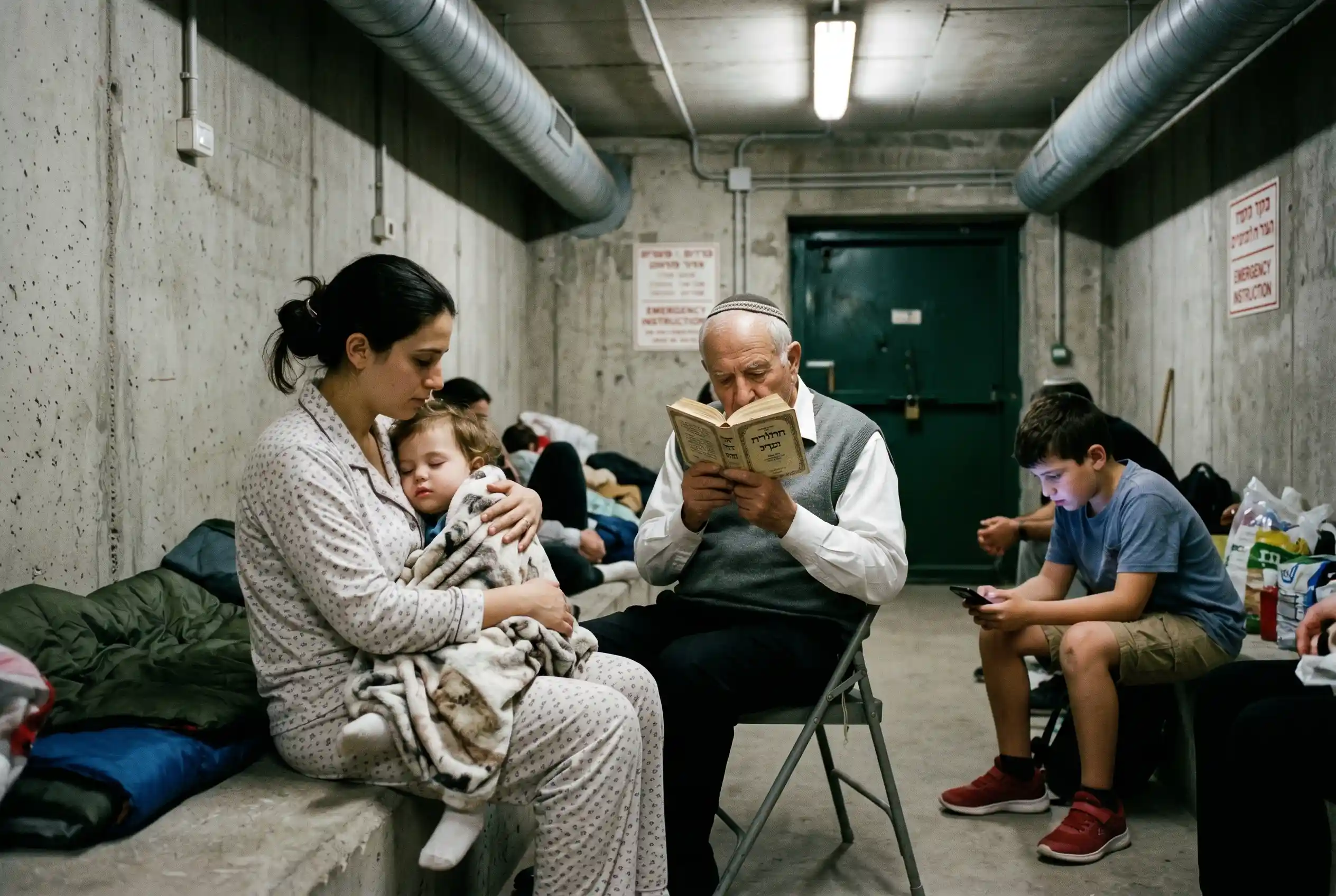
The Third Bunker Transition in a Year
Hospital staff in Israel now measure these bunker moves in years, not weeks. Soroka University Medical Center was struck by an Iranian ballistic missile during the June 2025 conflict, and as is standard during attacks, health care staff canceled non-essential visits and shifted operations to shelters. At Beilinson, the hospital that houses the largest emergency room in the Middle East, NICU infants and critical care patients were already in the bunkers by 10 p.m. Sunday.
This is the third time within a year that we have carried out such a transition.
Dr. Erez Barenboim, director of Beilinson and Hasharon Hospitals, made the count explicit in remarks to the Jewish Telegraphic Agency. Or Erez, head spokesperson for Clalit, told JTA the network would keep operating out of shelters until the Home Front Command restrictions changed. The Beilinson bunker has been the same destination for the hospital’s most fragile patients. The staff the dispatch described as visibly fatigued but resilient was back at the hospital Monday morning. By the time the day shift arrived, the latest overnight was nearly over.
A Generation Inside the Sirens
For an American student on a Birthright trip in the Galilee, the night came with a first. Alexi Wirpel, a student at the University of Mary Washington in Virginia, heard sirens signaling incoming missiles for the first time on Sunday. “We could hear the dome working, so we knew we were going to be relatively okay,” she said, in remarks reported by JTA.
By Monday, even a tentative pause did not settle the nerves. Wirpel said the group didn’t believe the truce would hold. “All day today we’ve all kind of been just waiting for something to go off again,” she said. For her, the calculus had crossed from news to family: “It’s become a very real reality that this is something that my family has to go through instead of just hearing about it.”
Caroline Flannery, who manages an after-school program at a Tel Aviv middle school, has watched the cumulative toll of two and a half years of conflict reshape a generation of Israeli children. Added to the time lost during the pandemic, students in those grades have missed the equivalent of a year of school.
We have kids in fifth and sixth grade that still don’t know the alphabet.
Caroline Flannery, who manages an after-school program at a Tel Aviv middle school, in remarks reported by JTA.
The Numbers Behind the ‘National Educational Emergency’
The classroom damage has begun to show up in measurable test scores. Leaked results of a government aptitude test found that only 3% of Israeli ninth graders met the national benchmark for science, and just 22% met the benchmark for English. Opposition leaders seized on the figures to call for a declaration of a “national educational emergency.” The report on the leaked ninth-grade science scores noted the Education Ministry said the science results were excluded from published exam data, with the education minister claiming the leak was driven by “political” reasons.
Flannery, who moved to Israel in 2019 and stayed, said the leaks confirmed what teachers see in their classrooms every day. With Trump pressing Israel and Iran to return to the negotiating table, she has begun planning around the next round, including Zoom classes, home visits, and worksheets a child can finish in a shelter. Many of her students, she said, will never fully catch up.
- 3% of Israeli ninth graders met the national science benchmark on a leaked government aptitude test
- 22% met the English benchmark on the same leaked test
- Cumulative toll on students spans two and a half years of conflict since the October 7, 2023 Hamas-led attack
- Students in affected grades have missed the equivalent of a year of school when pandemic closures are added
- Fifth and sixth graders at one Tel Aviv middle school still “don’t know the alphabet,” according to the teacher who runs the after-school program
Why Nobody Believes the Pause Will Hold
The pause is shaped more by exhaustion than by trust. Trump’s mediation reportedly pushed Netanyahu to scale back Israel’s response to Iran’s barrage, and Iran framed the halt as sufficient retaliation for the Israeli strikes on Beirut. Both leaders left the door open to fire, with Netanyahu pledging to respond “with force” to any future attack.
For Israelis, the math is simpler. The Twelve Day War in June 2025 was called “Rising Lion.” The next operation, in February 2026, was “Roaring Lion,” according to the analysis of the first phase of Operation Roaring Lion. The cycle between names has shortened, and the naming conventions have lost their bite.
Flannery, the Tel Aviv teacher, said she has contingency plans ready should the war return to its March tempo. Her conclusion about her students, after years of disruption, was that many will never fully catch up. “Their whole routine was disrupted and they come back,” she said. “They’re not ready, not used to, not prepared to sit, to come into class, to sit in their seats, to learn. Their minds aren’t there.”
Frequently Asked Questions
What happened between Israel and Iran on June 8, 2026?
Iran fired missiles at Israel on the night of June 7, 2026, then announced a pause by mid-morning Monday, June 8. U.S. President Donald Trump said he hoped both sides would stop, and Israeli Prime Minister Netanyahu said by Monday evening the fighting was halted, while warning of a forceful response to any future attack.
Is there a ceasefire between Israel and Iran?
No formal ceasefire has been declared. The Jewish Telegraphic Agency called the situation a “tenuous pause,” and Home Front Command restrictions remained in place on Monday evening, with schools closed through at least Wednesday.
Why were Israeli hospital patients moved to bunkers?
Beilinson hospital, which houses the largest emergency room in the Middle East, moved its NICU infants and critical care patients to underground bunkers by 10 p.m. Sunday. The hospital’s director, Dr. Erez Barenboim, said the move was the third such transition in twelve months.
How badly has the conflict affected Israeli students?
Caroline Flannery, who manages an after-school program at a Tel Aviv middle school, said students in the affected grades have lost the equivalent of a full school year when pandemic closures are added to wartime disruption. The cycle has been continuous since the October 7, 2023 Hamas-led attack.
What did the leaked test show about Israeli students?
A leaked government aptitude test, reported by the Times of Israel, found that 3% of Israeli ninth graders met the national science benchmark and 22% met the English benchmark. Opposition leaders used the figures to call for a “national educational emergency.” The Education Ministry said the science scores were excluded from published exam data, with the education minister claiming the leak was driven by “political” reasons.
