
Iran killed two American troops and left a third missing in a ballistic missile and drone attack on a US base in Jordan late Friday, and the United States answered with its eighth straight night of airstrikes on Iran’s Islamic Revolutionary Guard Corps. Search teams later found unidentified remains while looking for the missing soldier, pushing the incident’s death toll to three.
The exchange is the loudest part of a much quieter story. Since the truce that Washington and Tehran signed a month ago broke down, Brent crude has climbed, Kuwait’s drinking water plants have come under direct fire, and traders at the Chicago Mercantile Exchange have nearly tripled the odds of a Federal Reserve rate hike in September. None of that shows up in a casualty count, but all of it will still be here after this week’s headlines fade.
Eighth Night of Strikes Follows Deadly Jordan Attack
US Central Command said its forces struck coastal surveillance and air defense facilities, maritime capabilities and missile and drone storage sites tied to the IRGC units blamed for the Jordan attack. One target sat in a mountain valley where the Revolutionary Guard has long hidden missile equipment.
CENTCOM framed the mission bluntly. “The strikes are designed to further degrade Iran’s ability to threaten commercial shipping in the Strait of Hormuz,” the command said, tying the Jordan retaliation directly to the fight over the waterway. More than 50,000 American troops are currently spread across the region, based in countries now absorbing Iran’s counterstrikes.
“Godspeed, heroes,” Pete Hegseth, the US secretary of war, wrote on X. He added that their sacrifice only stiffens our resolve. President Trump called the deaths “a very sad thing” and said the US will never let Iran build a nuclear weapon. The killings brought the conflict’s American military death toll to at least 16, a figure that predates the third Jordan fatality confirmed over the weekend.
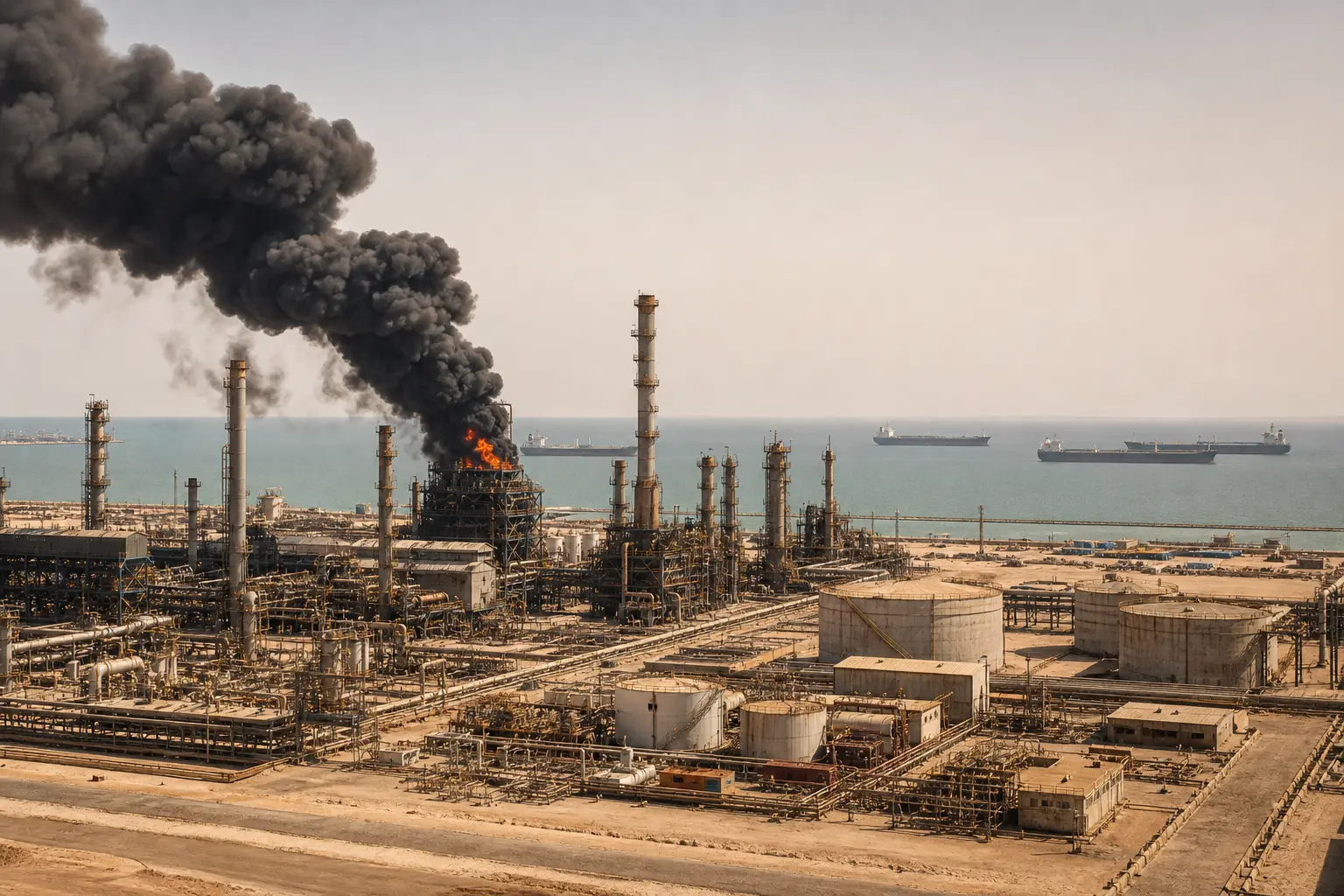
A Truce That Keeps Collapsing
This is not the first time this exact peace has failed. Trump and Iranian President Masoud Pezeshkian signed a memorandum of understanding on June 17 meant to end the war and reopen the Strait of Hormuz. Within days, Iran cited Israeli strikes in Lebanon and shut the strait again.
By June 27 the US Navy had carved out a widened shipping route near Oman to challenge Iran’s control. It held only briefly. On July 8, the interim truce broke down for good after Iran struck multiple commercial ships in the strait, and American bombers have flown every night since.
Iran’s Supreme Leader Mojtaba Khamenei, who took the role after his father Ali Khamenei was killed in the February strikes that opened this war, used the moment to declare Washington’s word worthless. He said the US had violated the MoU so thoroughly that Trump’s signature was “utterly worthless and invalid,” and warned Washington would face “unforgettable lessons.” Major General Ali Abdullahi, head of Iran’s Khatam al-Anbiya headquarters, went further, promising any American aggression “will be met with a decisive and devastating response.”
Kuwait’s Water Supply Comes Under Fire
Iran’s retaliation has increasingly landed on civilians who have no seat at the table. Twice in two days, Iranian strikes hit Kuwait’s Shuaiba power and desalination complex, an attack Iran’s military labeled Wave 15 of an operation it calls Nasr-2. The strikes sparked fires, knocked generation units offline and injured firefighters battling the blazes.
The stakes for Gulf states are existential in a literal sense. Desalination is not a convenience in the region; it is the water supply.
- Kuwait draws roughly 90% of its drinking water from desalination plants like Shuaiba.
- Qatar gets about 99% of its potable water the same way.
- Bahrain relies on desalination for more than 90% of what comes out of the tap.
Kuwait briefly shut its airspace and Kuwait Airways rescheduled flights. Jordan’s air defenses downed incoming Iranian missiles, and air raid sirens sounded in Bahrain and Saudi Arabia the same day. None of these countries is a combatant in the war between Washington and Tehran.
How Is a Middle East War Moving Fed Rate Odds?
It is moving them because oil is doing what oil does when a war shuts down a fifth of the world’s crude flow: dragging inflation expectations up with it. CME’s FedWatch tool put the odds of a September rate hike at 73%, up from just 26% in mid-June, when the truce still looked like it might hold.
The price swings track the war’s mood almost exactly.
| Date | Milestone | Brent Crude Price |
|---|---|---|
| Feb 28 | US and Israel launch strikes on Iran | Around $80 to $82 a barrel |
| March 4 | Iran closes the Strait of Hormuz | Surges past $120 a barrel |
| Late April | Wartime peak of the conflict | Tops $188 a barrel |
| June 29 | Truce holding, shipping resumes | $72.45 a barrel |
| July 18 | Truce collapses, Kuwait plant hit twice | $88.10 a barrel |
Tanker crossings through the strait fell to just eight on a single Thursday this month, down from more than 100 a day before the war. A Congressional Research Service assessment found war risk insurance for tankers has left premiums four or five times greater than they were previously, which is why so few captains are willing to make the run even when cargo is waiting. Federal Reserve researchers in Dallas modeled a worse case: a full three-quarter closure of the Gulf could push oil as high as $132 a barrel by year end, dragging global growth down with it. A separate World Bank analysis found the March disruption alone already lifted Brent by about 65 percent in a single month, the sharpest monthly jump on record.
Iran’s Grip on the Strait of Hormuz
Iran wants something it never fully had before this war: control over who pays to use the strait. Tehran has said commercial vessels should defer to its directives, effectively demanding a toll on a waterway the rest of the world has always treated as open to all. Washington has refused to accept that, insisting on free passage without payment to Iran.
That is a status quo that’s changed going forward. I don’t see Iran going back to where it was before.
Nikos Petrakakos, managing director of investments at Tufton Investment Management, told CNBC that assessment in late June, weeks before the truce collapsed and proved him right. Brookings Institution researchers note OPEC production has fallen more than 30 percent since the war began, evidence that the region’s energy map has already shifted regardless of how this round of fighting ends.
The United Arab Emirates, which has stayed out of the fighting, has pushed both sides toward the table. “The UAE calls for the utmost restraint to avoid serious repercussions and prevent the region from descending into new levels of violence and instability,” its foreign ministry said, stressing that free passage through Hormuz remains vital to the global economy.
No Clear Path Back to the Table
Trump has revived his threat to hit Iranian power stations and bridges to force Tehran to loosen its hold on the strait, and CENTCOM’s own statements suggest that campaign is already underway. The US has reimposed its naval blockade on Iranian ports to choke off Tehran’s oil exports in the meantime.
Iran shows no sign of backing down either. Khamenei’s warning of “unforgettable lessons” and Abdullahi’s promise of a “devastating response” both landed within the same 48 hours as the Kuwait strikes, suggesting neither side is negotiating from a position it sees as weak.
The next real test may not come from a battlefield at all. The Federal Reserve’s Open Market Committee meets July 28 and 29, and policymakers will have to decide how much weight this month’s oil reacceleration deserves against the cooler inflation data they saw in June.
Frequently Asked Questions
What was Operation Epic Fury?
Operation Epic Fury is the US military’s name for the campaign it launched against Iran on February 28, alongside Israeli strikes, which killed then Supreme Leader Ali Khamenei and set off the chain of events leading to this week’s fighting.
Why did Ali Khamenei’s son become Supreme Leader instead of a senior cleric?
Mojtaba Khamenei holds the clerical rank of hojjatoleslam, a step below the ayatollah rank Iran’s constitution expects of a supreme leader. The Islamic Revolutionary Guard Corps pressured the Assembly of Experts to elect him anyway within days of his father’s killing, citing his decades of ties to the Guard and the Basij militia he once commanded.
What is Kuwait’s Shuaiba complex?
Shuaiba is a large power generation and water desalination complex in Kuwait’s Al Ahmadi Governorate, one of the facilities the country depends on for the roughly 90% of its drinking water that comes from desalination rather than fresh water sources.
Has Iran’s oil production actually dropped during this war?
Yes. Regional producers including Kuwait and Iraq began curtailing output within days of the strait’s first closure in March once local storage filled up, and OPEC’s overall production has fallen more than 30% since the war began, according to Brookings Institution analysis.
