
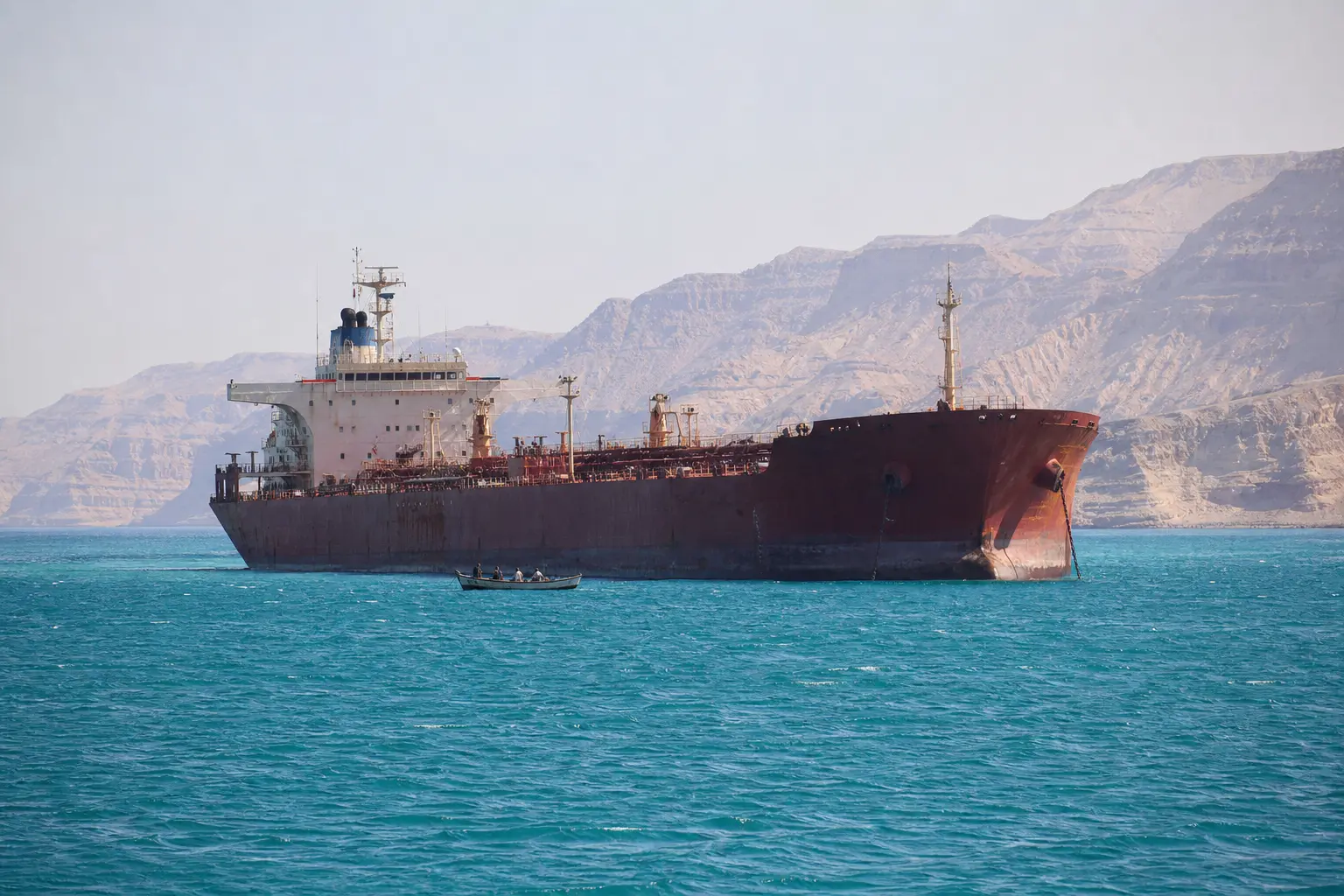
Egypt’s foreign minister told Somalia on Sunday that Somaliland’s new embassy in Jerusalem breaks international law, then asked Mogadishu to keep working to free eight Egyptian sailors still held by Somali pirates. The Cairo talks fused two very different crises: a breakaway region’s diplomatic coup in the Middle East, and a hijacked oil tanker anchored off Puntland since May.
Ethiopia’s name never came up in Egypt’s public readout of the meeting. Its fingerprints are on nearly every line of it, from the ribbon cutting in Jerusalem to the Egyptian soldiers now training Somali troops along the Ethiopian border.
Somaliland Opens Its First Embassy, and Picks Jerusalem
Egyptian Foreign Minister Badr Abdelatty met his Somali counterpart, Foreign Minister Abdisalam Abdi Ali, in Cairo on Sunday. According to Egyptian Foreign Ministry spokesman Tamim Khalaf, Abdelatty called Somaliland’s mission in occupied Jerusalem “an illegal and unacceptable step” that undermines the city’s legal and historical status. He reaffirmed Egypt’s “full support” for Somalia’s unity and rejected what he called “any unilateral measures” against its sovereignty.
Somalia’s federal government has never recognized Somaliland’s 1991 declaration of independence, and its president, Hassan Sheikh Mohamud, has been blunt about what he thinks is really going on. He called Israel’s recognition of Somaliland “not a recognition but a trap” meant to pull Somalia into a fight that was never its own.
The embassy itself opened on June 15, when Somaliland President Abdirahman Mohamed Abdullahi Irro cut the ribbon alongside Israeli Foreign Minister Gideon Sa’ar in Jerusalem’s Har Hotzvim tech park. It became the eighth foreign diplomatic mission located in the city. Somaliland’s ambassador had presented his credentials to President Isaac Herzog three months earlier, in March. Israel had recognized Somaliland’s independence in December 2025, becoming the first country in the world to do so.
Cairo does not dispute that the embassy exists. It disputes that Somaliland ever had the standing to open one.
Why Is Egypt So Angry About a Jerusalem Ribbon-Cutting?
Egypt’s anger has less to do with Jerusalem’s status than with who is courting Somaliland, and why. Israel’s recognition, and now its embassy, followed a much older move by Ethiopia to buy a foothold on that same coastline, a step Cairo has treated as a direct threat to its own security since early 2024.
On January 2, 2024, Somaliland’s then president, Muse Bihi Abdi, signed a memorandum of understanding with Ethiopian Prime Minister Abiy Ahmed. The deal handed Ethiopian naval forces twenty kilometers of coastline for fifty years, plus a stake in Ethiopian Airlines, in exchange for Ethiopia’s promise to conduct an “in depth assessment” of Somaliland’s statehood. The Arab League, led at the time by Egyptian President Abdel Fattah el Sisi, condemned the pact outright. Egypt’s own objection to Israel’s recognition a year later followed the identical logic: Cairo, Somalia and Turkiye framed it as an attempt to plant a foreign power on the Red Sea coast, not a dispute over Jerusalem’s holy sites.
Underneath all of it sits the Grand Ethiopian Renaissance Dam, the hydropower project on the Blue Nile that Egypt has fought for more than a decade because the river supplies the overwhelming majority of the country’s fresh water. In February, Egypt floated a conditional offer: it would help Ethiopia secure commercial Red Sea access if Addis Ababa drops its coastal military ambitions and shows flexibility on the dam’s water flow. The offer carried an unmistakable threat attached: Egypt could use its ties in Sudan, Somalia and Djibouti to block Ethiopian port access if Addis Ababa said no.
Three Ports, One Rival
Egypt’s response to Ethiopia’s coastal push has not stopped at statements. Over the past year, Cairo has signed a matching maritime agreement with every state bordering Ethiopia’s routes to the sea.
| Coastal Partner | Instrument and Timing | What It Covers |
|---|---|---|
| Djibouti | Port cooperation framework, December | Transport coordination with Egypt’s Ministry of Transport |
| Eritrea | Maritime transport agreement, signed in Asmara, May 16 | A direct shipping line and port development at Assab, Massawa and Marsa Fatima |
| Somalia | Maritime memorandum, approved by Somalia’s Council of Ministers, July | A framework linking Egypt’s Ministry of Transport with Somalia’s Ministry of Ports and Marine Transport |
The sequence gives Cairo a say at nearly every point where Ethiopia might reach saltwater, from the Gulf of Aden to the Bab el Mandeb strait. On the military side, Egypt and Somalia signed a defense pact in August 2024, days after Somalia’s government branded the Ethiopia-Somaliland MoU an act of aggression. Egypt sent arms and special forces within days, and officials at the time floated deploying up to 10,000 troops. The formal number that materialized under the African Union’s mission is far smaller: Egypt’s declared contribution stands at 1,091 troops, against Ethiopia’s 2,500, though Egyptian personnel also operate on a separate bilateral track in Hiiraan, a region bordering Ethiopia, outside AU command. In February, Cairo held a military parade in the Somali capital for President Mohamud, the first time Egyptian hardware had moved into Somalia since the 1970s.
That earlier chapter is worth naming. Egypt’s last sustained military relationship with Mogadishu was arms and training for Siad Barre’s government in the years before Somalia’s 1977 invasion of Ethiopia’s Ogaden region. Nothing today points to Egypt pushing for a repeat of that war, but the reference point is not lost on regional analysts.
I don’t think any of the military support for Somalia offered by Egypt is a game-changer yet. It’s signalling by Somalia to Ethiopia that it’s unhappy. But we could also start to see Egypt invest more in Somalia.
Alan Boswell, Horn of Africa director at the International Crisis Group, offered that read shortly after the 2024 pact was signed. Two years, three port deals and a Cairo military parade later, the “signalling” he described looks a lot closer to policy.
The Ransom That Still Hasn’t Landed
Set against that bigger contest is a much smaller, more urgent one. The MT Eureka, a Togo-flagged tanker carrying roughly 2,800 tonnes of diesel, was seized by armed pirates on May 2 off Yemen’s Shabwa Governorate and steered into Somali waters near Puntland. Its crew of 22 includes eight Egyptians and several Indian nationals.
- May 2, 2026: Pirates hijack the MT Eureka off Yemen and force it toward Puntland’s coast.
- May 13, 2026: Relatives and clan elders say the ransom demand jumps from $3 million to $10 million as talks stall.
- June 30, 2026: The Egyptian Marine Officers Union says the shipowner’s Yemeni partner and the captors reach terms, entering what it calls a decisive stage.
- July 19, 2026: Abdelatty presses Somalia in Cairo to keep working toward the sailors’ release.
The union says the pirates are now pushing to complete the payment quickly, worried that Somali security forces might attempt a rescue. Mediation is continuing through several channels, with pressure on the shipowner to finish the transfer without putting the hostages at greater risk. The Eureka was not the only ship taken that week; pirates were holding at least two other vessels in the same stretch of coastline around the same time.
Washington Pulls the Plug on Peacekeeping Funds
The hijacking is not an isolated event. The French navy’s Mica Center has recorded eighteen piracy incidents since April, with at least three vessels still held for ransom as of mid-July. Analysts blame naval forces stretched thin by the Red Sea and Strait of Hormuz conflicts, shipping traffic rerouting closer to Somali waters, and instability inside Somalia itself. The European Union signed a new Status of Forces Agreement with Djibouti on July 16 to keep its Atalanta and Aspides naval missions supplied.
That naval squeeze is landing at the worst possible moment for the force meant to backstop Somali security on land. The UN Security Council authorized up to 11,826 uniformed personnel for the African Union Support and Stabilization Mission in Somalia through the end of 2026. In a letter dated July 1, Washington told the African Union it would block any further UN funding for the mission and would not support its logistics office beyond that December deadline, despite having given nearly $2 billion to UN missions in Somalia since 2007. AUSSOM’s roughly $190 million annual budget already carries a shortfall, and its logistics arm faces a cut of about $130 million, a quarter of its approved funding.
Abdelatty’s appeal in Cairo for “sustainable funding” for AUSSOM reads differently against that backdrop. Egypt already runs a bilateral troop presence in Somalia that sits outside AU command. A shrinking multinational mission leaves more room for exactly that kind of arrangement to grow.
Mogadishu Is Stuck Between Two Patrons
For his part, Somali Foreign Minister Abdisalam Abdi Ali thanked Egypt for its political, development and security assistance, praising Cairo’s consistent backing for Somalia’s unity and sovereignty. He reaffirmed that Somalia intends to keep close coordination with Egypt on issues of shared concern.
Abdelatty used the meeting to push for deeper cooperation across several fronts:
- Security cooperation and counterterrorism training
- Trade, infrastructure and electricity projects
- Renewable energy and pharmaceuticals
- Agricultural processing and food manufacturing
He pointed to training already underway through the Egyptian Agency of Partnership for Development and the Cairo International Centre for Conflict Resolution, Peacekeeping and Peacebuilding, framing them as tools to build up Somalia’s institutions and workforce.
None of this erases how fragile Somaliland’s own position has become even as it collects diplomatic trophies abroad. In April 2025, Somalia’s federal government recognized the rival SSC-Khaatumo administration as its sixth Federal Member State, a move that cut Somaliland’s effective territory to roughly 45 percent of the old British protectorate’s borders. Ethiopian troops, meanwhile, remain deployed inside Somalia under the same AU mission Egypt is trying to prop up, which means Mogadishu cannot fully break with Addis Ababa even while leaning harder on Cairo. Two dates now sit unresolved on the calendar: the ransom payment still pending off Puntland, and the December 31 funding cliff facing the peacekeepers meant to help Somalia stand without any of its neighbors’ help.
Frequently Asked Questions
How many countries recognize Somaliland as independent?
Only Israel has formally recognized Somaliland’s statehood, a step it took in December 2025. Every other government, along with the African Union, still treats Somaliland as part of Somalia. Jerusalem’s seven other embassy-holding governments, the United States, Guatemala, Honduras, Kosovo, Papua New Guinea, Paraguay and Fiji, have no direct role in the Somaliland dispute.
How much territory does Somaliland actually control?
Less than its government claims. Somalia’s recognition of the rival SSC-Khaatumo administration as a Federal Member State in April 2025 reduced Somaliland’s effective territory to about 45 percent of the former British protectorate’s borders, with clan-based fighting in the Sool and Sanaag regions predating the Jerusalem embassy by years.
Could the Egypt-Ethiopia rivalry lead to direct conflict?
Analysts have flagged that risk without predicting it as certain. Regional security experts have warned that Egyptian troop deployments near the Ethiopian border could eventually put Egyptian and Ethiopian forces in close proximity in a contested area, though no clash between the two militaries has occurred.
What is the African Union Support and Stabilization Mission in Somalia?
AUSSOM traces back to an African Union peacekeeping deployment first authorized in 2007 under the name AMISOM, which later transitioned through an interim mission called ATMIS before adopting its current name and mandate. It remains Somalia’s main multinational security backstop against al-Shabaab.
What happened to the other ships pirates seized around the same time as the MT Eureka?
Pirates were separately holding the product tanker Honour 25 and the cargo ship Sward in early May 2026, according to maritime security reporting from the same period, showing the Eureka case was part of a wider spike rather than an isolated incident.
Why does Ethiopia want Red Sea access so badly?
Ethiopia has been landlocked since Eritrea’s independence in 1993 and now relies almost entirely on Djibouti’s ports for trade. Prime Minister Abiy Ahmed has repeatedly called sea access an existential question for a country of more than 130 million people.
