
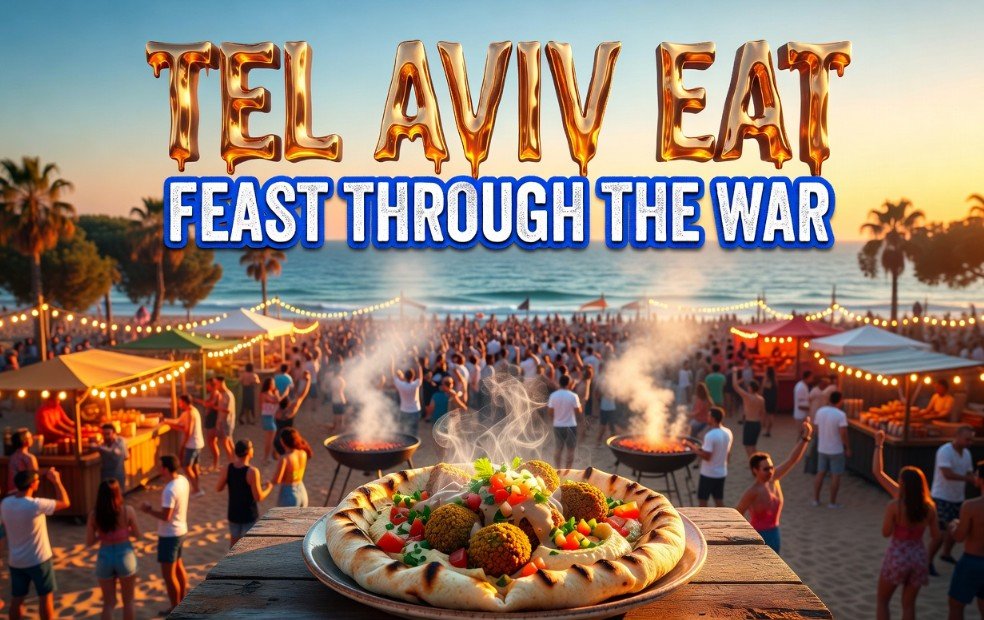
Thousands of people showed up to eat grilled kebabs, Druze pita, and Korean corn dogs by the Mediterranean Sea on Monday night. A fragile ceasefire between Israel and Iran is barely holding, Hezbollah rockets are still hitting the north, and yet the 10th Tel Aviv EAT Festival opened to packed crowds without missing a beat. That, right there, tells you everything you need to know about this country.
A Defiant Opening Night by the Mediterranean
The festival runs from May 11 to 14, every evening from 6 PM to 11 PM, with free admission for all. The setting is Charles Clore Park, a wide stretch of green hugging the Tel Aviv coast, with the Mediterranean Sea glittering just a few steps away.
Dish prices range between 30 and 55 Israeli shekels, roughly $8 to $15 per plate, a deliberate choice by organizers to keep Israel’s best food within reach of ordinary people. Dozens of restaurants, food trucks, and chef-led stalls filled the park, turning it into what organizers call the perfect picnic at the perfect time.
The Tel Aviv-Yafo Municipality, which co-organizes the event alongside the Hever Club, was clear about its intent. “It reflects the Tel Aviv spirit that continues to innovate, create and celebrate life even during challenging times,” the municipality said. “Especially now, we choose to gather together by the sea and make room for joy, flavors and human connection.”
Opening night also marked another milestone. The new Tel Aviv-Yafo 360, a massive circular stage built inside Charles Clore Park, was officially inaugurated during the festival. The stage will go on to host the Tel Aviv Pride Party, White Night celebrations, and other major city events in the months ahead.
A Menu That Mirrors an Entire Nation
Israel’s diversity shows up most honestly at a dinner table. The 2026 Tel Aviv EAT Festival proved it once again, with a lineup of vendors that reads like a living map of the country’s many communities and immigrant histories.
- Arayes by Roey Mantzour: Crisp pita stuffed with kebab meat, tahini, harissa, and pickles
- Yaniv Wahby from Daliyat al-Karmel: Druze pita, stuffed grape leaves, stuffed cabbage, and za’atar pastries topped with labneh and halva
- Chef Moti Yevdayev: Handmade Azerbaijani shah plov, qutab, and gurza dumplings rooted in family memory and traditional technique
- Suni Kim: Bibimbap, Korean barbecue, and Korean corn dogs from Tel Aviv’s first Korean restaurant
- Machneyuda Group: Jerusalem-style polenta and the bold, unapologetic cooking the restaurant is famous for
Roey Mantzour of Arayes captured the spirit of the whole lineup. Israeli food, he said, “reflects who we are: smart, diverse, a gathering of exiles from all over the world who came here to live.”
That quote carries a different weight here than it would anywhere else. Each vendor brought their own story of arrival and belonging. Chef Moti Yevdayev immigrated from Azerbaijan in 1998 and built his dishes from family memory. Suni Kim moved to Israel after falling in love with the country during the Jerusalem Marathon and never looked back.
Celebrity chefs added serious culinary firepower to the mix. Haim Cohen, Moshik Roth, Israel Aharoni, Shaul Ben Aderet, and Guy Gamzo were all on the grounds, making it, as the Jerusalem Post put it, one of those rare evenings when the country’s best chefs gather on the same lawn.
Soldiers at the Table Too
The 2026 festival carries a military dimension that goes beyond any previous edition. The Hever Club, representing permanent service members, IDF retirees, and security personnel along with their families, is an official co-organizer this year.
The club’s members receive a package of exclusive benefits at the festival:
| Benefit | Detail |
|---|---|
| Discounted meals | 15 to 25 NIS per dish (versus 30 to 55 NIS standard) |
| Dedicated queues | Separate entry and service lines |
| VIP area access | Closed section with seating, cafe, and cocktail stand |
| Dessert truck | Nadav Bornstein’s “Eugenkit” exclusively for Hever members |
Beyond the park, the Hever Club’s “On the Road to the Heroes” initiative is sending kosher dishes from selected festival restaurants directly to soldiers fighting in Gaza and in the north, via a dedicated food truck. The festival, in other words, is feeding both the crowd at the park and the fighters who cannot be there.
The Druze presence at the event added its own quiet emotional weight. Yaniv Wahby traveled from Daliyat al-Karmel, a Druze village in northern Israel that has been battered by Hezbollah rocket fire for months. He came to Tel Aviv anyway. He told reporters he came to “create a good atmosphere and give people a chance to be happy.”
That is not a small thing to say when your community is still under attack.
Ten Years, a New Stage, and No Plans to Stop
This is the 10th edition of the Tel Aviv EAT Festival. A decade ago, it started as a celebration of the city’s food scene. It has grown into something much harder to define and much harder to ignore.
The timing of this milestone is striking. The 2026 Iran war began on February 28 when Israel and the United States launched joint strikes on Iran. A conditional ceasefire was declared on April 8, but it has been shaky ever since. As the festival opened on May 11, US President Donald Trump himself described the ceasefire with Tehran as being on “life support.”
And yet the tables were full.
The festival is organized by the Tel Aviv-Yafo Municipality and is widely described as Israel’s largest annual food event. It draws crowds from across the country, from the north, from communities near the Gaza border, and from every cultural background the city and its surroundings hold.
The festival runs through Thursday, May 14, each evening from 6 PM to 11 PM at Charles Clore Park. Entry remains free. The food, the music, and the sea are all included. The geopolitical backdrop is unavoidable, but the Israelis who showed up on opening night seemed to have made their choice about how to spend a wartime Monday.
The Tel Aviv EAT Festival has always been about more than the food. This year, with a ceasefire hanging by a thread, a Druze vendor leaving a rocket-hit community to bring halva and pita to the coast, an Azerbaijani chef serving his grandmother’s recipes, and a Korean restaurateur who simply fell in love with a country and never left, the festival became something closer to a declaration. Israel is not done living, not done gathering, and not done eating. What do you think? Does food take on a deeper meaning when a nation is at war? Share your thoughts in the comments below.
