
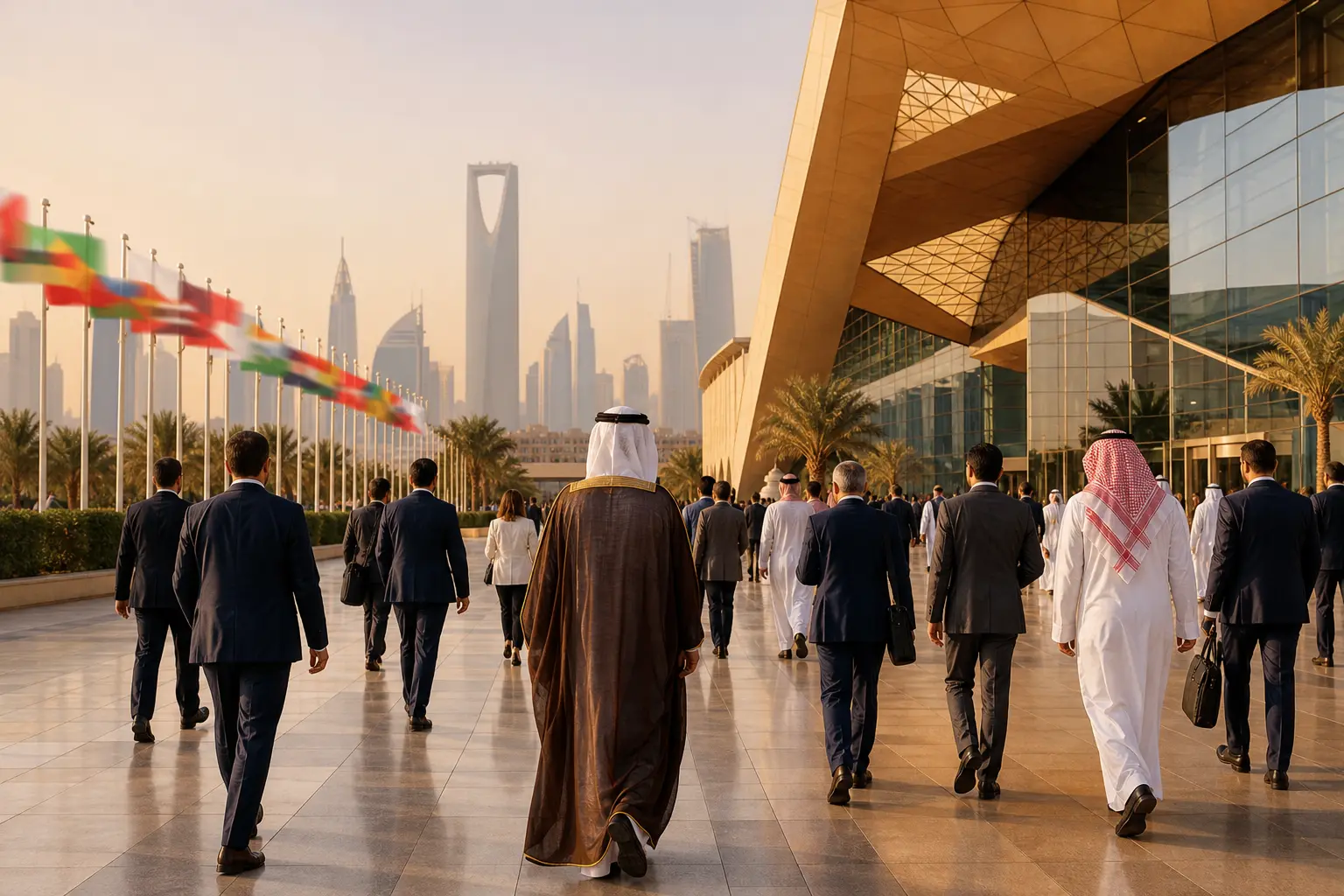
Saudi Arabia will host more than 3,000 delegates and 100 international speakers in Riyadh this October for the second Global CSR Forum, a royally patronized gathering that has grown sharply since its 2024 debut. The event runs October 5 and 6 at the Sofitel Riyadh Hotel & Convention Centre under the theme “From Commitment to Impact.”
The expansion lands at an odd moment for the corporate responsibility movement. Across the United States and Europe, companies are quietly dropping environmental, social and governance (ESG) language from annual reports and exiting climate coalitions under political pressure. Saudi Arabia is moving the opposite way, putting its own record on a bigger stage and pointing to a real climb up a global responsibility ranking as evidence the approach works.
Riyadh Scales Up a Two-Year-Old Forum
The Ministry of Human Resources and Social Development (HRSD) is organizing the second edition under the patronage of King Salman bin Abdulaziz Al Saud. The first Forum, held in October 2024 at Riyadh’s Four Seasons Hotel, introduced the same “Commitment to Impact” framing two years earlier. This time the venue is larger, the delegate count has passed 3,000, and the programme has grown to more than 40 sessions across six strategic pillars, built on what the ministry’s own October 2024 patronage announcement described as a smaller inaugural slate.
H.E. Ahmad Al-Rajhi, Saudi Arabia’s Minister of Human Resources, framed the recurrence as deliberate rather than ceremonial. “Two years ago, this Forum brought the world’s CSR leaders to Riyadh to shape what commitment looks like,” he said in the announcement, describing corporate social responsibility (CSR) as the umbrella term for how companies account for their social and environmental footprint. He said the first gathering left one clear takeaway.
Translating commitment into lasting impact requires sustained, recurring dialogue.
Al-Rajhi added that the goal is a recurring space to examine what has worked, what has fallen short, and how to speed up delivery, both for Saudi Arabia and for the rest of the world. That is a candid line for a government-run event to put in its own press materials: an admission, built into the Forum’s branding, that some commitments have not yet turned into results.
Riyadh’s Opening as the West Retreats
BlackRock, the world’s largest asset manager, exited the Net Zero Asset Managers initiative in January 2025. It was one entry in a broader retreat by Wall Street firms from climate coalitions they had joined only a few years earlier.
Much of that pullback is rhetorical. Companies are dropping the label faster than they are dropping the underlying spending.
- BlackRock exited the Net Zero Asset Managers initiative in January 2025, part of a wider Wall Street retreat from climate alliances.
- 25% of S&P 500 companies used the term “ESG” in report titles this year, down from 40% in 2024.
- 24 of the sectors tracked by brand valuation firm Brand Finance saw sustainability’s pull on consumer choice weaken between 2025 and 2026, though the decline is slowing.
Other institutions are holding parallel conversations this year regardless of the American mood. UNESCO used the World Urban Forum in Cairo to press the case that culture belongs inside sustainable development planning, one more entry on a crowded global calendar of forums competing for the same delegates and the same headlines Riyadh is chasing.
The Guest List Grows Past Thirty Countries
Speakers are traveling from more than 30 countries for the second edition, a wider net than the largely regional roster organizers drew on on for the first Forum. This year’s six pillars include dedicated tracks on digital responsibility, workforce and human capital, and artificial intelligence, alongside three additional pillars organizers have detailed on the event’s published programme schedule.
Confirmed speakers include Abdullah AlJuffali, Honeywell’s president for Saudi Arabia and Bahrain, and H.E. Ahmed AlMajed, HRSD’s Deputy Minister of Society Development. Organizers describe the audience as a deliberate cross-section rather than a single industry crowd:
- C-suite executives from multinational and Saudi companies
- Government ministers and regulators
- International standards bodies
- Institutional investors
- Academics researching sustainability
- Civil society representatives
A room full of regulators and institutional investors is also a room that helps decide where global capital moves next, which is precisely the audience a capital-hungry diversification programme needs in front of it.
Is the Ranking Jump Proof the Forum Works?
Not entirely, and the timeline explains why. Saudi Arabia’s climb in a closely watched responsibility ranking happened between 2021 and 2024, the same stretch that includes the first Forum but predates the second one entirely. The underlying numbers are real. Whether this specific event caused them is a separate question the Kingdom has not tried to answer.
| Metric | Earlier Benchmark | 2023 to 2024 Figure |
|---|---|---|
| Social Responsibility Index global rank (IMD) | 41st, 2021 | 16th, 2024 |
| Share of corporate social spending going to CSR | 1.19%, 2019 | 4.15%, 2023 |
| Large Saudi firms with formal CSR programs | 30% | 65% |
The figures trace back to the IMD World Competitiveness Yearbook, cited in a KPMG review of Saudi corporate leadership published in October 2025. Saudi Arabia wants to reach the top tier of that index by 2030, the same year Vision 2030’s broader diversification targets come due. Getting there means sustaining a climb that began before this Forum series existed, not simply hosting a bigger version of it every two years.
A Wider Riyadh Playbook
The CSR Forum is one piece of a larger pattern. Saudi Arabia has spent the past decade building a calendar of recurring global gatherings, from the LEAP technology conference to the Future Investment Initiative, meant to pull foreign capital and expertise toward Vision 2030, the diversification programme the Kingdom launched in 2016.
The Public Investment Fund (PIF), Saudi Arabia’s sovereign wealth fund, approved its 2026 to 2030 strategy this year, and it leans into the same logic. The board-approved plan shifting toward AI and green energy infrastructure also calls for greater private-sector participation, the same audience the CSR Forum is courting in Riyadh’s ballrooms this October. A decade-long review of Vision 2030’s economic record from the Center for Strategic and International Studies (CSIS), a Washington policy institute, found the programme has repeatedly used high-profile international events to signal changes to a global audience faster than domestic policy alone could.
The convening habit extends past business. Saudi Arabia’s Shura Council recently hosted cooperation talks with Tajikistan’s legislative leaders in Dushanbe, a separate track of the same broader strategy: use recurring international gatherings to keep Saudi Arabia in the room.
The Real Test Waits Past the Ballroom
HRSD also runs the Saudi National CSR Award, a domestic recognition programme meant to reward companies for embedding social responsibility into operations rather than just announcing it. The award and the Forum both sit inside what the ministry calls its national social responsibility strategy, built to lower the barriers that keep Saudi companies from engaging in the first place.
The bigger proving ground sits outside any conference hall. Saudi Arabia is separately preparing to host the 2034 FIFA World Cup and the 2030 World Expo in Riyadh, projects that will put labor practices, supply chains and environmental commitments in front of a global audience for years. Vision 2030’s own target is cracking the top tier of the responsibility index by 2030. That record will take longer than two days in a Sofitel ballroom to write.
