
Saudi Arabia arrested 15,836 people over one week for breaking residency, labor and border security laws, the Ministry of Interior said. It marks the latest entry in a tally the ministry has now published almost every week for years. Authorities logged 7,892 residency violations, 4,617 border security violations and 3,327 labor law breaches in joint inspection sweeps across the Kingdom.
Riyadh has filed a nearly identical bulletin most weeks this year, with totals ranging from just over 14,000 to more than 23,000. What barely changes is who gets caught crossing illegally. This week, 65 percent of the 1,631 people caught trying to cross the border were Ethiopian nationals, tied to a route Human Rights Watch has linked to years of documented killings.
Seven Days, 15,836 Arrests
The breakdown covers three separate laws. Residency violations, the largest category, totaled 7,892 cases. Border security violations reached 4,617. Labor law violations, tied to unauthorized work or sponsorship breaches, accounted for 3,327.
Illegal border crossings made up a separate count. Authorities intercepted 1,631 people trying to enter the Kingdom without authorization: 65 percent Ethiopian nationals, 33 percent Yemeni nationals and 2 percent from other countries. A further 42 people were caught trying to leave Saudi Arabia illegally, and 21 people were arrested for transporting, sheltering, employing or hiding violators, an offense the ministry treats as gravely as the underlying violation.
What happens after arrest runs through a defined pipeline:
- 30,139 violators, including 28,087 men and 2,052 women, are currently working through legal procedures.
- 17,273 have been referred to diplomatic missions to obtain travel documents.
- 6,160 have been referred to complete travel reservations.
- 12,211 have already been deported.
The penalty for helping someone break these rules is steep. Anyone convicted of facilitating illegal entry, transport, shelter or employment of a violator faces up to 15 years in prison, a fine of up to SR1 million (about $267,000), and confiscation of any vehicle or property tied to the offense. The ministry has repeated some version of that warning in nearly every weekly statement it has issued this year.
One Bulletin Among Dozens This Year
This week’s total sits inside a range Saudi Arabia has repeated for months. A week earlier, Arab News reported 15,430 arrests across the same three categories, covering July 2 to 8. Saudi Gazette put the week before that, June 25 to July 1, at 15,591. Some months run far higher: Saudi Gazette logged 22,931 arrests in mid-March 2026, and a year earlier, over a comparable July stretch, Gulf News found the count topped 23,000 arrests in a single week.
| Reporting Period | Total Arrests | Residency / Border / Labor Split | Illegal Entry Attempts | Ethiopian Share |
|---|---|---|---|---|
| 24 Muharram to 1 Safar 1448 AH (this bulletin) | 15,836 | 7,892 / 4,617 / 3,327 | 1,631 | 65% |
| July 2 to 8, 2026 | 15,430 | 7,913 / 4,037 / 3,480 | 1,542 | 53% |
| June 25 to July 1, 2026 | 15,591 | 7,759 / 4,488 / 3,344 | 1,629 | 53% |
| March 12 to 18, 2026 | 22,931 | 17,181 / 3,931 / 1,819 | 1,635 | 68% |
| July 10 to 16, 2025 | 23,167 | 14,525 / 5,511 / 3,131 | 1,593 | 69% |
The nationality split moves around week to week. Ethiopian nationals made up 53 percent of illegal entrants in each of the two weeks right before this one, then jumped to 65 percent this week, closer to the 68 and 69 percent shares recorded in March 2026 and July 2025. Yemeni nationals filled most of the remainder in every period on record.
Why Do Ethiopian and Yemeni Nationals Top the List?
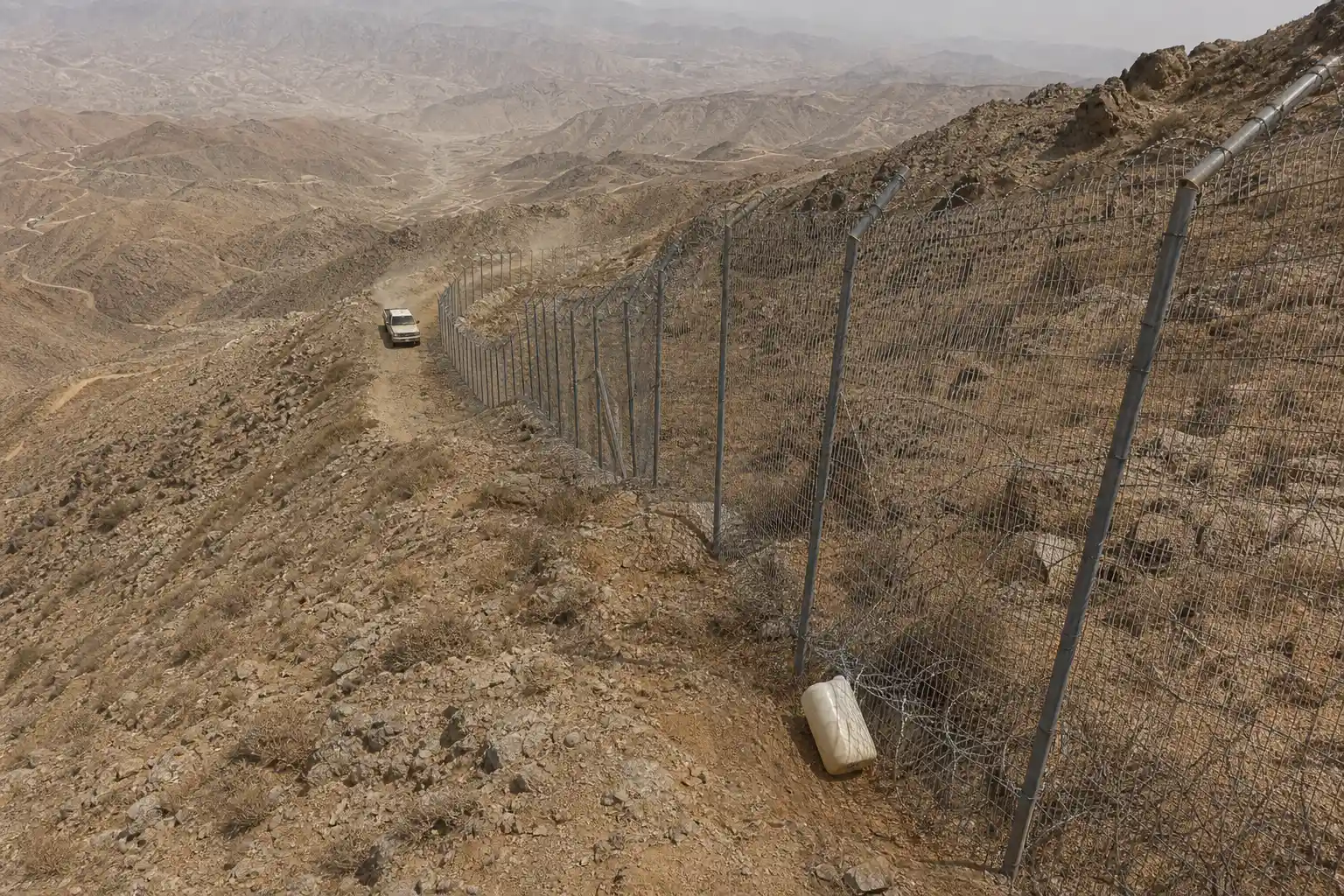
Most people Saudi Arabia catches crossing its border illegally arrive by way of Yemen, on a smuggling corridor known as the Eastern Route. It runs from the Horn of Africa, across the Gulf of Aden, through Houthi-held territory in northern Yemen, and into Saudi territory, a route Human Rights Watch (HRW) has linked to years of documented violence.
HRW documented the pattern in a 73-page investigation into mass killings at the crossing, covering March 2022 through June 2023. Researchers interviewed 42 survivors and relatives and cross-checked hundreds of videos, photos and satellite images. They concluded Saudi border guards had shot and shelled migrants in a pattern that was widespread and systematic, and that in some encounters, guards let survivors choose which limb would be shot before opening fire.
Saudi border guards knew or should have known they were firing on unarmed civilians.
Nadia Hardman, a refugee and migrant rights researcher at HRW, made that assessment after the group’s investigation into the crossing. The point of entry sits inside Houthi-controlled Saada governorate, the same stretch of Yemen where a fragile truce with the Houthi movement has been wavering, layering military risk on top of the smuggling routes migrants already use.
The 2017 Policy Behind the Numbers
The enforcement push behind these weekly counts traces back to 2017, when Saudi Arabia rolled out a Saudization drive meant to cut the Kingdom’s reliance on foreign labor. Non-Saudi nationals still make up more than 30 percent of the country’s population. The policy brought heavier police crackdowns, more detentions and larger expulsion campaigns almost immediately, and those campaigns never really stopped.
An estimated 750,000 Ethiopians live and work in Saudi Arabia, drawn by construction, domestic and service jobs that pay far more than what is available at home. Roughly 500,000 of them are believed to have entered without authorization, according to International Organization for Migration (IOM) estimates cited in HRW’s investigation, part of why Ethiopian nationals show up so consistently in the ministry’s weekly illegal entry counts.
The Killings Haven’t Stopped
HRW said its research showed the killings were still happening at the time its report was published in August 2023. A follow-up assessment from the Mixed Migration Centre tracked ongoing deaths and injuries at the crossing, with new evidence of Saudi border authorities firing on Ethiopians and Yemenis long after the initial report drew global attention.
Saudi Arabia took five months to formally respond in writing after the United Nations first raised the killings, and it disputed the allegations. Rights groups have called for an independent, UN-backed investigation, but none has been opened.
The next weekly bulletin is due within days. If this year’s pattern holds, it will report several thousand more arrests, a fresh nationality split, and no update on the killings HRW first documented on the same stretch of border back in 2023.
Frequently Asked Questions
What Happens to Expired Visa Holders Who Come Forward Before Arrest?
Saudi Arabia has opened a separate exit path alongside the standard enforcement pipeline. Under a Ministry of Interior directive tied to the Absher digital platform, expired visa holders can leave the Kingdom without fines, or extend their stay through April 18, 2026, avoiding the travel document and deportation queue entirely.
Does Reporting a Violator to Saudi Authorities Carry Any Risk?
No. The ministry says every report is handled with complete confidentiality, and informants bear no legal responsibility for coming forward, even when the report concerns a friend, employer or relative.
How Dangerous Is the Yemen to Saudi Arabia Crossing?
It ranks among the deadliest irregular migration routes on record. The IOM estimated at least 795 people, mostly Ethiopians, died on the route in 2022 alone. The Mixed Migration Centre has separately pointed to a suspected mass burial site in northern Yemen that could hold the remains of up to 10,000 migrants.
