
Attorney Michael Decker released a new legal guide for foreign property buyers on July 27, 2026, laying out Israel’s land rules and tax deadlines at the exact moment the country’s buyer pool is changing shape. American purchasers, long the dominant force in Israeli real estate, fell to 49% of foreign apartment purchases in the first quarter of 2026, down from 60% a year earlier, while French and British buyers surged.
The guide’s real value sits somewhere the market data doesn’t reach. Roughly 93% of Israeli land is not for sale at all. It belongs to the state and gets leased out for decades, a structural fact that trips up even well-financed foreign buyers who assume they’re purchasing land the way they would at home.
A Legal Guide Lands as Israel’s Buyer Map Flips
Decker, a founding partner at the Tel Aviv and Jerusalem firm Decker, Pex, Levi, built the guide around due diligence, land classification and the tax clock that starts ticking the moment a contract is signed. The announcement detailed the land classifications and 60-day tax deadline that international buyers are legally required to meet.
It arrives as the buyer roster itself is being rewritten. A weakening dollar has cooled American demand, according to a Times of Israel report on first-quarter purchase data, while French buyers jumped to 130 apartments from 84 a year earlier and British buyers climbed to 57 from 37. Together, the three countries still account for 87% of all foreign residential purchases.
| Nationality | Apartments, Q1 2025 | Apartments, Q1 2026 | Change |
|---|---|---|---|
| United States | 248 | 238 | Down about 4% |
| France | 84 | 130 | Up about 55% |
| United Kingdom | 37 | 57 | Up about 54% |
The homes American buyers purchase still run more expensive on average than those bought by other nationalities, but the share shift changes who a guide like Decker’s actually needs to serve. French and British buyers arrive with different residency assumptions, different mortgage access and, often, different eligibility for programs tied to Jewish immigration.
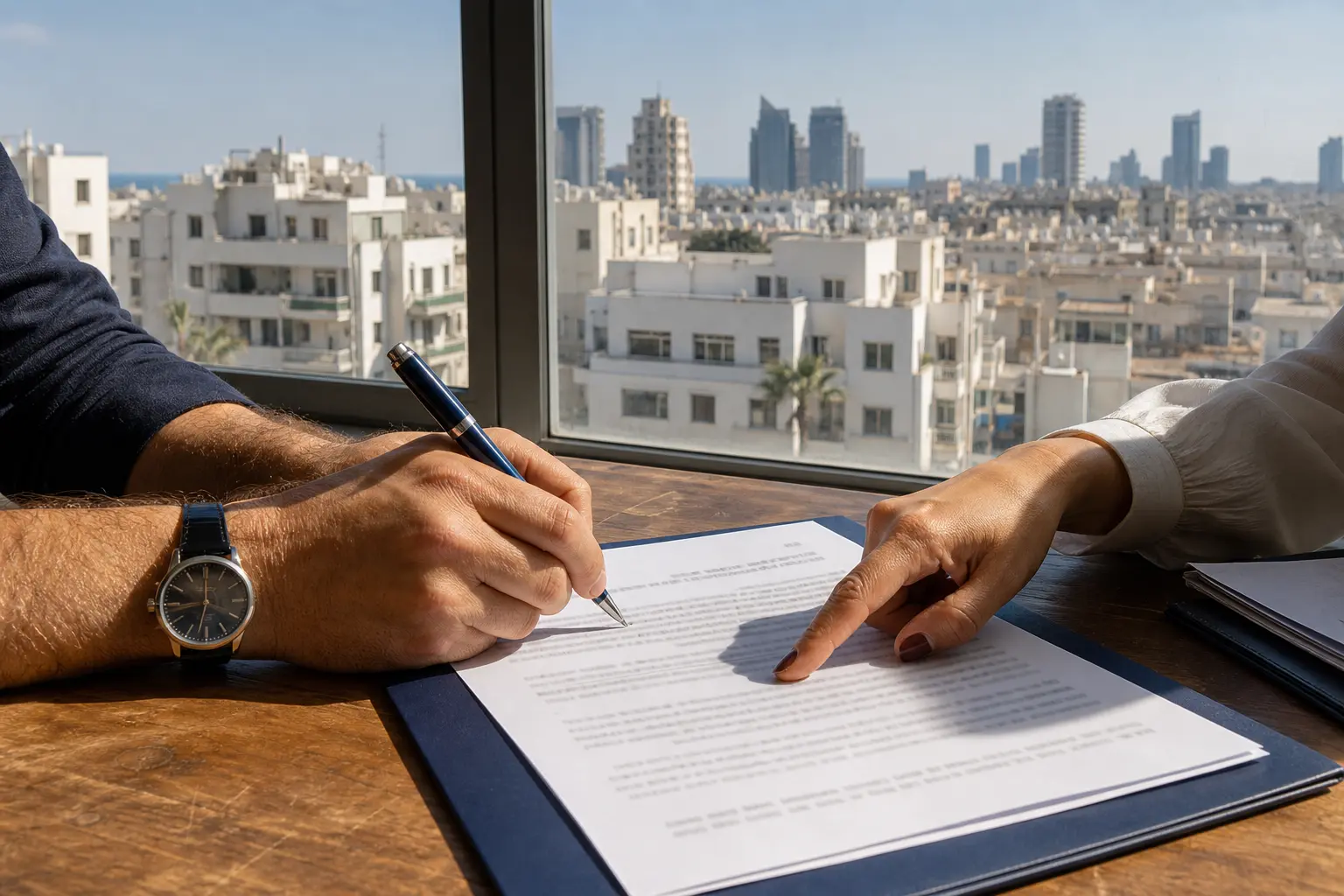
Israel’s Hidden Landlord
Here is the fact most foreign buyers miss going in. Land in Israel splits into two categories: privately owned parcels, and “Israel lands” controlled by the state, the Development Authority and the Jewish National Fund, administered through the Israel Land Authority (ILA). That second category covers about 93% of the country.
Foreign buyers without Aliyah eligibility are generally restricted to the private category. Those who qualify for Aliyah under the Law of Return, Israel’s statute granting Jewish immigrants the right to settle and gain citizenship, can also lease ILA-managed land on the same terms as citizens. Everyone else who buys on state land is really signing a long-term lease, not a deed.
- Tabu – Israel’s official Land Registry, where ownership, clear title and any mortgages or liens on a property get recorded.
Those leases typically run for decades, with terms and renewal conditions spelled out in the agreement rather than assumed. Decker’s guide walks through exactly what those 49-year leases with a built-in renewal option actually commit a buyer to, since a missed renewal clause can matter as much as the purchase price itself. Because nearly all of the underlying paperwork is written in Hebrew, buyers who skip a bilingual attorney often don’t find out what they signed until a renewal or a resale forces the issue.
Sixty Days to Register, Three Months to Close
Israeli law gives foreign buyers a fixed sequence to follow, and the clock doesn’t wait for a buyer to get comfortable with a foreign legal system.
- Due diligence – a licensed attorney verifies the seller’s ownership and checks the lease terms with the Israel Land Authority where the property falls under state control.
- Purchase agreement – counsel drafts and signs off on the contract, fixing the price and the payment schedule.
- Registration and Purchase Tax – the buyer must register the transaction and pay the mandatory Purchase Tax within 60 days of signing.
- Tabu transfer – the attorney completes the formal ownership change with the Land Registry, a step that usually takes one to three months.
Decker points to the paperwork itself as the biggest blind spot for buyers who try to save money on legal fees.
Skipping legal representation and signing untranslated documents can lead to overlooking critical leasehold terms that put a buyer’s entire investment at risk.
Michael Decker, founding partner at Decker, Pex, Levi and an Israeli Bar Association member since 2008, made the warning in the guide’s announcement. His firm’s stated goal is handling the logistics so a client’s investment doesn’t hinge on a translation gap.
Non-Residents Still Have to Put Half Down
Money is where foreign buyers get squeezed hardest, and it starts with financing. Bank of Israel supervisory rules cap mortgages for non-resident buyers at a 50% loan-to-value ratio, well below the 70 to 75% ceiling available to Israeli residents. That means a foreign buyer generally needs to bring half the purchase price in cash, regardless of income or credit history abroad.
Taxes carry a similar penalty. Nonresidents are taxed on the bracket reserved for an additional property, roughly 8% and up, even when the Israeli home is their only residence anywhere in the world, because the Tax Authority classifies buyers by residency status rather than by how many homes they actually own. This year’s Arrangements Law added three changes on top of that baseline: higher marginal purchase-tax rates on high-value acquisitions by investors, a modest increase to first-time-buyer relief thresholds, and a requirement that conveyancers file registration paperwork through the Tax Authority’s electronic portal rather than on paper.
Hidden liens are the other trap. A property with unresolved mortgages or municipal debts attached to its Tabu record can pass those obligations to a new owner if nobody checks the registry first, which is exactly the kind of search a licensed attorney is supposed to run before money changes hands.
Does Aliyah Status Change What You Can Buy?
Yes. Aliyah-eligible buyers can lease state-administered land that’s off-limits to other foreigners, and the same two countries driving this year’s property-buying shift, France and the United Kingdom, are also driving a documented rise in Aliyah applications, which makes the eligibility question more relevant to more buyers than it was a few years ago.
- 22,270 olim arrived through the Jewish Agency in 2025 from 105 countries (the Ministry of Aliyah and Integration separately counted about 21,900).
- 4,150 Jews from the United States and Canada made Aliyah in 2025, a four-year high and up 12% from 2024.
- 3,300 arrived from France, up roughly 45%.
- 840 arrived from the United Kingdom, up 19% for a second straight year.
The Jewish Agency’s own 2025 impact report tracking olim by country of origin attributes part of the rise to antisemitism concerns pushing Western Jews toward immigration files, not just a housing search. Roughly 30,000 people worldwide opened Aliyah paperwork last year, with the sharpest growth in the UK and Australia. Israel is still seeing more people leave than arrive overall, since new arrivals replace fewer than half of Israeli emigrants, but the arrivals it does gain increasingly come from countries with the income to buy. The government approved a five-year plan in November 2025 to bring 6,000 members of India’s Bnei Menashe community starting in 2026, one more sign that who’s eligible to lease from the state is about to widen further, not narrow.
Frequently Asked Questions
Does Buying Property in Israel Lead to Residency or Citizenship?
No. Purchasing real estate does not grant residency or citizenship. Only immigration under the Law of Return, known as Aliyah, changes a buyer’s legal status, and that process runs through a separate government body from property registration.
What Purchase Tax Rate Do Foreign Buyers Pay in Israel?
Nonresident buyers are taxed on the bracket for an additional property, roughly 8% and up, even when the Israeli home is their only residence anywhere, because the tax authority classifies buyers by tax residency rather than by how many homes they own worldwide.
Can Non-Jewish Foreigners Lease Land From the Israel Land Authority?
Generally no. Non-Jewish foreign nationals are limited to privately owned land, while foreigners eligible for Aliyah under the Law of Return can lease Israel Land Authority parcels on the same terms as citizens.
How Long Does Registration Take on Israel Land Authority Property?
Longer than the standard one to three months. Leases administered by the Israel Land Authority need the agency’s own approval before reassignment to a new leaseholder, which can push registration well past the typical Tabu timeline.
Do Foreign Owners Pay Annual Property Tax in Israel?
Yes. Beyond the one-time purchase tax, every owner pays arnona, a municipal tax billed every two months based on a property’s size, location and use, with rates set separately by each city.
Can Foreign Owners Sell Israeli Property and Move the Money Abroad?
Yes, but a sale can trigger mas shevach, Israel’s capital gains tax, and banks typically require proof the tax was paid before wiring proceeds overseas, a step foreign sellers often don’t budget for.
Disclaimer: This article is for general informational purposes only and does not constitute legal, tax or investment advice; buying property in Israel carries real financial and legal risk for foreign buyers, so consult a licensed Israeli attorney before signing any agreement, and note that figures cited are accurate as of publication in July 2026.
