
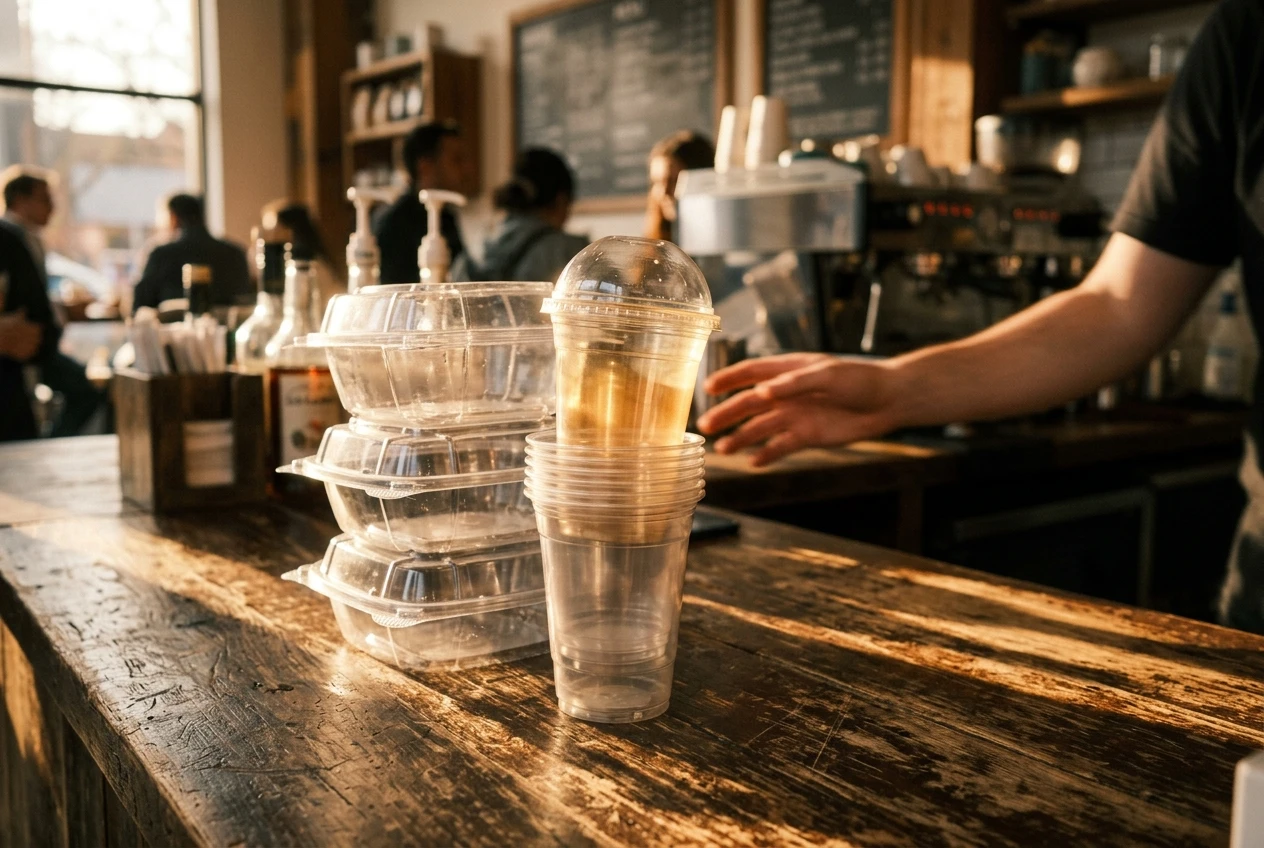
Georgia has postponed its ban on single-use plastic containers and cups in catering establishments, the country’s Ministry of Environmental Protection and Agriculture announced this week. Under the new dates, single-use plastic food containers used for takeout and delivery are off-limits from January 1, 2027, and single-use plastic cups from July 1, 2027. The catering amendment was made to Government Resolution No. 304 of June 8, 2022.
The catering postponement is the second delay on Georgia’s plastic timetable in four months. On April 8, 2026, Prime Minister Irakli Kobakhidze announced that the production, import and sale of beverages in plastic bottles had been pushed from February 1, 2027 to February 1, 2031. Both moves sit on top of a March 12, 2026 resolution that built a phased single-use-plastics prohibition on data showing plastic makes up 88% of the waste found in Georgia’s rivers.
Catering Gets Six More Months on Containers and Cups
The catering amendment, signed July 6, splits the restaurant counter into two deadlines. Single-use plastic food containers used for takeout and delivery now have until January 1, 2027. Single-use plastic cups now have until July 1, 2027. The six-month extension on containers is the smaller of the two changes; the cup date is a fresh deadline that did not exist on the March roadmap.
Both delays ride on a wider chain of plastic deadlines the government has been rewriting through Resolution No. 304. The production and import ban on beverages in plastic bottles has already slipped from February 1, 2027 to February 1, 2031. A separate February 1, 2027 deadline covering food packaged in plastic materials still stands on paper, according to Sustainability MEA’s reporting on the original rollout.
| Original deadline | Subject | Status |
|---|---|---|
| January 1, 2026 | Sale of plastic cutlery, plates, straws, beverage stirrers, food containers, cups and polystyrene lids | In effect |
| July 1, 2026 | Catering supply of beverages in plastic bottles | Postponed to February 1, 2031 |
| July 1, 2026 | Catering supply of food in single-use plastic containers | Postponed to January 1, 2027 |
| February 1, 2027 | Production, import and sale of beverages in plastic bottles | Postponed to February 1, 2031 |
| (new) | Catering supply of single-use plastic cups | Set for July 1, 2027 |
The Original Plan Was Tighter
The framework now being unwound was adopted at a March 12, 2026 government session. The Ministry of Environmental Protection and Agriculture published the resolution the same day in a release announcing the phased plastic ban. It set out a phased prohibition on the production, import and placement on the market of plastic products intended for food contact.
The first phase, from July 1, 2026, barred catering establishments from supplying beverages to consumers in plastic bottles. The second, from February 1, 2027, extended the prohibition to producers, importers and retailers of beverages in plastic packaging. Both phases carved out exceptions for drinking water in containers of three litres or more and other beverages in containers of 20 litres or more. The production ban allowed export.
The resolution framed the roll-out as a balance between public health, environmental protection and the economy. The ministry has described the original framework as designed to support ecological safety while allowing time for private-sector adaptation.
The Bottle Ban Slipped First, to 2031
On April 8, 2026, Kobakhidze told a cabinet meeting that the regulation on beverages in plastic bottles would be postponed by four years. He framed the move as the result of consultations with the business sector.
Kobakhidze said the use of plastic ‘harms both human health and the environment.’ At the same time, the prime minister added, ‘we must take into account the side factors associated with this process, including businesses’ subjective interests as well as the potential impact of specific regulations on consumer prices.’ He described the reduction of plastic use as a ‘gradual’ process. He said the government had held ‘active consultations’ with the business sector before deciding to postpone.
The April reversal broke with a January 2026 phase that had already taken selected items off shelves. From January 1, 2026, the sale of plastic cutlery, plates, straws, beverage stirrers, food containers, cups and lids made of expanded polystyrene was banned in Georgia. The catering bottle ban that was meant to follow on July 1, 2026 will now wait nearly five more years.
Trade publication Sustainability MEA, reporting on the rollout, said the original framework had been built on industry consultations with beverage manufacturers, foodservice operators and business associations. The same outlet cited a UNDP estimate that approximately 613.5 million units of single-use plastic products are consumed in Georgia every year.
Who Pushed the Government Off Course
The April reversal was preceded by public criticism from inside the governing bloc. Guram Macharashvili, a member of parliament from People’s Power, an offshoot of the ruling Georgian Dream party, called the planned ban a rushed decision. He argued it lacked sufficient consideration of its economic impact.
Kobakhidze framed the postponement in the language of consultation rather than retreat. The cabinet statement placed business interests and consumer prices at the centre of the decision. The phrase ‘businesses’ subjective interests‘ was the prime minister’s own. The wording was reported by Civil Georgia from the cabinet session.
The catering postponement in July repeats the same logic. Industry stakeholders had warned of cost, sourcing and infrastructure challenges in scaling sustainable substitutes that meet food safety and shelf-life requirements, per Sustainability MEA’s reporting on the original rollout.
Following these consultations, we have made the decision to postpone enactment of the regulation on the production, import, and placement on the market of beverages in plastic bottles by four years, until February 1, 2031.
Prime Minister Irakli Kobakhidze, speaking at the April 8, 2026 government session.
What Still Crosses the Counter
Until January 1, 2027, catering operators in Georgia can keep putting food into single-use plastic containers for takeout and delivery. Until July 1, 2027, they can keep pouring into single-use plastic cups. Beverages in plastic bottles that would have been off catering counters from July 1, 2026 are now legal at the counter until February 1, 2031. The original framework’s size-based exemptions for water and for military supply are unchanged by the July amendment.
Drinking water in containers of three litres or more and other beverages in containers of 20 litres or more are exempt from the production and import ban. Drinking water supplied to Georgia’s Ministry of Internal Affairs, Defence Forces and military personnel is also exempt. These carve-outs were set in the original March 12 resolution and survive the April and July amendments.
- Single-use plastic food containers in catering, until January 1, 2027
- Single-use plastic cups in catering, until July 1, 2027
- Beverages in plastic bottles at the catering counter, until February 1, 2031
- Bottled water in containers of three litres or more, permanently exempt from the production and import ban
- Other beverages in containers of 20 litres or more, permanently exempt
What the Rivers Are Doing in the Meantime
The data the government used to justify the original ban has not changed. In its March 2026 resolution, the ministry cited nationwide studies showing that approximately 88% of waste found in Georgia’s rivers consists of plastic.
Single-use products make up most of that fraction. Among the plastic itself, plastic bottles account for about 41% of river waste, the ministry said. The share is even higher in specific catchments, where the World Bank’s synthesis report Blueing the Black Sea, developed with the same ministry, found that plastic items make up 88% of all waste along Georgia’s Rioni river basin.
The same report counted plastic bottles and caps as nearly 60% of plastic waste on its own. It noted that nearly twice as much marine litter is recorded in the Black Sea as in the Mediterranean. On selected Georgian beaches, up to 95% of waste is marine litter. Recycling infrastructure and public awareness, the report said, remain limited but are improving.
The March resolution framed the environmental case in biological terms. ‘Plastic accumulates in soil, rivers, lakes, and seas, damages sanitation systems, and reduces soil fertility. Ultimately, this leads to a decline in biodiversity and the disruption of ecological balance.’
The next decision point is already on the books. Government Resolution No. 304 of June 8, 2022, the technical regulation now being amended, is the legal vehicle for the gradual prohibition. Each postponement runs through the same instrument, and each requires another cabinet amendment.
- 88%: share of waste in Georgia’s rivers that is plastic (ministry-cited studies, March 2026)
- 41%: share of river waste made up of plastic bottles (ministry-cited studies, March 2026)
- ~60%: share of plastic waste consisting of plastic bottles and caps (World Bank synthesis)
- 613.5 million: single-use plastic product units consumed in Georgia annually (UNDP estimate)
- 4 years: length of the postponement on beverage-bottle production and import (April 8, 2026 announcement)
Frequently Asked Questions
When will the ban on single-use plastic containers in Georgia’s catering take effect?
January 1, 2027. The government has amended Resolution No. 304 to push the date back six months from the original July 1, 2026 deadline. The new date was announced in early July 2026.
Why did Georgia postpone the plastic bottle ban to 2031?
Prime Minister Irakli Kobakhidze cited consultations with the business sector and concern about the impact on consumer prices when he announced the four-year postponement at an April 8, 2026 cabinet session.
What did the original 2026 plan look like?
A March 12, 2026 resolution phased in a ban on catering supply of beverages in plastic bottles from July 1, 2026, and on the production, import and sale of beverages in plastic bottles from February 1, 2027, with exceptions for large containers and export-only production.
Which plastic products are still exempt under the new rules?
Drinking water in containers of three litres or more and other beverages in containers of 20 litres or more are exempt from the production and import ban. Drinking water supplied to Georgia’s Ministry of Internal Affairs, Defence Forces and military personnel is also exempt.
Could the catering dates slip again?
The government has not signalled further changes. The catering postponement is the second amendment to Resolution No. 304 in 2026, and any further delay would require another cabinet amendment through the same instrument.
