
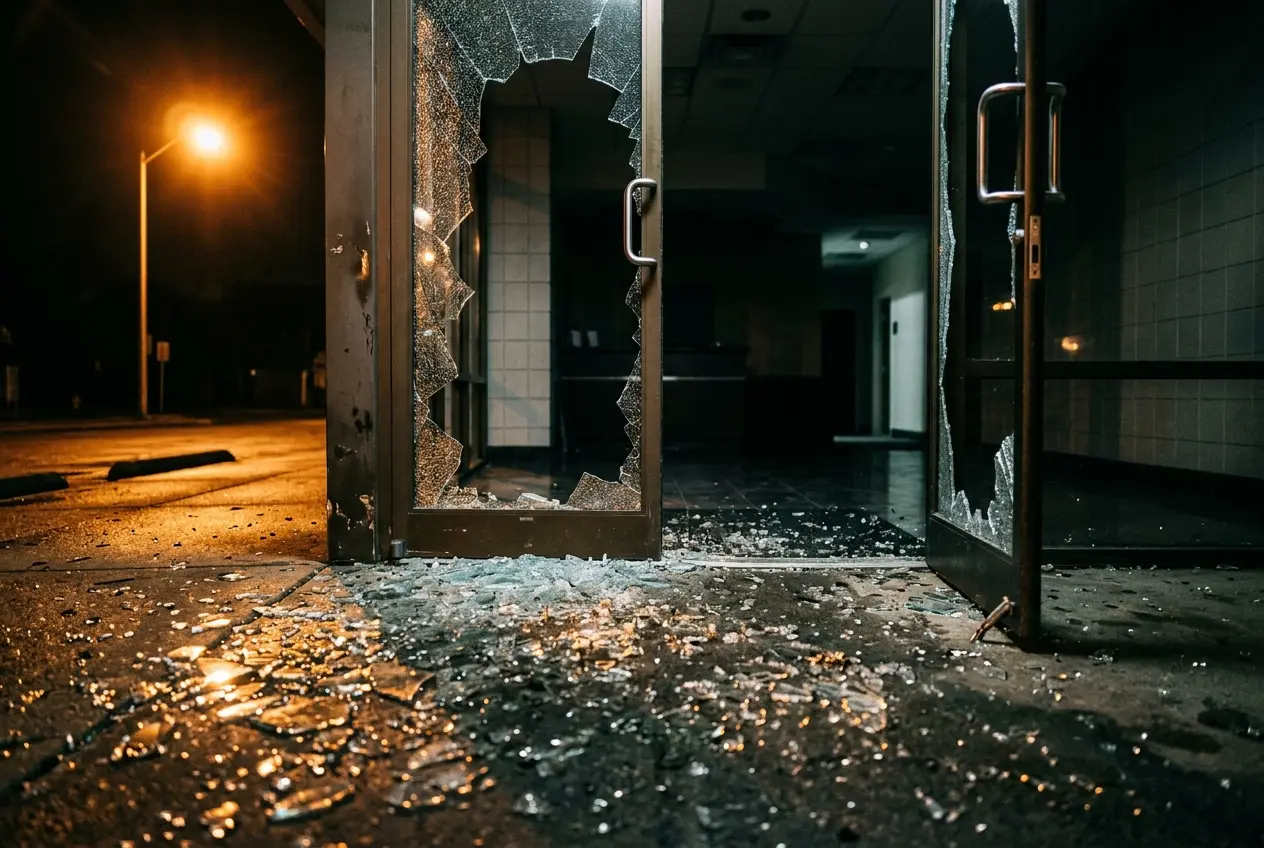
A masked assailant shattered the glass entrance to Channel 12’s Tel Aviv newsroom overnight, security camera footage shows, throwing two bricks at the door shortly after 3 a.m. on Sunday before running off. The attack came a month after death-threat graffiti named three of the network’s journalists by name and threatened their families with violence. Channel 12 said it was “shocked but not surprised” and demanded that police act to stop what it called the rising threat of violence against journalists and media outlets in Israel.
The Union of Journalists in Israel condemned the attack and called on police to act “quickly and seriously” against those targeting journalists. The brick landed weeks before the coalition is hoping to pass a series of bills aimed at bringing broadcast media under tighter government control, the latest move in a years-long pressure campaign against the Israeli press.
What Happened at Channel 12’s Door
The glass entrance to the Channel 12 news offices in Tel Aviv was smashed in an attack that the network called the latest violent incident targeting journalists and the media in Israel. Security camera footage published by the outlet shows a masked suspect walking up to the glass door and throwing a brick, which bounced off without damaging it. The suspect then threw a second brick at the door, this time shattering the glass, before running away. The timestamp on the footage showed that the incident took place shortly after 3 a.m. on Sunday.
In a statement, Channel 12 said it was “shocked but not surprised” by the incident, and demanded that the Israel Police act to stop the rising threat of violence against journalists and media outlets. “The Israeli government and the communications minister must stop their inflammatory and unbridled attacks against the free press,” the statement added. The Union of Journalists in Israel condemned the overnight attack and called on police “to act quickly and seriously to bring to justice those who try to harm journalists and media outlets.” Ynet news reported that the incident occurred about a month after hate graffiti was sprayed near the offices, including death threats, and that Channel 12 sources said they were shocked and would review security camera footage to identify who was involved. The Times of Israel published the security footage and timestamps from the attack. The attack was the latest in what Channel 12 called a rising threat of violence against journalists and media outlets in Israel.
“You Will Pay With the Blood of Your Loved Ones”
The brick attack came a month after graffiti inciting violence against Israel’s three main broadcast media networks was daubed near the Channel 12 office. “Hello traitors, 11, 12, 13,” the graffiti read, naming the three channels and the journalists working for them. “Peleg, Abramovich, Drucker, criminals. You will pay with the blood of your loved ones.” The three journalists named were Channel 12’s Guy Peleg and Amnon Abramovich, and Channel 13’s Raviv Drucker.
The graffiti also named the networks: Channel 12, Channel 13, and Kan, the public broadcaster also known as Channel 11. Threatening graffiti calling for “the blood of the traitors” was also found outside the Channel 13 offices in Tel Aviv in November, photographed at the time and attributed to right-wing activists. That earlier incident came after months of escalating online threats against Channel 13 reporters. The June graffiti and the November graffiti together form what the Times of Israel described as a campaign that has put named journalists in physical danger.
The June graffiti sat unsigned, mirroring the anonymity of the masked attacker at Channel 12’s door. Police have opened an investigation into both incidents.
Peleg, Sde Teiman and a Two-Year Pressure Campaign
Peleg has been the target of a far-right harassment campaign since 2024, when he aired leaked footage from the Sde Teiman holding facility depicting the alleged abuse of a Gazan detainee at the hands of soldiers. The broadcast drew immediate condemnation from government ministers and a long-running campaign of threats against Peleg personally. The June graffiti that named Peleg also named two other reporters. The three reporters work for the three broadcasters the graffiti also named.
The harassment arc has run through graffiti, online threats and now physical damage to a newsroom entrance:
- November 2025: Threatening graffiti calling for “the blood of the traitors” found outside the Channel 13 offices in Tel Aviv.
- One month before the attack: Graffiti near Channel 12 naming Peleg, Abramovich and Drucker and threatening their families.
- Overnight July 5, 2026: Masked attacker shatters the glass door at Channel 12’s Tel Aviv newsroom shortly after 3 a.m.
Peleg’s reporting put the Sde Teiman footage in front of an Israeli audience in 2024, drawing threats from right-wing activists. Drucker works at Channel 13 and Abramovich works at Channel 12, per the Times of Israel. The Times of Israel framed the brick attack as the latest in a longer pattern, with the network’s own statement naming the inflammatory rhetoric from government ministers as a direct cause. The three networks named in the graffiti have all been targeted by Communications Minister Shlomo Karhi’s broadcasting bill.
Channel 12’s statement on the brick attack tied the violence against its newsroom directly to the inflammatory rhetoric coming from government ministers. The Union of Journalists in Israel has called on the police to act “quickly and seriously” against those targeting journalists. The Forum of Israeli Channels has publicly condemned Karhi’s broadcasting bill as a plan to take over the free press.
The Channel That Will Have Him: Netanyahu, Channel 14 and a Closed News Cycle
Israel’s mainstream news outlets have been repeatedly targeted by Netanyahu and his government, the Times of Israel reported, beyond the incitement campaigns of right-wing activists. Netanyahu rarely sits for interviews with any channel other than the hawkish and sympathetic Channel 14. He has launched vitriolic attacks against journalists, accusing them of publishing “fake news” and “spreading lies.” The pattern has narrowed the channels through which the prime minister is willing to be questioned. Critics including the Forum of Israeli Channels have accused the government of using Channel 14 as a friendly outlet while punishing the rest of the broadcast landscape.
Channel 14’s editorial line, which has been broadly supportive of the Netanyahu government, has made it the default outlet for the prime minister’s media appearances. Critics say this leaves the Israeli public without ready access to the prime minister answering questions from the same reporters who cover his policies day to day. The Times of Israel reported that the pattern of boycotting mainstream interviews has run alongside the government’s broader pressure campaign against the press. The mainstream outlets have continued to broadcast under the pressure, though they have publicly protested the new legislation.
Karhi’s Broadcasting Bill and the Knesset Deadline
The brick at Channel 12’s door arrived alongside a legislative effort the country’s broadcasters call an attempt to take over the free press. Communications Minister Shlomo Karhi has been waging a years-long crusade to dismantle and weaken the free press, and the coalition is hoping to pass a series of bills before the current Knesset session ends later this month. The bills, if passed, would place Kan’s budget under government control and give the government significant control over broadcast media, news sites, and other media through a new regulatory council. Karhi has framed the package as consumer-friendly reform. The country’s broadcasters and press freedom groups have called it an attempt to take over the press.
The Karhi legislation would create a seven-member regulatory council. A majority of the council’s members would be appointed by Karhi, and the chairman of the council would also be appointed by him. The legislation would give the council broad powers, including the ability to fine broadcasters a minimum of one percent of their income for violating the terms of the new law. The council would also have the power to cancel a broadcast content provider’s registration for non-compliance, and to demand any data it seeks from the broadcasters.
Karhi, one of the most hard-right members of the Likud party, said upon presenting the legislation that it would reduce costs for consumers, increase choice, and increase competition within the realm of broadcast media. He called the package “a revolution in the broadcasting market in Israel, which hands power back to the public and opens up a variety of options, opinions and prices to them.” The new legislation would replace the Second Authority for Television and Radio and the Cable and Satellite Broadcasting Council. A new Broadcast Media Authority and a Council for the Regulation of Audio-Visual Content would take over their roles, the Times of Israel reported. The communications minister would appoint four of the seven members of the new council.
The Karhi broadcasting bill, in numbers:
- Seven members on the new regulatory council
- Four members appointed by the communications minister
- Minimum 1% of income as a fine for violations
- One chairman appointed by the minister
How Editors and Press Groups Are Reacting
Channel 12’s statement put the responsibility for the rising threat directly on the government and Karhi. “The Israeli government and the communications minister must stop their inflammatory and unbridled attacks against the free press,” the statement read. The Union of Journalists in Israel echoed that call and urged the police to act “quickly and seriously” against those targeting journalists.
Wrapped in whitewashed words and empty slogans, Karhi’s plan to take over the free press is coming.
The Forum of Israeli Channels issued an emergency statement accusing Karhi of seeking to “give the government political control” over content and news broadcasts. The forum said the legislation would allow the state to “issue sanctions and fines to deter criticism or lead to the closure of investigative media outlets.” The Association for Civil Rights in Israel called Karhi’s package “not a reform” but “a coup in the media market.” The civil rights group warned that “no oversight, no ethics, no independent news” would remain under the proposed framework. All three groups have called on the coalition to drop the package before the Knesset session ends.
