Egypt and Eritrea are stepping up efforts to build a stronger economic partnership, focusing on industry and joint investments. High-level talks in Cairo signal a clear shift toward deeper cooperation that could reshape trade, jobs, and growth across both nations.
Egypt and Eritrea hold key talks in Cairo
Egypt’s Minister of Industry, Khaled Hashem, met Eritrean officials including Economic Adviser Hagos Gebrehiwet and Trade Minister Nasr El-Din Saleh to map out future collaboration.
The meeting focused on expanding industrial ties and unlocking new investment opportunities between the two countries.
Both sides stressed their long-standing relationship, rooted in shared regional interests and geographic proximity. Officials described the talks as a step toward building a structured economic partnership rather than isolated projects.
Eritrea’s delegation, led by senior government figures, is currently in Cairo to draft a roadmap that will guide cooperation across sectors.
Focus sectors: industry, energy and natural resources
The discussions highlighted key sectors where both countries see immediate potential for growth and returns.
These include:
- Agro-industries and food processing
- Mining and natural resource development
- Fisheries and marine economy
- Renewable energy, especially solar power
- Industrial infrastructure development
Egypt aims to bring its industrial experience to the table, while Eritrea offers strategic access to resources and location along key trade routes.
This combination is seen as a major opportunity to create integrated supply chains that serve both domestic and regional markets.
Officials believe such collaboration can reduce import dependence and improve export capacity in East and North Africa.
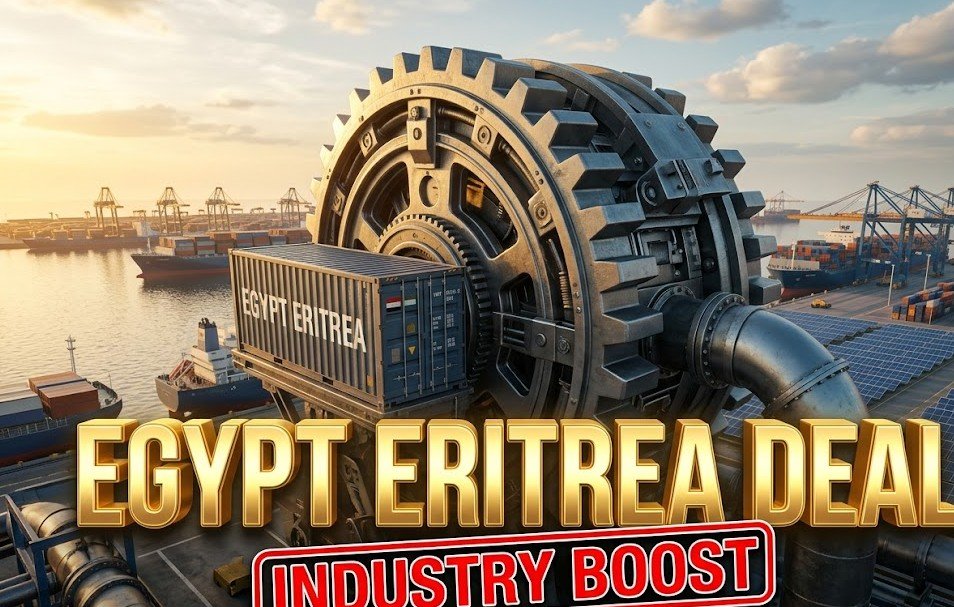
Plan for joint business council and private sector push
A major outcome of the talks is the proposal to establish a joint Egyptian Eritrean business council.
This body is expected to:
- Connect investors from both countries
- Speed up project approvals
- Improve communication between governments and businesses
The goal is to move from policy discussions to real on-ground projects faster.
Private sector involvement is being positioned as a central driver of this partnership. Governments are expected to provide policy support while businesses lead execution.
Such councils have proven effective in other bilateral relationships, helping reduce delays and build investor confidence.
Egypt offers technical support and industrial expertise
Egypt has signaled readiness to support Eritrea’s industrial development through multiple channels.
Key support areas include:
| Area | Support Offered |
|---|---|
| Manufacturing strategy | Planning and advisory services |
| Technical expertise | Deployment of Egyptian specialists |
| Feasibility studies | Project evaluation and design |
| Export development | Access to regional markets |
These efforts aim to help Eritrea build a strong manufacturing base from the ground up.
Egypt’s approach focuses on long-term capacity building rather than short-term gains. Officials say this will create sustainable industries that can compete regionally.
There is also a strong push to align projects with market demand to ensure profitability and long-term viability.
Skills training and institutional development in focus
Beyond infrastructure and investment, both countries are prioritizing human capital development.
Plans include:
- Setting up vocational training centers
- Expanding technical education programs
- Improving trade systems and regulations
- Strengthening quality and standards frameworks
This signals a broader vision that goes beyond factories to building a complete industrial ecosystem.
Eritrea is expected to benefit from Egypt’s experience in workforce development and industrial policy design.
At the same time, improved standards and trade systems could make Eritrean products more competitive in international markets.
A strategic partnership with regional impact
Eritrea has described Egypt as a key strategic partner and expressed strong interest in deepening ties.
The ongoing visit by Eritrea’s delegation is aimed at creating a clear, actionable roadmap for cooperation. Officials from both sides say the partnership could extend beyond bilateral trade and influence regional economic integration.
If successful, this collaboration could position both countries as stronger players in African industrial growth and cross-border trade.
The focus on shared growth, skills development, and private sector involvement reflects a shift toward modern economic partnerships in the region.
As both nations move from talks to implementation, the real test will be how quickly projects materialize and deliver results on the ground. Readers can share their views on this growing Africa partnership and what it means for regional development.