
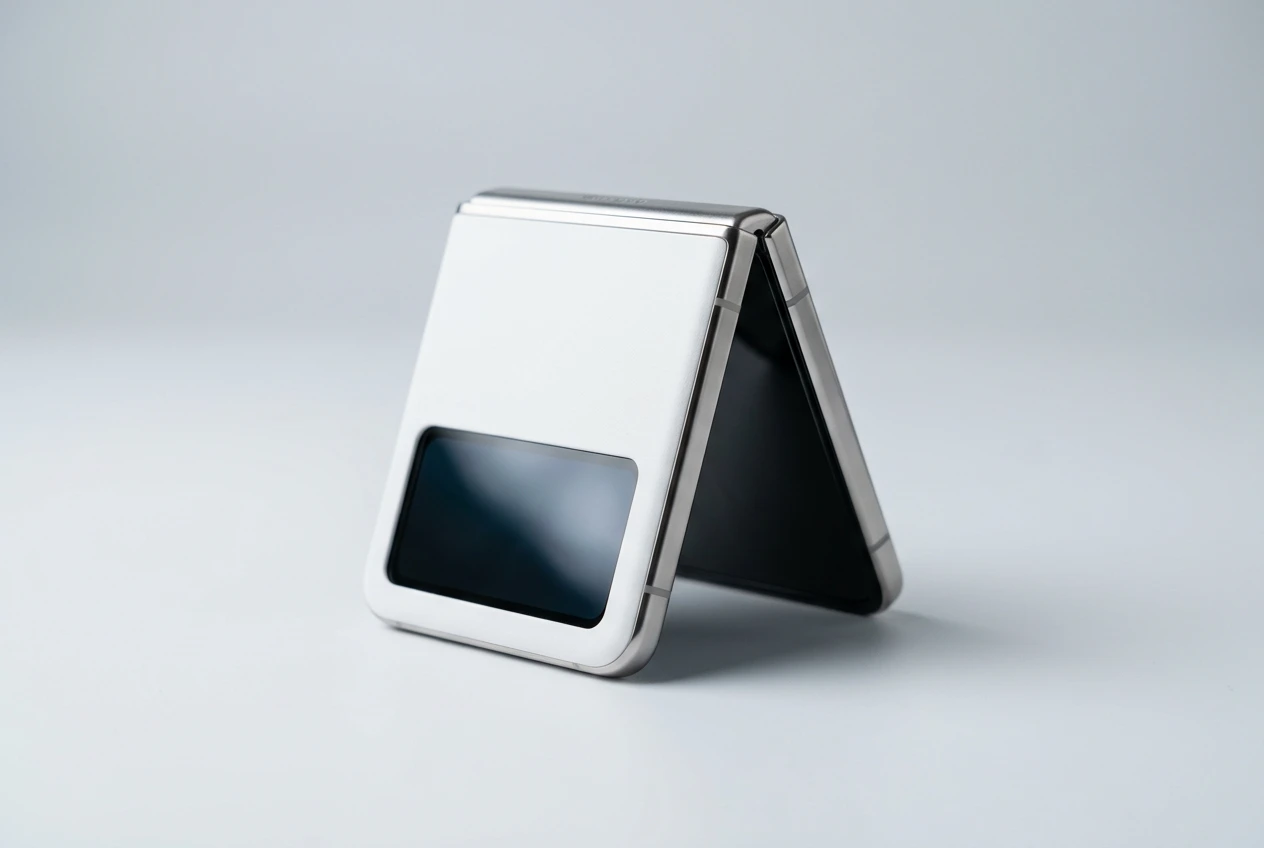
Apple’s foldable iPhone, the device rumored to ship as the iPhone Ultra or iPhone Fold, surfaced again on June 2 in a photo posted by serial leaker Ice Universe. The image shows a plain white slab with an oddly square footprint that opens like a book into a small tablet. Apple is expected to reveal the real thing at its September event, closing out years of speculation about whether the company would build a foldable at all.
The timing matters. Samsung is now in its seventh year selling book-style foldables, and Apple turns up last, at a price that could touch three times what a normal phone costs, leaning on a screen built inside a Samsung factory.
The Leak That Put a Square iPhone Online
The latest image came from Weibo, where Ice Universe posted it with the caption “iPhone Fold/iPhone Ultra” and nothing else. No measurements, no menu, no logo shot. Just a white device with a shape closer to a stubby book than the tall, narrow Galaxy folds people are used to.
One detail deserves a flag. The unit in the photo is almost certainly a dummy, a non-working model machined to mimic the dimensions Apple’s supply chain has locked in. MacRumors noted the device is believed to have entered early mass production while cautioning that the model shown is likely a mockup. That is normal at this stage. Casing dummies leak months ahead of any launch so accessory makers can tool up, and they tell you about size and shape, not about software or final color.
White is the headline here, and it reads as deliberate. If the dummy is accurate, Apple is skipping loud colors for its first fold, with Space Gray rumored as the second option. The same leak machine that surfaced Apple’s iPhone 16 design ahead of launch tends to run for months before a keynote, so expect more dummies, more colors, and more contradictions before September.
What the iPhone Fold Is Rumored to Pack
Strip away the photo and the hardware sheet is where the real argument sits. Reporting from analysts Ming-Chi Kuo, Bloomberg’s Mark Gurman, and Jeff Pu has converged on a fairly consistent spec list, even if Apple has confirmed none of it. The device folds horizontally, book-style, into a large interior screen, with a usable cover display on the outside.
| Component | Rumored spec |
|---|---|
| Inner display | 7.76-inch OLED (organic light-emitting diode), 120Hz |
| Outer cover display | 5.49-inch OLED |
| Chip | A20, built on TSMC’s (Taiwan Semiconductor Manufacturing Company) 2-nanometer process |
| Memory | 12GB RAM |
| Battery | 5,400 to 5,800 mAh, the largest in any iPhone |
| Crease depth | under 0.15mm |
| Authentication | Touch ID side button, no Face ID |
| Cameras | dual 48MP rear, 24MP under-display selfie |
| SIM | eSIM only |
The crease number is the one to watch. Foldables have always shown a visible dent where the screen bends, and Apple is reportedly chasing a fold so shallow it reads as flat, with a crease depth under 0.15mm and ultra-thin glass from supplier Lens Technology. Dropping Face ID for a side-mounted Touch ID button is the trade Apple made to keep the thing thin, the same call it makes on the iPad mini.
Apple Is Late to a Market Samsung Built
Apple is not opening a new category. It is walking into one that Samsung pried open in 2019 and has carried on its back ever since, with Huawei and a cluster of Chinese brands filling in behind.
Where the Market Stands Now
In the third quarter of 2025, Samsung held roughly 64% of foldable shipments, according to Counterpoint Research, with Huawei second near 15%. The category set a quarterly shipment record that quarter, lifted by Samsung’s Galaxy Z Fold7. Book-style designs, the kind Apple is copying, made up about 62% of the market. The rest of the field is busy too:
- Samsung drove the segment’s growth with a 32% year-on-year jump in foldable sales
- Huawei kept second place and added roughly 10% on the year
- Chinese makers like Oppo’s Find N3 with its 7.82-inch inner display have pushed book-style specs hard
- Total 2025 foldable shipments landed near 20.6 million units, up 10% on the year, per IDC
Why the Book Shape Is the Hard One
Apple skipped the easier flip-phone format and went straight for the book. That is the harder build: a bigger hinge, a larger flexible panel, and far more screen real estate where a crease shows. Samsung’s Galaxy Z Fold line and its 7.6-inch main screen set the template years ago, and the whole industry has spent that time learning how to hide the fold. Omdia, in its read on a pivotal 2026 for foldable hardware, has flagged Apple’s arrival as the moment the segment stops being a niche. The moat Samsung built is real. Apple is betting its hinge and its crease are good enough to walk straight through it.
A Starting Price Near Triple a Normal Phone
Here is the catch that the white dummy hides. This will be the most expensive iPhone Apple has ever sold, by a wide margin. Estimates differ on the exact figure, but they all start around the cost of two flagship phones stacked together.
| Source | Estimated starting price |
|---|---|
| Ming-Chi Kuo, supply-chain analyst | $2,000 to $2,500 |
| Mark Gurman, Bloomberg | $2,000 to $2,500 |
| UBS analysts | $1,800 to $2,000 |
| Fubon Research | around $2,400 |
Component-cost reporting points to a 256GB model near $2,320, a 512GB version around $2,610, and a terabyte build pushing toward $2,900. IDC pegs the segment’s average selling price near $2,400, roughly triple what a typical smartphone costs. Apple has never priced a phone there. The question for buyers is whether a flatter crease and an Apple logo justify the gap over a Galaxy fold that already does most of this.
Samsung’s Display Factory Builds the Screen
The part most coverage skips: even if Apple takes share from Samsung’s phone division, Samsung’s component business cashes in. The custom OLED panel inside the foldable iPhone, with integrated touch sensors, is reportedly built by Samsung Display, the same arm that supplies screens for regular iPhones.
So the company Apple is challenging on the shelf is also the company shipping the single most expensive part in the box. Samsung Display has spent years tuning flexible OLED yields for its own folds, and Apple’s volume, however modest at first, drops straight onto that line. Lens Technology supplies the ultra-thin protective glass, and the hinge reportedly uses a liquid-metal build mixing titanium and stainless steel. Apple designs the device and owns the customer. A chunk of the margin on every unit still flows back through its rival’s supply chain.
What Apple’s Entry Does to the Forecast
Analysts have already rewritten their numbers around a phone nobody has held. The shift is large. IDC, the International Data Corporation, lifted its 2026 foldable growth forecast to 30% year over year, up from a prior estimate of just 6%, crediting Apple’s entry and Samsung’s coming tri-fold. Here is the cluster of figures that defines the bet:
- 22% of global foldable unit share is what IDC projects Apple takes in its debut year, plus 34% of segment revenue
- 3 to 5 million units is Ming-Chi Kuo’s first-year shipment range, with second-generation volume potentially hitting 20 million by 2027
- Counterpoint is more cautious, forecasting roughly 20% market growth in 2026 as Apple’s entry sharpens competition
- The segment is forecast to grow at a 17% compound annual rate through 2029, against under 1% for ordinary smartphones
Read the spread between those numbers and you see the real disagreement. Kuo’s 3-to-5-million range, set against IDC’s 2026 foldable market forecast, says even a cautious Apple launch reshapes a 20-million-unit category. The bull case, helped by Counterpoint’s 2026 growth outlook, is that a foldable iPhone finally makes the format mainstream. The bear case is simpler: a $2,000 phone sells in the low millions, and the crease that looked solved in a lab shows up after six months in a pocket.
Frequently Asked Questions
When will Apple’s foldable iPhone be released?
Apple is expected to reveal it at its September 2026 event, with reporting pointing to an unveiling on September 8 or 9, alongside the iPhone 18 lineup. Supply-chain reports pushed mass production from June toward August, but the fall launch window has held so far.
How much will the foldable iPhone cost?
Estimates cluster between $1,800 and $2,900 depending on storage. Most analysts, including Ming-Chi Kuo and Bloomberg’s Mark Gurman, expect a starting price around $2,000 to $2,500, with component-cost reporting suggesting roughly $2,320 for the base 256GB model. That is close to triple the price of a standard smartphone.
Is it called the iPhone Fold or the iPhone Ultra?
Neither name is confirmed. Leakers and analysts have used both, and Ice Universe’s June post hedged with “iPhone Fold/iPhone Ultra.” Apple will settle the branding only at the official reveal.
Will the foldable iPhone have a visible crease?
Apple is reportedly targeting a near-invisible crease, with a fold depth under 0.15mm and a bend angle under 2.5 degrees, using ultra-thin glass from Lens Technology. Whether it stays that flat over years of daily folding is the open question, since every existing foldable develops a crease over time.
Does the foldable iPhone have Face ID?
No, according to current rumors. To keep the folded device thin, Apple is expected to drop Face ID and use a Touch ID fingerprint sensor built into the side power button, the same approach it uses on the iPad mini and iPad Air.
Who makes the foldable iPhone’s display?
Samsung Display is reported to supply the custom foldable OLED panel, the same supplier behind screens in standard iPhones. That means Samsung’s component business profits from the device even as Samsung’s phone division competes with it directly.
Apple has set its reveal for September. Until the keynote, every white slab posted to Weibo is a dummy and a guess.
