
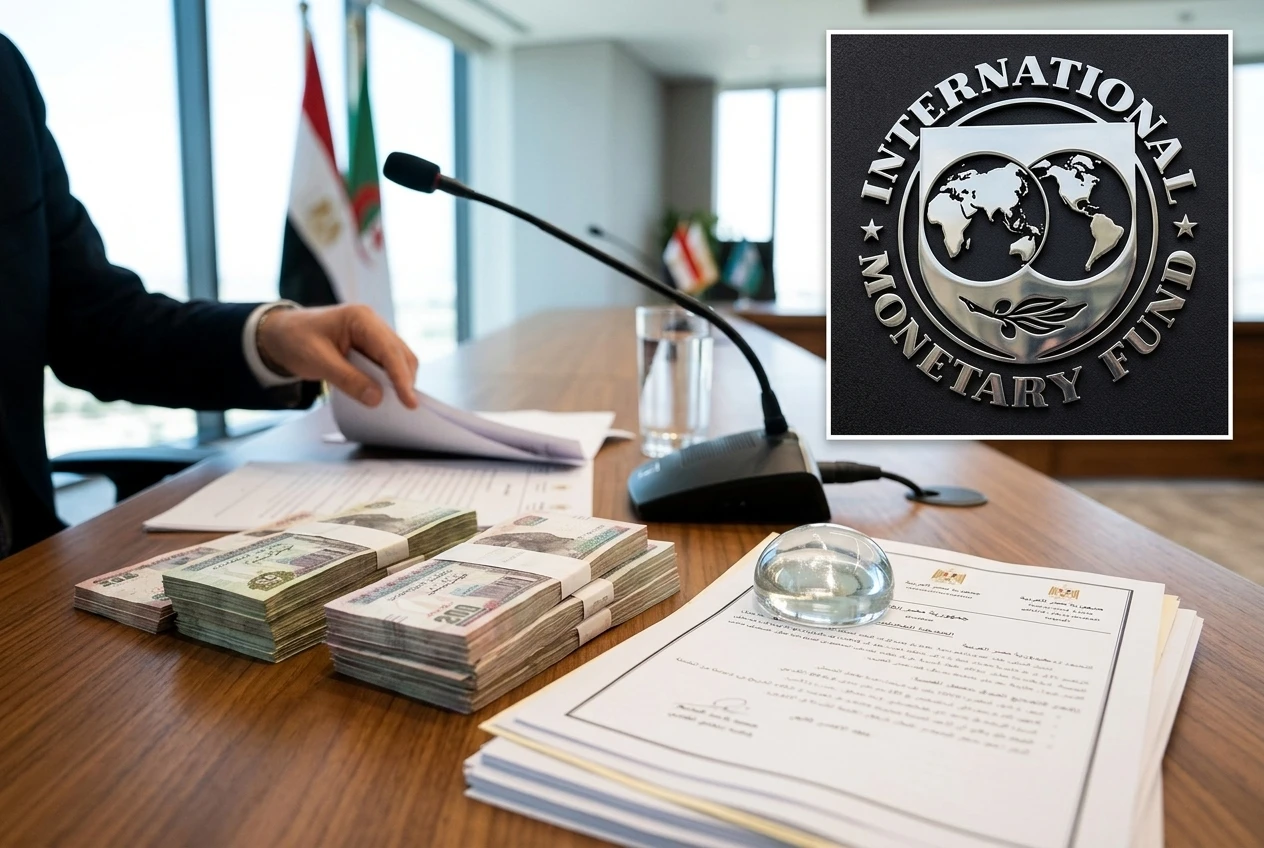
Egypt expects more than $1.7 billion from the IMF next week after the Fund’s Executive Board cleared the latest review of its reform program on Thursday. Prime Minister Mostafa Madbouly confirmed the figure at a Cabinet press conference in New Alamein City and said the European Union installment had already landed at the Central Bank.
The Board completed the seventh review under the EFF and second under the RSF, unlocking roughly $1.77 billion. That cash arrives as the Extended Fund Facility itself nears its December 2026 close.
The Board Clears Nearly $1.8 Billion
IMF figures put the fresh access at SDR 1.11 billion (about $1.5 billion) under the Extended Fund Facility plus SDR 200 million (about $272 million) under the Resilience and Sustainability Facility. Combined, the packages have now disbursed around $7.3 billion to Egypt.
- $1.5 billion EFF portion available immediately
- $272 million RSF climate-resilience portion
- ~$1.77-1.8 billion total new draw
- Mid-December 2026 scheduled EFF conclusion
Madbouly told reporters the disbursement “exceeds $1.7 billion, and we expect to receive it next week.” The EU’s €1.5 billion ($1.7 billion) second installment under its €4 billion macro-financial assistance package was credited last Friday. That brings EU MFA support since the partnership launch to €3.5 billion, with one final €1.5 billion tranche still pending conditions.
The premier framed both inflows as proof the state is “moving successfully along its reform path.” Official accounts echoed the welcome within hours.
Why the Money Arrives in Late July
Staff-level agreement on the reviews came in late June. The Board met on the scheduled Thursday slot after the authorities requested waivers and modifications on certain performance criteria. Egypt entered the period of regional conflict from a stronger macro base than in earlier shocks, the Fund noted, thanks to exchange-rate flexibility, energy-price adjustments and fiscal restraint.
Real GDP growth hit 5 percent in the third quarter of FY2025/26 and 5.2 percent over the first nine months. Full-year growth is projected near 4.6 percent. Headline inflation eased to 14.3 percent in June after a March spike to 15.2 percent. The current-account deficit is estimated at 4.5 percent of GDP, cushioned by record remittances, tourism and a gradual Suez Canal recovery. Gross reserves stood at 119 percent of the IMF adequacy metric at end-June.
Primary surplus and tax-revenue targets were exceeded by end-March. The tax-to-GDP ratio is on track to rise 1.2 percentage points this fiscal year. These numbers cleared the path for the draw even as structural markers lagged.
What the Fund Still Wants Accelerated
Implementation of structural reforms has been uneven. The Board welcomed the State Ownership Policy and recent customs and tax-administration steps. It also noted the Gabal El-Zeit transaction and stake sales in listed state firms that raised about $520 million. Yet the broader divestment program advanced more slowly than expected.
Key calls from the review include:
- Decisive rollout of the State Ownership Policy to shrink the state’s economic footprint
- Faster, more transparent asset sales that free space for private investment
- Continued tight monetary policy and exchange-rate flexibility
- Further fiscal consolidation and tax-base expansion
- Stronger risk management at state-owned banks
Deputy Managing Director and Acting Chair Nigel Clarke put the priority plainly after the vote.
Continued fiscal discipline and accelerating structural reforms, notably decisive implementation of the State Ownership Policy and divestment agenda, will be essential to preserve macroeconomic stability and strengthen resilience.
Clarke’s statement also stressed rebuilding reserves and creating room for private-sector investment. An earlier staff-level deal that tied funds to faster selloffs already flagged the same bottleneck. Progress on the second edition of the State Ownership Policy document covering 2026-2030 will be watched closely.
Who Feels the Inflows First
The Central Bank of Egypt gains immediate foreign-currency support. That cushions the pound, which has traded near EGP 50-51 per dollar in recent sessions, and helps meet external financing needs estimated in the billions for the current and next fiscal years. Record Gulf remittances that narrowed the BoP gap already provided one buffer; official inflows add another.
Households still face elevated inflation and the lagged effects of earlier currency moves and energy adjustments. Businesses that compete with state firms stand to gain if divestments finally open markets. Exporters and tourism operators benefit from any stability signal that keeps the currency flexible rather than rigidly defended. Public debt and rollover needs remain high, so the cash reduces near-term pressure without eliminating it.
Regional risks sit in the background. Renewed tensions could hit Suez traffic, energy prices and investor confidence again. Improved stability or faster reform delivery would work in the opposite direction.
From a $3 Billion Start to the Final Stretch
The original 46-month EFF approved in December 2022 was worth about $3 billion. It was later expanded and extended, with an RSF overlay for climate and resilience work. Combined fifth and sixth reviews in February 2026 released roughly $2.3 billion and rephased the remaining access. The seventh review now delivers the next large slice; an eighth and final review is due before mid-December.
| Milestone | Approximate Access | Notes |
|---|---|---|
| Dec 2022 Board approval | $3 billion EFF | Original 46-month arrangement |
| Later expansion + RSF | Toward $8 billion total envelope | Access raised and facilities added |
| Feb 2026 5th/6th reviews | ~$2.3 billion | Rephasing and extension to Dec 2026 |
| Jul 2026 7th EFF + 2nd RSF | ~$1.77-1.8 billion | Immediate draw unlocked |
| Final review target | Remaining access | Program close mid-December 2026 |
Total purchases under the two facilities now stand near $7.3 billion. Firm financing from partners, including GCC deposits that stay until program end except for equity purchases, underpins the remaining gap. Market issuance and further divestment proceeds are still required.
December Deadline and the Selloff Clock
The EFF is scheduled to conclude by mid-December. That leaves one more full review cycle. Authorities have already secured the latest cash and the EU installment. The harder remaining work is converting the State Ownership Policy from document into completed transactions at scale.
Earlier phases of the divestment drive fell short of headline targets amid market volatility and FX pressures. Recent smaller sales show movement is possible. Investors will treat the pace of airport, banking, telecom and tourism offerings under the new 2026-2030 SOP edition as the live test. Prior reporting on the seventh-review tranche path already mapped the same conditionality.
Growth is projected to moderate to about 4.4 percent in FY2026/27 as regional effects linger. Inflation may tick up again later this year before easing toward the central bank target. The current account should narrow if oil prices soften and services stay firm. Those baselines assume the policy mix holds.
Madbouly’s confidence message and the Board’s approval give the government breathing room and a political win. The Fund’s language on the state’s footprint makes the next five months the period that decides whether the program ends with durable private-sector space or another unfinished agenda. For the numbers that matter after the money lands, see Egypt’s ongoing IMF program page.
Frequently Asked Questions
What is the total size of Egypt’s current IMF Extended Fund Facility?
The original December 2022 EFF was about $3 billion for 46 months. It was later expanded and extended through mid-December 2026, bringing the overall EFF-plus-RSF envelope toward $8 billion; cumulative purchases under both facilities now stand near $7.3 billion after the latest draw.
How does the Resilience and Sustainability Facility differ from the EFF?
The EFF focuses on balance-of-payments support and broad macroeconomic and structural reforms. The RSF provides longer-term, cheaper financing specifically for climate resilience and sustainable growth measures, such as energy and water reforms; the latest review released about $272 million under the RSF.
What does Egypt’s State Ownership Policy require?
The policy sets criteria for retaining, restructuring or divesting state assets, aims to raise the private sector’s economic share, and lists priority sectors for offerings. A second-phase document covering 2026-2030 expands the framework to airports, banking, telecoms and tourism while emphasizing transparency and fiscal impact.
When does the current IMF program with Egypt end?
The EFF arrangement is scheduled to conclude by mid-December 2026 after a final eighth review. The parallel RSF timeline has been aligned with that end date through rephasing.
