
Attorney Michael Decker released a new legal guide on July 27 for foreigners buying property in Israel, and its fine print exposes a market split by religion and immigration law. Roughly 93% of the country’s land belongs to the state and is leased, not sold. Who gets to lease it, and on what terms, depends on a 1950 law most buyers have never read.
Decker’s guide walks foreign buyers through due diligence, tax deadlines and the Hebrew paperwork at Israel’s land registry. It says far less about why two buyers with identical budgets can end up with very different deals depending on ancestry alone.
Two Markets Hiding Under One Guide
Michael Decker, a founding partner at Decker, Pex, Levi and a member of the Israeli Bar Association since 2008, built his firm’s reputation guiding foreign clients through Israeli property deals. His new guide targets the mechanics: due diligence, contracts, tax filings, registration.
But the guide’s own details point to something bigger. Foreign buyers who qualify for Aliyah under the Law of Return, Israel’s 1950 statute granting Jews and their immediate families the right to immigrate, can reach land that other foreigners legally cannot touch. Everyone else is boxed into a shrinking private-property market, paying steeper taxes and borrowing less.
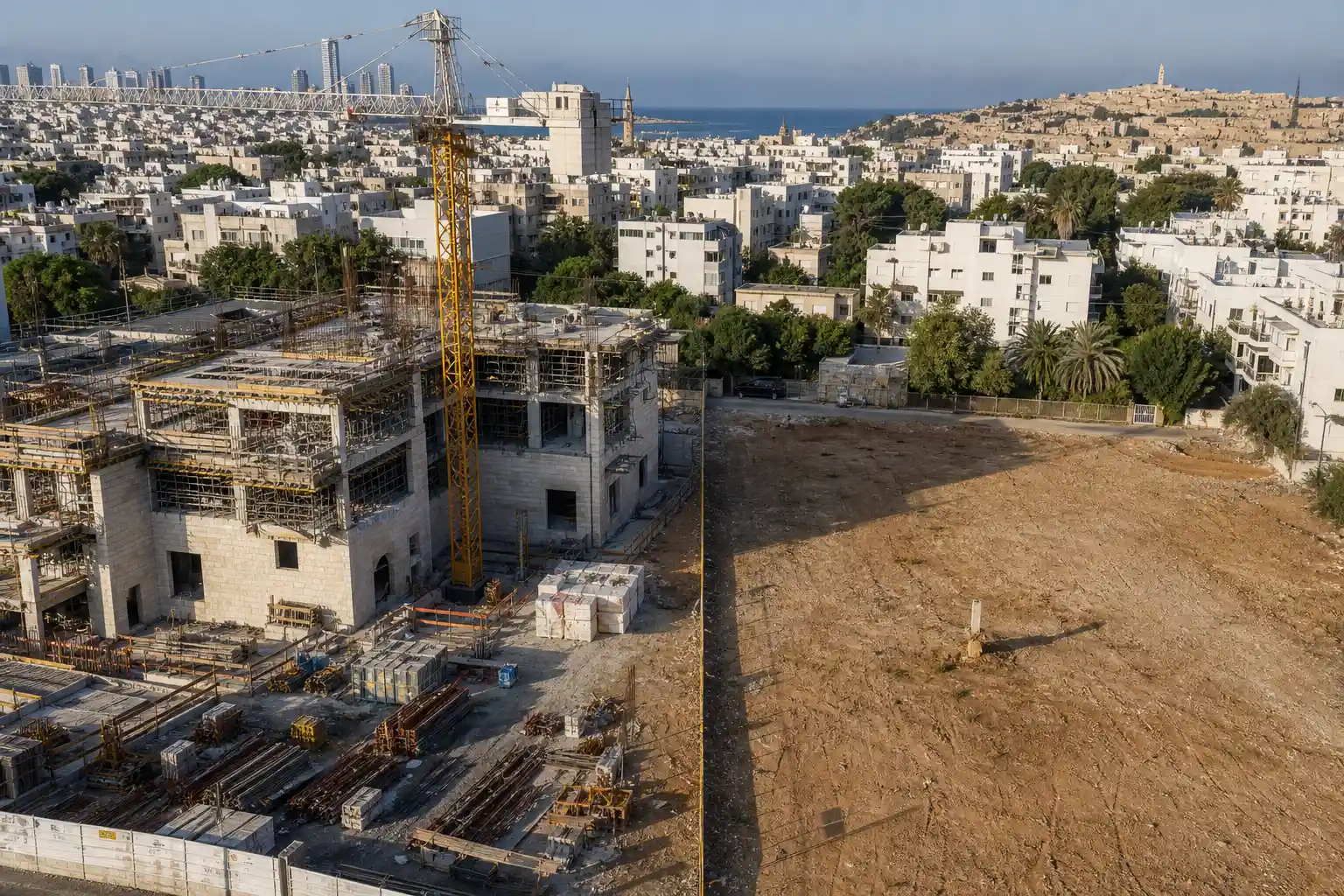
Who Owns the Land Being Sold
The Israel Land Authority, a government body, controls about 93% of the country’s territory. It leases that land on long-term contracts rather than selling it outright, typically 49 to 98 years, renewable. Day to day, a leaseholder can sell, renovate or pass the property to heirs much like an owner would. Legally, though, the Authority remains the landlord, and resale or renovation on its land can require its sign-off first.
Foreign nationals without Aliyah eligibility are generally restricted to the remaining private land, roughly 7% of the country. Every deal, regardless of buyer, ends at the same office once signed.
- Tabu – the Hebrew name for Israel’s Land Registry, the office that records ownership, clear title and any mortgages or liens against a property, almost entirely in Hebrew paperwork foreign buyers rarely read unassisted.
Attorneys exist for exactly that gap. Nearly every filing at the registry is in Hebrew, and a mistranslated clause can bury a lien or a leasehold restriction a buyer never sees coming.
The Law of Return’s Back Door Into State Land
Here is where the guide’s mechanics turn into a genuine fork in the road. A foreign national who qualifies for Aliyah, by Jewish ancestry, conversion or marriage, can buy Israel Land Authority property that an otherwise identical foreign buyer cannot. That eligibility alone opens the door, even before anyone actually relocates.
A separate benefit kicks in only after a buyer completes that move. Israel’s Tax Authority lets new immigrants, officially termed olim, apply for a partial purchase tax exemption unavailable to non-resident foreigners, Aliyah-eligible or not, who haven’t made that move.
| Buyer Type | Access to State-Leased Land | Purchase Tax Treatment | Mortgage Ceiling |
|---|---|---|---|
| Israeli resident, primary home | Full access, state and private | Progressive brackets starting at 0% | Standard resident lending, no foreign-buyer cap |
| Foreign buyer, Aliyah-eligible, not yet relocated | Full access once eligibility is verified | Non-resident investor rate until Aliyah is completed | Non-resident cap applies |
| Foreign buyer, not Aliyah-eligible | Private land only, about 7% of the country | Non-resident investor rate from the first shekel | Non-resident cap applies |
Land eligibility and tax relief run on separate clocks. One depends on ancestry. The other depends on actually moving.
Why Is Aliyah Climbing as Israel’s Population Growth Slows?
Aliyah from Western democracies is rising even as total immigration to Israel fell. New arrivals from the United States, France and the UK all grew in 2025, driven largely by reported antisemitism at home, while a steep drop in Russian emigration pulled the overall headcount down.
Israel took in 21,900 new immigrants from 105 countries in 2025, roughly a third below the prior year, almost entirely because Russian arrivals collapsed. Strip Russia out and the picture flips: non-Russian immigration rose 23.6%, to about 13,600 people. The United States sent 4,150 olim, up 12%. France sent an estimated 3,300, a 45% jump. The UK sent 840, its second straight year of growth. Roughly 30,000 Jews worldwide opened immigration files with the Jewish Agency for Israel in 2025, a pipeline for arrivals still to come.
The same anxiety is showing up in public fights over where criticism of Israel ends and antisemitism begins, aired when an Australian official called some of that criticism absolutely antisemitic. That argument, playing out across Western capitals, tracks the same unease pushing Jewish families toward property searches in Tel Aviv and Jerusalem.
Israel is leaning into the trend. The Jewish Agency’s own 2025 accounting shows the organization actively steering new olim toward communities hit hardest by the war, part of a recovery push. Separately, the government approved a five-year plan in November 2025 to bring 6,000 members of India’s Bnei Menashe Jewish community to Israel, with arrivals starting this year.
The Ordinary Foreign Buyer’s Bill Comes Due
Foreign buyers without Aliyah eligibility face two blunt instruments: tax and credit. Non-residents pay 8% to 10% purchase tax starting from the first shekel of a property’s value, the higher rate kicking in above roughly 6.06 million shekels (about 1.68 million dollars). Israeli residents buying a primary home get a 0% starting bracket. Non-residents get none of it, taxed as investors regardless of intent.
Credit is tighter too. Regulators cut the loan-to-value ceiling for non-resident mortgages to 50% this year, down from 60%. Combined with the flat investor tax rate, ordinary foreign buyer activity has eased slightly through 2026, even as demand from American and European buyers seeking a foothold or a family connection stays strong.
Skipping legal representation and signing untranslated documents can lead to overlooking critical leasehold terms that put a buyer’s entire investment at risk.
Michael Decker wrote that warning into the guide released this week. His firm’s broader complaint tracks it: foreign buyers routinely overpay by misreading local tax brackets, or miss hidden debts and liens sitting quietly on a property’s registry file.
Decker’s Four-Step Path to a Registered Deed
Once a foreign buyer picks a property, the guide lays out a fixed sequence with real deadlines attached.
- A licensed attorney verifies the seller’s ownership rights and reviews the property’s lease terms with the Israel Land Authority, where applicable.
- Legal counsel drafts and both sides approve a formal purchase agreement, fixing price and payment schedule.
- Within 60 days of signing, the buyer must register the transaction and pay the Purchase Tax.
- The attorney completes a formal ownership transfer at the Tabu registry, a step that usually runs one to three months.
There is an earlier, stricter deadline the guide does not dwell on. Israeli tax law separately requires a sale declaration filed within 30 days of signing, ahead of the 60-day window for full registration and tax payment. A buyer can run the actual numbers through the Tax Authority’s official purchase tax calculator before either deadline arrives.
The Guide Fixes Procedure, Not the Split
Decker’s guide will likely save some foreign buyers from the two most common errors his firm sees: overpaying tax through a misread bracket, and missing a lien buried in untranslated paperwork. Neither error is small. Both are fixable with a licensed attorney and a competent translation.
What the guide cannot fix is the underlying architecture. A buyer’s ancestry, not their bank balance, still decides whether 93% of Israel’s land is even on the table. The non-resident investor tax brackets Decker’s guide cites stay in effect through at least December 31, 2026, the same year the first arrivals of the 6,000-person Bnei Menashe resettlement plan are due to land.
Frequently Asked Questions
Does buying property in Israel come with a path to citizenship or residency?
No. Israel has no investment-linked residency or citizenship route tied to a property purchase. Citizenship runs through the Law of Return, based on Jewish ancestry, conversion or marriage, entirely separate from how much a buyer spends on real estate.
What is the Law of Return, and does eligibility mean someone already has citizenship?
The Law of Return, passed in 1950, gives Jews and their children, grandchildren and spouses the right to immigrate to Israel and receive citizenship. Eligibility alone, provable through documented ancestry, is enough to unlock the right to buy Israel Land Authority property, even for someone who has never lived in the country and never formally completed Aliyah.
Can an Israel Land Authority lease ever convert into something closer to outright ownership?
In some cases, yes. Certain long-term ILA leases can be capitalized, meaning the leaseholder pays a one-time fee to the Authority that reduces future obligations and moves the arrangement closer to full ownership. A property’s capitalization status is one of the specific items an attorney is expected to check before closing.
What happens if a foreign buyer misses the 60-day tax registration deadline?
The sale itself does not collapse, but the buyer becomes exposed to interest and penalty charges under Israeli tax law until the registration and payment are finally completed, on top of whatever rate bracket already applies.
Can a foreign buyer who qualifies for Aliyah get Israeli resident mortgage terms right away?
No. Land-purchase eligibility under the Law of Return and resident lending status are separate tracks. A foreign buyer who has not yet completed Aliyah still falls under the non-resident 50% loan-to-value cap, regardless of ancestry-based eligibility to buy state-leased land.
Disclaimer: This article is for general information only, not legal or tax advice; Israeli real estate, immigration and tax rules change and carry financial risk, so prospective buyers should consult a licensed Israeli attorney before acting, and figures here are accurate as of publication.
