
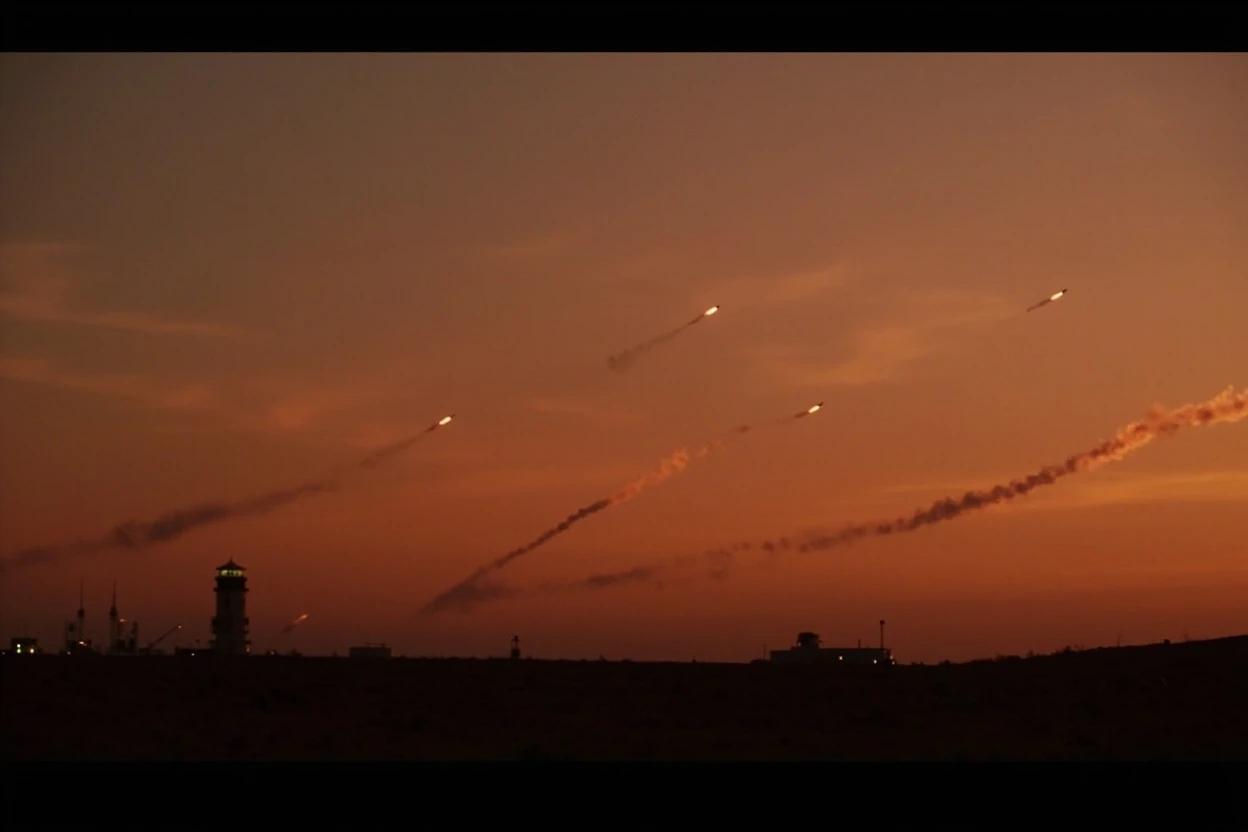
Yemen’s Houthi movement fired ballistic missiles at Saudi Arabia’s Abha International Airport on Monday, July 13, 2026, breaking the informal truce that has held between the kingdom and the Iran-aligned group since March 2022. Saudi air defenses intercepted the missiles, the Saudi-led coalition said, but the strikes end more than four years of relative quiet on the kingdom’s southern border and raise the prospect of renewed attacks on the Red Sea shipping lanes that carry a large share of Saudi Arabia’s oil exports.
The attack came hours after Yemen’s internationally recognized government, backed by Saudi Arabia, struck the runway of Sanaa International Airport to prevent an Iranian aircraft from landing. Houthi military spokesman Yahya Saree described the Abha strike as retaliation for what he called “blatant aggression” and warned airlines against flying into Saudi airspace until what the Houthis called a “blockade” on Sanaa airport was lifted. The Saudi-led coalition’s spokesman, Turki al-Malki, confirmed the interceptions on X.
A Funeral Flight from Tehran Sparked the Strike
The chain of events began with a dispute over a single plane. Earlier in July, the Houthis accused Saudi warplanes of trying to block an Iranian flight carrying sick Yemenis from landing at Sanaa, a standoff detailed in the earlier Houthi threat against Saudi airports. Khaleej Times reported the aircraft was linked to a Houthi delegation that had traveled to Tehran for the funeral of Iran’s late supreme leader, Ali Khamenei, and had refused to board a flight on Yemen’s domestic carrier Yemenia.
On Monday, Yemen’s Defense Ministry said it ordered the runway at Abha International Airport‘s counterpart in Sanaa struck to prevent a second Iranian plane from landing in what it called a violation of Yemeni sovereignty. An armed forces spokesman later said the aircraft had landed at the Houthi-controlled Hodeidah airport, about 150km southwest of Sanaa on Yemen’s Red Sea coast. Yemeni Defense Minister Taher al-Aqili said “our patience has run out” and warned that government forces would respond to any hostile aircraft in Yemeni airspace “by all available means.”
The Houthis responded within hours, and the underlying tensions stretch back weeks. The Houthis had threatened earlier in July to hit Saudi airports and vital assets should Riyadh violate its airspace or attempt to attack it, and Saree declared on Monday that the Sanaa airstrike had ended the de-escalation and ceasefire agreement with the Yemeni government. The Abha strike is the first claimed Houthi attack on Saudi territory since the informal March 2022 truce took effect.
The day also brought a standoff over an International Committee of the Red Cross aircraft. Yemen’s internationally recognized government accused the Houthis of preventing an ICRC plane from leaving Sanaa airport and holding the pilot and co-pilot “hostage.” ICRC spokesman for the Middle East Hachem Osseiran told AFP that “all ICRC staff and the crew of the plane are safe and accounted for.” An ICRC-mediated prisoner exchange between the two sides had already fallen through in recent days, with each side blaming the other in a sign of growing tension.
The Bab el-Mandeb Stakes for Saudi Oil
The diplomatic rupture matters because of what lies about 20 miles west of Abha airport: the Bab el-Mandeb strait, the only point of entry to the Red Sea from the Indian Ocean. A report on the missile exchange and shipping risk notes that $1 trillion worth of goods pass through the Red Sea each year. Saudi Arabia exports around four to five million barrels per day through a pipeline network connecting its eastern oil fields to Red Sea ports, according to CFR expert Edward Fishman, making access to the strait critical to the kingdom’s oil revenues.
| Maritime Route | Approximate Daily Oil Flow |
|---|---|
| Strait of Hormuz | about 21 million bpd |
| Suez Canal and Suez-Mediterranean Pipeline (H1 2025) | about 4.9 million bpd |
| Bab el-Mandeb Strait (H1 2025) | about 4.2 million bpd |
| Saudi East-West Pipeline to Red Sea | four to five million bpd |
The same analysis of the Bab el-Mandeb chokepoint documents how vulnerable that traffic can be. Red Sea oil shipments fell by more than half, from 9.3 million barrels per day in 2023 to 4.1 million bpd in 2024, after the Houthis began targeting commercial vessels in response to the Israel-Hamas war. On June 8, 2026, the Houthis announced a complete ban on Israeli ships transiting the Red Sea, calling them “legitimate military targets.”
The Yemeni Armed Forces carried out a military operation targeting Abha International Airport, using a number of ballistic missiles and unmanned aerial vehicles.
Yahya Saree, Houthi military spokesman, in a video statement.
On Monday, the United Kingdom Maritime Trade Operations warned of suspicious activity off the coast of Yemen after at least six small boats approached a tanker in the Gulf of Aden, forcing the ship to fire warning shots. CFR’s Fishman has said “the Houthis, who are Iranian allies, could theoretically shut off the Bab el-Mandeb and basically make it so that Saudi Arabia doesn’t have any way to export oil.” A video statement from Houthi military spokesman Yahya Saree confirmed the Abha operation but did not address shipping threats directly.
Could the Strike Reopen Red Sea Attacks?
The missile exchange lands on a Saudi-led coalition that had been splintering for months. The Houthis and Yemen’s internationally recognized government have been at war since 2014, in a conflict that has killed hundreds of thousands of people and triggered one of the world’s worst humanitarian crises. Saudi Arabia intervened in 2015, accusing Iran of arming the rebels, a charge Tehran denies. The 2022 truce had largely held despite regional escalation tied to the Israel-Gaza war and the Iran conflict, but it never formally extended beyond the ceasefire’s informal understanding.
Violence flared again late in 2025 after a separatist movement backed by the United Arab Emirates swept through territory in the south, breaking apart the coalition originally built to fight the Houthis. The split left Saudi Arabia and the UAE nominally on the same side in Yemen, but operating through different proxy forces on the ground. A coalition account of the missile interceptions confirmed the strikes were aimed at Saudi Arabia’s southern region, where the kingdom’s airports sit close to the Yemeni border.
Iran’s response to the Sanaa strike shows the awkward diplomatic geometry of the moment. Tehran’s foreign ministry spokesperson condemned the attack on Sanaa airport as “a clear violation of international law,” according to Khaleej Times, even as the Houthis fired at a Saudi civilian airport and warned international airlines to stay out of Saudi airspace. The head of Yemen’s Presidential Leadership Council, Rashad al-Alimi, tried to limit the spread of the confrontation, saying he had “ordered that the scope of the confrontation not be expanded.” Saudi Arabia has not publicly addressed the Houthi accusation that it carried out the Sanaa airstrikes.
The Houthis have warned they remain ready to target Red Sea shipping in solidarity with Tehran, and the Gulf of Aden incident on Monday hints at how quickly that threat could resurface. The Security Council’s July 2026 monthly forecast notes that continued Houthi threats to resume targeting Israeli-linked shipping, paired with IRGC activity in the area, keep the Bab el-Mandeb on a short fuse. Whether the Abha strike draws a Saudi military response, or a wider Houthi turn against shipping, will depend on decisions made in Riyadh and Sanaa in the days ahead.
Frequently Asked Questions
What happened at Abha Airport on July 13, 2026?
Houthi forces fired multiple ballistic missiles and drones at Abha International Airport in southern Saudi Arabia on Monday, July 13, Saudi air defenses said. The Houthi military spokesman said the operation used ballistic missiles and unmanned aerial vehicles, marking the first claimed Houthi strike on Saudi soil since a 2022 informal truce.
Why did the Houthis attack Saudi Arabia?
The Houthis said the Abha strike was retaliation for airstrikes they blamed on Saudi Arabia that hit Sanaa International Airport earlier the same day. Yemen’s internationally recognized government, backed by Saudi Arabia, said it had struck Sanaa’s runway to prevent an Iranian aircraft from landing, an account the Houthis rejected.
Is the 2022 Saudi-Houthi truce over?
Houthi spokesman Yahya Saree declared on Monday that the attack on Sanaa airport ended the de-escalation and ceasefire agreement. The truce had been holding despite expiring, and Monday’s exchange of strikes threatens to unravel it.
Could the Houthis attack Red Sea shipping?
On June 8, 2026, the Houthis announced a complete ban on Israeli ships transiting the Red Sea, calling them legitimate military targets. On Monday, the United Kingdom Maritime Trade Operations reported suspicious activity in the Gulf of Aden involving six small boats approaching a tanker. CFR analyst Edward Fishman has said the Houthis could theoretically shut off the Bab el-Mandeb strait.
How much oil passes through the Bab el-Mandeb Strait?
About 4.2 million barrels per day crossed through the Bab el-Mandeb in the first half of 2025, according to the U.S. Energy Information Administration. Saudi Arabia exports another four to five million bpd through its East-West pipeline to Red Sea ports, which depend on access through the same strait.
