
Advanced Israeli-made missile defense systems and combat avionics have reached Qatar and Saudi Arabia, two countries that maintain no diplomatic relations with Israel, a Haaretz investigation published on Sunday concluded from photographs and defense contract documents.
The deals ran through Boeing prime contracts for F-15 warplanes and put Elbit’s C-MUSIC infrared countermeasures on three Qatari royal aircraft. They also delivered Israeli-made JHMCS pilot helmets and AN/AVS-9 night-vision glasses to both Gulf monarchies. The sales sit against years of political friction inside Israel over Doha’s ties to Hamas, and the broker who marketed much of the Qatari equipment is the same officer now suspended from the country’s hostage-negotiation team over the Qatargate affair.
What the Haaretz Documents and Photos Show
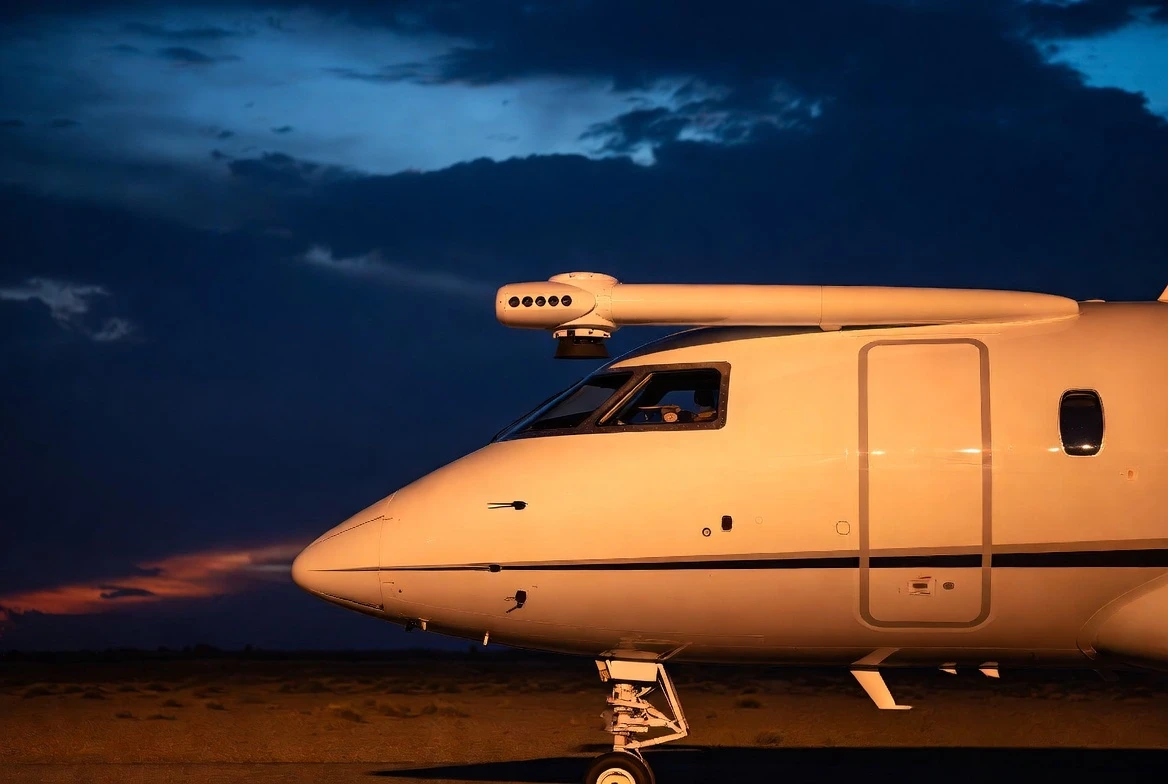
The Haaretz report, dated June 28, identified C-MUSIC systems on three of 11 aircraft operated by Qatar’s royal family. Those units were installed between 2020 and 2022 while the planes sat in Basel for maintenance, per the report’s analysis of publicly available photographs. The Times of Israel reproduction of the Haaretz investigation is the public record of the findings.
Elbit Systems is the Israeli supplier named on the C-MUSIC equipment. The system uses a sophisticated radar to track incoming shoulder-fired, surface-to-air missiles, then deflects them with a very powerful laser beam, the report adds. C-MUSIC can be installed in various parts of an aircraft and requires no special training to operate. The same equipment is in service on the Israeli prime minister’s Wings of Zion aircraft and on the French presidential plane, among others.
Beyond the C-MUSIC units, the body of evidence places 160 JHMCS helmets on Qatar’s F-15QA Ababil jets, plus AN/AVS-9 night-vision glasses. The JHMCS helmet shows flight data on the visor and lets a pilot zone in on a target and fire. Saudi Arabia received the same helmet and glass models under Boeing’s separate F-15SA contract.
The C-MUSIC System and a Flight to Tehran
The Qatar finding lands hardest in one image. When Emir Sheikh Tamim bin Hamad Al Thani flew to Tehran in 2024, his plane was carrying Elbit’s C-MUSIC, the report noted. Iran is what the same source describes as “Israel’s archnemesis.”
An Israeli-manufactured counter-missile system, fitted to a Gulf royal jet, in the capital of a state that backs Hezbollah and Hamas. The Haaretz report does not address whether the Israeli government cleared the installation.
Two features made C-MUSIC a fit for a royal fleet. It tracks incoming MANPADS using a sophisticated radar and deflects them with a very powerful laser beam. It needs no special training. The same published product page for the C-MUSIC family lists Directional Infrared Counter Measures, or DIRCM, as the technology family.
How Israeli Defense Firms Landed Boeing Subcontracts
The bulk of the Israeli revenue ran through subcontracts on Boeing platform sales. The 2017 US-Qatar deal to sell F-15QA Ababil warplanes to Doha produced Israeli subcontracts valued by the report at $150 to $250 million, covering 160 JHMCS helmets described as worth about $200,000 each, along with the night-vision glasses.
Israeli firms acted as Boeing subcontractors on both Gulf F-15 programs. The report names Elbit Systems specifically on C-MUSIC and on the JHMCS helmets. A secondary supplier, Israel Aerospace Industries, appears in the Haaretz section header and in third-party coverage of the investigation as part of the supplier set.
| Recipient | Equipment listed | Source cited | Scale cited |
|---|---|---|---|
| Qatar (F-15QA jets) | 160 JHMCS helmets plus AN/AVS-9 night-vision glasses | 2017 US-Qatar Boeing contract | $150 to $250 million in Israeli subcontracts |
| Qatar (VIP royal fleet) | Elbit C-MUSIC on 3 of 11 royal jets | Basel maintenance, 2020 to 2022 | Not specified in the report |
| Saudi Arabia (F-15SA fleet) | 462 JHMCS helmets plus 462 night-vision glasses | US Defense Department statement on the 2010 Boeing contract | Not specified in the report |
The rollout of the first F-15SA for the Royal Saudi Air Force in 2013 came three years after the Saudi helmet package the Haaretz report cites.
Saudi Arabia’s 462-Helmet Deal
Saudi Arabia’s package ran through Boeing’s separate F-15SA sale, which the US Defense Department detailed in a 2010 contract statement. That statement listed 462 JHMCS helmets and 462 night-vision glasses of the same models sold to Qatar. Online footage shows the Saudi helmets in active Royal Saudi Air Force service, the report said.
Saudi Arabia and Qatar both have no diplomatic relations or open defense ties with Israel. In the months leading up to the October 7, 2023 Hamas-led attack, it was widely reported that Riyadh was weighing normalization along the lines of the US-brokered Abraham Accords with other Arab states. Normalization does not appear imminent. Israeli and Saudi leaders have both signaled it is not currently on the table.
The Broker Linking the Sales and the Qatargate Probe
The defense pipeline to Qatar runs through a small Israeli commercial layer that now sits inside a separate scandal. Maj. Gen. (res.) Yoav “Poli” Mordechai, suspended as the IDF’s deputy envoy for hostage talks, runs a company with Qatari defense marketing ties adjacent to the equipment deliveries Haaretz documented.
Mordechai’s company, Novard, has in recent years represented Elbit Systems and Rafael Advanced Defense Systems in marketing defense products to the Qatari government, the Ynet news site reported last year. Mordechai and his partner earned thousands of dollars in brokerage fees from Elbit sales to Qatar’s ruling family, per Ynet.
Novard also signed a contract with Perception, a public relations company owned by Yisrael Einhorn, a former staffer to Prime Minister Benjamin Netanyahu. The contract was part of a campaign to boost Qatar’s image before the 2022 World Cup.
Even in this case, though everything was done in an open, transparent manner and reported as required by the law, I will do everything that is required to assist legal authorities in uncovering the truth and will act according to their instructions, if only because reaching the truth will prove that there was no blemish and no flaw in my conduct.
That statement came from Mordechai in August, distributed via his attorney Gadi Zilbershlag. The IDF has stood by him, emphasizing that he is fully committed to the hostage-negotiation team, does not negotiate directly with intermediaries, and provides a critical contribution to operations.
Mordechai continued in his position on the negotiating team even after reports of his Qatar links surfaced. Police questioned him under caution in early July on suspicion of contact with a foreign agent and accepting bribes, then again on August 21, after which his testimony was described as “problematic” and a 14-day suspension was imposed. He has since agreed to extend the bar by another 30 days.
The Qatargate affair now touches multiple members of Netanyahu’s circle. The investigation focuses on suspicions that Netanyahu’s aides Jonatan Urich and Eli Feldstein committed offenses tied to alleged work for a pro-Qatar lobbying firm while in the Prime Minister’s Office. The alleged offenses include contact with a foreign agent and a series of corrupt actions involving lobbyists and businessmen.
Why Normalization Stays on the Shelf
The reported sales sit inside a wider regional realignment that has not produced the diplomatic openings Israel was promised in the early 2020s. Inside Israel, Qatar’s role in supporting Hamas, including years of monthly cash grants officially earmarked for fuel purchases in Gaza, became a major political issue as critics examined Doha’s role during the war. The questions compounded with the Qatargate scandal, a fact pattern that now touches the defense sales pipeline as well.
Both Gulf monarchies operate Israeli-made subsystems on their F-15s and on the Qatari emir’s jet without any defense relationship with Israel. Haaretz did not publish a list of every Israeli subcontractor on the deals, and the Israeli Defense Ministry had not published a public response to the Haaretz findings at the time the Times of Israel reported the story.
For Saudi Arabia, the F-15 helmet package predates the F-35 discussions and the Abraham Accords talks. For Qatar, the equipment sits alongside Israeli awareness of Doha’s Hamas links. The Qatargate probe turns what might otherwise read as a routine defense sale into a political fact the Israeli government has yet to publicly address.
Boeing’s defense business remains the underlying reason both monarchies operate Israeli-made subsystems without ever signing a defense cooperation deal with Jerusalem. The commercial pipeline preceded the diplomatic freeze, and the freeze shows no sign of breaking.
Frequently Asked Questions
What is Elbit’s C-MUSIC system?
Elbit’s C-MUSIC is a Directional Infrared Counter Measures (DIRCM) suite designed to protect aircraft from heat-seeking shoulder-fired missiles. The Times of Israel’s reproduction of the Haaretz investigation says the system uses a sophisticated radar to track incoming MANPADS and deflects them with a very powerful laser beam. It can be installed in various parts of an aircraft and requires no special training to operate. The same equipment is in service on the Israeli prime minister’s Wings of Zion aircraft and on the French presidential plane, among others.
Who sold what to whom under these deals?
The Haaretz report ties Israeli firms to contracts covering 160 JHMCS helmets on Qatar’s F-15QA Ababil warplanes and to 462 JHMCS helmets plus 462 night-vision glasses for Saudi Arabia’s F-15SA fleet. The 2017 US-Qatar deal put Israeli subcontracts at $150 to $250 million, per the report. Elbit’s C-MUSIC infrared countermeasures were photographed on three of 11 Qatari royal jets, with installations in Basel between 2020 and 2022.
Why is the Qatargate scandal relevant to the defense sales?
The Qatargate affair involves suspicions that Netanyahu aides Jonatan Urich and Eli Feldstein committed offenses tied to alleged work for a pro-Qatar lobbying firm. Novard, Maj. Gen. (res.) Yoav Mordechai’s company, marketed Elbit Systems and Rafael defense products to the Qatari government and earned brokerage fees from those sales, per Ynet reporting from last year. Mordechai is suspended from the hostage-negotiation team and has agreed to remain barred for an additional 30 days.
Why did Qatar’s emir fly to Tehran on a plane with Israeli defense gear?
The Haaretz report documents that the C-MUSIC installation completed between 2020 and 2022 during Basel maintenance stayed on Emir Tamim bin Hamad Al Thani’s aircraft when he flew to Tehran in 2024. Iran is the country the Times of Israel terms “Israel’s archnemesis.” Haaretz does not address whether the Israeli government cleared the installation or discuss the symbolism of an Israeli-made defense system on a plane landing in Iran.
Is Israel normalizing ties with Saudi Arabia or Qatar?
No. Both Gulf monarchies operate Israeli-made defense equipment without diplomatic ties to Israel. The Times of Israel reports that Saudi-Israeli normalization does not appear imminent, with Israeli and Saudi leaders both signaling it is not currently on the table. The Haaretz investigation identifies both countries as recipients of the equipment documented.
