
Sam Abu Haikal turned seven months old on Friday. By that evening, he was dead, shot through the face by an Israeli soldier as his family’s car sat stopped near a checkpoint in the Tel Rumeida neighborhood of Hebron. His mother remains in surgery at Al-Ahli Hospital, still unaware her son is gone.
The Israel Defense Forces (IDF) launched an investigation and said the military “expresses deep sorrow” over Sam’s death. A soldier, the IDF says, fired on a vehicle troops perceived to be accelerating toward them. Sam’s grandmother, sitting in the front passenger seat at the moment of the shooting, says the car had already stopped before a single shot was fired.
A Family Drive Through Tel Rumeida
Fahd Abu Haikal, 41, a Bethlehem-based university lecturer, was driving Friday evening to his mother’s home in Hebron’s Tel Rumeida district, carrying his wife, his infant son Sam, and his mother Feryal, who sat in the front passenger seat. The family was en route from Fahd’s home in Bethlehem to Feryal’s house in Tel Rumeida, a distance of roughly 30 kilometers through the occupied West Bank. Fahd chose a route through the Wadi al-Hariya neighborhood, near what Palestinians call Checkpoint 17, to avoid congestion on the main road.
Tel Rumeida is among the most heavily militarized residential areas in the occupied West Bank. Under the 1997 Hebron Protocol, the city is divided between Palestinian Authority-controlled H1 and Israeli military-controlled H2, where Tel Rumeida sits. Soldiers maintain a permanent street presence in H2, which covers several thousand Palestinian residents alongside a smaller settler community. Checkpoints and observation posts are embedded throughout the district, and routine searches are part of daily movement through it.
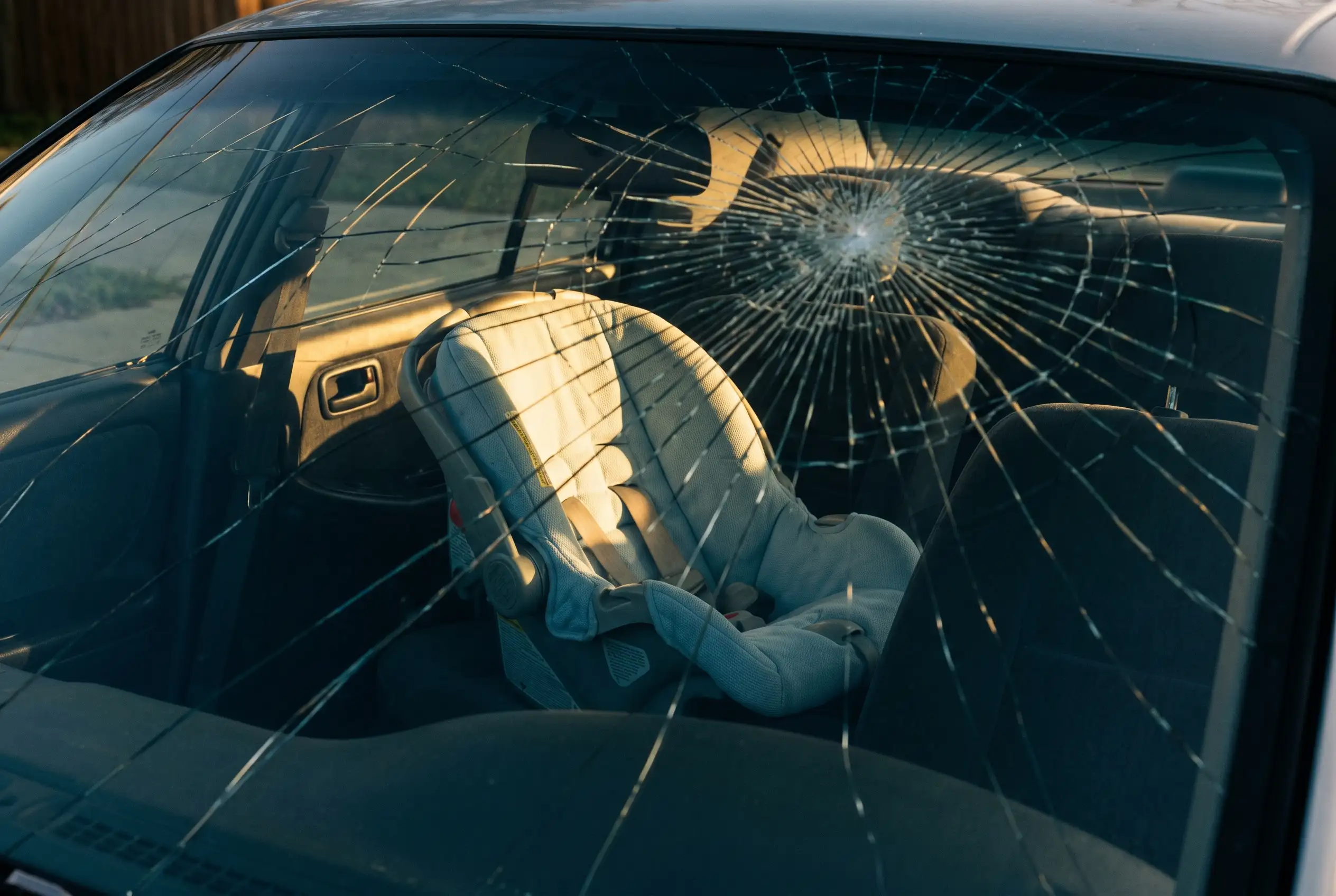
When the family spotted Israeli military vehicles and soldiers in the distance, Feryal told reporters at Al-Ahli Hospital, they stopped the car. Soldiers opened fire from roughly ten meters away, she said, directly at the stationary vehicle. One bullet entered the windshield, pierced Sam’s face on the right side and exited on the left, then struck his mother in the face, with shrapnel fragmenting toward her heart. Fahd was shot through the hand as the bullet passed through the front of the car.
All three were taken to Al-Ahli Hospital. Sam was critically wounded and died of his injuries. His mother went into surgery; doctors have not told her Sam died. Associated Press photographers who reached the scene documented the bullet hole in the windshield and Sam’s car seat, positioned directly behind the driver, consistent with the bullet’s reported path.
What the IDF Said
The IDF’s statement said troops conducting operations in Hebron “perceived a vehicle accelerating toward them.” A soldier fired single shots at the vehicle. The military’s initial review, released alongside its condolences, concluded that those injured were “uninvolved civilians.”
The Palestinian Authority (PA) confirmed Sam’s identity and his parents’ injuries through its official Wafa news agency, describing the family as having been shot while traveling from Bethlehem to visit relatives in the city. The PA Health Ministry formally notified the Civil Affairs Authority of Sam’s death. A second Palestinian, Amjad Jawad Abdul-Fattah Natsha, 31, was shot and killed the same evening by Israeli forces at a junction in the city, per Palestinian health authority records.
Feryal Abu Haikal’s account contradicts the IDF’s central claim. She told reporters the car had stopped completely before any shots were fired, that the soldiers were visible at a distance when the family pulled over, and that no warning was given. The IDF’s statement does not address whether the vehicle was moving at the moment the soldier fired.
The incident is unbelievable and unacceptable.
Feryal Abu Haikal told Reuters from outside the hospital. Inside, Fahd Abu Haikal described to AP reporters what happened after the bullet penetrated the windshield. “It entered the child’s face on the right side and exited on the left, then passed directly into his mother’s face and exited on the other side, with shrapnel lodged near her heart,” he said. He held up a phone showing reporters a photo of Sam. Sam was buried in the city on Saturday.
Children Among the West Bank’s Dead
Sam’s death comes within a documented pattern of Palestinian civilian casualties in the West Bank that has widened sharply since October 2023.
- 1,090+ Palestinians killed in the occupied West Bank and East Jerusalem since October 7, 2023, per the UN human rights office bulletin covering events through April 2026
- Nearly 1 in 5 of those killed were children
- 240 killed in the West Bank by Israeli forces and settlers in 2025, including 55 children, per OCHA’s West Bank situation monitoring
- 68 killed in the West Bank since January 2026, including 16 children, before Friday’s shooting, per Palestinian health authority data
Israel’s military scaled up West Bank operations sharply after the October 2023 Hamas attack that killed roughly 1,200 people in Israel. Operation Iron Wall, launched in Jenin in January 2025 and extended to Tulkarm and Nur Shams, displaced approximately 33,000 Palestinian refugees from those three camps by early 2026, per OCHA monitoring. The operation’s closure orders were extended repeatedly through at least March 2026.
Palestinian health records compiled through early June show 16 children killed in the West Bank in 2026 before Friday’s shooting, with Sam among the youngest. In March, four members of the same Palestinian family, including two boys aged 5 and 7, were shot dead by Israeli soldiers after a late-night drive following the Ramadan fast. Those killings also prompted an IDF investigation; no results have been made public.
The Ramming Claim, Applied Again
The IDF says troops “perceived a vehicle accelerating toward them” before a soldier opened fire Friday. The same justification appears in multiple West Bank shooting incidents documented by UN monitors and human rights organizations since October 2023. Three cases, including Friday’s, show the pattern alongside their outcomes:
| Date | Location | IDF Claim | Independent Account |
|---|---|---|---|
| June 5, 2026 | Tel Rumeida, Hebron | Vehicle perceived accelerating toward troops | Grandmother: car had stopped; soldiers were 10 meters away |
| December 2025 | Nablus governorate | Claimed ramming attempt | No Israeli soldiers reported injured; one Palestinian killed |
| December 2025 | Einabus | Driver tried to run over soldiers | B’Tselem investigation: car was attempting to stop when first shot struck |
Under IDF open-fire regulations, soldiers may shoot at a vehicle when they perceive it as an imminent threat. Friday’s justification, that troops “perceived a vehicle accelerating toward them,” meets the doctrine’s threshold, which requires the soldier’s perception to be reasonable at the moment, not confirmed movement or physical contact. Human rights organizations have argued that when the initial review relies on the firing unit’s own operational account, the soldier’s characterization of the vehicle’s behavior tends to anchor the investigation before independent witnesses are heard.
The IDF’s statement on Friday’s shooting has not addressed Feryal Abu Haikal’s account that the car was stationary when soldiers opened fire.
Fewer Than 1% of Complaints Lead to Charges
How the Probe Works
When a Palestinian civilian dies at the hands of an IDF soldier in the West Bank, the process that determines accountability runs through the Military Advocate General (MAG). Complaints against soldiers go to MAG first; MAG then decides whether to refer the case to the Military Police Criminal Investigations Division (MPCID), the body responsible for criminal probes against soldiers. In most operational incidents, MAG bases this referral decision on an internal investigation conducted by the unit involved in the killing.
Since 2011, IDF policy has required that deaths of Palestinian civilians not involved in warfare be automatically referred to MPCID, unless the killing occurred “clearly part of a combat situation.” According to Yesh Din, an Israeli human rights organization that has monitored West Bank accountability cases for two decades, the “combat situation” exception is applied broadly and has frequently been used to prevent MPCID from opening a criminal file. When MPCID does open a case, it operates without mandatory time limits; investigations can run for years, long after evidence degrades and the soldier in question has left active service.
Nine Years of Data
Between 2016 and 2024, 2,427 complaints alleging IDF soldier offenses against Palestinians in the West Bank were filed with military authorities, according to data Yesh Din obtained through a freedom-of-information request to the IDF. Of those, 552 investigations were opened, 22.7% of the total. Twenty-three indictments were filed. That is 0.9% of complaints ever reaching prosecution, across nine years and more than two thousand cases.
Since October 2023, the picture has not improved. Action on Armed Violence, a UK monitoring group, tracked 52 IDF cases opened between October 2023 and June 2025 involving incidents linked to more than 1,300 Palestinian deaths; 88% were either closed without a finding of fault or remain unresolved. One indictment was issued across all 52 cases.
The accountability gap is not a recent discovery. The Turkel Commission, which the Israeli government established following the 2010 flotilla incident, recommended specific improvements to the IDF’s investigation mechanism in 2013. Most of those recommendations have not been implemented, per Yesh Din’s subsequent monitoring of complaint outcomes. The IDF Spokesperson’s Unit declined to respond to requests for comment on the accountability data when the Times of Israel reported on it in early 2026.
Fahd Abu Haikal sat at Al-Ahli Hospital on Saturday with a bandaged hand, his wife still in surgery. The IDF’s investigation carries no published timeline for its conclusion.
