
Tel Aviv-Jaffa will raise prices at every municipally run parking facility by 20% starting August 1, city officials confirmed this week. The increase covers every lot operated by Ahuzot HaHof, the company wholly owned by the municipality that runs parking across the city, and it applies to residents and visitors alike.
City Hall and Ahuzot HaHof point to rising wages, security, cleaning, electricity and technology costs. They also blame falling revenue since Israeli parking lots were required to start billing by the minute instead of the hour, a switch designed specifically to stop drivers from being overcharged.
What Tel Aviv Drivers Will Pay Starting August 1
The hourly rate for Tel Aviv-Jaffa residents rises from 5 to 6 shekels. Non-residents will pay 24 shekels an hour, up from 20. Evening and one-time parking climbs from 7.50 to 9 shekels for residents, and from 30 to 36 shekels for everyone else.
| Parking Rate | Residents (Old) | Residents (New) | Non-Residents (Old) | Non-Residents (New) |
|---|---|---|---|---|
| Hourly | 5 shekels | 6 shekels | 20 shekels | 24 shekels |
| Evening / One-Time | 7.50 shekels | 9 shekels | 30 shekels | 36 shekels |
Every figure in that table moves by exactly one-fifth, matching the headline 20% increase. The gap between residents and everyone else stays just as wide as before: a non-resident parking by the hour now pays four times the resident rate.
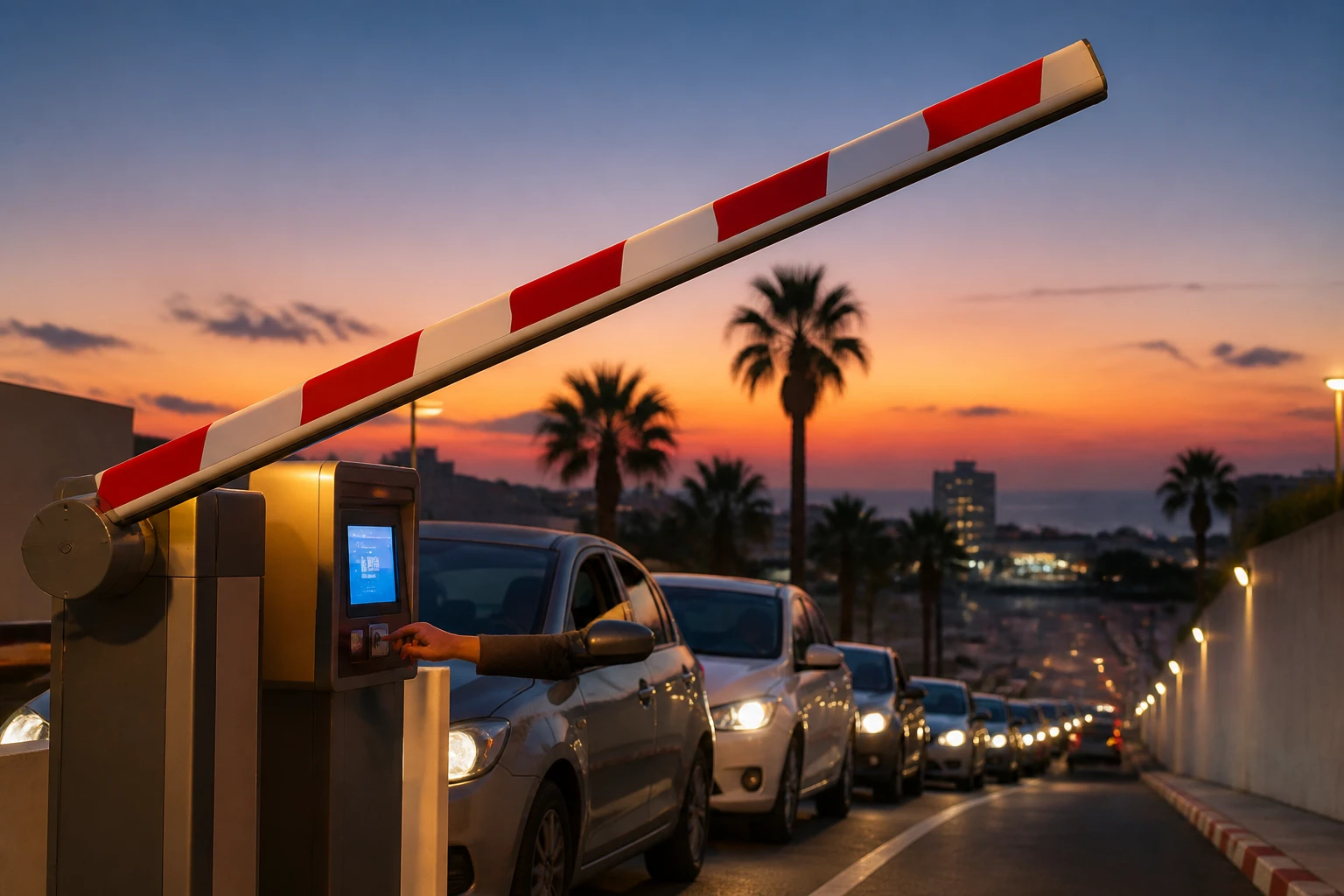
Why Are Parking Rates Rising Now?
Ahuzot HaHof points to two forces. One is ordinary cost inflation: wages, security, cleaning, electricity, municipal taxes and information technology. The other is newer. Revenue has dropped since Israel required parking lots nationwide to bill by the minute rather than rounding a stay up to the next full hour. The company says its new prices will still sit below what nearby private lots charge.
That billing switch was not the municipality’s idea. It followed a law sponsored by Knesset member (MK) Naama Lazimi of the Democrats party, which passed its second and third Knesset readings roughly a year before taking effect, giving operators time to install per-minute metering. Lots charging flat daily, weekly or event rates were exempted.
It’s illogical to pay for a full hour when you only park for a few minutes.
Lazimi made that argument while defending the bill, framing it as a fix for an injustice built into how Israeli parking lots had billed drivers for years.
- Naama Lazimi, the law’s sponsor: says flat hourly billing overcharged drivers and the law simply makes them pay for time actually used.
- Parking lot operators: warned Knesset committees the switch could cause disputes, even physical confrontations, over exit-gate charges.
- Ahuzot HaHof and the Tel Aviv-Jaffa Municipality: say the billing change cut revenue regardless of the fairness debate, and higher operating costs justify the 20% increase on top of that.
The Five Lots Losing Their Early Evening Discount
Residents get a break at some of the city’s busiest facilities, but the break is shrinking. Under the municipality’s eligibility rules for discounted resident parking, five locations now see that discount start later and pay out less.
- Basel
- Tel Nordau
- Bnei Dan
- Chen Boulevard
- Gordon
At those five lots, the resident discount used to begin at 7 p.m. and cut the price by 75%. Under the new structure it starts at 9 p.m. and cuts the price by only 50%. The two changes compound: residents parking there for an early dinner or a sunset walk lose two hours of eligibility, then get a smaller discount once it finally kicks in.
One facility is exempt. The Carmel 2 parking structure keeps its current payment rules and overnight arrangement untouched.
The municipality is also adding a penalty for long-term parkers. Residents who leave a car in place for more than 96 consecutive hours will lose their discount and pay full price. Officials said that provision will start later, once billing-system updates are finished.
A Pattern Already Showing Up Elsewhere
Tel Aviv’s municipal operator is not the only one raising prices after the minute-billing switch. An investigation of eight parking lots across central Israel, reported by Aurora Israel News and credited to the financial daily TheMarker, found the average hourly price had climbed by 8 shekels once those lots moved to per-minute charging.
Aurora Israel News also documented a specific case: a Tel Aviv lot that once charged a flat 20 shekels an hour switched to half a shekel per minute, a rate that adds up to 30 shekels for a full hour, a 50% jump dressed up as more precise billing.
Parking operators did not hide their objections. During Knesset debates over the bill, owners argued the minute-by-minute requirement would squeeze margins and pushed back against it. Raising base rates, in Tel Aviv and beyond, is the response several appear to have settled on instead.
Parking’s Long Run as a City Revenue Engine
Parking has funded Tel Aviv-Jaffa for a long time. Haaretz reported the municipality collected roughly 250 million shekels from parking fees and fines in 2009 alone, a sign of how central the system has long been to the city budget.
The city has also shrunk the supply drivers compete for. Haaretz reported in 2020 that Tel Aviv had been removing curbside parking spots to widen sidewalks and add bike lanes, pushing more drivers toward paid municipal lots like the ones Ahuzot HaHof runs. Less free curb space, combined with rates now climbing 20%, leaves fewer cheap options for anyone driving into the city.
Municipal Lots Still Undercut Private Ones
Despite the increase, Ahuzot HaHof says its prices will remain below what private operators charge nearby. The municipality has repeated that comparison as its central argument for why the 20% jump should not push drivers toward alternatives.
City residents keep a discount either way. Non-residents, commuters and visitors absorb the same 20% increase with no offsetting break, at a moment when reporting from Aurora Israel News and TheMarker shows the minute-by-minute law adding costs at lots well beyond Tel Aviv’s own network.
The grace period Knesset gave operators to install per-minute metering has already run out for many of them. Ahuzot HaHof’s new prices take effect August 1, applying to every driver who parks in a Tel Aviv municipal lot that day.
