
BUSINESS
Tamimi Markets Buys Al Raya After the PIF Stake
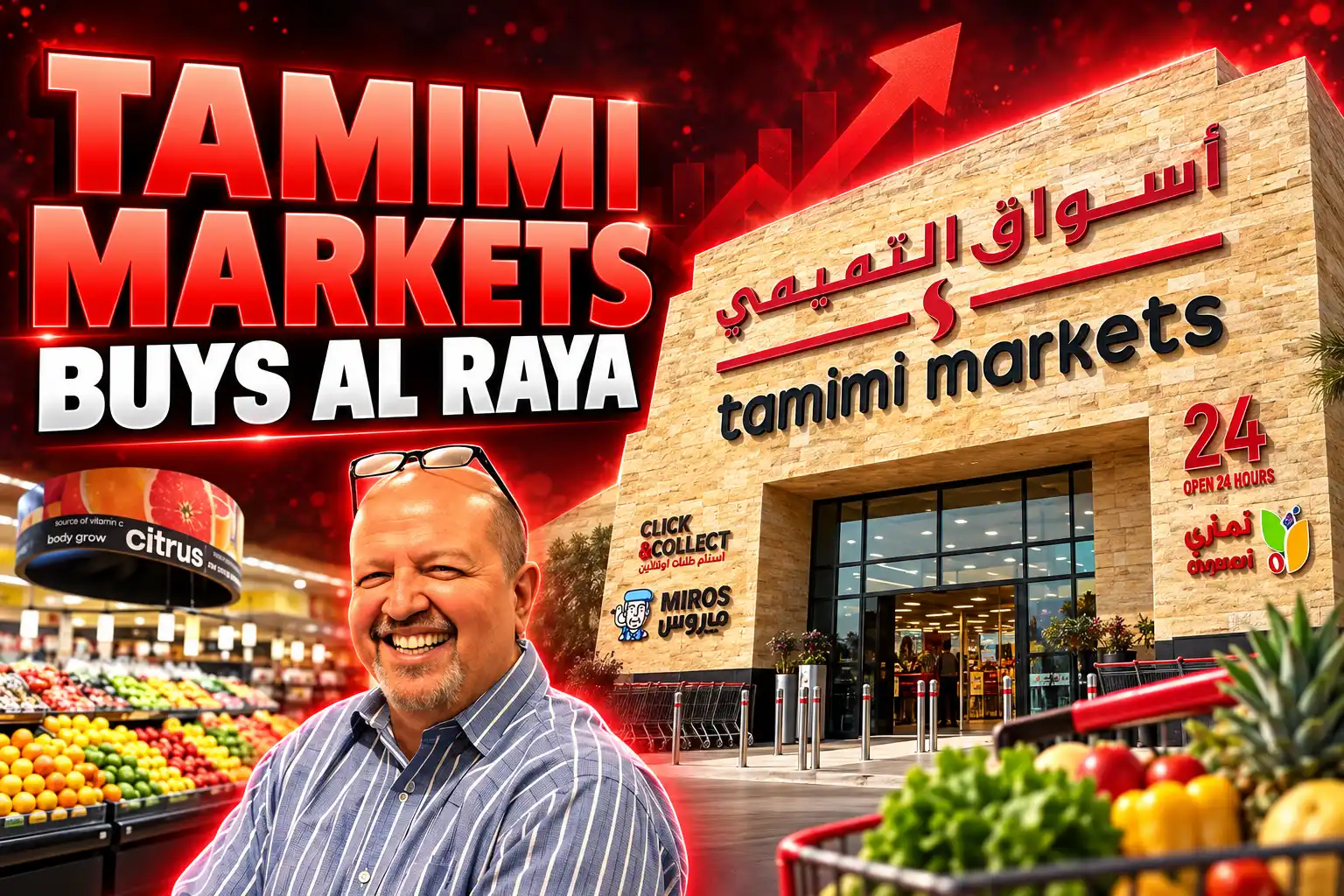
Tamimi Markets bought Al Raya’s 51 western stores in February 2024, eight months after PIF took 30 percent of the family grocer.

Tamimi Markets completed a 100 percent buyout of Al Raya For Food Stuffs Company JSC on 13 February 2024, taking the grocer to 111 stores.
Al Raya added 51 supermarkets across more than 20 cities in western Saudi Arabia. On 1 June 2023 the Public Investment Fund had already signed a deal for 30 percent of Tamimi, buying new shares rather than a slice of Al Raya itself.
PIF Took 30 Percent Eight Months Earlier
The fund’s own statement said it would hold 30 percent of Tamimi Markets after a capital increase, once authorities signed off. It framed the grocer as a future “national champion” and a regional chain, and it listed a possible initial public offering among the aims.
Majed AlAssaf, then head of consumer goods and retail in PIF’s MENA investments division, tied the cheque to food supply, not to a single banner on a high street.
PIF is investing in the grocery and food supply chain to ensure a strong Saudi presence in the market, enabling the private sector to capitalize on positive market demand. This partnership is expected to contribute to the expansion of Tamimi Markets’ operations and product offering, accelerating its regional growth plans and benefiting consumers through greater choice.
Majed AlAssaf, Head of Consumer Goods and Retail, MENA Investments Division, Public Investment Fund, 1 June 2023
Tariq AlTamimi, chairman of Tamimi Holding, said the same day that the partnership would let the company “accelerate and expand our store network across the region.” Eight months later that network jumped by 51 boxes in one close.
A Tamimi Markets supplier presentation circulated in 2025 still split the grocer as 70 percent family and 30 percent PIF. The fascia stayed Tamimi. The cap table did not.
PIF also said the stake would help Tamimi reach online grocery and set up international sourcing centres. That brief fits a buyer that already imports heavily and wanted a western store map it did not have to build aisle by aisle.
Levant Capital’s Third Consumer Exit Since 2021
Al Raya was not a distressed local chain when Tamimi arrived. Dubai-based Levant Capital had held a 75 percent stake since 2012 and, in Tamimi’s telling, built an independent management team around it. Over that hold the store count rose from 23 to 51, and sales area grew 2.5 times.
The original buy was larger than a quiet family sale. On 21 February 2012, funds advised by Levant Capital and Citi Venture Capital International closed a controlling stake valued at $100 million. Al Raya then ran a Jeddah-based chain whose 2011 sales were put at about SAR 800 million ($213 million), with shops in 14 cities including Jeddah, Madina, Taif, Jizan, Najran, and Sabya.
Majed Al-Khammash, Al Raya’s founder and chief executive at the time, said he wanted to “more than double in size over the next few years.” The 23-to-51 run did that, even if it took the full 12-year hold rather than a few years.
Levant had already sold other consumer names to trade buyers. Savola Foods paid $260 million in cash, about SAR 975 million, for Bayara Holding, with that deal completed on 20 October 2021. In 2022 Levant sold Turkish childrenswear retailer Panço to Kuzu Group. Al Raya was the third such exit to a strategic buyer since 2021.
HOW AL RAYA CHANGED HANDS
- 1991: Al Raya opens its first supermarket in Jeddah.
- 21 February 2012: Levant Capital and Citi’s then venture arm close a $100 million controlling stake.
- 1 June 2023: PIF agrees to take 30 percent of Tamimi Markets by buying new shares.
- 13 February 2024: Tamimi completes a 100 percent purchase of Al Raya.
- 2025: A Tamimi supplier presentation still lists 46 Al Raya stores beside the Tamimi banners.
Salameh Sweis, Levant’s chief executive in 2012, had bet that Saudi shoppers would keep moving from informal grocers into organised supermarkets. That migration is why a Khobar-born chain would later pay up for a ready western net instead of planting 51 new stores from scratch.
What Tamimi Bought in the West
The prize was geography plus a format Tamimi did not invent. Al Raya’s 51 stores sat across the northwest, west, and southwest, a belt Tamimi had approached from the other side of the kingdom.
Bobby Rajendran, chief executive of Tamimi Markets, went straight at the bakery rather than at square metres.
“The Al Raya brand is renowned for its neighborhood convenience and fresh positioning, particularly with its outstanding bakery,” he said. “We are eager to bring value and efficiency to the Al Raya brand while fostering its continuous growth.”
WHAT CAME WITH THE WESTERN CHAIN
- Store count: 51 supermarkets at close, which took Tamimi to 111 stores when added to its own 60.
- Cities: more than 20 in the northwest, west, and southwest, a map built from a 1991 Jeddah start.
- Format: neighborhood convenience and fresh food, with the bakery Rajendran named as the stand-out.
- Seller: Levant Capital as the 75 percent holder, with BNP Paribas advising Al Raya and Eversheds Sutherland advising its shareholders.
Tamimi’s own history sits in the Eastern Province. Sheikh Ali Abdullah Al Tamimi founded the wider Tamimi Group in 1953 around pipeline and construction work for the oil industry. In 1979 the family opened a modern supermarket in Khobar with Safeway Stores of the United States. When Safeway pulled back to its home market in the 1980s, the family bought the rest of the joint venture and kept the import habit, including Safeway private-label lines that the company still flags on its site.
That is why the Al Raya map mattered. Tamimi’s about page now says the stretches from NEOM and Tabuk in the far northwest to Abha in the southwest and down the western seaboard including Jeddah, plus Qassim, Majm’ah, Hafr Al Batin, Jubail, Al Hasa, and Bahrain. The western half of that sentence is the Al Raya purchase in plain language.
Distribution followed the same logic. The company lists facilities in Dammam, Riyadh, and King Abdullah Economic City north of Jeddah. The 2025 supplier presentation counted five distribution hubs and a temperature-controlled fleet, the plumbing a dual-banner grocer needs if it plans to keep Al Raya’s fresh counters stocked from a Dammam core.
The Combined Chain Still Trails the Giants
At close the two companies counted 111 stores. That figure was a supermarket tally, 60 Tamimi boxes plus 51 Al Raya, not a full census of every express format Tamimi later put in a pitch deck.
The 2025 presentation split the group another way: 60 Tamimi supermarkets, 55 Tamimi Express stores, and 46 Al Raya stores, 161 stores in all, plus 35 cash-and-carry hubs. Those are different counts, not a claim that the grocer added 50 supermarkets in a year.
TAMIMI’S 2025 STORE MIX
| Banner | Stores in 2025 deck | Role |
|---|---|---|
| Tamimi supermarkets | 60 | Core grocery box |
| Tamimi Express | 55 | Smaller format |
| Al Raya | 46 | Western neighborhood banner |
| Combined | 161 | Dual brand, plus 35 cash-and-carry hubs |
Abdul Aziz Al-Tamimi, managing director of Tamimi Markets and grandson of the founder, has already conceded the scale gap. “Tamimi Markets today isn’t the biggest supermarket chain in the market, but that’s not our goal,” he wrote on the company site. “Our goal is to be the best.”
The listed grocery leaders still set the branch race. In the west, the sharper overlap is with BinDawood Holding, the Jeddah group behind BinDawood and the premium Danube banner. Waleed Bin Dawood, its commercial-sector chief, put the group’s supermarket share at about 12.5 percent in January 2026 and said price fights were pushing chains toward service and supply-chain work rather than a truce on the till.
Tamimi’s public target, still on its about page, is 200 stores by 2030. The Al Raya close was the fastest way to put western cities on that chart without a decade of site hunts.
Al Raya’s Name Stayed on the Stores
Rajendran did not talk about stripping the Al Raya name. He talked about putting “value and efficiency” into that brand. The 2025 deck treated Al Raya as a living fascia: 46 supermarkets, listed apart from the 60 Tamimi supers and the 55 Express stores.
Forty-six is not 51. The presentation does not say whether five sites closed, changed banner, or were counted on a different rule. What it does show is that Tamimi was still selling Al Raya as a western neighborhood chain more than a year after the close, not as a leftover logo on a Dammam warehouse.
That split matches how the two businesses grew up. Tamimi sells itself on imports, organic lines, and names such as Costco’s Kirkland Signature and Sainsbury’s. Al Raya sold itself on a bakery and a shop you could walk to. Keeping both names lets Tamimi run an Eastern import box and a western fresh box without forcing Jeddah regulars through a Khobar rebrand on day one.
The 2025 deck also sketched three Tamimi store looks, Classic, Heritage, and Modern, including a “classic facelift” and a newer flagship design. Al Raya sat beside those looks as its own line of 46 supers, which is a choice to run two brands rather than one national template.
ANB Capital and Baker Botts Handled the Close
Baker Botts, acting with the Law Office of Mohanned bin Saud Al-Rasheed, said Tamimi completed its acquisition on 13 February 2024. Tamimi issued the public statement on 15 February 2024. ANB Capital was sole financial adviser to Tamimi. BNP Paribas advised Al Raya, and Eversheds Sutherland advised the selling shareholders.
Arabic versions of the close notice said the deal went through after official approvals from the relevant authorities. No competition finding was published beside the press note, and no purchase price accompanied the 100 percent claim.
WHAT WE KNOW
- The close: Tamimi took 100 percent of Al Raya on 13 February 2024 and announced it on 15 February 2024.
- The buyer’s cap table: PIF agreed on 1 June 2023 to hold 30 percent of Tamimi through new shares, and the 2025 deck still used that 70/30 split.
- The banner: Al Raya remained a named chain of 46 stores in Tamimi’s 2025 supplier presentation.
WHAT IS UNCONFIRMED
- The 2024 price: neither side published what Tamimi paid, or what Levant cleared after 12 years.
- The IPO: PIF named a possible listing in June 2023; Tamimi has not brought one.
- The five-store gap: the deck does not explain why Al Raya’s count moved from 51 at close to 46.
Tamimi has not said what it paid, and Levant Capital has not said what it cleared after the 12-year hold. The grocer’s public target, posted on its own site, is 200 stores by 2030.
Frequently Asked Questions
How Much Did Tamimi Pay for Al Raya?
The 2024 purchase price was never published by Tamimi Markets, Levant Capital, or their advisers. The earlier controlling stake, closed on 21 February 2012 by Levant Capital and Citi Venture Capital International, was valued at $100 million, a figure the 2024 close did not match with a new number.
What Were Al Raya’s Sales When Levant Capital Bought In?
Al Raya posted sales of about SAR 800 million ($213 million) in 2011, according to the joint statement on the 2012 deal, when the chain served more than 50,000 customers a day across 14 cities.
Does Tamimi Markets Operate Outside Saudi Arabia?
Yes. The company’s about page lists three stores in Bahrain and treats the two kingdoms as one expansion field, alongside Saudi cities such as Qassim, Jubail, and Al Hasa that sit outside Al Raya’s western belt.
Which Other Consumer Firms Sit in PIF’s Grocery Orbit?
PIF’s 1 June 2023 statement on Tamimi listed Noon.com, Halal Products Development Company, and Americana Restaurants International PLC as existing consumer and retail holdings beside the new 30 percent grocery stake.
Disclaimer: This article is news reporting and analysis of a completed grocery deal and related ownership changes. It is informational only and is not investment advice, a solicitation to buy or sell securities, or a view on any future Tamimi listing. Readers who are considering a stake in a grocer, a fund, or a related security should consult a licensed financial adviser. Store counts, ownership splits, and deal terms reflect the company statements and presentations cited here and can change.

Christa Pike Survived the Execution Tennessee Would Not Pause

Musk’s Oligarch Charge Hits a Queue of Three

Circle Puts USDC and EURC Into SAP Pay Workflows

Ring’s First Smart Lock Skips Home Wi-Fi for Sidewalk

GTA 6 Puts Cash Back on the Story Path

Salah Captained Egypt to Their First World Cup Win

Aramco Crash Kills 14 Two Days After Oil Restart

Apple Labor Day Deals Hide June’s Memory Price Hike

Zelda’s 40th Switch 2 Ships Without a Zelda Game

Palworld 1.0.4 Adds Palpedia Search After the 1.0 Launch
-
 NEWS5 months ago
Salah Captained Egypt to Their First World Cup Win
-
 BUSINESS4 months ago
Aramco Crash Kills 14 Two Days After Oil Restart
-
 NEWS2 months ago
Apple Labor Day Deals Hide June’s Memory Price Hike
-
 GAMING1 month ago
Zelda’s 40th Switch 2 Ships Without a Zelda Game
-
 GAMING1 month ago
Palworld 1.0.4 Adds Palpedia Search After the 1.0 Launch
-

 NEWS3 months ago
El Niño Puts Israel’s Needed Winter Rain on a Flood Clock
-

 ENTERTAINMENT1 month ago
King Charles Letter Keeps Harry and Meghan as Private Citizens
-

 ENTERTAINMENT4 months ago
A Thousand and One Drops Off Riyadh’s October Calendar