
Israel’s defence minister, Israel Katz, warned on Sunday that any Iranian missile landing on Israeli soil would draw a response with “full force.” The missiles Iran actually fired that day hit Kuwait’s water supply, Jordan’s airspace and Bahrain instead.
Katz said Israel was ready for “both defensive and offensive” action if Tehran struck first. Washington is reinforcing that posture regardless: the United States plans to send dozens of additional refuelling planes to the region, a US official told Reuters.
Katz’s Warning Covers a Border Nobody Has Crossed
The ceasefire President Trump brokered between Israel and Iran has collapsed. Direct missile exchanges between Tehran and Jerusalem had actually grown rarer since April, largely because Trump was pressing both sides to protect a truce that let oil flow again through the strait of Hormuz.
That restraint is gone. Trump told a US media outlet he “couldn’t care less” that Iran had torn up the ceasefire, and he went further in a social media post on Sunday.
The gates of HELL have now been UNLEASHED like they never could have imagined or seen before.
Trump wrote that hours after US Central Command said American forces had completed an eighth straight day of strikes on Iran’s “military coastal surveillance and air defence facilities, maritime capabilities, and missile and drone storage sites.” Part of the goal, Centcom said, was to “swiftly punish” the Islamic Revolutionary Guard Corps (IRGC) for the deaths of two US soldiers killed in an Iranian strike on a Jordanian airbase on Friday, one of the deadliest days for American forces since the war resumed. A third soldier is still missing, Centcom said.
Kuwait Takes the Hit, Twice
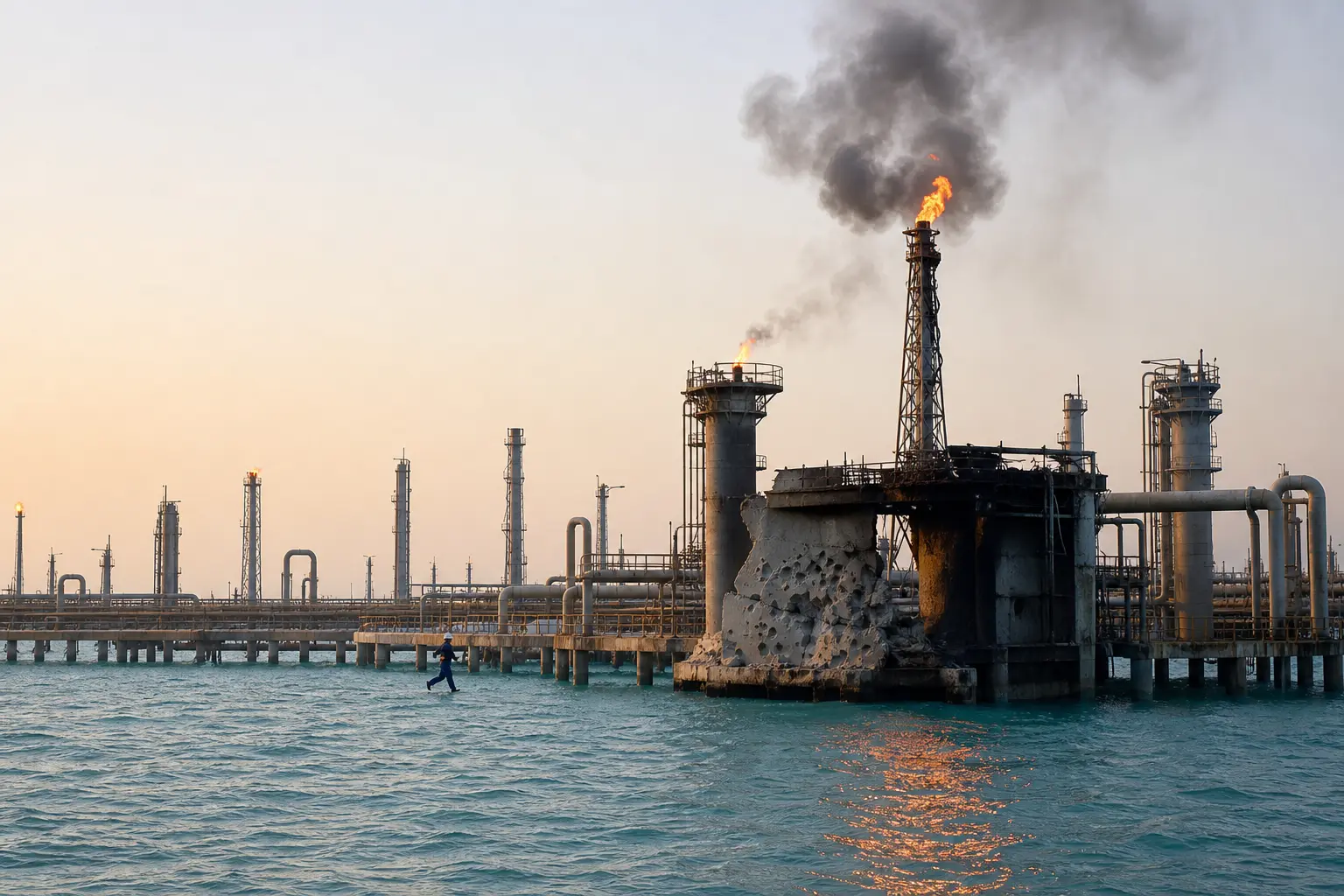
On Sunday, Iran fired fresh missiles at Kuwait’s power and desalination plant, the second strike on the same complex in three days. Kuwaiti officials said firefighters extinguished the blaze and crews were already repairing the damaged generating units.
Jordan said its air defences shot down three Iranian missiles aimed at the kingdom on Sunday, with air-raid sirens sounding over Amman. Jordan summoned Iran’s charge d’affaires over what it called “unjustified and blatant Iranian attacks” and “provocative and inflammatory statements targeting the kingdom’s territory.”
Kuwait’s foreign ministry said the repeated targeting of civilian facilities amounted to a dangerous escalation that violated international law, the UN charter and UN Security Council resolution 2817, and said Iran bore full legal and moral responsibility for the strike and its consequences.
| Country | What Was Hit | Response |
|---|---|---|
| Kuwait | Power and desalination plant, struck Friday and again Sunday | Fire contained both times; no reported interruption to drinking water |
| Jordan | Three ballistic missiles over Amman, Sunday | All three intercepted; Iran’s charge d’affaires summoned |
| Bahrain | Missile strikes, Sunday | Targeted alongside Jordan; full outcome not yet detailed |
| Qatar | Missile barrage, Friday | Public sheltered twice; falling debris injured a child |
Qatar, which has served as a mediator trying to end the war, took the heaviest hit on Friday. Qatar’s interior ministry said falling debris from intercepted missiles injured a child after air-raid warnings sounded twice across the country.
A Region That Drinks the Sea
Kuwait’s vulnerability here is not incidental. About 90% of the country’s drinking water comes from desalination, along with roughly 86% in Oman and about 70% in Saudi Arabia. Hundreds of desalination plants sit along the Persian Gulf coast, and many are physically bolted to power stations, so a strike on the electrical grid can shut down the water supply too.
Sunday’s strike was not the first time this war reached that specific chokepoint.
- Doha West, Kuwait – damaged early in the war by debris from intercepted drones targeting a nearby port
- Qeshm Island, Iran – Iran says a US strike in March cut water supplies to 30 villages; Washington never confirmed it
- Saudi Arabia – Yemen’s Houthi rebels have struck desalination facilities there in earlier rounds of regional fighting
- Kuwait’s plant, again – Sunday’s strike hit the same power and desalination complex for the second time in three days
Gulf governments and US officials have flagged this risk for years. Without desalination, the region’s largest cities could not sustain their current populations.
Iran Turns the Strait Into Its Own Weapon
Iran’s government-aligned Tasnim news agency said two ships had an “accident” Sunday after trying to cross the strait of Hormuz on an “unsafe route” not sanctioned by Tehran. Two other ships turned back, Tasnim reported.
“Vessels that are influenced by the words of the Americans and enter unsafe routes will certainly face accidents,” the IRGC said.
- Two US soldiers killed, a third missing after Friday’s Iranian strike on a Jordanian airbase, one of the deadliest days for American forces since the war resumed
- Eight straight days of US strikes on Iranian military and coastal targets, Centcom said Sunday
- More than 40 deaths in Iran this month from the renewed fighting, according to Tehran
- Two ships suffered what Iranian state media called an accident Sunday after taking an unauthorised route through the strait
Israel still has not been drawn into direct fire. The economic fallout from this war is already reaching well beyond the battlefield.
Why Would India Pay for Iran’s War?
India buys more discounted Russian crude than almost any country besides China, which already puts it in range of a Senate sanctions bill built to squeeze Moscow’s war chest. Trump now wants Iran folded into that same bill, meaning a tariff aimed at Russia could land on India over a conflict it has no part in.
The bill, championed for more than a year by the late senator Lindsey Graham before his death this month, would let Trump tariff the top five purchasers of Russian oil and gas up to 100%, currently China, India, Slovakia, Hungary and Azerbaijan.
Trump urged Republicans on Sunday to add Iran and the militant group Hezbollah to that same legislation, writing on Truth Social that it was what Graham “wanted to do, and it was going to happen.” House Foreign Affairs Committee chairman Michael McCaul said he plans to introduce a companion bill on Monday, calling it Graham’s “final wish.”
Not every senator backing the bill wants it reopened. Democratic senator Richard Blumenthal, Graham’s chief partner on the legislation, urged colleagues to move forward with the version already negotiated rather than add new targets. Trump has said he would still consider separate legislation if Congress wants one.
The tariff threat lands at an awkward moment. Oil prices are already climbing because of the wider war, and a 100% tariff on Russian crude buyers would layer a second shock on top of the first for whichever countries end up on the list.
Grossi Draws a Line Around Iran’s Reactors
Trump has threatened since early in the war to hit Iranian civilian infrastructure directly, including power plants and bridges, a step many observers have said would constitute a war crime. Washington denies targeting civilians, but photos and video from recent days show extensive damage at civilian sites.
Iran said Sunday that the clearest example yet was a US strike on the unfinished Darkhovin nuclear power plant. Iran’s Atomic Energy Organisation called it “an aggressive and brutal act contrary to international law.”
The International Atomic Energy Agency (IAEA) said the site held no nuclear material when it was last inspected and that the reported strike was not believed to pose any radiological risk. Its director general, Rafael Grossi, still repeated his call for “military restraint in the vicinity of all nuclear-related sites.”
Iran’s supreme leader, Mojtaba Khamenei, said Saturday that the US would face “unforgettable lessons” if the strikes continued. Katz’s threat and Khamenei’s both remain untested, for now.
Frequently Asked Questions
How much of the world’s oil passes through the strait of Hormuz?
About a fifth of the world’s seaborne oil trade normally moves through the strait in peacetime. Prices had already climbed from around $74 a barrel two weeks earlier to above $86 a barrel by Friday as fighting spread to tankers.
Is Kuwait’s water supply actually at risk of running out?
Not yet, according to Kuwaiti officials. The country activated emergency contingency plans after the weekend strikes and has reported no interruption to water service so far, though it has few alternatives if desalination capacity goes offline for an extended stretch.
Which countries would face new tariffs if Iran is added to the Russia sanctions bill?
The bill already targets the five biggest buyers of Russian oil and gas: China, India, Slovakia, Hungary and Azerbaijan, with tariffs of up to 100%. Countries buying less than 15% of their gas from Russia, and cutting that share further, would be exempt. Adding Iran and Hezbollah would layer a new penalty onto whichever buyers also deal with Tehran.
What is the Darkhovin nuclear plant that Iran says the US attacked?
Darkhovin is an unfinished nuclear power plant in Iran’s Khuzestan province, on the Karun River roughly 70 km south of Ahvaz. It held no nuclear material when the IAEA last inspected it, which is why the agency said the reported strike posed no radiological risk, even as it stopped short of naming who carried it out.
