
The Egyptian and Turkish air forces wrapped a multi-day joint air exercise at several Egyptian air bases on Sunday 21 June, the Egyptian military said in a statement.
The drills involved multi-role fighter aircraft and theoretical lectures aimed at unifying combat concepts. They are part of an Egypt-Turkey defence partnership that has moved from diplomatic rapprochement into active military integration, with Aselsan now operating a permanent Cairo office under the Aselsan Egypt brand and Egypt taking a development and manufacturing role in Turkey’s Kaan stealth fighter programme.
Air Drills Over the Desert
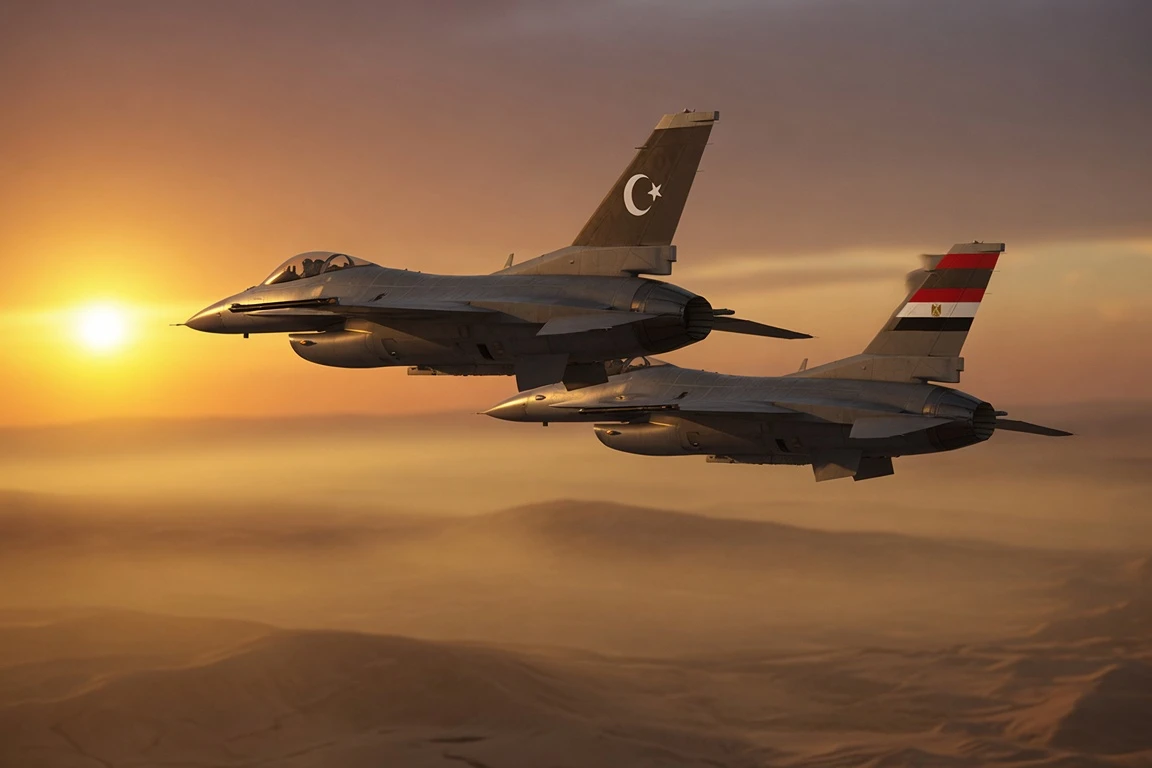
The Egyptian military announced the conclusion of the air exercise on Sunday 21 June, three days after the air force and its Turkish counterparts completed their work at the air bases involved, with the Egyptian military spokesperson publishing photos of the final day. The exercise ran across “a number of air bases” in Egypt, per the Egyptian military statement on the air exercise, with training sorties focused on operational missions designed to coordinate efforts and enhance the ability of both sides to operate jointly. Both sides framed the drills as part of a wider push to expand military-to-military cooperation, and neither disclosed the specific aircraft types or numbers involved. The June exercise follows Egypt and Turkey’s resumption of full diplomatic relations in 2023 and the launch of the High-Level Strategic Cooperation Council in September 2024.
The first phase of the exercise included theoretical lectures aimed at unifying combat concepts and exchanging training expertise, according to the air exercise kickoff and first phase details. The drills also involved operational training sorties, with the Egyptian military highlighting “the latest multi-role fighter aircraft operated by the Egyptian and Turkish air forces” in its closing statement.
The June air drills follow Egypt and Turkey’s September 2025 resumption of joint naval exercises in the eastern Mediterranean under the Sea of Friendship banner, the first such drills in 13 years. That naval restart came two years after Ankara and Cairo restored full diplomatic ties in 2023. Both the air and naval tracks now sit inside the High-Level Strategic Cooperation Council established in September 2024.
The Kaan Programme and the Industrial Bet
Beyond the exercises, the partnership now reaches into aircraft development. Egypt joined Turkey’s Kaan fifth-generation stealth fighter programme as both a development and manufacturing partner, with the deal reported to include technology transfer, component manufacturing and domestic assembly for Cairo.
The aircraft is expected to enter Turkish Air Force service in 2030, according to Middle East Monitor reporting, with the Block 10 and 20 variants initially powered by US-made General Electric F110 engines and the Block 30 variant targeted to field a domestically produced fifth-generation engine by 2033. Turkish Aerospace general manager Mehmet Demiroglu, speaking at the World Defense Show in Riyadh in February 2026, said the company has 10 F110 engines already on hand to cover prototype testing and that the first batch to be delivered to the Turkish Air Force would start in early 2029. He also confirmed that Saudi Arabia is in the “final stages of decision-making process” on joining the Kaan programme, either as a customer for some 20 aircraft or as a co-production partner.
We already have 10 engines, enough to cover all our prototypes. We don’t have any problem in terms of development. The first batch to be delivered to the Turkish Air Force will start early 2029.
The quote comes from Mehmet Demiroglu, general manager of Turkish Aerospace, speaking to Breaking Defense at the World Defense Show in February 2026. The full Kaan production and Saudi talks interview also detailed Turkish Aerospace’s sixth-generation and engine plans.
The visible industrial layer in Egypt is now anchored by Aselsan, one of the world’s largest defence electronics companies. Aselsan opened its first Egyptian representative office, branded “Aselsan Egypt,” on 5 December 2025 at the Egypt Defence Expo (EDEX 2025) in Cairo.
CEO Ahmet Akyol said the office would serve the Egyptian armed forces and other Egyptian clients directly, according to Aselsan’s December 2025 Cairo office launch. Around 80 Turkish defence firms participated in EDEX 2025, the largest Turkish turnout at any regional defence exhibition. Aselsan also signed preliminary agreements with three Egyptian companies intended to evolve into joint production and joint operations, with the resulting jointly developed products due for official announcement at EDEX 2027.
From Bilateral Drills to a Four-Party Forum
The same week the air exercise wrapped, Egypt hosted a parallel diplomatic step. On Sunday 21 June, the foreign ministers of Egypt, Turkey, Saudi Arabia and Pakistan met in Cairo to push for a permanent and verifiable US-Iran settlement.
Egyptian Foreign Minister Badr Abdelatty, Turkish Foreign Minister Hakan Fidan, Saudi Foreign Minister Faisal bin Farhan and Pakistan’s Deputy Prime Minister Mohammad Ishaq Dar posed for a group photograph before talks that also praised Pakistan’s central role in mediating the 18 June US-Iran agreement, according to the Cairo foreign ministers’ joint statement on Iran.
President Sisi used the meeting to push the group beyond ad-hoc coordination. He said “recent regional developments” had made the four countries “essential bases for regional security and stability” and that their “consultative mechanism must evolve into a capable and effective institutional framework that reaches comprehensive and sustainable solutions to the region’s crises,” according to a statement from his office. The grouping convened as a 60-day ceasefire between the US-Israel coalition and Iran took effect this weekend, following the February outbreak of the latest Iran war.
The forum sits on top of the Egypt-Turkey High-Level Strategic Cooperation Council, established in September 2024, which already coordinates presidential, military and diplomatic tracks between Cairo and Ankara. Adding Saudi Arabia and Pakistan turns a bilateral council into the embryo of a four-power Arab-Islamic security grouping that, by Sisi’s own framing, is meant to operate independently of the US-led security architecture that has anchored the region since the late 20th century.
What Israel and Washington Are Watching
The cooperation is openly framed by both sides as a counterweight to long-standing Israeli air superiority. Egypt and Turkey both hope the Kaan programme and joint training will erode the regional dominance of the Israeli Air Force, an ambition that places the partnership at the centre of the next decade of Middle East air-power competition. Israeli media outlets have characterised the June air exercise as “an unprecedented strategic shift,” Middle East Monitor reported in December 2025, citing Israeli sources.
Egypt-Turkey rapprochement followed a decade of estrangement triggered by the July 2013 military coup in Cairo that toppled the Morsi government and brought President Sisi to power. The restoration of full diplomatic relations in 2023 and the launch of the High-Level Strategic Cooperation Council in September 2024 moved under a regional order that still assumed US primacy.
The same logic is now surfacing on the transport side, with Ankara and Riyadh moving to revive the Hejaz railway as an overland route bypassing Israel and the Strait of Hormuz. The Kaan programme sits inside this same vulnerability. The first batch of Block 10 and 20 aircraft will use General Electric F110 engines still awaiting US export licence approval, and that same Western supply chain would feed Egyptian-assembled airframes if Cairo joins the manufacturing stream. Turkey’s planned domestic engine for Block 30, targeted for first test by 2032 and final delivery by 2033, is the moment Egypt’s role would mature from co-development into local final assembly.
What Aselsan Is Bringing to Egypt
The industrial layer in Egypt is now anchored by Aselsan’s permanent Cairo presence. Aselsan opened its first Egyptian representative office, branded “Aselsan Egypt,” on 5 December 2025 at the Egypt Defence Expo (EDEX 2025). Around 80 Turkish defence firms participated in EDEX 2025, the largest Turkish turnout at any regional defence exhibition. The new office gives Aselsan its first physical presence in Egypt and serves as the company’s regional anchor for the eastern Mediterranean and North Africa.
Aselsan signed preliminary agreements with three Egyptian companies at the show, with the deals intended to evolve into joint production and joint operations and with the resulting jointly developed defence products due for official announcement at EDEX 2027. Aselsan CEO Ahmet Akyol described the office as a strategic step that strengthens cooperation between Ankara and Cairo. The portfolio being brought to the Egyptian market spans multiple product families that drew strong interest from Middle Eastern and African delegations at EDEX 2025:
- “Steel Dome” multi-layered integrated air defence architecture, merging electronic warfare and radar into a unified network.
- KGK-84 guidance kit, which can deliver a one-ton bomb to a range of 100 kilometres.
- Air defence systems, electronic warfare systems and radar suites.
- Tank modernisation solutions.
- Maritime sensors and communications systems.
Beyond arms, both governments are seeking to lift bilateral trade from approximately $9 billion to $15 billion by 2028, with Egypt already Turkey’s leading trading partner in Africa. The industrial layer also includes separate joint agreements to co-produce drones, unmanned ground vehicles and long-range artillery ammunition. With the Cairo office now open, Egyptian state buyers can receive Aselsan products and services directly, Akyol said, and the first joint production announcements under the three preliminary deals are expected at EDEX 2027.
Why the Partnership Is Still Short of an Alliance
The current relationship is best described as an “emerging defence partnership” rather than a formal military alliance, according to a military expert who spoke to Middle East Monitor on condition of anonymity. A treaty-grade alliance would require a mutual defence pact, standing military coordination mechanisms, a joint operations centre and binding operational commitments, none of which are in place.
External pressure is the main brake. According to Middle East Monitor reporting, the rapprochement has raised concerns in both Israeli and American circles, with Washington reportedly seeking clarification about recent defence-ministry contacts between Cairo and Ankara. The speed of integration could slow or face obstacles if Washington chooses to push back, particularly via the Kaan engine export licence. Saudi Arabia’s pending decision on whether to buy some 20 Kaan airframes or join as a co-production partner is the second pressure point: an order would expand the programme’s industrial base and reduce Turkey’s dependence on a single regional partner.
Inside Egypt, the partnership’s success rests on whether Cairo continues to see diversification away from US and Western procurement as a strategic priority through any future administration. Turkey’s side depends on Ankara’s “zero problems” policy holding, a phrase Erdogan-era policymakers have used to describe the diplomatic environment Turkey wants to maintain with its neighbours. The next concrete test is the engine licence approval expected within weeks and the formal unveiling of the Aselsan co-developed products scheduled for EDEX 2027.
Frequently Asked Questions
What just happened between Egypt and Turkey militarily?
The Egyptian and Turkish air forces completed a multi-day joint air exercise at several Egyptian air bases earlier this month, the Egyptian military said in a statement on Sunday 21 June. The drill involved multi-role fighter aircraft and included theoretical lectures on combat concepts and operational training sorties. It followed the September 2025 resumption of joint naval drills in the eastern Mediterranean under the “Sea of Friendship” banner, the first such exercise in 13 years.
Where does Egypt fit into Turkey’s Kaan stealth fighter programme?
Egypt has joined the Kaan programme as a development and manufacturing partner, with reports indicating the deal covers technology transfer, component manufacturing and domestic assembly in Egypt. Turkish Aerospace expects the first batch of Kaan fighters to be delivered to the Turkish Air Force starting in early 2029, with the Block 10 and 20 variants initially powered by US-made General Electric F110 engines. Saudi Arabia is in the “final stages of decision-making” on its own Kaan participation, Turkish Aerospace general manager Mehmet Demiroglu said in February 2026. The programme’s service entry with the Turkish Air Force is expected in 2030, per Middle East Monitor reporting.
Why did Aselsan open an office in Egypt?
Aselsan, one of the world’s largest defence electronics companies, opened a representative office branded “Aselsan Egypt” in Cairo on 5 December 2025 during the EDEX 2025 defence exhibition. CEO Ahmet Akyol said the office would serve the Egyptian armed forces and other Egyptian clients directly. Around 80 Turkish defence firms participated in EDEX 2025.
What is the four-party Arab-Islamic forum?
The foreign ministers of Egypt, Turkey, Saudi Arabia and Pakistan met in Cairo on Sunday 21 June 2026 to push for a permanent and verifiable US-Iran settlement. President Sisi used the meeting to call for the four countries’ “consultative mechanism” to “evolve into a capable and effective institutional framework.” The group sits on top of the bilateral Egypt-Turkey High-Level Strategic Cooperation Council established in September 2024 and builds on Pakistan’s central role in mediating the 18 June US-Iran agreement.
How might the partnership affect Israel and the United States?
Both Egypt and Turkey frame the cooperation as a way to challenge the long-standing regional dominance of the Israeli Air Force, with Israeli media outlets characterising the June air exercise as “an unprecedented strategic shift.” The Kaan’s reliance on US-made General Electric F110 engines gives Washington a direct pressure point through export licences, still in their final stage of approval as of February 2026. Saudi Arabia’s pending decision on whether to buy some 20 Kaan aircraft or co-produce them would also shape how far the grouping can scale independent of US supply chains.
