
Egypt pulled in $15.5bn in foreign direct investment during 2025, more than any other country in Africa and the second highest total in the Arab world. Minister of Investment and Foreign Trade Mohamed Farid announced the figure Monday at the Cairo launch of the United Nations Conference on Trade and Development’s (UNCTAD, the UN body that tracks global trade and investment flows) World Investment Report 2026. A new government strategy targeting 12 priority economic sectors is now close to finished.
Set against the report’s own global numbers, that continental crown looks smaller. Africa took in roughly $70bn of the $1.6tn that crossed borders worldwide last year. Egypt’s share of that continental total keeps growing even as the continent’s share of the world’s total barely moves.
Egypt Claims Africa’s FDI Crown, Again
Farid delivered the number at an event held with the Egyptian government, attended by Minister of Foreign Affairs, Emigration and Egyptian Expatriates Badr Abdelatty alongside senior officials, business representatives and delegates from international financial institutions. Abdelatty called it Egypt’s second straight year on top of the continental table, pointing to improved macroeconomic indicators and a private sector he described as the primary engine for growth.
Other counts of the same UNCTAD data tell a longer story. Coverage published within days of the Cairo event put Egypt’s run atop Africa’s FDI table at four consecutive years, not two. Neither Egyptian officials nor UNCTAD’s own presenters addressed the discrepancy on stage.
Abdelatty also cited the launch of a State Ownership Policy Document and a cap on government investment, both meant to leave more room for private companies in sectors the state has traditionally dominated.
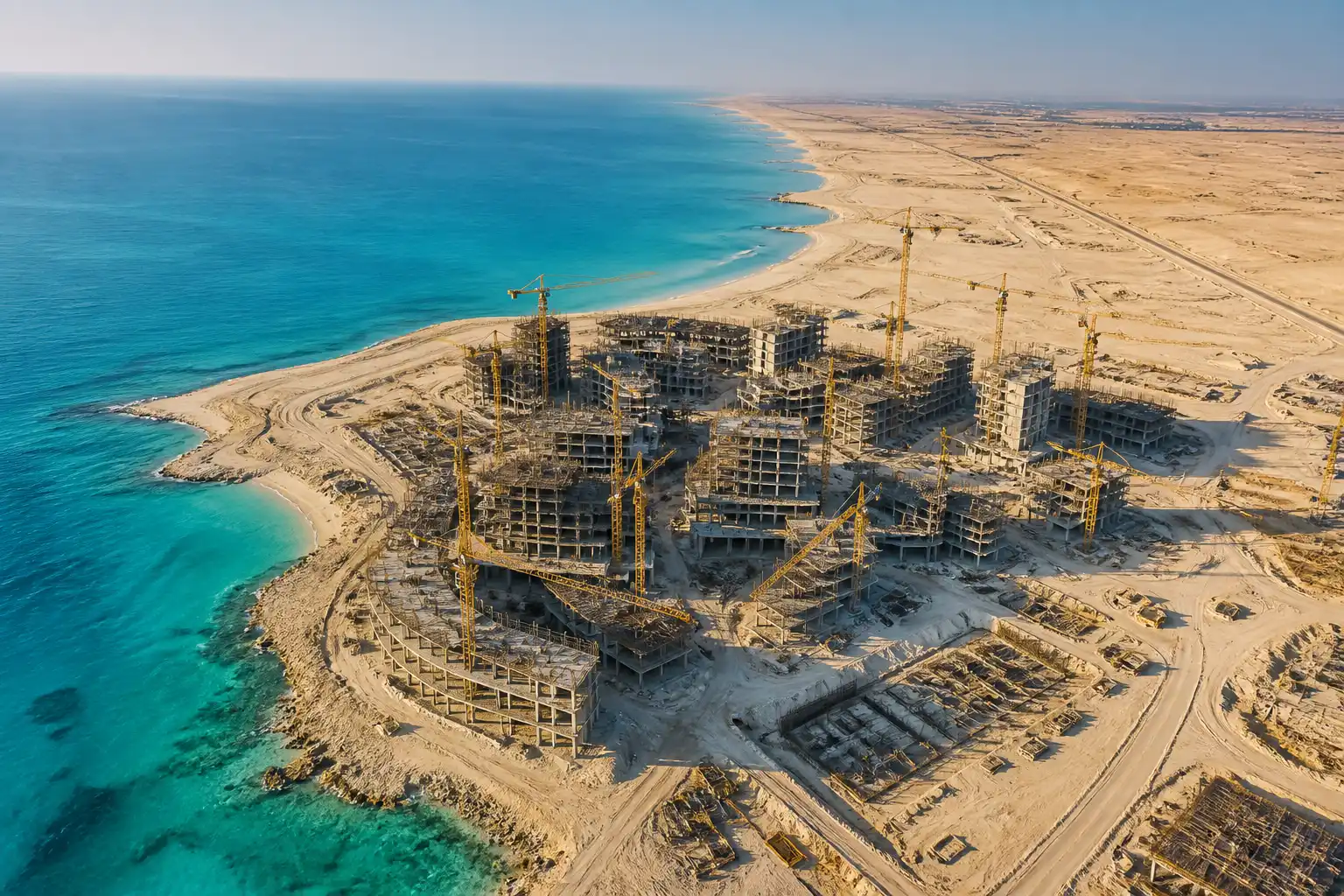
Egypt Alone Absorbs a Fifth of Africa’s FDI
The concentration inside Africa’s own numbers is stark. Egypt’s $15.5bn works out to roughly 22% of everything the entire continent attracted in 2025, more than double the next largest recipient.
| Country | 2025 FDI Inflow | Continental Rank |
|---|---|---|
| Egypt | $15.5bn | 1st |
| Guinea | $7.8bn | 2nd |
| Mozambique | $5.7bn | 3rd |
| Nigeria | $4bn | 4th |
| Ethiopia | $3.8bn | 5th |
| Morocco | $3.3bn | 6th |
Farid told the room that Africa did not benefit enough from the global investment growth recorded elsewhere. He pointed to a separate, sharper problem sitting underneath the continental figures: FDI into the world’s lowest income countries actually fell 2% in 2025, even as money flooding into wealthier economies climbed.
Where Is the World’s Investment Money Going?
Pedro Manuel, Acting Secretary-General of UNCTAD, presented the global findings behind Egypt’s ranking. Worldwide FDI grew 6% in 2025 to about $1.6tn, he said, but real growth was closer to 4% once financial flows tied to European cross-border financial centres were stripped out. UN Trade and Development’s own published data show the top 20 host economies absorbed more than 80% of every dollar that moved across a border last year.
The regional split UNCTAD reported shows how uneven that money is:
- $644bn is what developing Asia alone drew in, the single largest destination on the planet for foreign capital.
- 44% growth is South Asia’s expansion rate, the fastest of any region in the report.
- $190bn is Latin America and the Caribbean’s total, up 14% on the year before.
- $70bn is Africa’s entire continental haul, barely moving while other regions surged.
Manuel said investment is increasingly concentrated in a narrow band of strategic sectors: semiconductors, artificial intelligence, clean energy and critical minerals. Combined investment in those areas has grown more than fivefold since 2020 to reach $580bn, he said, now accounting for close to half of new projects announced worldwide. Separately, UNCTAD’s own report data show semiconductor investment grew at a 54% compound annual rate between 2020 and 2025, and AI infrastructure and data centres alone pulled in $341bn in 2025. Those four strategic categories now make up 44% of global greenfield project value, up from just 16% in 2020.
Egypt’s incentive list, energy, automotive, pharmaceuticals, logistics and information technology, touches that boom mostly at the edges. None of it yet approaches the scale of the AI infrastructure buildout reshaping where the rest of the world’s capital is landing.
Cairo’s Plan to Chase the Next Boom
Farid said the coming FDI strategy splits Egypt’s economy into two tiers: eight sectors judged ready to quickly absorb new investment, and four more that still need regulatory and legislative work before they can compete. The full list of all 12 has not been made public.
Abdelatty named the incentive priorities directly, tying tax and customs relief to specific industries:
- Renewable Energy – one of the sectors receiving tax and customs incentives under the reform push Abdelatty described.
- Automotive – included in the same incentive package alongside energy and pharmaceuticals.
- Pharmaceuticals – named specifically among the priority sectors for tax and customs relief.
- Logistics – covered under the same reform framework as part of a broader push to draw supply chain investment.
- Information Technology – covers artificial intelligence applications specifically, the category UNCTAD’s global data shows growing fastest.
Nan Li Collins, Director of the Investment and Enterprise Division at UNCTAD, told the Cairo audience that investment conversations worldwide have shifted away from chasing raw flow volumes. Governments now compete on building real productive assets, deeper local corporate capacity, better paid jobs and technology transfer, she said, not just on the size of the number they can announce.
The Paperwork Behind the Investment Push
Behind the sector strategy, Farid said his ministry is preparing a new package of decisions in the coming weeks to speed up capital increases and corporate mergers and acquisitions through a single integrated digital system, aimed at cutting processing times.
That builds on the cabinet approved “Economic Entities Platform,” which unifies company registration and licensing through one digital window. The platform currently covers 468 economic activities, with room to expand further. Farid said it depends on linking government databases so investors face fewer procedural hurdles.
The push lines up with what outside observers already flag as friction points. A U.S. government assessment of Egypt’s investment climate has previously highlighted licensing delays and bureaucratic overlap as recurring complaints among foreign investors, the exact pain points the new digital window is meant to remove.
One Coastal Mega Deal, Still Doing the Heavy Lifting
Much of Egypt’s FDI story still traces back to a single 2024 transaction. Large scale energy, real estate and green transition projects, the Ras El-Hekma development chief among them, continued driving inflows into 2025, according to UNCTAD’s underlying data.
- February 2024: Egypt and the UAE’s ADQ sign a $35bn deal to develop the 170 square kilometer coastal site at Ras El-Hekma on Egypt’s north coast, officials called it the largest single foreign investment in an urban project in the country’s modern history.
- 2025: Full year foreign direct investment reaches $15.5bn, with the same cluster of energy, real estate and green transition projects still carrying much of the load.
- January 2026: An earlier UNCTAD estimate puts Egypt’s 2025 FDI at close to $11bn, based on partial year data ahead of the full report.
- July 2026: UNCTAD’s World Investment Report 2026 launches in Cairo, revising the total up to $15.5bn and previewing the government’s 12 sector strategy.
The gap between the January estimate and the July total went unexplained at Monday’s event. It leaves a fair question hanging over how much of Egypt’s headline number rests on one real estate megaproject signed more than two years ago, rather than the broader diversification the new strategy is supposed to deliver.
Africa’s Poorest Nations Are Falling Further Behind
Abdelatty framed Egypt’s reforms against a harder global backdrop: successive crises, supply chain disruption and a widening gap in development and digital access between rich and poor nations, all adding uncertainty to investment decisions everywhere. He called for reforming the international economic and financial architecture so developing nations can reach finance, technology and investment on better terms.
Farid raised a specific fix while discussing the lowest income countries, whose FDI fell 2% even as global investment expanded. He argued for mechanisms that convert debt burdens into productive investment, a concept that keeps surfacing in international finance discussions about heavily indebted developing economies, though he did not detail how Egypt itself would apply it.
Collins closed her remarks on a steadier note for the continent as a whole. She said Africa continues to draw international investor interest, pointing to a rising count of newly announced projects as evidence of growing confidence, and thanked Egypt for hosting the report’s launch.
Frequently Asked Questions
What Counts as Foreign Direct Investment?
Foreign direct investment measures cross border money that buys a lasting, controlling stake in a company or project abroad, not short term trades in stocks or bonds. That distinction is why a single infrastructure deal like Ras El-Hekma can move a country’s entire annual total on its own.
Why Did Egypt’s FDI Estimate Change From $11bn to $15.5bn?
UNCTAD’s own numbers moved during the reporting cycle. An early 2026 estimate, based on partial year data, had put Egypt’s 2025 inflows near $11bn. The full World Investment Report, released in July with more complete figures, revised that total up to $15.5bn, and officials did not address the gap during the Cairo presentation.
Has Egypt Named All 12 Priority Sectors?
The full list is not yet public. Farid described eight sectors as ready for quick investment and four more needing regulatory work first, but the ministry has so far only named renewable energy, automotive, pharmaceuticals, logistics and information technology, including AI applications, as incentive priorities.
What Is Egypt’s State Ownership Policy Document?
It is the framework Abdelatty cited for capping government investment across the economy, intended to free up room for private companies in sectors the state has traditionally run. Officials have paired it with tax and customs incentives in the five priority sectors to draw private capital into that space.
What Did Egypt’s Minister Mean by Turning Debt Into Investment?
Farid raised the idea while discussing the lowest income countries, whose FDI fell 2% even as global investment grew. He argued for mechanisms that convert debt burdens into productive investment, without detailing how such a mechanism would work in practice for Egypt or elsewhere.
