
Egypt’s Ministry of Environment pulled ten agamas and a haul of wild turtles from a Cairo flea market this week, opening a legal case under a wildlife law that dates to 1994. The animals were seized at Souq Diana in the Al Azbakiya district, where inspectors say vendors were trading protected reptiles without a license.
The ministry has raided this market before. Independent assessments of Egypt’s wildlife trade have repeatedly found that prosecutions like the one now underway are rare, which is what makes this particular case worth watching as it moves through the courts.
Ministry Pulls Agamas and Turtles From a Cairo Flea Market
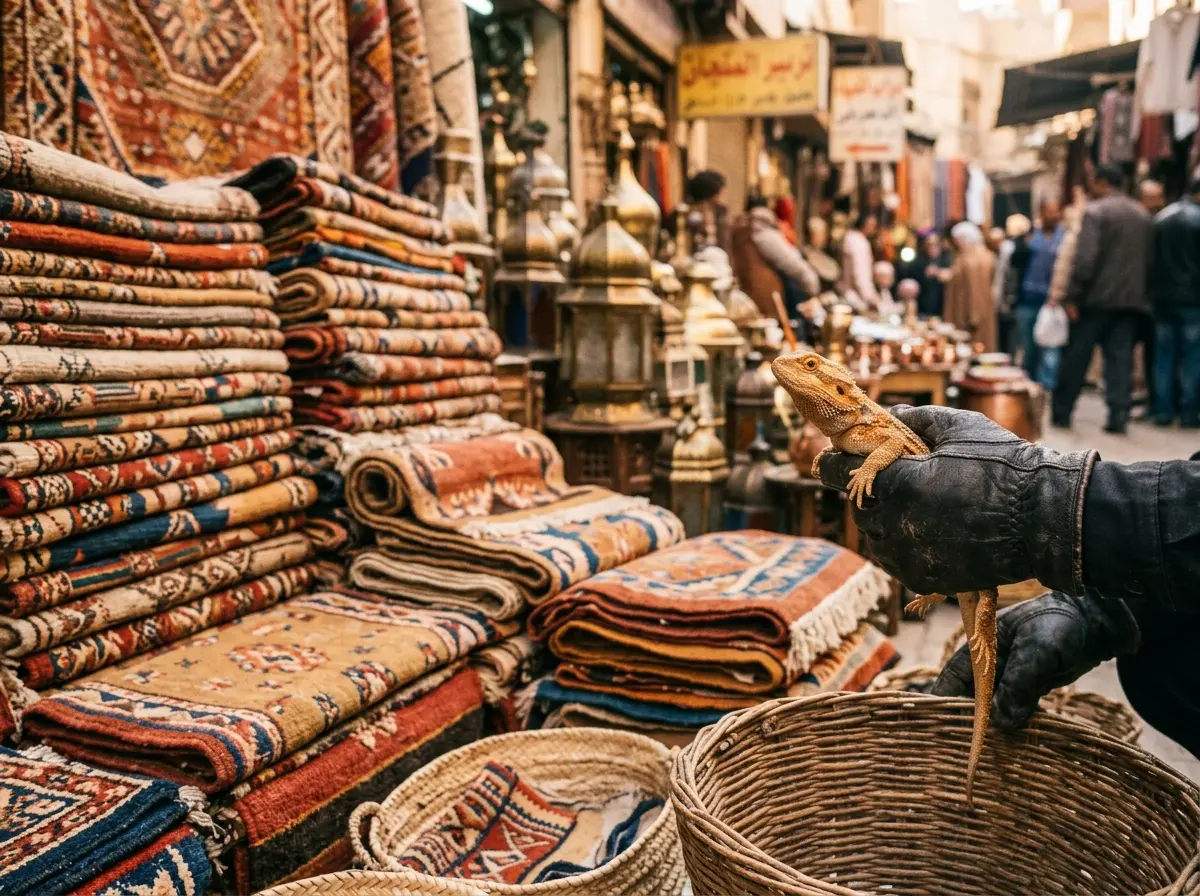
The operation was carried out by the ministry’s Nature Protection Sector during a routine inspection of Souq Diana, a weekly market known locally for antiques and secondhand goods. Officers confiscated ten agamas, spiny, sun loving lizards common across Egypt’s deserts, along with an unspecified number of wild turtles.
Both species are covered by national wildlife protections, and the ministry said the animals were being offered for sale in violation of those rules. The confiscated reptiles were placed under official custody, and legal proceedings were initiated against the individuals involved, according to the ministry’s statement on the raid.
Officials framed the sweep as part of a continuing campaign against Egypt’s illegal wildlife trade rather than a one-off event. That framing matters, because the market inspectors targeted this time has drawn their attention before.
What We Know:
- Ten agamas and a number of wild turtles were confiscated from Souq Diana in Al Azbakiya.
- The raid was carried out by the Nature Protection Sector under the Ministry of Environment.
- The seized animals are in official custody while legal proceedings move against the traders involved.
- Officials cited Article 28 of Law No. 4 of 1994 as the legal basis for the case.
What Remains Unconfirmed:
- The exact number of turtles seized has not been disclosed.
- The ministry has not named how many individual traders face charges.
- No court date or potential penalty has been made public yet.
Those gaps are typical of an enforcement case at this early stage, before charges are formally filed in court.
Souq Diana Has Been Here Before
This is not the first time the ministry’s inspectors have shown up at this address. An earlier joint inspection at Diana Market on Emad El Din Street, the same downtown stretch, turned up a very different haul: two horned owls, an eagle, four Egyptian chameleons and one Egyptian tortoise, all seized alive, alongside taxidermied specimens including a mongoose, five red foxes, five falcons and an African grey parrot. That earlier sweep was triggered after social media posts showed wildlife being sold openly at the market.
A separate raid in 2016, at Cairo’s Al-Sayeda Aisha market, pulled in fruit bats, Nile crocodiles, iguanas and monkeys in a joint operation between police and the ministry. Taken together, the three episodes trace a pattern: Cairo’s informal markets keep surfacing as trading points for protected and exotic species, and enforcement keeps returning to the same handful of locations rather than eliminating the trade outright.
| Inspection | Location | Animals Seized | Notable Detail |
|---|---|---|---|
| This week’s raid | Souq Diana, Al Azbakiya | 10 agamas, wild turtles | Legal proceedings opened against traders |
| Earlier inspection | Diana Market, Emad El Din Street | 2 horned owls, 1 eagle, 4 chameleons, 1 tortoise, plus taxidermied mongoose, foxes, falcons and parrot | Triggered by social media posts |
| 2016 raid | Al-Sayeda Aisha market, Cairo | Fruit bats, Nile crocodiles, iguanas, monkeys | Joint operation with Cairo police |
Souq Diana’s day-to-day reputation has nothing to do with wildlife. Local listings describe it as a weekly antiques and flea market, the kind of place shoppers browse for old furniture, brass and vintage odds and ends. The wildlife trade appears to run alongside that legitimate business rather than as its stated purpose, which is part of why it keeps slipping past casual notice.
Why Does Cairo Keep Turning Up on Wildlife-Trafficking Maps?
Cairo sits at a crossroads for illegal wildlife trafficking because of its geography and its air links, and reptiles and birds are the categories most commonly moved through markets like this one, ahead of mammals and marine species. Egypt’s own domestic ivory market, though officially restricted, has drawn separate scrutiny for years.
The wildlife trade monitoring network TRAFFIC has flagged Egypt’s unregulated ivory trade as large enough to draw foreign buyers despite the ban. A global wildlife trade report from CITES, the international treaty governing cross-border trade in endangered species, similarly found reptiles and birds account for the largest share of trafficked wildlife worldwide, a pattern this week’s seizure fits squarely into. One count from a separate Cairo flea market found roughly forty birds of prey, mostly kites and kestrels, crammed into a single small cage, an illustration of how casually protected species have circulated through the city’s informal markets.
That is not new information to the ministry. What has changed, at least on paper, is the frequency with which inspectors are showing up and the willingness to say publicly that a legal case has been opened.
Prosecutions Have Long Been the Exception
That last point carries more weight than it might first appear. An enforcement-needs assessment from the Species Survival Network (SSN, a coalition of conservation groups that monitors how countries enforce international wildlife trade rules) found that Egypt had made few arrests and rarely prosecuted anyone for illegal wildlife trade, and that confiscations themselves were uncommon relative to the scale of the trade its researchers documented.
A separate review prepared for the Convention on Migratory Species (CMS, a United Nations treaty body focused on species that cross international borders) examined Egypt’s national laws and their enforcement and reached a similar conclusion: the legal framework outpaces the enforcement behind it. Markets get inspected, animals get confiscated occasionally, but the cases that follow through to prosecution have been the minority.
Set against that backdrop, the ministry’s statement that legal proceedings were initiated against those involved in the Souq Diana case reads as more than routine language. It is the part of the announcement that past assessments suggest doesn’t always happen.
What Article 28 Prohibits
The legal basis for the case is Article 28 of Law No. 4 of 1994, Egypt’s core environmental protection statute, later amended by Law 9 of 2009. The article sets out a short list of banned activities involving protected wild birds and animals, all requiring a license that most street vendors do not hold.
- Hunting protected wild birds or animals.
- Capturing them from their natural habitat.
- Displaying them for sale or public viewing.
- Possessing them, including as pets.
- Selling or trading them commercially.
Each of those five acts is treated as a separate violation under the law, meaning a single market stall selling a captured lizard can trigger more than one charge at once. That breadth is part of why enforcement officials describe the statute as broad enough to cover most of what happens at markets like Souq Diana, even when the specific species involved change from raid to raid.
A Minister Holding Two Portfolios at Once
The public face of the response is Manal Awad, Egypt’s minister of local development and acting minister of environment, a dual role that puts the same official in charge of both municipal oversight of markets like Souq Diana and the wildlife law being enforced there. Awad, a veterinary medicine PhD holder, previously served as governor of Damietta and was the first woman to hold Egypt’s local development portfolio.
Her official ministry biography lists local governance reform and environmental development as linked priorities rather than separate tracks, a framing that lines up with a case that sits at the intersection of a street market and a conservation law. Awad called on the public to report illegal wildlife activity, including the sale or private ownership of protected species, saying the reports support national efforts to conserve Egypt’s biodiversity and enforce environmental regulations.
That appeal is not a new idea from her office. It builds on infrastructure the ministry already has in place for exactly this purpose.
The Case Heads to Prosecutors Next
With the animals in custody and a legal file opened, the Souq Diana case now moves toward Egyptian prosecutors, who will decide what charges to pursue against the traders identified in the raid. The ministry has not said how many people are implicated or when a court date might follow.
In 2022, facing a rise in reported illegal wildlife sales, the ministry set up what it described as Egypt’s first hotline dedicated to public tips on wildlife trafficking. Awad’s appeal for public reporting effectively points back to that same channel, suggesting the ministry is leaning on public tips as much as scheduled inspections to find the next Souq Diana.
Whether this case ends in the kind of prosecution that past assessments found rare, or joins the long list of seizures that quietly closed without charges sticking, will depend on decisions still ahead in Egyptian courts.
Frequently Asked Questions
How Can Someone Report Illegal Wildlife Trade in Egypt?
The Ministry of Environment operates a dedicated hotline, launched in 2022 as the first of its kind in Egypt, specifically for public tips on illegal wildlife sales and trafficking. Minister Manal Awad has renewed calls for residents to use official channels to report sightings of protected species being sold or kept as pets, rather than posting about them on social media.
Can Tourists or Residents Legally Buy Reptiles at Egyptian Markets?
No. Article 28 of Law No. 4 of 1994 bans purchasing, possessing or transporting protected native species without a license, regardless of the buyer’s nationality. Species covered by CITES also require export permits before they can legally leave the country, which most souvenir-style purchases at markets like Souq Diana would not have.
Are Agamas and Turtles Officially Endangered Species?
Egyptian law protects native wild birds and animals broadly under Law No. 4 of 1994, not only species with a formal international endangered listing. That means agamas and wild turtles can be protected under national rules even without the kind of high-profile endangered status attached to species like the Egyptian tortoise, which was seized in an earlier market raid.
Is Souq Diana a Legal Market?
Yes. Souq Diana operates as a legitimate weekly antiques and flea market on Emad El Din Street, drawing shoppers for secondhand furniture, brassware and vintage goods. The wildlife trade that inspectors targeted runs informally alongside those legal stalls rather than as the market’s advertised purpose, which is part of why it has drawn repeat scrutiny.
