
Jordan Gayle punched his partner in the face because, he told the court, she had not made him breakfast. When she tried to run from his home in Acocks Green, he grabbed her, leaving a scratch on her arm. A Birmingham magistrate gave him a 24-month community order and let him walk free.
That outcome will read to some as a small, local injustice. It is actually closer to the norm. England and Wales prosecuted a record run of domestic abuse cases last year, more of them survived a victim’s attempt to pull out than in previous years, and most of the people convicted at the end of that process, like Gayle, never see the inside of a cell.
A Row Over Breakfast Ends With a Punch
Gayle, 45, of Palmers Way, Acocks Green, assaulted his partner at his address on October 21, 2025. He appeared at Birmingham Magistrates’ Court on Friday, July 17, for sentencing, having already pleaded guilty to assault by beating.
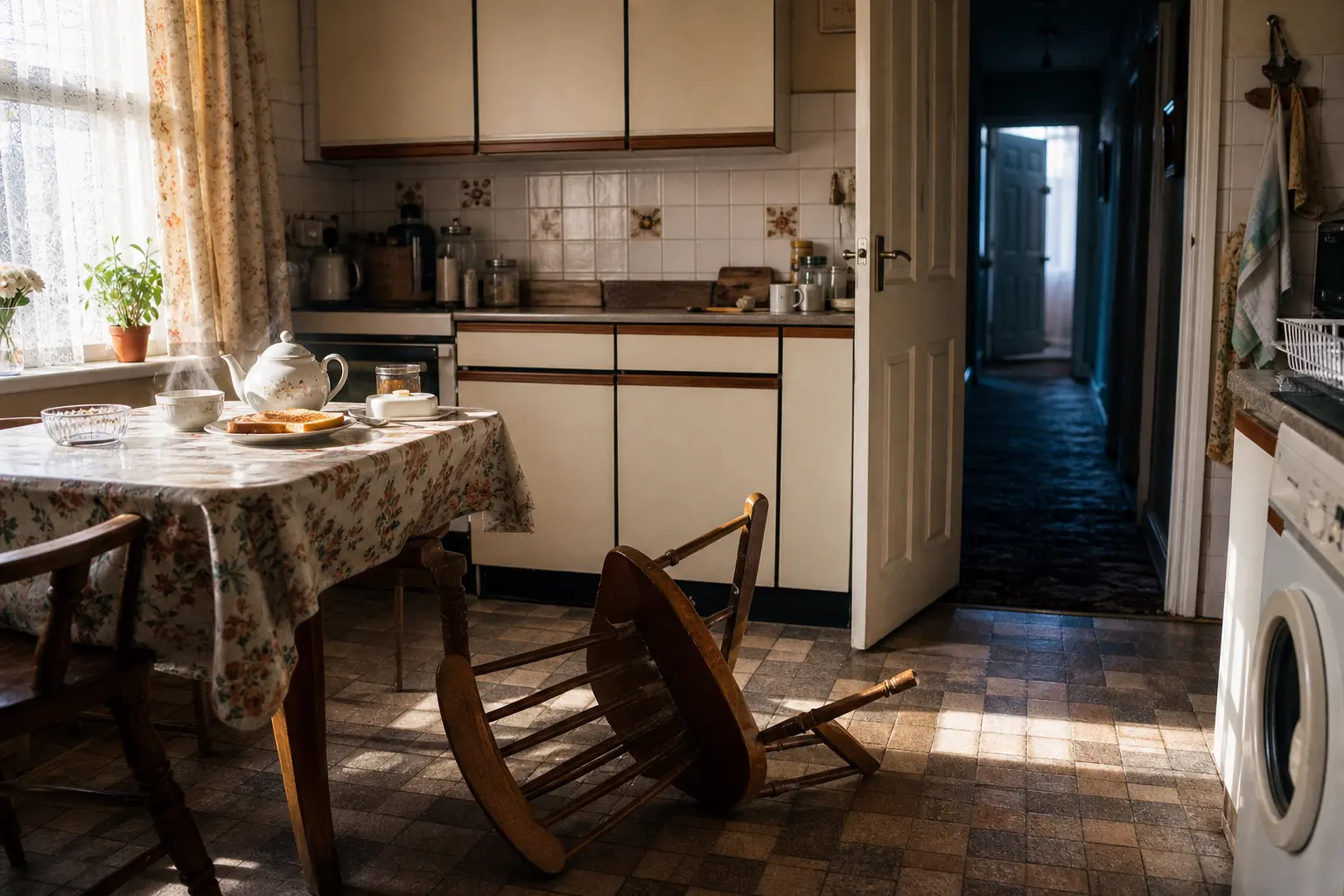
Shajah Javed, prosecuting, told the court the victim said she had been assaulted at his address over an argument about him not getting breakfast. Gayle punched her to the face. She fled the address. He tried to grab her to stop her leaving, causing a scratch.
The case took a turn typical of domestic abuse files. Javed said the victim later advised she did not wish to support the case after contacting police, then made a further statement detailing the assault. Alum Zeb, defending, told the court his client accepted he had assaulted a partner he had been with for what Zeb called a very long time, adding that she still wants to be with him.
She Withdrew Her Statement, Then Made Another
What happened to Gayle’s partner, dropping her account and then giving it again, is close to routine in these cases. The 54,987 domestic abuse related prosecutions brought in England and Wales in the year ending March 2025 were up 7.4% on the year before, and thousands of them ran into exactly this problem.
- 54,987 domestic abuse related prosecutions across England and Wales in the year to March 2025, a 7.4% rise on the year before
- 41,070 of those cases ended in a conviction
- 13,917 did not, and 6,624 of those non-convictions traced back to victim related issues, among them retractions and no shows at trial
Prosecutors have a name for the workaround. It matters here because it is the reason Gayle’s case did not simply collapse when his partner first pulled back.
- Evidence-led prosecution – a case the Crown Prosecution Service can still pursue using injuries, 999 calls, photographs or earlier complaints, without needing the complainant to give live evidence
In Gayle’s case, his partner eventually gave a further statement anyway. But the option to proceed without her was always there, and it is what has let conviction rates hold up even as retraction stays common.
How a Guilty Plea Bought Him a Community Order
Courts are not supposed to treat a domestic assault as an ordinary punch-up. The Sentencing Council’s own guidance treats a domestic setting as an aggravating factor that raises the seriousness of an assault, on the reasoning that it breaches the trust that is meant to exist inside a relationship. That aggravation sits on one side of the scale. Guilty pleas, a clean recent record and a victim who wants the relationship to continue sit on the other.
The Case for Leniency
Zeb argued four points in mitigation, and the bench appears to have accepted all of them.
- A long relationship that Zeb described as a good one
- No prolonged or sustained attack, in the defence’s telling
- Only minor physical injuries to the victim
- No further offending in the 12 years since Gayle’s last conviction
What the Court Ordered
| Measure | England and Wales | West Midlands |
|---|---|---|
| Latest annual snapshot | 3.8 million people affected, 7.8% of adults, year ending March 2025 | 3,000 fewer recorded domestic abuse victims than the year before |
| Year on year direction | No statistically significant change from the year before, per the ONS | Force describes a clear fall, inside an almost 6% drop in total recorded crime |
| Prosecutions and casework | 54,987 domestic abuse related prosecutions, up 7.4% | Not broken out separately from the national CPS total |
Magistrate Michael Ward set the sentence at a 24-month community order.
Bearing your eventual guilty plea in mind, we’re halving court costs to £200 with a surcharge of £114. We understand you’re on Universal Credit, so it will be reduced from that.
Ward delivered that line directly to Gayle, who stood in the dock in a black hoodie. The prosecution had originally sought £314 in costs.
3.8 Million Cases a Year and No Sign of Decline
Zoom out from one courtroom in Birmingham and the scale gets harder to treat as background noise. The Crime Survey for England and Wales estimated that 3.8 million people experienced domestic abuse in the year ending March 2025, a prevalence rate of 7.8%. That broke down to 2.2 million women, 9.1% of the female population, and 1.5 million men, 6.5% of the male population.
None of that moved much from the year before. The ONS found no statistically significant change in domestic abuse prevalence between the year ending March 2024 and the year ending March 2025. A quarter of adults, 25.8%, said they had experienced it at some point since turning 16, a lifetime figure of roughly 12.5 million people. Younger adults reported it far more than older ones: 18.2% of 16 to 19 year olds in the last year alone, against a fraction of that for people over 25.
West Midlands Says Its Own Numbers Are Falling
Against that flat national picture, West Midlands Police has told a different story about its own patch. The force’s March 2025 crime figures announcement said 3,000 fewer domestic abuse victims were recorded than the year before, part of an overall drop of roughly 18,000 offences, nearly 6% of total recorded crime across the force.
A falling local count and a flat national survey are not measuring quite the same thing. One counts what gets reported to police in one force area; the other estimates lived experience across the whole of England and Wales, reported or not. Gayle’s assault happened in that same West Midlands patch the force says is improving, in the same year the national prevalence data show essentially no movement at all.
A Conviction That Still Ends at Home
Whichever trend line is right, Gayle’s sentence points to the part of the system that gets the least attention once a case closes. The Domestic Abuse Commissioner for England and Wales has told Parliament that most domestic abuse perpetrators remain living in the community whether or not they have been charged or convicted, and has questioned how effective current arrangements are for managing them once they are back among the public. Her evidence to Parliament on community management gaps argued for a coordinated, multi-agency response rather than the patchwork that exists now.
Gayle is that arrangement in miniature. He was not sent to custody. He was not required to leave Acocks Green. His partner, who twice changed her mind about giving evidence and still wants the relationship to continue, remains the person best placed to know whether a community order changes anything.
His order runs for 24 months from July 17, 2026. If he breaches it, he is back in front of a magistrate, this time with a conviction already on the file.
