
Ten ready-to-operate industrial complexes, five technological universities and Red Sea ports have turned Upper Egypt into a working destination for foreign factories, the Cabinet Media Centre said, as the region’s unemployment rate fell to 4.6 percent in 2025 from 12.3 percent in 2014.
The package of infrastructure, land rules and training sits behind listed projects that already include Samsung’s $700 million electronics complex in Beni Suef and a multi-billion-pound solar build in Qena.
The pitch is practical rather than aspirational. Sheds, power, ports and trained graduates are already in place, so an investor can move from decision to production without waiting on basic civil works. That is the difference the Cabinet Media Centre is selling.
Ten complexes stand ready for tenants
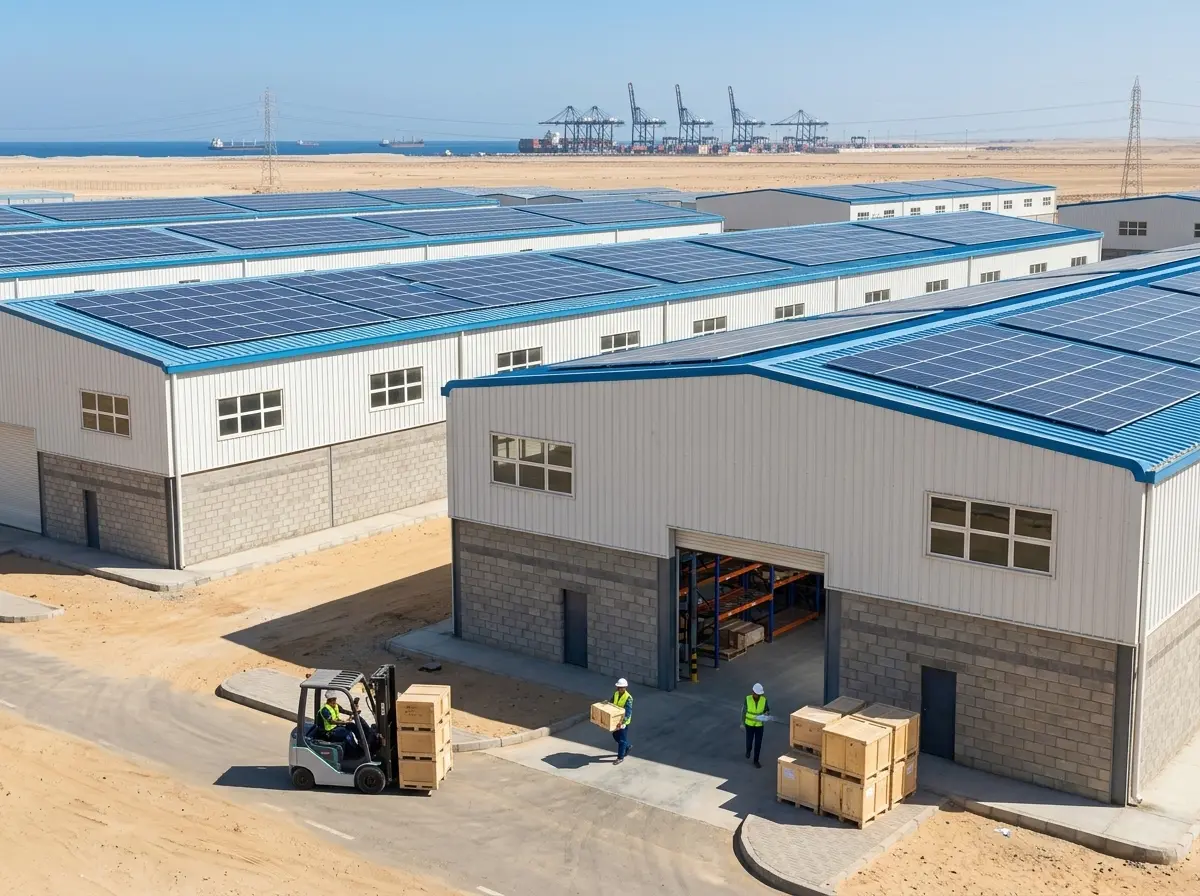
The Cabinet Media Centre listed logistics infrastructure as the first draw: 10 fully equipped industrial complexes plus the ports of Safaga and Hurghada and the Argeen land crossing. These sites are presented as ready for immediate occupation rather than greenfield builds that can take years.
Earlier state reporting put the same complexes at 2,628 industrial units providing 26,000 jobs. That base of finished sheds, power and utilities is what lets an investor move from decision to production without waiting on basic civil works.
- Complexes span Upper Egyptian governorates including Beni Suef, Minya, Assiut, Sohag, Qena, Luxor and Aswan corridors.
- Units come with water, drainage, electricity and telecoms already installed.
- Land can be allocated at reduced prices or under usufruct terms carrying exemptions of up to 10 years.
- Faster licensing is paired with training support for the workforce.
The Upper Egypt Development Authority, set up in 2018 as a public service body, has finished about 43 projects and has 20 more under way. The complexes form the industrial core of that programme and of the wider government priority on Upper Egypt development.
Ready units change the risk profile. An electronics or garments line does not need to fund a multi-year build before the first shift clocks in. Power and drainage are already live. That compresses the gap between a board decision and the first export container.
Foreign factories already on the ground
The centre named five concrete international projects as proof that the pitch is working. They cover electronics, solar power, auto components, telecoms gear and garments.
| Project | Location | Investment | Sector |
|---|---|---|---|
| Samsung electronics complex | Beni Suef | $700 million | Electronics |
| Obelisk solar energy project | Qena | EGP 30 billion | Solar + storage |
| Yazaki automotive wiring harness | Fayoum | €26.7 million | Auto components |
| Nokia production line with SICO | Assiut | $20 million | Telecom equipment |
| Swiss Cotton Garments factory | Beni Suef | $15.4 million | Textiles |
Samsung’s Beni Suef plant is the company’s first in the Middle East and Africa and has already drawn expansion talk, including tablet lines. The Obelisk project, developed with Scatec, is a 1 125 MWp solar plant in Qena with battery storage; its first 500 MW phase opened in early 2026. Yazaki, Nokia-SICO and the Swiss garments plant add diversified manufacturing footprints further south.
These sit alongside other industrial bets in the region, including Egypt’s first wind turbine factory and wind farm deal and a separate new industrial investment deal with Eritrea. The pattern is the same: capital is arriving where land, power and labour are already organised.
The spread of sectors matters as much as the headline sums. Electronics, solar with storage, auto wiring, telecom gear and garments do not share a single supply chain. That mix reduces the chance that a downturn in one industry empties the complexes at once.
Tax breaks and cheap land tip the scale
Investors receive a standard set of fiscal and administrative incentives that apply with extra force in Upper Egypt under the national framework.
- Tax deduction equal to 50 percent of investment costs.
- Customs duty cut to 2 percent on machinery and equipment.
- Customs exemptions on moulds and production inputs that are later re-exported.
- Industrial land at reduced prices or usufruct, with exemptions lasting up to 10 years.
- Financial support for exporting manufacturers, faster licensing and workforce training help.
These track the Investment Law tax reduction system that steers capital toward underdeveloped governorates. The 50 percent deduction is the headline figure repeatedly cited for Upper Egypt projects. Combined with ready units, the cost of entry drops enough to offset distance from Cairo and Alexandria ports for many export-oriented lines.
Land terms and the customs cuts work together. A firm that pays less up front for a plot, then imports machinery at 2 percent duty, carries a lighter balance sheet into the first years of operation. Exemptions on moulds and re-exported inputs further protect thin export margins.
Five tech universities feed the plants
Skills supply is no longer left to chance. The Cabinet listed five technological universities already operating in the region:
- Beni Suef Technological University
- New Assiut Technological University
- International Technological University in Fayoum
- International Technological University in Assiut
- International Technological University in Thebes
They are designed to produce technicians and engineers matched to factory floors rather than general degrees. Training support attached to the investment incentives lets firms top up that pipeline with on-site programmes. For a wiring-harness plant or an electronics line, the ability to hire and retain local staff within a short radius removes one of the classic risks of southern locations.
The universities sit near the same corridors as the complexes. Graduates do not have to relocate to Cairo to find industrial work. Firms, in turn, do not have to import large numbers of supervisors from the north. That local loop is what makes the labour offer credible to a foreign plant manager.
Safaga and the Red Sea export route
Geography used to be the complaint. Upper Egypt sat far from Mediterranean export gates. The Cabinet now points to Safaga, Hurghada and the Argeen land crossing as the counter. Safaga in particular is framed as Upper Egypt’s gateway, with new multipurpose terminal capacity aimed at mining output, industrial cargo and routes toward the Gulf and East Africa.
A functioning Red Sea exit shortens the inland haul for goods made in Qena, Sohag or Assiut. Combined with the Nile corridor and new roads built over the past decade, the logistics penalty has narrowed. Plants that once looked stranded now sit on a workable export path.
The Argeen land crossing adds a second door for overland trade. Together with Safaga and Hurghada, the region is no longer locked into a single long run to the Mediterranean. That choice of exits is part of why export-oriented lines can now treat Upper Egypt as a viable base.
How the 2018 authority built the base
The Upper Egypt Development Authority was created in 2018 to concentrate effort across the southern governorates. Its completed and ongoing project list runs well beyond factories into roads, housing, water and power. The industrial complexes are one visible slice of that work.
- 2018: Authority established as a public service body for sustainable development across Upper Egypt.
- By 2023: Ten industrial complexes reported with 2,628 units and 26,000 job slots; broader state spending on the region already measured in the hundreds of billions of pounds.
- 2025: Regional unemployment recorded at 4.6 percent.
- 2026: Cabinet Media Centre packages the complexes, ports, universities and incentives as a single investment offer; major foreign plants are operating or expanding.
The sequence matters. The authority and the complexes came first. The foreign nameplates and the unemployment drop arrived after the sheds and the power were already standing.
About 43 finished projects and 20 more under way show the authority’s brief is wider than industry alone. Roads, housing, water and power underpin the factories. Without that base, ready units and tax rules would not hold tenants for long.
Unemployment falls as plants hire
The Centre tied the industrial push directly to the labour market. Unemployment across Upper Egypt’s governorates dropped 7.7 percentage points to 4.6 percent in 2025 from 12.3 percent in 2014. That is one of the sharper regional improvements recorded in the country over the period.
Key markers
- 12.3 percent unemployment in 2014
- 4.6 percent in 2025
- 7.7 point decline
- Samsung, Yazaki, Nokia-SICO and garments plants among the employers adding headcount
Population in the Upper Egypt governorates is roughly 36 million, about 40 percent of Egypt’s total. A sustained lower jobless rate in that base changes household incomes, migration pressure toward Cairo, and the political weight of the south. The factories and the training pipeline are the practical link between the Cabinet’s investment slides and those household numbers.
| Marker | Figure |
|---|---|
| Unemployment in 2014 | 12.3 percent |
| Unemployment in 2025 | 4.6 percent |
| Decline over the period | 7.7 points |
| Regional population share | About 40 percent of Egypt |
| Job slots in the ten complexes | 26,000 |
The same infrastructure that drew the first wave of foreign plants is still available for the next. Ready units, land terms, tax rules, tech-university graduates and a Red Sea exit now form a package that no longer requires an investor to build everything from scratch. That is the sleeper shift: Upper Egypt has moved from a development slogan to a place where factories already run and more can be switched on quickly.
The Package Works as One Offer
Each piece of the Cabinet brief is familiar on its own. Complexes, tax rules, universities and ports appear in many investment pitches. The change is that they now operate together in the same governorates.
A tenant in Beni Suef or Assiut can take a finished unit, claim the 50 percent tax deduction, hire from a nearby technological university, and ship through Safaga. No single incentive has to carry the whole decision.
- Finished units remove years of civil works.
- Fiscal rules cut the cash needed at entry.
- Local graduates and training support fill the first shifts.
- Red Sea and land exits shorten the path to foreign buyers.
That stack is why the centre can present Upper Egypt as ready rather than planned. The foreign plants already listed are the proof of concept. Empty sheds and open land terms remain for the next wave.
Southern Jobs Ease Pressure on Cairo
A region that holds roughly 36 million people cannot keep exporting surplus labour north without cost. The 7.7 point fall in unemployment points the other way: more households can earn near home.
Factories and the five technological universities form the direct channel. Wiring harnesses, electronics, garments and telecom gear need steady local headcount. Training support attached to the incentives helps firms keep that headcount rather than cycling workers through short contracts.
Lower migration pressure toward Cairo is a side effect with national weight. So is a larger industrial tax base in governorates long treated as dependents. The Cabinet figures do not spell out every household gain, but the labour-market swing and the named employers sit on the same map.
The offer stays open. Ready units, land terms and the Red Sea route are still in place for plants that have not yet signed. The first wave showed the model can run. The next wave will test how far it scales.
Frequently Asked Questions
What tax and customs incentives apply to industrial projects in Upper Egypt?
Investors can claim a tax deduction equal to 50 percent of investment costs, pay only 2 percent customs duty on machinery and equipment, and receive exemptions on moulds and temporary production inputs that are later re-exported; land can also carry reduced prices or usufruct terms with exemptions of up to 10 years under the national Investment Law framework that favours the region.
How many industrial units do the 10 complexes contain?
State reporting from 2023 put the ten industrial complexes at a total of 2,628 units with capacity for 26,000 jobs; the Cabinet Media Centre in 2026 continues to describe them as ready-to-operate.
Which major foreign industrial projects are already listed in Upper Egypt?
Confirmed examples include Samsung’s $700 million electronics complex in Beni Suef, the Obelisk solar project in Qena valued at EGP 30 billion, Yazaki’s €26.7 million wiring-harness plant in Fayoum, a $20 million Nokia-SICO production line in Assiut, and a $15.4 million Swiss cotton garments factory in Beni Suef.
By how much has unemployment fallen in Upper Egypt?
The regional rate declined 7.7 percentage points to 4.6 percent in 2025 from 12.3 percent in 2014, according to the figures released with the Cabinet Media Centre briefing.
Which technological universities support industry in the region?
Five are named: Beni Suef Technological University, New Assiut Technological University, International Technological University in Fayoum, International Technological University in Assiut, and International Technological University in Thebes.
