
Egypt’s natural gas production sits at about 4.1 billion cubic feet per day while daily consumption runs near 6.5 bcf, leaving a shortfall of 2.5 to 3 bcf that must be filled by imports. Official documents reviewed by Reuters project total gas imports, pipeline plus LNG, at roughly 1.08 trillion cubic feet from July 2026 through June 2027. The same country that once exported LNG from Idku and Damietta now charters floating regasification units and negotiates multi-year cargoes, yet its terminals and pipelines still draw gas from Israel and, soon, Cyprus for processing and re-export.
The arrangement looks like decline. It functions as a different form of leverage.
Production fell a third in three years
Zohr, the giant field Eni brought online in late 2017, pushed Egypt to self-sufficiency and net exporter status by 2019. Output for the country as a whole peaked near 70.4 billion cubic meters in 2021. By 2024 it had dropped to 49.4 Bcm, a one-third decline at roughly 11 percent a year, according to OIES analysis of Egypt gas balances. Decline accelerated through 2024, with quarterly drops reaching 20 percent late in the year.
Tharwat Hassane, petrophysical adviser and operational general manager at Sahara Oil and Gas, put the current figures plainly: production around 4.1 bcf against consumption of 6.5 bcf. Arrears to international oil companies had climbed above $6 billion earlier, choking new drilling. The government repaid about $4.2 billion in 2025 and cut the outstanding balance toward $1.1 billion by early 2026, while announcing a five-year plan for 480 wells and more than $5.7 billion in investment. Fresh Western Desert finds and Zohr workovers have added incremental volumes, yet the gap remains structural.
- 2021 peak: 70.4 Bcm annual production, net LNG exporter
- 2024: 49.4 Bcm production, net importer with Israeli pipeline gas and LNG cargoes covering roughly one-fifth of demand
- Current daily: ~4.1 bcf output, ~6.5 bcf use, shortfall covered by imports
- Target: lift output toward 6.4-6.6 bcf/d medium term
Electricity demand keeps rising with population and summer peaks that can exceed 37 GW. Gas still fuels the bulk of power generation. Without faster renewables or efficiency gains, the import bill stays high.
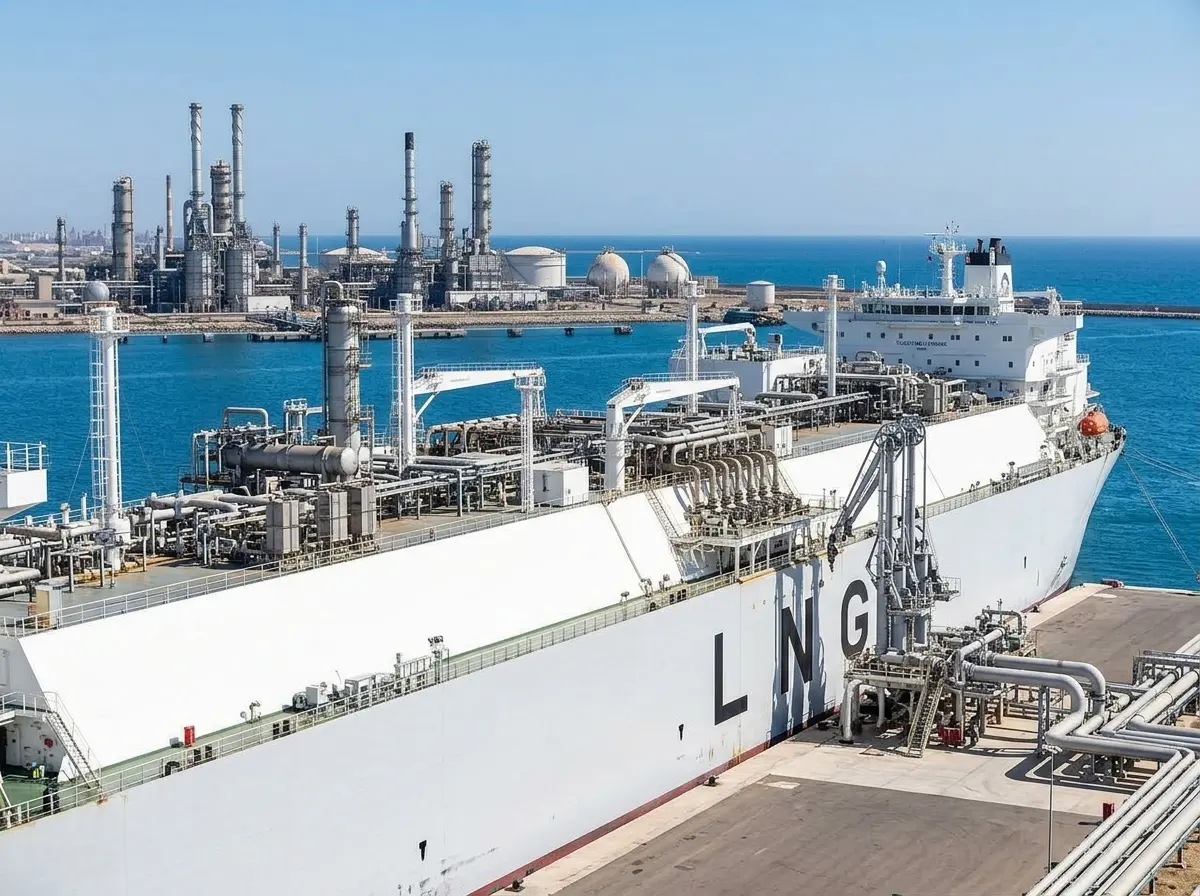
Idku and Damietta still set the regional timetable
Egypt holds the only operating liquefaction capacity in the Eastern Mediterranean. Idku’s two trains deliver a combined 7.2 million tonnes per annum. Damietta’s SEGAS plant adds roughly 5 mtpa, for a total near 12.7 mtpa. Those trains once ran on Egyptian molecules. Now they stand ready for third-party gas.
Cyprus has no liquefaction of its own. Building one would take years and billions. Instead, commercial agreements signed in 2025 route Cronos gas, operated by Eni and TotalEnergies, into Egypt’s system via a short tie-back to Zohr facilities, then into Damietta for export. First flows are targeted around mid-2027, with volumes potentially 800-900 million cubic feet per day in the initial phase. Aphrodite, operated by Chevron, Shell and NewMed, carries a later timetable, first gas closer to 2031 under current plans, also via Egyptian pipelines and terminals. Half of early Cronos volumes may stay inside Egypt for domestic use; the rest becomes LNG for Europe and Asia.
Israel already pipes gas from Tamar and Leviathan into the Egyptian grid. A $35 billion, 15-year deal extending to 2040 commits roughly 130 billion cubic meters from Leviathan alone. Expansions at both Israeli fields aim to lift export capacity further. Egypt takes the molecules, meets local demand first, and liquefies any surplus. The model turns Egypt into the region’s processor rather than its sole producer. An EIA Eastern Mediterranean gas overview notes that Cyprus’s fields will compete with Israeli gas for the same Egyptian export slots once both are online.
| Facility | Type | Capacity | Role in 2026 |
|---|---|---|---|
| Idku (ELNG) | Liquefaction | 7.2 mtpa | Export trains; future Cronos feed |
| Damietta (SEGAS) | Liquefaction | ~5.2 mtpa | Export; Cronos primary route |
| Four FSRUs | Regasification | ~2.7 bcf/d combined | Import peak cover at Ain Sukhna and Damietta |
| SUMED / Suez | Transit | Pipeline + canal | Red Sea-Med connectivity |
These assets cannot be duplicated quickly by neighbors. That is the source of remaining influence.
Israeli volumes buy security and create exposure
Pipeline imports from Israel have become the largest single balancing item. At times they have supplied more than 1 bcf/d and covered a substantial share of Egypt’s total gas imports. The arrangement survived the Gaza war and earlier field shutdowns, but every interruption forces Egypt to scramble for spot LNG or burn more fuel oil. A July 2026 drone strike that damaged the Energos Winter FSRU at Damietta underlined how concentrated the import infrastructure has become.
On X, Egyptian and regional voices describe the dependence in blunt terms. One widely viewed post noted that Israel already accounts for a large fraction of Egypt’s gas imports and a material slice of overall consumption, framing the $35 billion deal as economically necessary yet politically awkward. Crowd commentary repeatedly flags the risk that any prolonged Israeli outage would hit Egyptian power plants and factories first. The same pipelines that deliver molecules also transmit geopolitical weather.
Egypt has signed MoUs to send gas northward to Lebanon and Syria via the Arab Gas Pipeline in winter surplus months. In practice those flows often rearrange Israeli molecules moving through the system. The broker role runs both directions.
Four floating units and a rising import bill
To cover summer peaks Egypt expanded regasification to four FSRUs with combined capacity near 2.7 bcf/d. Units have been chartered from Höegh, SEFE and others, with some seasonal swaps involving Turkey’s BOTAŞ. The floating fleet gives flexibility without multi-year onshore construction. It also locks in charter costs and keeps hard-currency outflows high.
LNG imports climbed from near zero in 2023 to roughly 4.4 bcm in 2024 and around 13 bcm in 2025. First-quarter 2026 alone saw 4.3 bcm of LNG, more than double the prior-year period, according to JODI-linked reporting. Spot purchases at premiums to European benchmarks, plus financing for deferred payments, have pushed the monthly natural-gas import bill sharply higher at times. Multi-year contracts under discussion with Shell, BP, TotalEnergies and others aim to reduce that volatility. The talks mirror earlier patterns of long-term cover, as covered in reporting on multi-year LNG supply talks with majors.
If the cargoes are paid for in dollars, burned at subsidized domestic prices, and generate little export revenue, the broker model becomes a fiscal drain rather than a strategic asset. Clearing IOC arrears and restoring upstream activity remain the only durable offsets.
What three fixes would change the math
Cairo’s own officials and local analysts list the same priorities:
- Accelerate domestic drilling and field redevelopment so output climbs back toward 6 bcf/d and beyond
- Raise the renewable share in power generation faster, cutting the gas burn that now dominates the electricity mix
- Diversify pipeline and LNG suppliers so no single neighbor or spot market can dictate terms
Renewable targets have been revised more than once. Earlier goals of 42 percent by 2030 were dialed back in some IMF-linked documents toward roughly 30 percent; other statements still cite higher ambitions for 2030-2040. Solar and wind additions continue, yet gas remains the flexible backbone for peak load. Tenders for floating LNG storage units show how seriously peak demand is still managed with imported molecules.
EGAS production and field development role sits at the center of both the upstream recovery effort and the import logistics. Without measurable gains on all three fronts, influence rests on infrastructure that Egypt does not fully control upstream of the beach.
Cyprus gas arrives into a tighter system
Cronos is the nearer-term test. Eni has a track record of fast East Med developments; Zohr itself went from discovery to first gas in roughly 2.5 years. The short distance to existing Zohr infrastructure supports an optimistic mid-2027 start. Once online, those volumes can either fill Egyptian demand or free capacity for LNG exports. Aphrodite’s later schedule leaves more time for commercial splits between domestic use and export to be renegotiated under Egyptian priority rules.
The irony is sharp. Cyprus gains a quick route to market it could not build alone. Israel gains a long-term buyer and export path. Egypt gains throughput fees, processing margin and the diplomatic status of the indispensable node. At the same time every new molecule that enters the system increases the value of the very terminals and pipelines that also make Egypt vulnerable to disruption. The strategic value of Egypt LNG terminals rises precisely because global chokepoints and regional wars keep reminding buyers how few alternatives exist.
Recent drone damage to an FSRU and circulating target lists that name Idku, Damietta and Zohr as Europe-linked assets only underline the exposure. Influence and risk travel the same pipes.
The domestic ledger decides whether the broker model holds
Foreign-currency reserves, electricity tariffs, industrial competitiveness and household supply security form the real scorecard. Cargo counts and MoUs look impressive until the import bill crowds out other spending or until a summer heatwave collides with an Israeli outage. Egypt has already demonstrated it can re-export small LNG volumes when winter demand eases and new wells come online. Sustaining that while covering a structural shortfall requires the production recovery and renewables push to deliver on schedule.
The country no longer needs to own every molecule that moves through its system. It does need the system itself to remain solvent and politically manageable. Rising LNG imports therefore sit inside a larger architecture: one that can still project regional weight if the domestic books stay balanced, and one that turns scarcity into pure cost if they do not.
For now the terminals keep working, the FSRUs stay on station, and the deals with Israel and Cyprus keep advancing. The paradox is operational, not theoretical.
