
Lebanese Prime Minister Nawaf Salam told visiting US officials on Friday that Israel must halt destruction operations, expand pilot areas and set a clear timetable for withdrawal from Lebanese territory. Hours later Hezbollah leader Naim Qassem accused Beirut of exposing the Lebanese army to bombardment and Israeli pressure under a deal that has produced no visible gains.
The exchange crystallizes the bind created by the June framework: the Lebanese state accepted a sequence that puts army deployment and Hezbollah disarmament ahead of any firm Israeli exit calendar.
That bind is political as much as military. Beirut must show the public it can protect the army and recover land, while the same document requires the army to clear zones before any redeployment clock starts. Each side now reads the same text as proof the other is stalling.
Salam’s Meeting With the US Team
According to a statement from the prime minister’s office, Salam met US Ambassador to Beirut Michel Issa and General Joseph Clearfield, who heads the US military coordination group for Lebanon. They reviewed the military track of the negotiation framework and conditions in the south.
Salam pressed three points: stop the demolitions, widen the pilot zones, and fix a timetable for full Israeli pullout. Parliament Speaker Nabih Berri held a separate meeting with the same officials. Berri said Israel has not stopped its violations, citing village demolitions, bulldozed farmland, forest fires and damage to heritage sites. “The key to stability remains forcing Israel to stop its war and withdraw to the international border,” he said.
Issa called the talks positive and said negotiations would continue, without naming a date. The next round is expected in early September.
The pairing of Salam and Berri on the same day mattered. One spoke for the cabinet’s military track; the other framed the same demands through the lens of ongoing violations on the ground. Together they left the US team with a single Lebanese message: sequencing without a calendar is no longer enough.
- 4,335 people killed by Israeli attacks since March 2, per Lebanese authorities
- 12,277 wounded in the same period
- More than one million displaced
Those figures track the human cost that has mounted while the framework’s sequenced steps remain incomplete. The Lebanon death toll climbing past 4,300 has become a running backdrop to every diplomatic round.
Diplomats can treat pilots and verification as technical files. The casualty and displacement totals keep those files from staying technical. Each unfinished step now arrives with a larger human ledger attached.
What the June Framework Requires
The document signed in Washington on June 26 commits Israel and Lebanon, with full US support, to a reciprocal, sequenced process. The Lebanese Armed Forces must restore effective sovereign authority pending verified disarmament of non-state armed groups. Only then does the IDF progressively redeploy out of Lebanese territory. The full text of the June 26 trilateral framework never uses the word “withdrawal.” It speaks of “redeployment” timed to LAF control of pilot zones.
That word choice is doing heavy work. Redeployment can be partial, reversible and conditions-based. Withdrawal, in Lebanese political speech, implies a finished exit to the international border. Salam’s timetable demand tries to pull the public meaning back toward the second reading while the signed text still encodes the first.
| Framework clause | Stated mechanism | Current friction |
|---|---|---|
| Pilot zones | LAF assumes control after clearance and verification; reconstruction follows | First zone still sees strikes and demolitions |
| Disarmament | Complete and verified end to non-state armed groups across Lebanon | Hezbollah rejects the premise |
| Military coordination | MCG4L with US participation manages deconfliction and sequencing | Qassem calls it Israeli control over army deployments |
| Israeli presence | Phased reduction once conditions met; no territorial ambitions declared | Katz says no exit until Hezbollah disarmed |
The Security Annex, referenced but not fully published in the public note, sets a four-step model for each pilot: clearance of infrastructure and weapons, verification, LAF sole control, then reconstruction. Two initial zones were agreed; Zawtar al-Gharbiyeh became the first test case.
Because the annex ties reconstruction and civilian return to the end of that chain, any stall at clearance freezes the later steps. The framework’s design assumes each gate opens the next. On the ground, the first gate has stayed half open.
Pilot Zones Still Drawing Fire
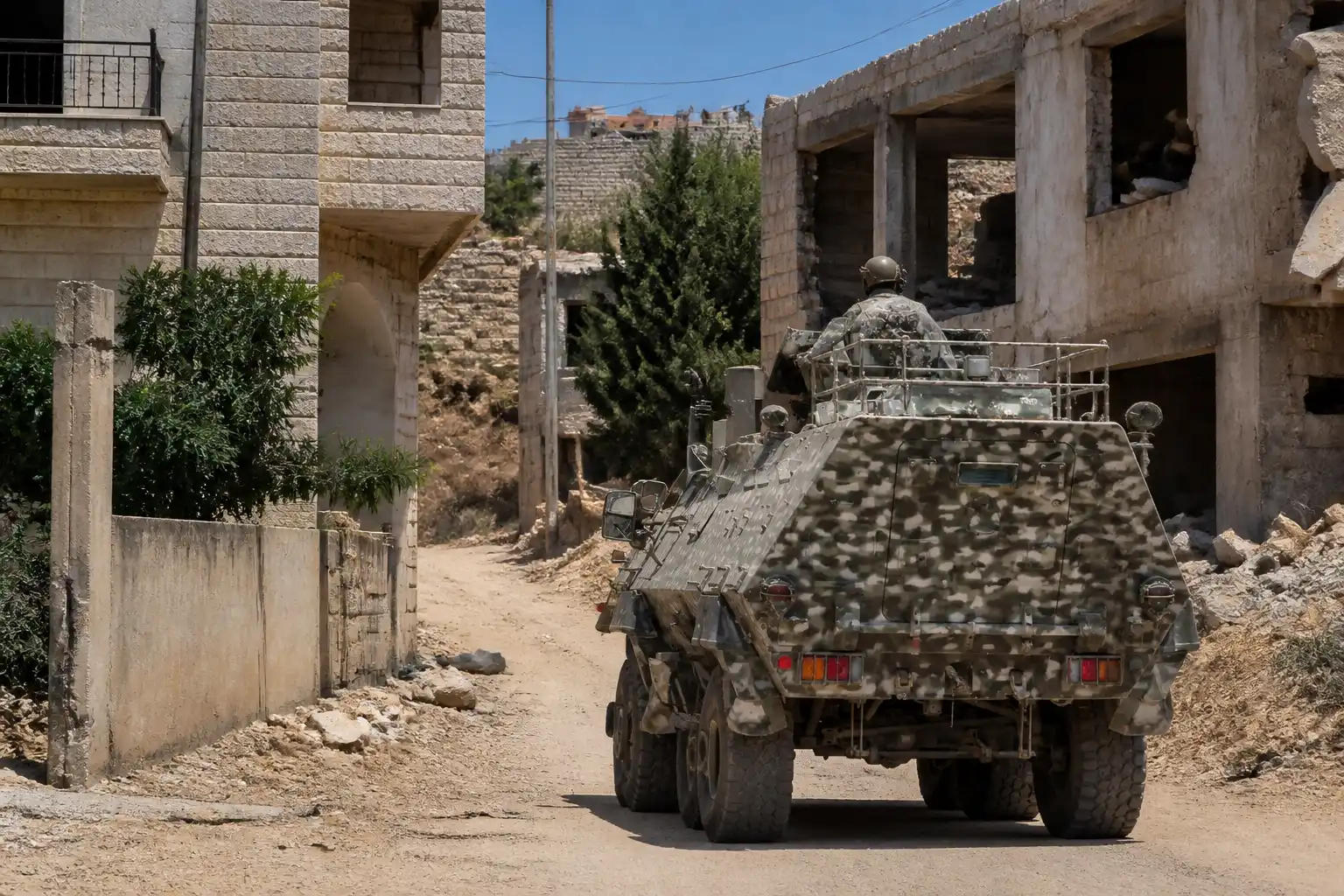
Lebanese army units entered Zawtar al-Gharbiyeh on July 21 after an announced Israeli handover. Residents and local reports described continued Israeli activity in and around the area. Qassem noted that Israel has kept striking homes and demolishing tunnels inside the zone despite the army’s presence. That pattern is the core of his charge that the agreement is non-functional.
- Clearance of tunnels, weapons and command sites
- Joint or third-party verification of the clearance
- LAF assumption of exclusive operational control
- Start of reconstruction and civilian return
In practice the first step has not produced quiet. Engineering units faced warning fire on entry day. Demolitions and strikes have continued into August. The gap between the paper sequence and the ground reality is what Salam is now trying to close with a timetable demand. Earlier diplomatic efforts, including the earlier Rome talks on pilot zones, ran into the same violence-versus-progress tension.
A pilot that still draws fire cannot advertise success to either domestic audience. For Beirut, it weakens the case that army deployment buys sovereignty. For critics of the deal, it supplies daily evidence that handover language outran the facts.
- June 26: Trilateral framework signed in Washington under full US support.
- July 21: Lebanese army units enter Zawtar al-Gharbiyeh after an announced Israeli handover.
- Late July into August: Strikes, warning fire and demolitions continue inside and around the first pilot.
- Friday: Salam demands a halt, wider pilots and a pullout timetable; Qassem says the army has been exposed.
- Early September: Next formal talks expected, with the same sequence still unresolved.
The Army Sits Between Two Pressures
Qassem’s language was blunt. He asked how officials could accept “this ongoing humiliation of the Lebanese army, exposing it to bombardment and Israeli pressures, instead of acting as its protectors.” He said Israel is trying to bind Lebanon to an oversight body that would control the army’s deployment and internal operations. He challenged the government to name a single achievement from seven rounds of talks.
How can you accept this ongoing humiliation of the Lebanese army, exposing it to bombardment and Israeli pressures, instead of acting as its protectors?
That was Naim Qassem on Friday. The charge lands because the framework places the LAF at the center of the clearance work while Israeli forces retain freedom of action until verification is complete. Hezbollah refuses to disarm under those terms. The army therefore operates in zones where it is both the designated authority and a potential target. Crowd reaction on X treated the quotes as confirmation that the coordination mechanism hands Israel a veto over Lebanese deployments while giving Hezbollah a ready narrative of state weakness.
Seven rounds without a named achievement give that narrative room to travel. The military coordination group was built to manage deconfliction and sequencing. In Qassem’s telling, the same body becomes the instrument of external control. The government has not yet produced a counter-list of concrete gains that would blunt the charge.
Where the Main Parties Stand Now
US Ambassador Issa told reporters Israeli attacks would stop only once Hezbollah disarms. “If they give up their weapons, everything will stop,” he said. Israeli Defence Minister Israel Katz stated on Thursday that Israel will not withdraw until Hezbollah is disarmed. Israeli forces occupy multiple towns inside the border and continue demolitions and displacement operations.
Those two statements close ranks on the conditions ladder. They leave little space for the calendar Beirut wants. As long as disarmament remains the gate, a pullout timetable would reverse the order the framework wrote down.
What we know
- Framework signed June 26; pilot operations began late July
- Salam and Berri both demand halt to destruction plus a withdrawal timetable
- Next formal talks penciled for early September
- Casualty and displacement numbers continue to rise under the current pace of operations
What remains unconfirmed
- Exact size and locations of all remaining occupied pockets
- Any private US timeline for expanding pilots or conditioning aid
- Whether Hezbollah will ever accept verification mechanisms that include Israeli input
Egypt has separately kept pressure on for a complete exit, consistent with the line that partial handovers without a calendar leave the south in limbo. That position tracks with Egypt pressing for full Israeli exit after earlier rounds stalled.
| Actor | Public condition for calm or exit | Immediate demand |
|---|---|---|
| Salam and Berri | Israeli halt and move to the international border | Stop demolitions, expand pilots, fix a timetable |
| Issa and Katz | Hezbollah disarmament first | Hold the conditions sequence |
| Qassem / Hezbollah | Rejects disarmament under current terms | End what he calls humiliation of the army |
| Egypt | Complete Israeli exit | No open-ended partial handovers |
A Timetable Collides With the Ladder
Salam’s three points sound modest in isolation. Taken together they rewrite the order of operations. A halt to demolitions would constrain Israeli freedom of action before verification is finished. Wider pilots would spread LAF responsibility faster than the first zone has been secured. A fixed pullout timetable would replace conditions with dates.
The framework’s authors avoided that trade on purpose. Redeployment waits on LAF control and verified disarmament. Katz and Issa are still reading from that page. Beirut is now saying the page itself is the obstacle to stability on the border.
Hezbollah’s refusal to accept the premise of disarmament under the deal sharpens the collision. If the group stays outside verification, the ladder never reaches the top rung. If Israel stays until that rung is reached, occupation and demolition continue. Salam’s calendar is an attempt to cut across a loop the text does not resolve.
Partial handovers without dates are exactly what Egypt has warned against. The Lebanese demand for a timetable and the Egyptian line on a complete exit point at the same weakness: sequenced pilots can freeze the south in place rather than clear it.
Why the First Pilot Carries Extra Weight
Zawtar al-Gharbiyeh was meant to prove the model. Clearance, verification, exclusive LAF control, then reconstruction and return. Two initial zones were agreed; this one went first. When engineering units met warning fire on entry day and demolitions continued into August, the proof case became the dispute case.
Failure at the first pilot raises the cost of every later one. Expand the zones, as Salam asks, and the army inherits more ground it does not fully control. Keep the zones narrow, and critics say the process is theater. Either path feeds the charge that seven rounds have yielded no visible gain.
Reconstruction cannot start in earnest while strikes and tunnel demolitions continue. Civilian return waits on reconstruction. The four-step chain therefore stalls at step one, and the human cost listed above keeps growing in the meantime.
September Talks Inherit a Harder Board
The original ambition was lasting peace, mutual recognition of sovereignty, and an end to the state of war. The text commits both governments to good-faith measures and working groups toward a comprehensive agreement. In practice the conditions-based ladder has produced one contested pilot, continued strikes, and open political warfare inside Lebanon over who is humiliating the army.
Analysts who examined the four-step pilot zone clearance model warned early that tying redeployment to verified disarmament risked a loop: no agreement on what counts as “done,” therefore no exit, therefore continued occupation that itself fuels the rationale for non-state arms. That loop is now visible. Salam’s timetable demand is an attempt to insert a calendar into a document that deliberately avoided one. Qassem’s reply is that the document itself is the problem.
Israeli forces remain in southern Lebanon. The LAF remains responsible for clearing zones it does not fully control. Hezbollah remains outside the deal and free to describe every delayed handover as proof of surrender. Early September will test whether any side is ready to loosen the sequence that produced this reckoning.
Until someone yields on order of operations, the next round will reopen the same files: pilots under fire, an army caught between mandates, and a death toll that rises while the wording stays fixed.
