
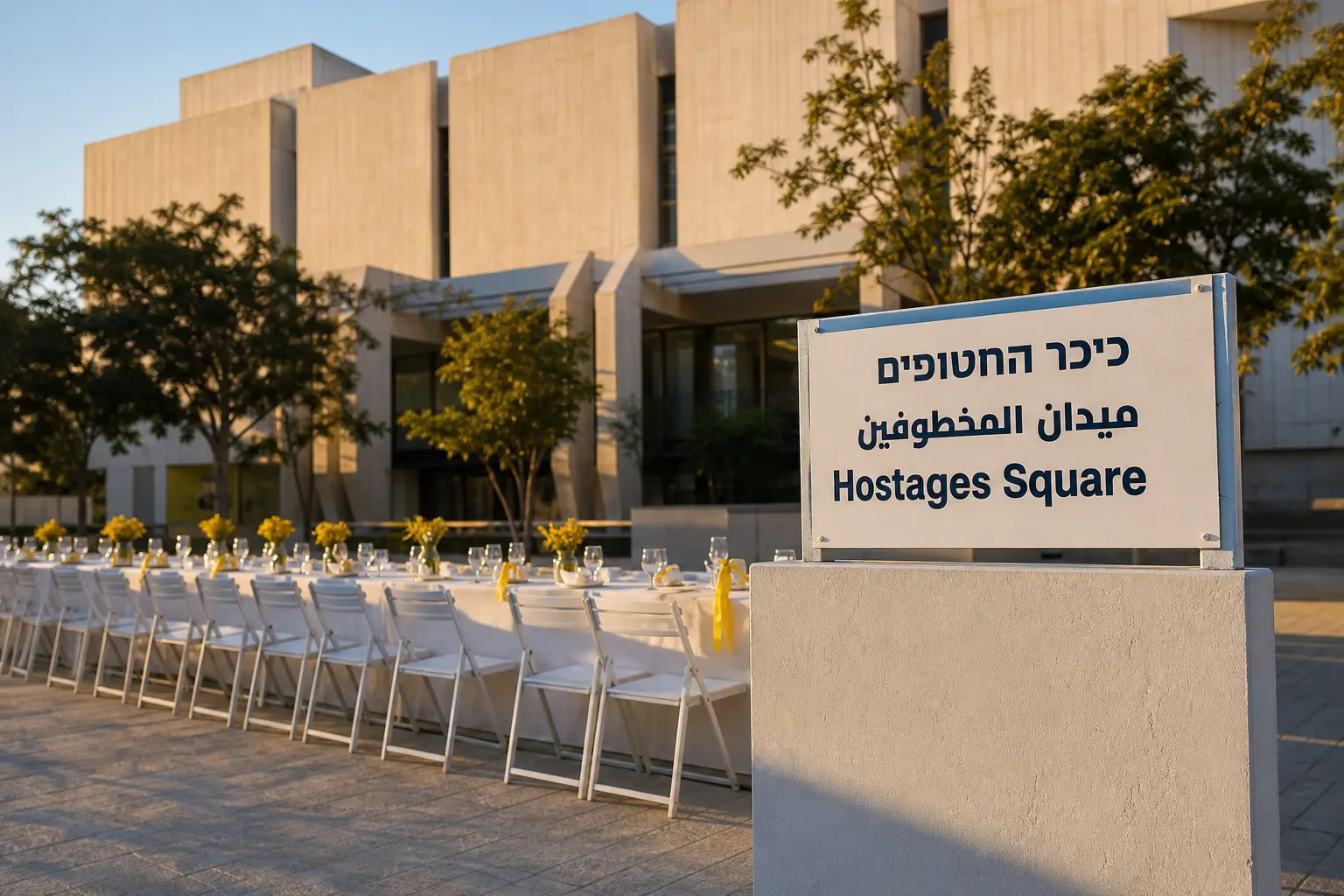
Tel Aviv Mayor Ron Huldai unveiled permanent signage on the plaza outside the Tel Aviv Museum of Art this week, making Hostages Square the official name after nearly three years of unofficial use. The move locks the campaign for the 251 people seized by Hamas on Oct. 7, 2023 into the city’s map from the attacks until the return of the final hostage, Ran Gvili, on Jan. 26, 2026.
Huldai framed the decision as a refusal to let the chapter fade. The formal step also ends a quiet debate over whether the site should keep the name that carried the pain or shift to something that stressed return and unity.
New Signs Make the Popular Name Stick
The plaza sat for years under its old label as the open space beside the museum even while every Israeli called it Hostages Square. By July the municipal naming committee had backed Huldai’s proposal. Unveiling of the new signs followed in mid-August.
History cannot be erased, and we must not allow it to be forgotten. The decision to name this place Hostages Square is intended to ensure that this chapter in the history of the State of Israel, from October 7, 2023, until the return of the final hostage, Ran Gvili, on January 26, 2026, will be remembered for generations.
Huldai said those words at the ceremony. He later told family representatives the square had been a center of solidarity and an unwavering demand to bring them all home. The Tel Aviv-Yafo Municipality announcement stressed the same commitment: the site would stand as a testament so the story would not be forgotten, not one letter, not one act.
As of mid-August Google Maps still listed the place as permanently closed, a digital lag that drew wry notice even after the physical signs went up.
How Museum Square Became the Hostage Epicenter
The open space in front of the Tel Aviv Museum of Art complex was long known simply as Museum Square. After Oct. 7 its location near the Kirya defense headquarters made it a natural base for families. On Nov. 3, 2023, a tent city rose. Kibbutzim from the western Negev, Nova festival families, youth movements and support groups filled it.
Weekly Shabbat gatherings, mass rallies and daily vigils followed. An electronic clock counted every day since the attacks. When Gvili’s remains came home the clock stopped after 844 days. Crowds of 100,000 or more packed the square at peak moments, including the 100-day mark and the celebrations when living hostages walked free.
- Nov. 3, 2023: Tent city established by hostage families and support groups.
- Nov. 24-25, 2023: Large Shabbat service and 50-days rally draw tens of thousands.
- Jan. 13, 2024: Estimated 120,000 attend 100-days memorial with international speakers.
- Oct. 13, 2025: Thousands watch live as the last living hostages return under the peace plan.
- Jan. 26-27, 2026: Final body recovered; clock stopped the next day.
- Aug. 2026: Official renaming and new signage unveiled.
The pattern matches earlier Israeli practice of turning sites of loss and struggle into named public places that keep memory in ordinary daily movement.
Names That Almost Replaced It
Once the October 2025 deal freed the remaining living hostages, pressure rose to rebrand. Dani Miran, whose son Omri spent 738 days in captivity, personally urged Huldai to call it Returnees Square. Other voices floated Heroes Square or names that stressed national unity.
Relatives of those whose bodies still lay in Gaza pushed back hard. They insisted the existing name stay until every last person came home. The committee and mayor ultimately kept Hostages Square. The choice treated the full arc, living and dead, as one unfinished duty rather than a completed victory.
- Returnees Square, advanced by some released hostages’ families after the living returned
- Heroes Square, proposed to honor both captives and rescuers
- Unity-focused alternatives that downplayed the hostage label
- Hostages Square, retained until and after the final recovery
That decision now sits on permanent metal and stone.
Art and Installations That Filled the Space
The square never stayed empty of meaning. Early on came an empty Shabbat dinner table with a place setting for every captive. Yellow chairs marked absence. Mirrors surrounded Menashe Kadishman’s Binding of Isaac sculpture. A 25-meter mock Hamas tunnel let visitors walk a narrow dark passage while names and gunfire sounds played.
A Tree of Wishes carried tags from Jewish schoolchildren in 650 schools worldwide. A large metal-and-wood face sculpture that survived the Be’eri massacre found a home there after completion. Merchandise kiosks sold Bring Them Home Now gear. Stages hosted speeches, prayers and concerts through rain and heat.
| Installation | Purpose | Notable Detail |
|---|---|---|
| Empty Shabbat table | Visualize missing people | One seat per hostage |
| Yellow chairs | Solidarity marker | Color became national symbol |
| Mock tunnel | Simulate captivity | 25 meters, audio of names and fire |
| Tree of Wishes | Global children’s messages | Tags from 650 schools |
| Electronic clock | Count days held | Stopped at 844 days |
These pieces turned the plaza into both memorial and pressure chamber. Many remain or left deep marks even after physical scaling back once the last living captives were free.
The Political Charge That Never Left
The square did not become quiet after the returns. In July 2026, on the 1,000th day since the attacks, thousands gathered again to demand a state commission of inquiry into the failures that enabled Oct. 7. Prime Minister Benjamin Netanyahu has resisted a fully independent probe, preferring a politically appointed body. The issue now sits inside the run-up to Oct. 27 elections.
Former hostages and family members led marches into the square that night. Speakers called Netanyahu’s legacy one of failure. The same ground that hosted hostage vigils now hosts accountability demands. Making the name permanent freezes that dual identity: a place of grief and a place that still argues over why the grief arrived.
On X, former Israeli spokesman Eylon Levy noted that everyone already called it Hostages Square and the official step simply caught up. Replies mixed pride in the remembrance with sharper political jabs, reflecting how the site still divides as much as it unites.
Families, the City and What Remains
Rebecca Geller, who handled international communications for the Hostages and Missing Families Forum and spent much of the war at the square, welcomed the formal name. She said the place gave families a way to leave the house, feel community support and stay nourished body and soul through the worst times. She still finds it hard to visit, even just for the museum, because the emotion rises again.
Huldai repeatedly thanked the families for their courage and said Tel Aviv-Yafo had the privilege of serving as their home. Residents and people from across Israel turned the plaza into a national living room of solidarity. Earlier coverage on this site tracked how the square functioned as a symbol of solidarity during the long campaign and later saw an earlier scaling back as the final captive returned.
The pattern is familiar in Israeli cities. Streets, squares and parks carry the names of wars, fallen soldiers and national traumas so that ordinary routes keep the past visible. Hostages Square now joins that map. The struggle ended with every captive accounted for. The name ensures the cost stays written on the ground where the families stood.
Frequently Asked Questions
What was the original official name of Hostages Square?
The plaza was officially known as the plaza outside the Tel Aviv Museum of Art or Museum Square (Kikar HaMuzeon) until the August 2026 municipal decision. The public had already shifted to Hostages Square within weeks of Oct. 7, 2023 because of the permanent family encampment and rallies held there.
Who was the last hostage returned and when did the clock stop?
Police officer Ran Gvili’s remains were recovered in Gaza on Jan. 26, 2026, making him the final one of the 251 taken. The square’s electronic day-counter was stopped the following day after 844 days, closing the public tally that had run since the attacks.
Why did some families want a different name after the living hostages returned?
After the October 2025 deal freed the remaining living captives, figures such as Dani Miran argued for Returnees Square to mark successful homecomings. Others preferred Heroes Square. Families still waiting for bodies held in Gaza insisted the Hostages name stay until every person was back, and that view prevailed with the mayor and naming committee.
What major art installations defined the square during the campaign?
Key works included a long empty Shabbat table with seats for every captive, yellow empty chairs as solidarity symbols, a 25-meter walk-through mock tunnel with audio of names and combat sounds, mirrors around an existing Binding of Isaac sculpture, and a Tree of Wishes carrying messages from schoolchildren in hundreds of schools abroad.
Does the square still host political events after the name change?
Yes. In July 2026 protesters including former hostages and families used the site to mark 1,000 days since Oct. 7 and to demand an independent state inquiry into the security failures of that day, an issue that remains contested ahead of the October 2026 elections.
