
Jordanian Foreign Minister Ayman Safadi stood beside Turkey’s top diplomat in January 2025 and promised that Syria’s Kurds would live a dignified, stable life inside a unified state. Eighteen months later, Damascus controls roughly four fifths of the territory Kurdish forces once governed, the country’s main oil fields and the border crossings into Iraq.
The Kurdish-led administration that helped defeat the Islamic State group got a citizenship decree out of the bargain, not a constitutional guarantee. Rights researchers say a decree signed by one president can be unsigned by the next.
A Pledge Made Beside Turkey’s Foreign Minister
Safadi delivered his commitment at a joint press conference with Turkish Foreign Minister Hakan Fidan on January 6, 2025, weeks after Bashar al-Assad’s government collapsed. Jordan, he said, rejected any return of unrest to Syria and wanted Damascus to succeed at rebuilding the state.
We want Syria to regain its security, stability, sovereignty, and unity. We reject the resurgence of terrorism and do not wish to see further conflict in the country.
Safadi said this, according to ARK News, while affirming that Jordan wanted “the Kurds in Syria live a dignified and stable life alongside the other components of the Syrian population.” The choice of company mattered. Turkey had spent a decade treating the Kurdish-led People’s Protection Units (YPG), the backbone of the Syrian Democratic Forces (SDF), as an extension of the Kurdistan Workers’ Party (PKK), the group Ankara has fought inside its own borders since the 1980s. A pledge of Kurdish dignity delivered next to Ankara’s foreign minister was never going to be a neutral gesture.
Eighteen Months, Eighty Percent
The first real test of that pledge came in March 2025, when Syria’s transitional government and SDF commander Mazloum Abdi signed a framework to merge Kurdish-run institutions and forces into the Syrian state. It stalled. By early January 2026, Al Jazeera reported that Damascus and the SDF had failed to make progress on the military side of that merger.
What followed was a government offensive into the northeast, now recorded on reference sites as the 2026 northeastern Syria offensive. Syrian forces pushed into territory long run by the Autonomous Administration of North and East Syria (AANES), the Kurdish-led civil government that had operated courts, schools and local councils across the region since the war against the Islamic State group.
A new ceasefire and integration agreement followed fast. President Ahmed al-Sharaa signed it in Damascus on January 18, 2026, and a nationwide truce with the SDF was announced the next day. By January 29 and 30, the terms were taking shape on the ground: four SDF brigades folded into the Syrian army, with three more due to follow as whole units, including a Kobani-based force assigned to a division tied to Aleppo province. General Security Service units moved into Hasakah, Qamishli and Kobani to oversee the handover.
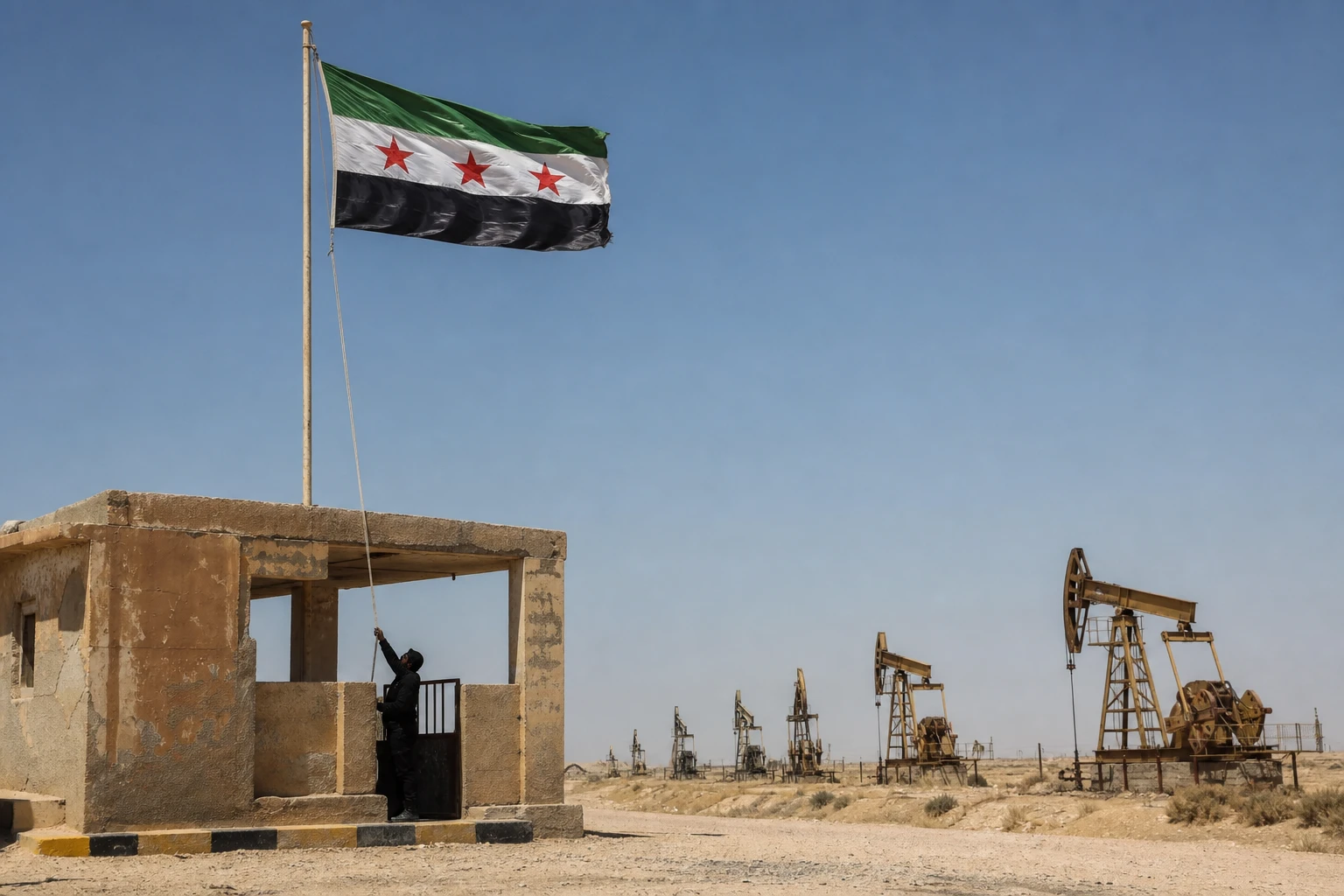
The territorial result was stark. Up to 80% of the land AANES once administered has been captured or ceded to Damascus since the offensive began, according to research tracking the campaign. The region’s main oil fields and its border security with Iraq now sit under state control.
What Damascus and Ankara Walk Away With
Lay the outcomes side by side and the zero-sum shape of the last eighteen months is hard to miss.
| Party | Territorial or Institutional Position | What Changed Since January 2026 |
|---|---|---|
| Syrian government (Damascus) | Controls an estimated 80% of former AANES territory | Oil fields and Iraq border security under state control; General Security Service deployed in Hasakah, Qamishli and Kobani |
| Turkey | No direct new territorial claims | Long-demanded SDF brigade integration underway; parallel PKK dissolution track advancing since a July 2025 weapons-burning ceremony in Iraqi Kurdistan |
| Kurdish-led SDF and AANES | Administrative footprint reduced to a fraction of its prior extent | Citizenship decree issued for stateless Kurds; Nowruz named a national holiday; no constitutional protection secured |
Middle East Institute analysts summed up the dynamic bluntly, describing the outcome as a strategic double win for Ankara. Turkey did not have to fire a shot to get Kurdish militia brigades absorbed into a state army it trusts more than an autonomous Kurdish force on its border.
The Price of Kurdish Self-Rule
Al-Sharaa’s Decree No. 13, issued January 16, 2026, granted Syrian citizenship to Kurdish residents long denied it, including people left stateless since a 1962 census in al-Hasakah province stripped tens of thousands of registration. The decree also made Nowruz, the Kurdish new year, a national holiday.
It reads as goodwill. Kurdish rights researchers call it thin. A presidential decree is an administrative act, not a constitutional clause, and Syria’s transitional charter still concentrates power in the presidency and criminalizes vaguely defined “calls for division,” a clause with a long history of being turned against minority political organizing in the region.
A March 2026 review by the European Union’s asylum agency examined exactly this gap, offering a formal assessment of security conditions facing Kurdish communities after the offensive and the integration deal. Researchers at Arab Center Washington DC reached a similar conclusion, tracking the shrinking space available for Kurdish self-governance as Damascus absorbs AANES institutions one ministry at a time.
What Does Jordan Want From This?
Jordan’s interest in Syria’s north was never really about Kurdish cultural rights on their own. Amman wants a calm, functioning neighbor that stops smuggling networks, drug shipments and armed groups from reaching its own border, and it has said so plainly in 2026.
In February, Safadi and Syrian Foreign Minister Asaad al-Shaibani held a joint press conference and described defense and security coordination between the two countries as having made significant progress. Their stated priorities included:
- Countering drug smuggling networks that expanded during the last years of Assad’s rule
- Curbing arms trafficking routes that feed instability along the shared frontier
- Joint monitoring of what Safadi called attempts to undermine Syria’s stability
Two months later, at the Antalya Diplomacy Forum, Safadi called the moment historic for Syria and said the international community backed the country’s sovereignty over all its territory, a phrase that, in practice, has come to mean Damascus’s authority over the northeast rather than a federal or autonomous arrangement AANES leaders once sought. Research from the Baker Institute and CSIS both trace Turkey’s strategic calculus on Syria’s Kurds to the same underlying logic Jordan has echoed: a unified, centrally controlled Syria is easier for every neighboring capital to manage than a fragmented one with an armed, semi-autonomous Kurdish region inside it.
The Unwritten Constitution
The integration process is not finished, and the parts still open are the parts that matter most to Kurdish negotiators.
What We Know
- The January 18, 2026 ceasefire and integration framework has generally held, despite scattered violations reported by monitors
- Four SDF brigades were already absorbed into the Syrian army following the January 29 agreement, with three more expected as whole units
- Decree No. 13 granted citizenship to stateless Kurds and repealed the 1962 al-Hasakah census measures that had denied it
What’s Unconfirmed
- Whether Kurdish cultural and political rights will be written into Syria’s permanent constitution rather than left to a decree any future president could reverse
- The final shape of AANES civil institutions, including courts and local councils, not yet absorbed into state structures
- How the remaining share of formerly Kurdish-run territory will be governed once integration is declared complete
Until Syria’s constitutional drafting process resolves that first question, every citizenship decree and every brigade integrated into the national army sits on the same shaky legal footing: goodwill from a transitional presidency, not a right a court can enforce.
Frequently Asked Questions
What is the Syrian Democratic Forces?
The SDF is the Kurdish-led militia that partnered with the United States starting in the mid-2010s to defeat the Islamic State group in Syria, drawing Arab, Syriac and other local fighters into its ranks alongside the YPG. It has functioned as the region’s dominant military force since, and its brigades are now the ones being folded into the Syrian national army under the 2026 integration deal.
What is the Autonomous Administration of North and East Syria?
AANES is the civilian government the SDF and allied Kurdish, Arab and Syriac political parties built to run courts, schools and services across northeast Syria during the war. Most of its territory and institutions have been transferred to Damascus since the January 2026 offensive and the integration agreement that followed.
Why does Turkey object to Kurdish self-rule in Syria?
Ankara treats the YPG as inseparable from the PKK, the group it has fought inside Turkey for decades, and views any armed, autonomous Kurdish zone on its southern border as a security threat. That stance has softened only in parallel with the PKK’s own dissolution process, which included a weapons-burning ceremony in Iraqi Kurdistan in July 2025 following jailed PKK leader Abdullah Ocalan’s call to disarm.
Did Syria actually grant Kurds citizenship in 2026?
Yes. Decree No. 13, issued January 16, 2026, granted citizenship to Kurdish residents registered as foreigners or left unregistered after a 1962 census in al-Hasakah province, a measure that had stripped tens of thousands of people of legal status for over six decades.
Is the Damascus-SDF ceasefire holding?
Largely, yes. The agreement has been described as generally implemented despite isolated violations, and Washington called the original integration framework a historic milestone when it was first announced. Implementation has continued through 2026 with brigade transfers and joint monitoring on the ground.
