
Singapore’s Ministry of Foreign Affairs condemned attacks on Saudi energy infrastructure and Red Sea shipping on Sunday, citing two maritime treaties by name as Brent crude tore past $100 a barrel. The statement came a day after Houthi rebels hit Saudi oil installations at two Red Sea ports and Saudi-backed forces struck back, opening a second front in a war much of the world had assumed was winding down.
Singapore sits thousands of miles from Yemen’s battlefields. It also runs the busiest bunkering port on the planet, and almost every disruption to Red Sea shipping eventually shows up in its harbor accounts, its fuel contracts and its shipping registry. That distance is why the statement reads like routine diplomacy. The numbers behind it say otherwise.
Singapore Names the Treaties It Wants Enforced
The Ministry of Foreign Affairs (MFA) did not simply denounce violence. It reached for specific legal text, saying it is imperative that navigational rights and freedoms be respected and upheld in accordance with international law as reflected in the 1982 United Nations Convention on the Law of the Sea (UNCLOS), and that seafarer and ship safety be ensured under the International Convention for the Safety of Life at Sea (SOLAS).
We urge all parties to exercise restraint and avoid actions that could further escalate tensions.
That line, issued Sunday and posted alongside the ministry’s statement on the Middle East attacks, is standard diplomatic language. Naming two specific conventions is not. UNCLOS governs which waters are open to passage and who controls them. SOLAS governs whether the ships moving through those waters, and the crews aboard them, are protected. Together they form the legal backbone of the entire shipping trade Singapore depends on.
Why Does a Red Sea War Threaten Singapore?
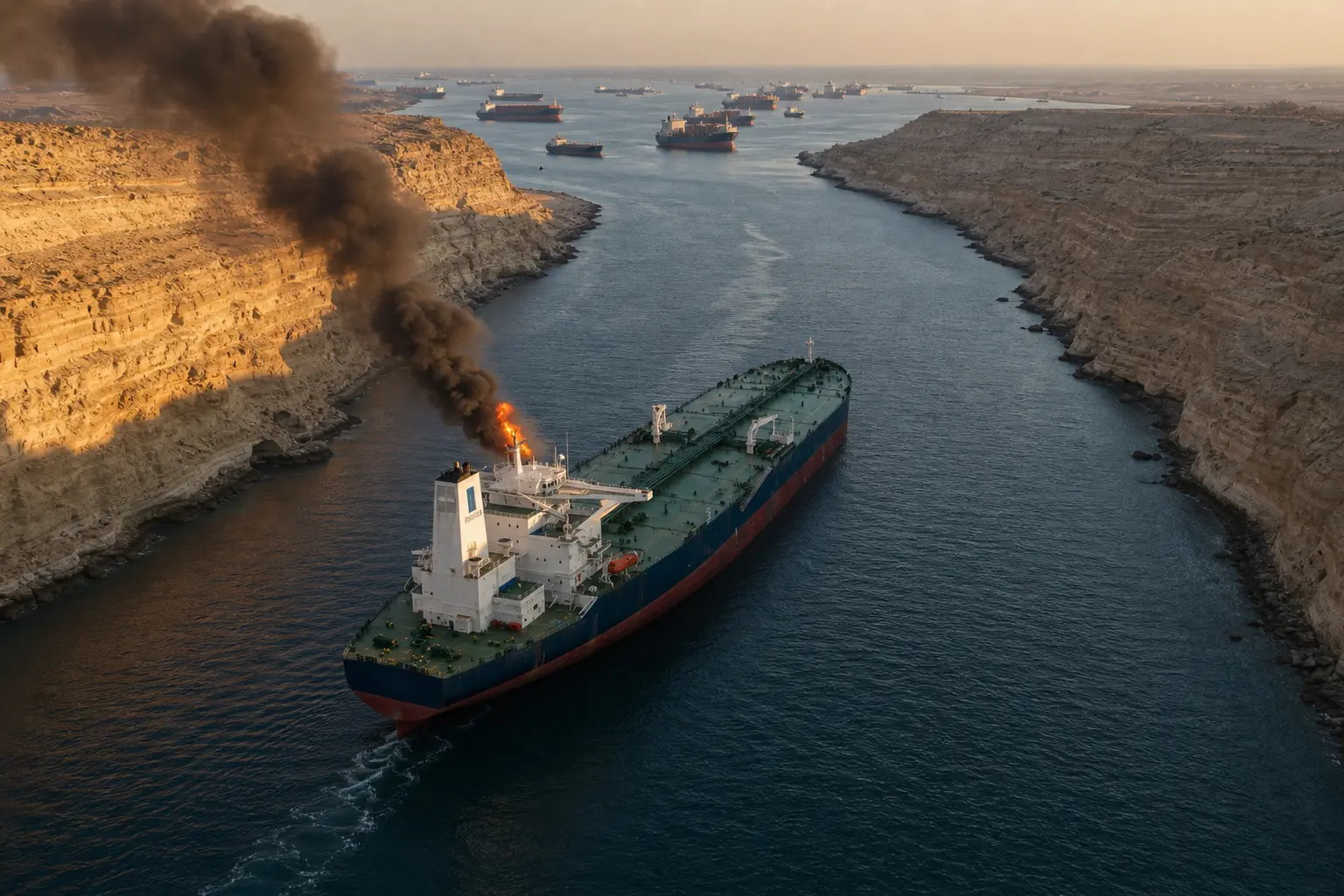
Singapore is not fighting this war, but it clears more marine fuel than any port on Earth, and a prolonged blockade or insurance spike in the Red Sea eventually reaches its docks, its refineries and the citizens it has already been flying home from Riyadh.
Singapore’s port sold a record 54.9 million tonnes of marine fuel in 2024, roughly five times the volume of the next-largest bunkering hub, and it has held the world’s top ranking for shipping and maritime trade since 2015. The agency overseeing the port’s bunker fuel metering rules also regulates the Jurong Rock Caverns, Southeast Asia’s first underground oil storage facility, which anchors Singapore’s role as a physical trading floor for the crude and refined products that pass through the Malacca Strait.
That exposure is not abstract. Singapore has already flown air force jets to Riyadh for stranded citizens, and Singapore Airlines and budget carrier Scoot have extended their Middle East flight cancellations into March. A government that has already moved people and grounded planes over this conflict has more than legal principle riding on how it ends.
Five Parties, One Widening War
The conflict now touches five distinct actors, each with a different stake in whether it keeps expanding.
- Saudi Arabia – has led an Arab military coalition against the Houthis for more than a decade and is now absorbing strikes on its own oil infrastructure.
- The Houthis – Yemen’s Iran-aligned rebel movement, have declared a naval blockade of Saudi Arabia over the past week and say any Saudi oil facility could be a target.
- Iran – traded strikes with the United States and Israel for thirteen consecutive nights before quieting down.
- The United States – the Pentagon suspended its own airstrikes on Iran Friday to open room for diplomacy, according to UN Ambassador Mike Waltz.
- Singapore – not a combatant, but the operator of the world’s largest bunkering port, with citizens still being repatriated from Saudi soil.
None of the five can fully control how the others act, which is precisely what makes a formal call for restraint worth issuing, and worth reading closely.
A Second Front Opens on the Red Sea
Saturday’s attack on Saudi oil installations at two Red Sea ports, followed by Saudi-backed forces bombing Houthi positions the same day, opened what wire reports describe as a second front in a war Riyadh has fought for more than ten years. Houthi leader Abdul Malik al-Houthi has said all Saudi oil facilities could now be considered targets, a threat that follows the group’s declared naval blockade of Saudi Arabia over the past week.
The market reacted before the diplomats did. Brent crude jumped 7% in a single session to $100.66 a barrel on July 23, touching as high as $102 intraday, its first close above the $100 mark since May, after Houthi forces struck two Saudi oil tankers in the Red Sea. The benchmark is up more than 30% this month alone. The corridor those tankers were sailing through, the Red Sea, the Bab el Mandeb Strait and the Gulf of Aden, is now covered by a standing advisory on Houthi attacks against commercial vessels from the United States’ own maritime regulator, a reminder that this is not the first time the route has been treated as a war zone.
The Numbers Behind the Shock
| Metric | Figure | Context |
|---|---|---|
| Brent crude price | $100.66 a barrel | Up 7% in a single session, July 23 |
| Monthly oil gain | More than 30% | Since Red Sea and regional strikes intensified |
| Singapore bunkering volume | 54.9 million tonnes | Record marine fuel sold in 2024 |
| Global bunkering rank | No. 1 | Singapore has held the title since 2015 |
Every row in that table describes the same trade route from a different angle: how much it costs to move fuel, and how much of the world’s fuel physically passes through hands that now have to watch it get more dangerous.
Yemen’s War Resumes After Years of Uneasy Calm
Saudi Arabia has led an Arab coalition against the Houthis since the Iran-aligned fighters captured Yemen’s capital, Sanaa, more than a decade ago. Hundreds of thousands of people have died in the civil war since, from both fighting and famine. A ceasefire had held since 2022, imperfect but largely intact, until it broke down this month.
The collapse did not happen in a vacuum. The Houthis are effectively joining a wider war their Iranian allies have waged since being struck by the United States and Israel, and their blockade threat against Saudi Arabia’s last open oil route is as much a message to Washington and Tel Aviv as it is to Riyadh. A truce built to hold two regional rivals apart could not survive a war that expanded to include their patrons.
Washington Pauses, Tehran Watches
The Pentagon suspended airstrikes on Iran on Friday, Eastern time, after thirteen consecutive nights of attacks. Iran, which had retaliated against each night of US strikes by hitting neighboring countries that host American bases, has also held its fire for two days. Waltz told Fox News Sunday that President Trump paused the campaign to give diplomacy more room to work.
An Iranian official, speaking to Reuters on condition of anonymity, said Tehran’s position remains attack for attack: if the strikes stop, Iran will halt its own operations too, and that message has already been passed to Washington.
- Confirmed: Brent crude closed above $100 a barrel for the first time since May, and the Pentagon has paused strikes on Iran after thirteen straight nights.
- Singapore’s foreign ministry has formally invoked both UNCLOS and SOLAS, treaties it rarely names together in a single statement.
- Unconfirmed: Whether Iran’s two-day pause in retaliatory strikes survives beyond the current diplomatic window.
- Whether the Houthi blockade will actually halt oil cargoes moving through the Red Sea, rather than simply rattling the futures market.
Tehran’s message to Washington, delivered through that same anonymous channel, was simple: the retaliation stops when the attacks do.
