
Egyptian President Abdel Fattah al-Sisi asked Tanzania this weekend for farmland, a new shipping lane and support in Egypt’s fight over the Nile. Speaking alongside Tanzanian President Samia Suluhu Hassan in Dar es Salaam on Saturday, Sisi proposed a joint agricultural reclamation project, an expanded port and a shipping route linking Egypt’s Red Sea coast to East Africa, according to Garowe Online’s report on the visit.
Tanzania is one of eleven countries in the Nile Basin. It is also one of the countries that already ratified the water sharing treaty Egypt refuses to sign, and the dam its president praised during the visit sits nowhere near the Nile at all.
Egypt Pitches Farmland, Ports and Power Lines in Dar es Salaam
Sisi told reporters the two governments had agreed to explore a joint venture on Tanzanian soil. “We discussed opportunities to launch an agricultural land reclamation project in Tanzania to enhance food security for both countries and meet demand for strategic crops,” he said, adding that the plan could later expand to support exports.
The two leaders also witnessed the signing of memorandums of understanding (MOUs) covering transport, electricity and renewable energy, according to the Egyptian presidency. Sisi said Cairo was ready to help expand the Port of Dar es Salaam and floated a new shipping route between Egypt’s Red Sea port of Safaga and the Tanzanian capital, part of a wider logistics corridor he wants built between Cairo and Tanzania.
Trade between the two countries reached $12.3 million in the first quarter of 2026, with Egyptian exports to Tanzania up 3.2% over the same period, according to Egyptian official statistics. A business forum on the sidelines drew more than 35 Egyptian and 120 Tanzanian company representatives, where Sisi described the talks as producing “fruitful discussions” on trade and investment. Egypt’s own account of its Africa policy credits Sisi with trade agreements signed with Tanzania, Zambia and South Sudan going back years before this visit.
A Reclamation Project With No Address Yet
Of everything announced in Dar es Salaam, the farmland scheme is the newest and the least defined. Sisi described a concept, not a plan.
- What we know: Sisi and Hassan agreed to explore a land reclamation project aimed at food security and “strategic crops,” with Sisi saying it could eventually support exports. The same visit produced signed MOUs on transport, electricity and renewable energy.
- What’s unconfirmed: Which Tanzanian region would host the farmland project, its size, its cost or who would finance it. No start date has been given for the proposed Safaga to Dar es Salaam shipping line or the port expansion Sisi says Egypt is ready to help fund.
Egypt has run reclamation programs at home for decades, turning desert into farmland along the Nile Delta and the Toshka basin. Exporting that model to Tanzania would mark a new phase, if it gets past the pledge stage.
The Dam Egypt’s Own Companies Just Finished Building
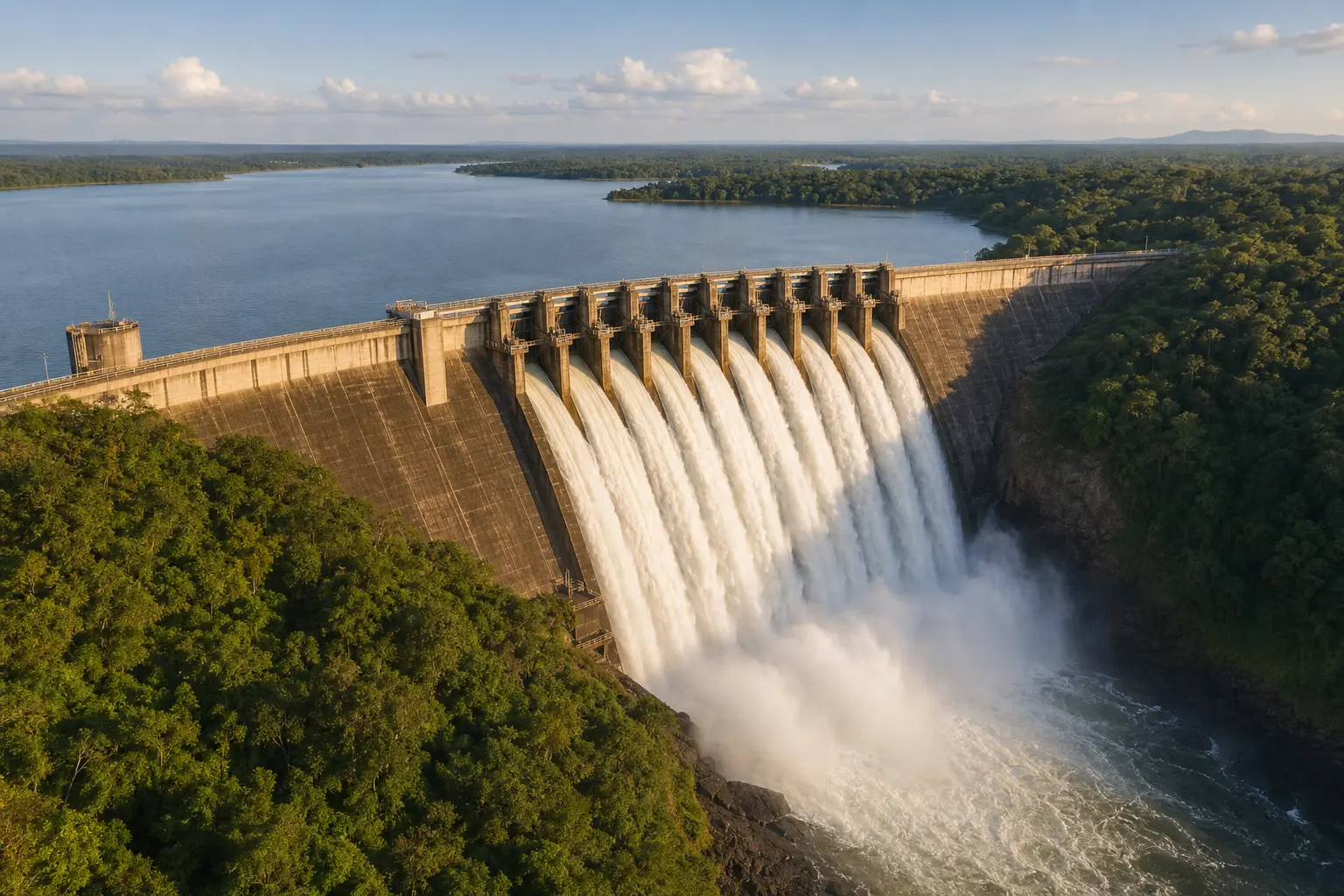
One project from this relationship is already finished, and it is not small. The Julius Nyerere Hydropower Project, a 2,115 megawatt plant on the Rufiji River in eastern Tanzania, was built under a contract Cairo and Dar es Salaam signed in 2018.
An Egyptian consortium of Arab Contractors and Elsewedy Electric carried out the construction, a joint venture entrusted with the Rufiji River project by the Tanzanian government. The plant reached full commissioning in 2025 after its ninth and final turbine came online, and Hassan publicly credited Egypt’s role in building it during Saturday’s appearance. Sisi called it a model for cooperation between African nations.
It is the fourth largest dam in Africa and the largest power station in East Africa. None of that required Ethiopia’s cooperation, an African neighbor’s approval, or a decade of United Nations letters, because the Rufiji is not a shared international river the way the Nile is.
Why Isn’t Ethiopia Part of This Conversation?
Ethiopia’s name did not come up in Garowe Online’s account of the visit, yet it explains why this trip matters. Ethiopia finished the Grand Ethiopian Renaissance Dam (GERD) in 2025, ending a 14 year construction fight with Egypt over Nile water rights that Cairo never managed to stop.
The dam was inaugurated on September 9, 2025, with an annual output of 15,700 gigawatt hours once fully online, according to Webuild, the Italian firm that built it. Egypt did not simply accept the outcome. It registered its objection at the UN Security Council on the same day the dam opened, and Ethiopia responded by accusing Cairo of clinging to a colonial mindset.
Ethiopian Prime Minister Abiy Ahmed struck a different tone at home. “We believe in shared progress, shared energy, and shared water,” he said at the time, according to Al Jazeera’s coverage of the inauguration. Egypt was not in a position to argue the dam out of existence anymore. It was already built.
Tanzania Already Signed the Treaty Cairo Rejects
The reason Ethiopia’s shadow falls over a Tanzania trip comes down to a piece of paper Tanzania signed sixteen years ago. Four Nile Basin states, Ethiopia, Tanzania, Uganda and Rwanda, signed the Nile Basin Cooperative Framework Agreement at Entebbe in May 2010, with Kenya and Burundi joining soon after.
Tanzania ratified it. So did Ethiopia, Rwanda, Uganda and Burundi, over the years that followed. Egypt and Sudan refused, arguing the treaty would strip their historical claims to the river. The treaty’s entry into force in October 2024 came after South Sudan’s ratification pushed the count of ratifying states past the threshold needed, without Cairo on board.
There is an older irony buried in the geography too. The Nile Basin Initiative, the body that spent a decade negotiating that treaty, was founded in Dar es Salaam in 1999, the same city where Sisi stood this weekend asking for farmland and a new port deal.
Two Dams, One Contractor’s Contradiction
Set the two mega-dams side by side and the contrast in Egypt’s posture becomes plain.
| Detail | Grand Ethiopian Renaissance Dam | Julius Nyerere Hydropower Project |
|---|---|---|
| River | Blue Nile, Ethiopia | Rufiji, Tanzania |
| Capacity | 5,150 megawatts | 2,115 megawatts |
| Builder | Ethiopian Electric Power, with Webuild of Italy | Arab Contractors and Elsewedy Electric of Egypt |
| Contract signed or construction start | Construction began 2011 | Contract signed 2018, construction began 2019 |
| Completed | Inaugurated September 9, 2025 | Fully commissioned in 2025 |
| Egypt’s public stance | Formally objected at the UN Security Council | Financed and built by Egyptian state-linked firms |
Both projects broke ground within a few years of each other. Cairo spent a decade and a half opposing one. Its own companies built the other.
Cairo’s Alliance Map Since the Filling Fight Ended
Egypt’s Nile strategy did not start with this trip and it will not end with it. Analysts at the Middle East Institute describe a pattern that predates the GERD’s completion by years.
- Security and defense pacts with Uganda, Kenya and Burundi
- A renewed political and military alignment with Sudan
- Growing economic ties with Zambia and South Sudan
- The new farmland, port and shipping package now on the table for Tanzania
The Middle East Institute traces this back to Egypt’s security pacts with Uganda, Kenya and Burundi, built up in the years after Ethiopia’s first filling of the GERD reservoir left Cairo searching for leverage it did not have on the ground. A more recent assessment goes further, describing Sisi’s continental diplomacy as a containment mechanism against Ethiopia’s growing regional influence, extending from the Nile Basin into Red Sea ports and the Horn of Africa.
The Nile River Basin Commission that grew out of the 2024 treaty now operates without Egypt or Sudan at the table. Tanzania has a seat there. So does Ethiopia.
Frequently Asked Questions
What is the Nile Basin Cooperative Framework Agreement?
It is a treaty first signed at Entebbe, Uganda in May 2010 by Ethiopia, Tanzania, Uganda and Rwanda, later joined by Kenya and Burundi. It sets rules for equitable use of the Nile and created the Nile River Basin Commission once enough countries ratified it, which happened in October 2024 after South Sudan’s accession.
Why does Egypt reject a treaty most Nile Basin countries accepted?
Cairo leans on a 1959 agreement with Sudan that allocated it 55.5 billion cubic meters of Nile water a year, with Sudan getting another 18.5 billion, out of roughly 74 billion in average annual flow. Egypt argues the newer treaty would undo those guarantees, since it was negotiated without Egypt’s claim to 55.5 billion cubic meters annually being protected in the text.
Is the Julius Nyerere dam built on the Nile River?
No. It sits on the Rufiji River in eastern Tanzania, a river system that empties into the Indian Ocean and has no connection to the Nile. Tanzania still counts as a Nile Basin country through separate rivers and streams that feed Lake Victoria, the Nile’s source lake.
How much electricity does the Rufiji River dam add to Tanzania’s grid?
At 2,115 megawatts, the plant roughly doubles Tanzania’s previous installed generating capacity, which stood at about 1,600 megawatts. Only around 37% of Tanzanians had access to electricity before the project reached full commissioning.
What else is Egypt building in East Africa’s logistics network?
Beyond the Tanzania package, Egypt has pushed to establish a logistics zone tied to Djibouti’s port infrastructure, part of the same push to build economic footholds along the Red Sea and East African coastlines that feed into its wider Nile Basin strategy.
