
Israel’s first AI healthcare regulatory sandbox launched on July 13, 2026, with three Israeli healthtech companies selected to pilot autonomous medical systems at three leading hospitals. The program, run jointly by the Israel Innovation Authority and the Ministry of Health, is the country’s first framework for AI that performs clinical tasks on its own rather than assisting physicians. The pilots will run under regulatory supervision at four hospitals across the country. The clinical evidence and operational experience generated through them are intended to inform regulators in other jurisdictions.
The first three companies are Pulsenmore, Cordio Medical, and Simahook. Pulsenmore will pilot at-home pregnancy ultrasound analysis, while Cordio Medical tests home heart failure management and Simahook evaluates AI-guided fetal weight assessment at two Hadassah hospitals in Jerusalem. The pilots span obstetrics, cardiology, and fetal medicine. Each will run under regulatory supervision at a different clinical setting. The trials will take place at four hospitals across the country.
What the Sandbox Actually Is
A regulatory sandbox is, in the framework’s own words, a setting where technologies that do not yet fit within existing rules can operate under the eye of the regulator rather than waiting for legislation to catch up. In Israel, that means companies run pilots inside live clinical environments, with the Ministry of Health and the Israel Innovation Authority providing regulatory guidance alongside financial support through the Innovation Authority’s Pilot Fund. The framework is targeting clinical AI specifically, calibrated for systems that the existing healthcare AI pipeline was not built to handle. The stated goal is to enable the development, evaluation, and validation of highly autonomous AI-powered medical technologies within a supervised regulatory environment, per the announcement.
Most medical AI in use today works as decision support, surfacing suggestions to a physician who remains in charge. The sandbox targets a different generation of systems: AI that acts on predefined medical protocols, performs clinical tasks on its own, and shares responsibility with the human clinician. The Ministry of Health’s published program framework narrows the eligible technologies to three focus areas, with concrete definitions for each.
- Automation: Technological solutions that propose the evaluation of full automation of tasks currently performed by clinical staff.
- Task Redistribution: Technological solutions that propose a re-examination of the division of labor among members of the care team, including the potential development of new roles within the healthcare system.
- Substantial Regulatory Challenges: Solutions that, for example, require changes to clinical practice authorities, address legal and professional liability when AI acts, manage risk allocation between humans and software, or seek approval for generative AI tools in clinical settings.
The program is described in the joint announcement as the first of its kind in Israel, and is meant to position the country among the first in the world with a dedicated regulatory framework for autonomous AI-powered medical systems. Innovation Authority chairman Dr. Alon Stopel called the combination of an advanced healthcare system, a world-class healthtech industry, and forward-looking regulation ‘a strategic advantage for Israel.’ The Pilot Fund support is the financial backbone of the program, providing the cash to run pilots in real clinical settings. The regulatory guidance is layered on top, with each selected company paired with a designated expert team inside the Ministry of Health.
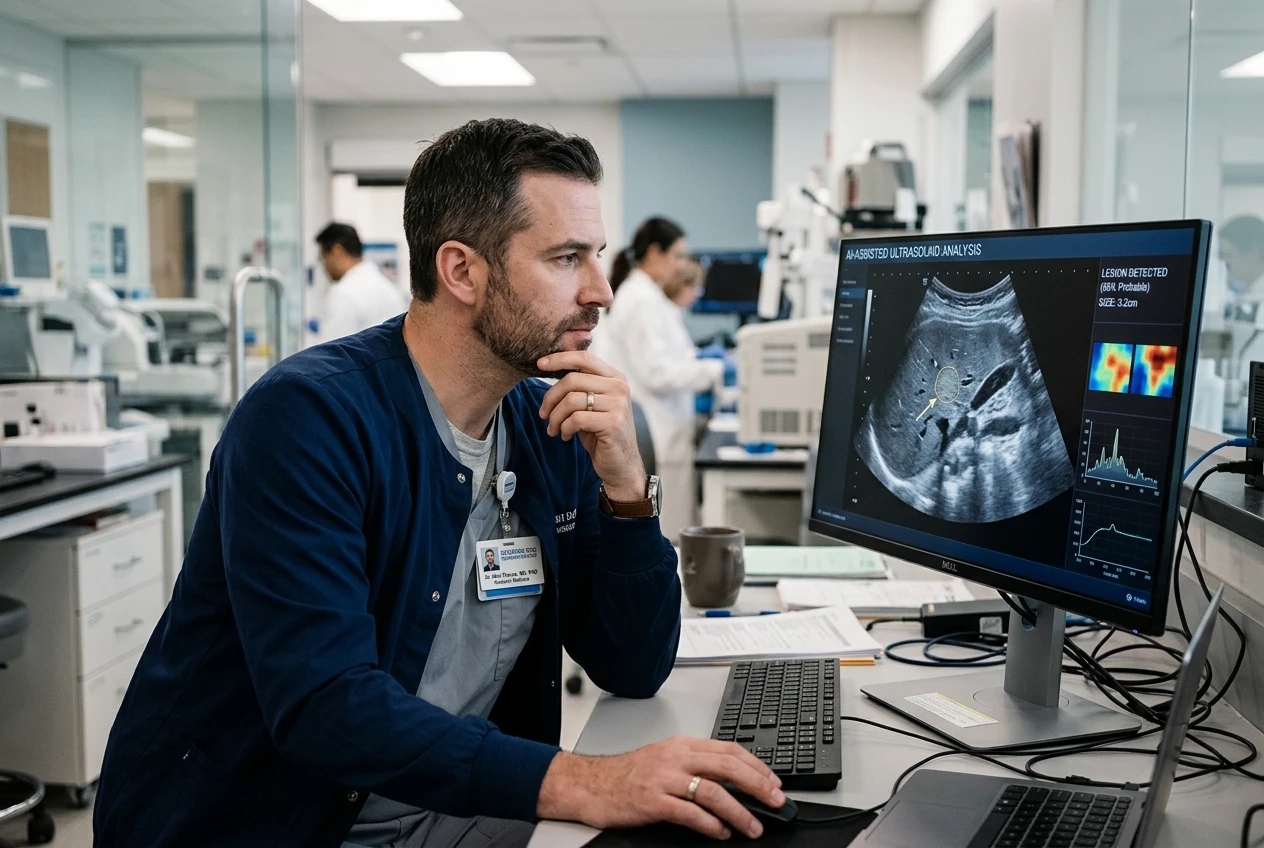
Three Pilots, Three Different Bets on Autonomy
The three selected companies are not running variants of the same idea. Each will test a different kind of autonomy in a different clinical setting, at a different hospital, under a different version of the regulatory question. The Israel Innovation Authority and Health Ministry announcement lays out what each pilot will test, where, and under which regulatory question.
| Company | Pilot Site | System Type | Regulatory Question |
|---|---|---|---|
| Pulsenmore | Rabin Medical Center (Beilinson Hospital) | At-home pregnancy ultrasound AI | Autonomous interpretation without physician review |
| Cordio Medical | Tel Aviv Sourasky Medical Center (Ichilov Hospital) | Home heart failure management AI | AI performing therapeutic interventions |
| Simahook | Hadassah Ein Kerem and Hadassah Mount Scopus Medical Centers | AI-guided fetal weight assessment | Expanding ultrasound performance beyond specialists |
Pulsenmore will work inside the obstetrics unit at Rabin Medical Center, also known as Beilinson Hospital. The pilot focuses on at-home ultrasound examinations performed by pregnant women, with an AI system analyzing the images and aiming for the day when routine scans do not need a physician’s interpretation to produce a clinical answer. The stated objective is to build a regulatory pathway that lets the system make autonomous clinical decisions without a doctor reviewing every image. Cordio Medical will run its pilot at the Heart Failure Clinic of Tel Aviv Sourasky Medical Center, also called Ichilov Hospital, where its system is built for heart failure patients managing their condition at home. The system combines voice analysis, patient questionnaires, smartphone and smartwatch data, and electronic medical records to flag clinical deterioration and recommend medication adjustments inside a treatment protocol the treating physician has already approved.
Why Israel Is Staking Its Healthtech Brand on the Wager
The Innovation Authority and the Health Ministry chose to build a regulatory sandbox rather than wait for legislation to catch up. They are using the program to generate the kind of clinical evidence and operational data that Israeli companies can take to regulators abroad. That puts Israel’s commercialization timeline ahead of larger jurisdictions still drafting rules. The framework is designed, per the announcement, to enable the development, evaluation, and validation of highly autonomous AI-powered medical technologies within a supervised regulatory environment.
The framing in the joint announcement is direct. Innovation Authority chairman Dr. Alon Stopel said the combination of an advanced healthcare system, a world-class healthtech industry, and forward-looking regulation ‘represents a strategic advantage for Israel.’ His counterpart, Health Ministry Director General Moshe Bar Siman-Tov, framed the move in equally national terms.
The regulatory sandbox will allow us to work alongside industry to determine the most appropriate regulatory framework for the next generation of medical technologies while maintaining the highest standards of quality and patient safety. It will also strengthen the position of Israel’s healthcare system as a global leader.
Moshe Bar Siman-Tov, Director General of the Ministry of Health, made the comments in the joint July 13, 2026 announcement with the Israel Innovation Authority. The Pilot Fund support is intended, per the program’s announcement, to accelerate the transition from development to commercialization and to generate the clinical database and operational experience that will support future engagement with international regulators. In Saudi Arabia, a major Riyadh hospital has been quietly folding AI into daily clinical and operational work, a separate shift from pilot projects to routine use. The trade-off is explicit: companies in the sandbox gain early regulatory contact and funding in exchange for continued development inside Israel and pricing commitments for the domestic market. The program’s stated aim is to position Israel among the first countries in the world with a dedicated regulatory framework for autonomous AI-powered medical systems.
The Open Questions the Pilots Are Designed to Surface
The sandbox exists because the underlying questions do not yet have answers anywhere. The announcement lists five open issues directly: professional accountability, patient safety, risk management, generative AI integration, and how responsibility is divided between humans and software. Each is being tested, in some form, inside one of the three pilots.
- Professional accountability when AI performs actions previously reserved for licensed clinicians.
- Patient safety under autonomous decisions taken inside predefined medical protocols.
- Risk management for responsibility allocation between humans and software systems.
- Integration of generative AI into clinical workflows under the program’s stated requirements for patient protection and data privacy.
- Distribution of responsibility between healthcare professionals and artificial intelligence systems.
Pulsenmore’s pilot tests whether an AI can be the final clinical reader of an ultrasound without a radiologist in the loop. Cordio Medical is asking whether its system can recommend medication adjustments inside a protocol already set by a physician. For Simahook, the regulatory question is whether a non-specialist can perform an ultrasound examination with AI guidance in real time. Each pilot maps to one of those five issues, in a different clinical setting, with a different version of autonomy.
The wider concern, raised by the program’s own framing, is that no comprehensive regulatory framework for these technologies currently exists in Israel or in most countries around the world. The same wider debate over AI’s benefits and risks is now playing out across healthcare, where the stakes are measured in patient outcomes rather than model accuracy. The pilots are designed to generate the clinical database and operational experience that the Innovation Authority says will support future engagement with international regulators.
The pilots will not answer every question regulators are wrestling with. They will produce, for the first time, evidence generated under regulatory supervision inside Israel’s healthcare system. That evidence is meant, per the Innovation Authority, to support future engagement with international regulators. The clinical database and operational experience from each pilot are expected to travel with the companies that generate it. The framework’s stated goal is to position Israel among the first countries to develop a dedicated regulatory framework for autonomous AI-powered medical systems, per the announcement.
How a Call for Proposals Became Three Pilots in Six Months
The cohort’s path to selection moved quickly. The Innovation Authority and the Ministry of Health published the call for proposals on July 1, 2026, with a submission deadline of April 14, 2026. The official program documents set the timeline for decisions to be communicated by end of June 2026, a deadline that was met with the July 13 announcement.
The selection framework laid out in the call for proposals is structured around five criteria: technological innovation and feasibility, business and market potential, expected economic impact in Israel, the applicant’s execution capability, and a final category the program calls regulatory and process uniqueness, measuring how much each proposal advances the regulatory conversation rather than just the technology. Once selected, each company receives a designated Single Point of Contact inside the Ministry of Health, a multidisciplinary expert team that meets with the company at least once per quarter, and a tailored regulatory guidance plan developed in joint sessions with the regulator. Companies also submit progress updates at least once every two months throughout the guidance period, a cadence the program describes as ongoing guidance and continuous learning. The full call for proposals, with the program criteria and submission deadline, is published on the Innovation Authority’s site. The Ministry of Health’s full sandbox framework and review process is available on the Israeli government’s central portal.
What These Pilots Will and Won’t Settle
The sandbox is built to test, not to approve. The Ministry of Health’s program page is explicit that participation does not constitute a commitment or guarantee of regulatory approval. The pilots generate evidence and regulatory learning; they do not, on their own, authorize any of the three systems for general clinical use.
The Ministry of Health also narrows what the program will not address. Systems built solely for decision support, products that need only standard medical device or clinical trial approval, and projects whose primary challenge is privacy, cybersecurity, or data access are explicitly excluded and routed to existing regulatory tracks. What the pilots are designed to settle is more specific: the operational data, the safety profile, and the regulatory pathways that Israeli companies can present to international regulators when they pursue approval abroad. The framework’s stated focus, per the Ministry of Health, is on automation, task redistribution, and substantial regulatory challenges.
The first three pilots are now active across four hospitals in Israel. The framework they build will be tested inside the country’s healthcare system first. The same framework is intended, in the program’s own terms, to inform regulators in other jurisdictions. According to the announcement, the program’s stated aim is to position Israel among the first countries in the world to develop a dedicated regulatory framework for autonomous AI-powered medical systems. The clinical database and operational experience generated through the pilots are expected to support future engagement with international regulators, per the Innovation Authority.
Disclaimer: This article is for informational purposes only and covers a regulatory and technology development story, not a specific medical recommendation. Figures, company names, and program details are accurate as of the July 13, 2026 announcement. Readers should consult qualified healthcare professionals for any medical decisions, and the regulatory framework described is subject to change as the pilots progress.
