
Egypt’s Petroleum Ministry launched an international tender to lease a 150,000 cubic-meter floating LNG storage unit, with deployment expected from June or July through the end of September at the Red Sea port of Ain Sokhna and an estimated lease cost of about $2.25 million per month. The vessel is framed by the government as a tactical hedge: a buffer against delayed cargoes and against any interruption of pipeline gas from Israel, the kind of disruption Cairo says it has already absorbed at least once in recent summers. The tender lands against a math problem that has been hardening for years.
Egypt expects summer natural-gas demand of around 7.9 billion cubic feet per day in August, up roughly 10% from a year earlier, with domestic production running at about 3.8 billion cubic feet per day. Imports of around 3.9 billion cubic feet per day will have to close the gap, with about 1.1 billion cubic feet per day arriving via pipeline from Israel’s Tamar and Leviathan fields and 2.8 billion cubic feet per day in LNG cargoes. Pipeline gas from Israel stays cheaper than imported LNG because it does not require liquefaction or marine shipping. The floating storage is meant to cushion both legs of that import stack against interruption.
A Three-Month Hedge Against Pipeline Disruption
The tender is sized to two specific risks: a delayed LNG cargo and a cut in pipeline gas from Israel. The government’s tender specification lays out the storage unit as a way to “ensure sufficient reserves in case scheduled shipments are delayed or pipeline gas imports from Israel are reduced or interrupted, similar to disruptions experienced during last summer’s regional tensions,” according to a government official familiar with the matter. The framing puts Cairo’s planning logic on the record.
- Capacity: approximately 150,000 cubic meters of LNG
- Lease term: initial three months, extendable if required
- Station: Red Sea, near Ain Sokhna Port
- Window: from June or July through the end of September
- Cost: about $2.25 million per month
Egypt already runs three floating storage and regasification units at Ain Sokhna. The new vessel will dock alongside them on the Red Sea coast for the duration of the summer peak. Pipeline gas from Israel stays cheaper than imported LNG because it does not require liquefaction or marine shipping, which is why the storage unit is being added on top of the existing pipeline arrangement.
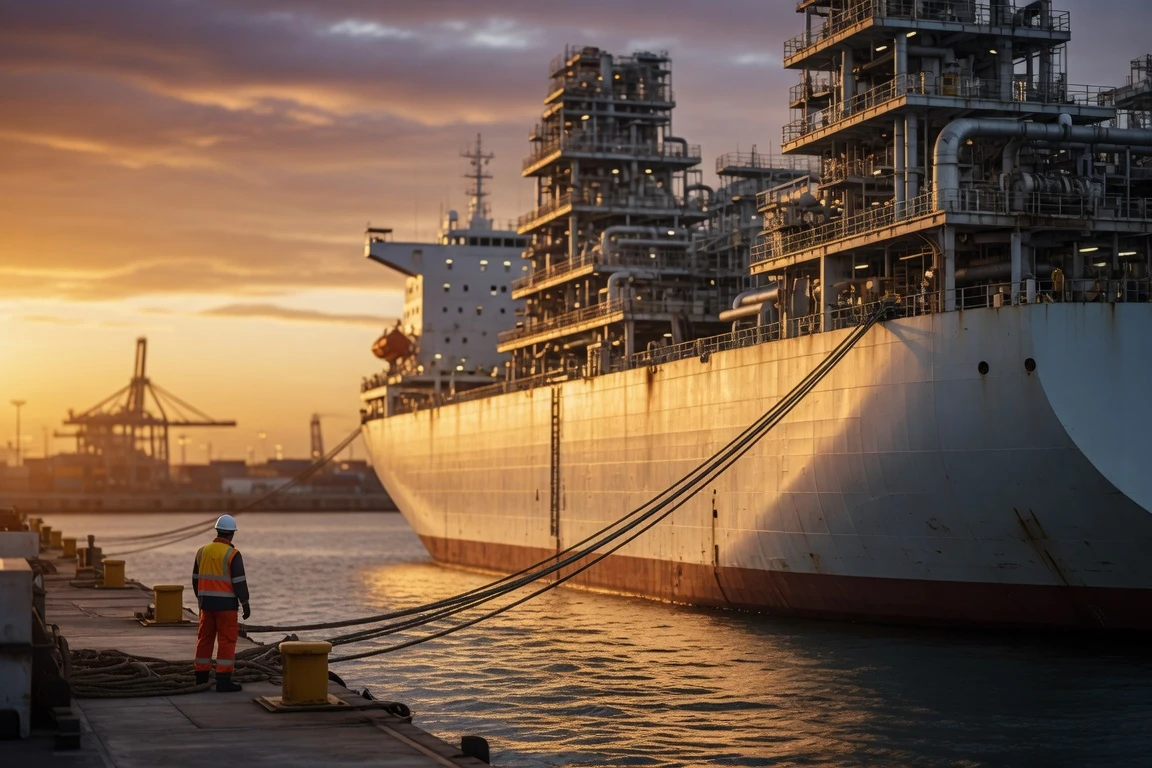
Summer Demand Pushes Toward 7.9 bcf/d
Summer natural-gas demand is forecast to peak at around 7.9 billion cubic feet per day in August, up roughly 10% from 7.2 billion cubic feet per day a year earlier. Most of the new pull sits in the power sector.
Power demand is projected to reach 5.1 billion cubic feet per day, up from 4.85 billion cubic feet per day in August 2025. Egypt’s domestic gas output has slipped to around 3.8 billion cubic feet per day, the lowest in years. Power plants alone will absorb roughly all of it, leaving the Petroleum Ministry to lean on imports and on accelerated upstream investment.
Pipeline gas from Israel’s Tamar and Leviathan fields is expected to deliver roughly 1.1 billion cubic feet per day into the import stack. Those are the two largest fields supplying the Egyptian pipeline, with the smaller Karish discovery adding another 1.75 trillion cubic feet of reserves further north, as an analysis of Israeli offshore gas reserves describes. Most of the rest, around 2.8 billion cubic feet per day, will arrive as LNG cargoes landing at the FSRUs already stationed at Ain Sokhna and Damietta. The new tender adds another buffer on top of that arrangement.
Egypt’s Current Floating Storage Fleet
Egypt currently operates three FSRUs at Ain Sokhna, with a combined processing capacity of about 2.25 billion cubic feet per day, alongside the Energos Winter FSRU at Damietta, which can regasify up to 450 million cubic feet per day.
| Asset | Location | Type | Capacity |
|---|---|---|---|
| Three FSRUs (existing) | Ain Sokhna Port, Red Sea | Regasification | ~2.25 bcf/d combined |
| Energos Winter | Damietta | Regasification FSRU | up to 450 mmcf/d |
| Floating storage unit (tendered) | Ain Sokhna vicinity, Red Sea | LNG storage | ~150,000 cbm LNG |
The new tender’s vessel will be stationed alongside the existing FSRUs at Ain Sokhna, with deployment from June or July through the end of September and a possible extension.
Ain Sokhna has become Egypt’s main LNG import gateway, the place where international cargoes meet the national grid. Damietta complements that setup with a smaller FSRU presence and, separately, sits on top of one of the country’s two operating LNG export terminals, the SEGAS facility.
Together the FSRU fleet gives Egypt roughly 2.7 billion cubic feet per day of regasification capacity, more than the imported cargoes expected this summer. That headroom lets the new vessel play a buffering role. Pipeline gas from Israel stays cheaper than LNG because it skips the liquefaction and shipping steps. The same infrastructure has put Egypt’s terminals at the center of a wider search for non-Gulf supply, as a regional analysis of Egypt’s LNG position describes.
The Production Decline Behind the Tender
The structural problem sits upstream. Egypt’s domestic gas output has slipped from a 2021 peak, with mature fields still losing output at a rate estimated at around 100 million cubic feet per month.
- 3.8 bcf/d: Egypt’s current domestic gas production
- ~100 mmcf/month: monthly decline from mature fields
- 5.1 bcf/d: power-sector demand forecast for August 2026
- $2.25 million/month: estimated lease cost for the new storage unit
Until new wells come online, every additional cubic foot of summer demand has to come from imports. Egypt’s dry natural gas production reached a peak of about 2.4 trillion cubic feet in 2021, the EIA noted, roughly 61% higher than 2016. The country reverted to net importer status in 2024, and the floating storage tender is the operational response to that reversal. The Ministry is working with international energy companies to accelerate the development and connection of new gas wells.
Chevron and the 2026 Upstream Push
Chevron has begun drilling new exploration wells in Egypt’s western Mediterranean offshore, joining a wider campaign by Eni, BP, and other international partners to slow, and eventually reverse, the production decline.
Egypt’s Ministry of Petroleum has put fresh acreage on the block to make that possible. The 2024 licensing round offered 10 offshore and 2 onshore blocks across the Eastern Mediterranean and the Nile Delta, with bids now being evaluated. The 2025 Open Blocks Licensing Program added seven more Mediterranean fields and six other onshore and offshore areas. The country plans to keep adding barrels (or cubic feet) through 2030 by stacking fresh exploration on top of accelerated workover drilling at older fields.
For the Ministry, the floating storage unit and the drilling campaign are running on parallel tracks. One buys time through the summer; the other, if it succeeds, lifts production above its current level over the longer term.
Egypt’s LNG Imports Through 2030
Egypt plans to continue importing LNG through 2030 and to expand regasification infrastructure beyond the existing cluster at Ain Sokhna and the lone FSRU at Damietta. The floating storage is part of that multi-year plan.
Cypriot gas is set to reinforce it. Egyptian and Cypriot governments approved development plans in February 2025 for the Aphrodite and Cronos fields southwest of Cyprus, with both operators intending to link upstream facilities to Egypt’s natural gas transmission network for export, per an Eastern Mediterranean gas briefing from the US Energy Information Administration. First flows from those fields have not yet begun.
Domestic production recovery is the other variable. Egypt’s dry natural gas output reached a peak of about 2.4 trillion cubic feet in 2021, the EIA noted, before slipping back as Zohr and other fields declined.
Until that curve bends upward, the floating storage unit will likely be renewed each summer. Cairo is paying now to be ready for the kind of disruption that prompted the tender. The lease structure lets Cairo walk away after three months if the upstream drilling now underway delivers new production in time.
Frequently Asked Questions
What is the floating LNG storage unit for?
The unit is designed as a summer stockpile. It will sit at Ain Sokhna through September, holding surplus LNG cargoes so Egypt has backup supply if scheduled shipments slip or pipeline gas from Israel is interrupted, similar to the disruptions absorbed during last summer’s regional tensions.
Where will it be stationed?
At Ain Sokhna Port on the Red Sea. Egypt already operates three floating storage and regasification units there with a combined capacity of about 2.25 billion cubic feet per day, all serving the same summer peak the new unit is designed to support.
How much will it cost Egypt?
About $2.25 million per month. The initial lease term is three months, with an option to extend if summer demand runs hotter than forecast or if pipeline deliveries are interrupted again.
Why does Egypt rely on Israeli pipeline gas?
Pipeline gas from Israel’s Tamar and Leviathan fields is cheaper than imported LNG because it skips the liquefaction and shipping steps. Egypt expects about 1.1 billion cubic feet per day to arrive through the pipeline this summer, out of around 3.9 billion cubic feet per day in total imports.
What is being done about the domestic production shortfall?
The Petroleum Ministry is working with international energy companies to develop new gas wells and offset the natural decline at mature fields, estimated at around 100 million cubic feet per month. Chevron has begun drilling in Egypt’s western Mediterranean offshore as part of that campaign.
