
Israeli troops killed “several armed terrorists” in southern Syria’s security zone this Saturday, June 27, the Israel Defense Forces said on Sunday. The IDF announced the operation in a one-line statement and released no further details about the dead or the location. The Etzioni Brigade reservists opened fire on the men, the military told reporters; no affiliation was named.
The Saturday raid is the latest in an average of 17.5 Israeli ground incursions a week logged inside the zone since June 2025, a year of operations built on territory Israeli forces first entered after the fall of Bashar al-Assad in December 2024. Defense Minister Israel Katz said earlier this month that Israeli forces would remain in Syria “for an unlimited period.” The harder story beneath the headline is what a year of open-ended occupation inside Syria has cost, and why a parallel US-mediated negotiation track has yet to remove a single base.
What the IDF Says About Saturday’s Raid
The IDF described the operation in a single sentence: “Saturday, IDF soldiers eliminated several armed terrorists in the Security Zone in southern Syria.” The phrasing defined the dead by status rather than identity, and the military released no follow-up on Sunday beyond that initial statement.
Reservists of the Etzioni Brigade carried it out, according to the military. The IDF statement, carried in full by The Times of Israel, gave no location, no affiliation of those killed, and no description of the firefight beyond the reservists “opening fire.”
The IDF added that its forces would continue to “operate in the Security Zone in southern Syria in order to remove any threat to Israeli civilians and IDF soldiers.” That framing has recurred in IDF statements about the southern Syria zone for months, casting the raids as a standing mission rather than a one-off response to Saturday’s incident.
How Israel Came to Hold Southern Syria
Israel’s presence in southern Syria dates from the collapse of the Assad regime in December 2024. Within hours of opposition fighters entering Damascus on December 8, Israeli forces launched a large-scale ground operation and moved past the UN-patrolled buffer zone that had separated Israeli and Syrian positions on the Golan Heights since the 1974 disengagement agreement. By the end of that 48-hour period, Israeli jets had flown at least 350 airstrikes against former Syrian military infrastructure.
The military has framed the occupation as defensive. Israel captured most of the Golan Heights from Syria in the 1967 war and later annexed the area in a move most of the international community does not recognize. The stated aim of the buffer zone is to keep hostile groups from establishing a foothold on the border, a position Israeli officials have repeated in every statement since the deployment began.
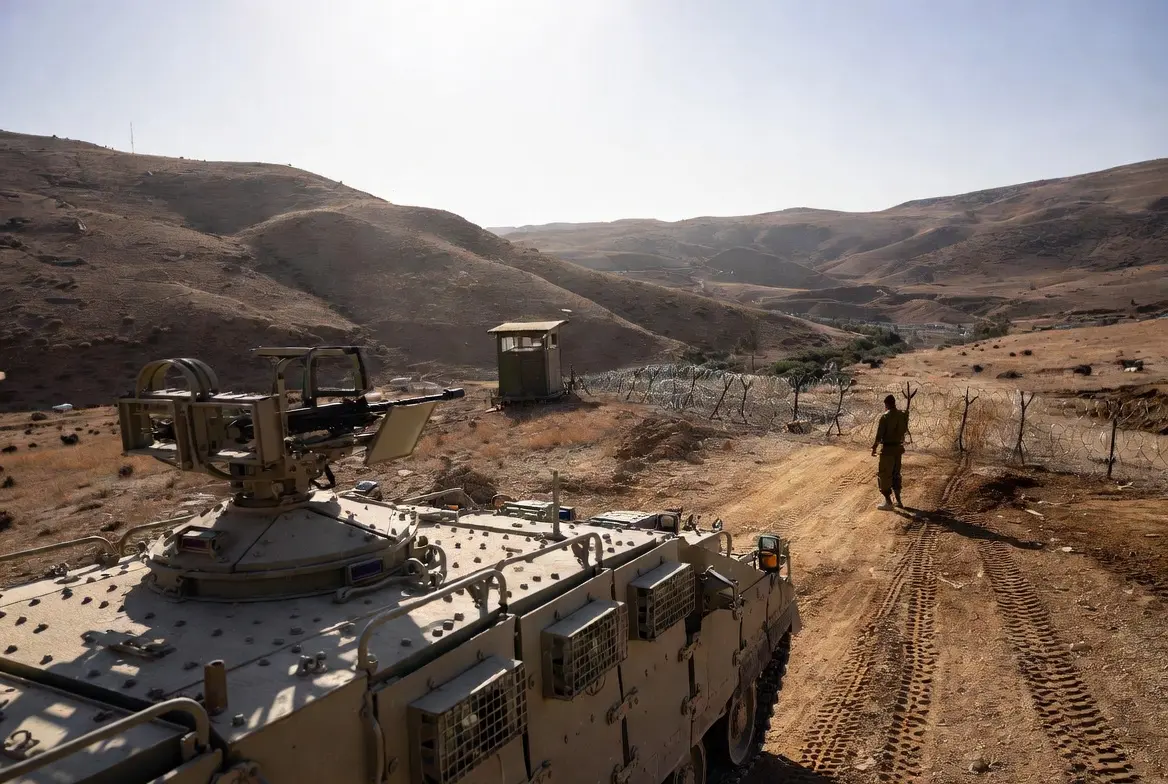
Israeli forces now hold about 350 square kilometers inside Syria, a stretch running from Mount Hermon in the north to a strip of Daraa’s Yarmouk Basin in the south. A December 2025 analysis of the Syrian buffer zone logged nine IDF posts inside Syria, including two on the Syrian side of Mount Hermon, with troops operating “up to nine miles inside Syria.”
A Year of Weekly Ground Incursions
Saturday’s operation sits on top of a much busier routine. The Syria in Figures project recorded an average of 17.5 Israeli ground incursions per week since June 2025, drawn from field monitoring of the buffer zone footprint. In November and December 2025, the pace nearly doubled, with nearly 200 ground operations inside Syria over two months, described by Syria in Figures as a deliberate pressure tactic against the negotiating team in Damascus.
Standard incursions follow a template. Armored patrols move through populated villages, set up temporary checkpoints on main roads, stop and search all passing Syrian civilians, examine phones, and in some cases collect biometric data. Patrols raid residential buildings, commercial businesses, and at times schools. Dozens of Syrian men have been taken into Israeli territory for interrogation and released a day or two later in rural areas, often without explanation; at least a dozen remain in Israeli detention with their whereabouts unrecorded, according to Syria in Figures.
Israeli jets have run a parallel air war. At least 350 strikes flew in the first 48 hours after Assad’s fall, with hundreds more through December 2024. By December 8, 2025, the cumulative strike count had reached nearly 1,000 across Syria since the operation began, according to the same tally. Targets have included former regime military infrastructure, government facilities, and suspected positions of militant groups still active inside Syria.
Rural communities along the front line have been reshaped. More than 110 acres of the historic Jubata al-Khashab forest have been razed since the Israeli deployment began, agricultural land has been cleared, and herders and farmers trying to reach fields within sight of Israeli lines have come under live fire.
- ~350 square kilometers of Syrian territory held by Israeli forces since December 2024
- 17.5 average Israeli ground incursions per week since June 2025
- ~1,000 Israeli airstrikes on Syrian targets by December 8, 2025
- 9 IDF bases inside newly occupied Syrian territory
- 12+ Syrian men held in Israeli detention without public record
The Three Times the Pattern Has Turned Deadly
Most incursions do not produce a casualty count. Two named 2025 incidents did, and both happened inside the same stretch of southern Syria where Saturday’s raid took place. On the record, the deadliest named episodes are Koya in Daraa in March 2025, when seven local men were killed by IDF forces after resisting an incursion, and Beit Jinn in Rural Damascus in November 2025, when fourteen people were killed after several local men resisted an IDF raid.
What those incidents looked like from outside varied by source. Syria’s new government described Beit Jinn as a war crime aimed at igniting the region in conflict. The IDF said its raid was meant to apprehend suspects from the Jamaa Islamiya terrorist organization and that armed men opened fire on the troops before soldiers responded with live fire and air support. The same analytical brief noted that Jamaa Islamiya had not generally maintained a presence in southern Syria, a gap between the IDF’s stated target and the local reality that has framed every deadly exchange in the zone so far.
The Saturday operation does not match the Koya or Beit Jinn casualty figures yet. The IDF has said only “several,” and no further details have been released beyond the Etzioni Brigade’s role. What places the new incident inside the same pattern as the two 2025 cases is the basic fact: the raid happened inside the security zone, the dead were not named, and the IDF’s statement described the entire engagement in a single sentence.
| Incident | Date | Location | Reported killed |
|---|---|---|---|
| Saturday’s raid | June 27, 2026 | Southern Syria security zone | “Several” armed terrorists, no further details |
| Beit Jinn raid | November 2025 | Rural Damascus | 14 people killed after men resisted an IDF raid |
| Koya incursion | March 2025 | Daraa | 7 local men killed after resisting an incursion |
What the Weekly Incursions Cost the Local Population
The incursion count is the abstract number; the ground reality is the one residents along the front line live with. Patrols through populated villages can run multiple times a week, and the Syrian Foreign Ministry’s response to each one has followed the same pattern: a public statement of condemnation and a complaint filed with the United Nations. The complaint file is long.
Farmers and herders who have tried to enter or use their land within sight of Israeli lines have frequently come under live fire, the Syria in Figures monitoring records. More than 110 acres of the historic Jubata al-Khashab forest have been cleared since the Israeli deployment began, and access restrictions have pushed vast stretches of agricultural land out of use. In a rural region, the local agricultural sector has been crippled by the new rules, according to the same reporting.
Inside Syrian government offices, the public posture and the working posture have diverged. Although the Foreign Ministry’s condemnations have come at regular intervals, the Syrian Interior Ministry officers stationed in Daraa maintain lines of communication with Israeli counterparts, and during periods of heightened tension that contact has run up to the ministerial level. The back channel has not slowed the incursion count.
The Negotiation Track That Hasn’t Dislodged a Base
The political track has run alongside the military one for almost a year. Several rounds of direct Israel-Syria talks collapsed in late September 2025 after months of US mediation; direct talks resumed on January 5, 2026 following a personal request from US President Donald Trump, according to Syria in Figures. Israel and Syria’s new authorities have since agreed on an intelligence-sharing mechanism, and both sides describe themselves as cautiously moving toward a broader security arrangement. The most recent round of Israel and Syria’s Paris security talks tracked the same gap between Israeli demands and Syrian offers.
The shape of any deal is the open question. Israel continues to demand the demilitarization of southern Syria and to insist on retaining all positions on Mount Hermon. Damascus has offered a narrow southern buffer, far short of what Israel has asked for. Israeli Prime Minister Benjamin Netanyahu, visiting wounded soldiers after Beit Jinn, framed his position in a single sentence: “In a good spirit and understanding, an agreement can be reached with the Syrians, but we will stand by our principles.”
The United States has pressed both sides publicly and privately. Trump has publicly urged Israel not to disrupt Syria’s development, and US envoy Tom Barrack met Syrian President Ahmad al-Sharaa in Damascus to deliver the same message. A senior US official told regional media that Netanyahu was “seeing ghosts everywhere” and risked turning the new Syrian government into an enemy. Trump and Netanyahu have since emphasized that differences on Syria will not derail the broader US-Israel relationship; the underlying presence in southern Syria has not changed.
Israel’s domestic framing has hardened in parallel. On Thursday, Defense Minister Israel Katz said Israeli forces would remain inside security zones in Lebanon, Syria, and the Gaza Strip “without any time limit.” The Saturday raid sits inside that language: a continuing mission to “remove any threat” from a zone Israel has defined as its own, on terms no deal has yet replaced.
Israeli forces would remain in Syria “for an unlimited period.”
Defense Minister Israel Katz, in remarks reported by the Kurdistan24 news agency on Sunday, June 28, 2026.
The Year of Presence After Saturday’s Raid
Saturday’s operation is the most recent data point in a pattern that began when the IDF first moved past the 1974 disengagement line in December 2024. The raid is not the largest casualty event on record in the zone, and it is not the smallest. It sits inside a sequence of operations that has run at an average of 17.5 a week since June 2025, against targets the IDF has generally declined to identify, in a zone where Israeli forces have built at least nine bases.
Another Friday-to-Saturday operation inside the same zone is the predictable follow-on so long as the buffer holds, the bases stay, and the talks stall.
