
The United States has warned of “alarming indications that mass atrocities could be imminent” in the Sudanese city of El Obeid, where the paramilitary Rapid Support Forces are encircling army-held positions and striking civilian infrastructure with drones. The US State Department said on Monday the RSF was “massing forces” around the North Kordofan capital, a logistics hub of roughly half a million people. The warning came hours after the UN Security Council expressed concern on Saturday over “the imminent risk of mass atrocities” in the same city.
El Obeid has been partially encircled by the RSF for months, but recent weeks have brought a sharp escalation. Drone strikes have hit fuel stations, electricity substations, transport trucks, residential areas, and a funeral gathering, killing civilians and shutting down services the city depends on, while UN human rights chief Volker Türk has warned that an imminent RSF offensive risked “fresh commission of serious international crimes” against the civilian population.
Warnings Stack From Washington, Geneva, and New York
The US warning, issued June 22, marks Washington’s most direct public statement on the El Obeid crisis. The State Department said there were “alarming indications that mass atrocities could be imminent” and called on the RSF and allied forces to “cease any actions that could endanger civilians, impede humanitarian assistance, or contribute to further atrocities and suffering.” It repeated demands for a negotiated end to Sudan’s war, now in its fourth year.
The UN Security Council made its own statement on June 20, citing “the imminent risk of mass atrocities” and urging all parties to protect civilians. UN High Commissioner for Human Rights Volker Türk went further on June 18, saying in Geneva that an imminent RSF offensive risked “fresh commission of serious international crimes and deepening the catastrophic impact on an already beleaguered civilian population.” He called for the offensive to be halted before it began. The US warning came four days later, citing the same language.
- June 18, 2026: UN High Commissioner for Human Rights Volker Türk warns in Geneva of “fresh commission of serious international crimes” if an RSF offensive on El Obeid goes ahead.
- June 20, 2026: The UN Security Council issues a press statement citing “the imminent risk of mass atrocities” in El Obeid and calling for protection of civilians.
- June 22, 2026: The US State Department says there are “alarming indications that mass atrocities could be imminent” and calls on the RSF to halt operations around the city.
the catastrophic impact on an already beleaguered civilian population
Volker Türk, the UN High Commissioner for Human Rights, issued the warning in Geneva on June 18, 2026, as reported in his office’s press release on the imminent El Obeid offensive. The US position is laid out in State Department June 22 statement on El Obeid.
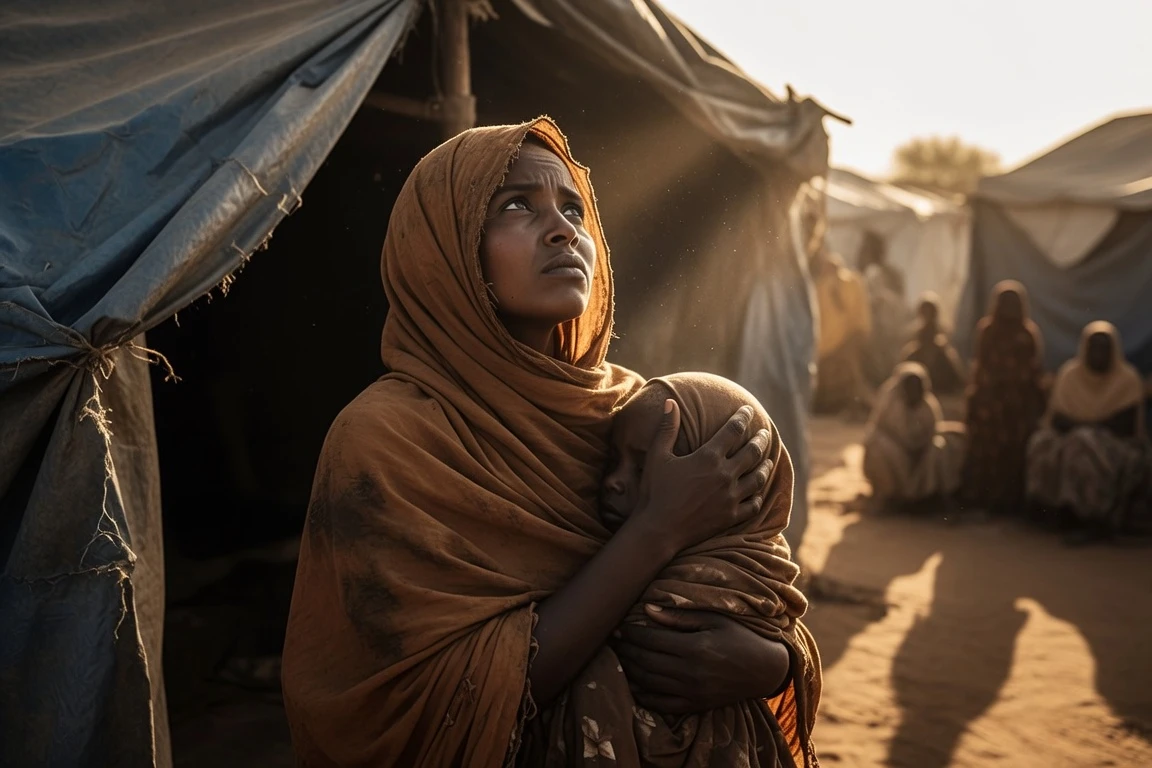
Drone Strikes Have Hit the City for Weeks
Drone warfare has become a defining feature of Sudan’s civil war, and El Obeid has absorbed weeks of it. Local rights group Emergency Lawyers reported that overnight strikes on June 11 killed 23 people and wounded 19 others, hitting residential areas, a funeral gathering, and a truck carrying food supplies. Health officials at El Obeid Hospital gave a lower count: 15 killed and more than 10 wounded. Emergency Lawyers blamed the RSF, which did not immediately claim responsibility.
The targets have stretched well beyond military positions. Between June 18 and 21, the UN aid coordination office OCHA reported drone attacks on a power substation and a fuel station in El Obeid. The strikes forced the closure of a dialysis centre, the Sudan Doctors Network said, and shut down water stations across parts of the city.
- Power substation in El Obeid, struck between June 18 and 21, contributing to electricity outages
- Fuel station in El Obeid, hit in the same window, worsening shortages for hospitals and residents
- Dialysis centre forced to close after nearby strikes, per the Sudan Doctors Network
- Water stations shut down, further cutting access to safe drinking water
- Two bridges south of Um Ruwaba targeted on June 22, on a main road to South Kordofan
- Funeral gathering and residential areas hit in the June 11 overnight strikes
The scale of the campaign is far larger than the city. The UN said in May that at least 880 civilians had been killed in drone strikes across Sudan between January and April 2026. Kordofan, the central region where El Obeid sits, has become a focal point: it links RSF strongholds in Darfur to army-controlled areas in eastern Sudan, and both sides have poured resources into contesting it. The details of the June 11 strikes are reported in a June 11 account of the central Sudanese city strikes, and OCHA’s broader service-shutdown summary is in the UN aid office’s June 23 briefing on El Obeid.
The Sudanese army has hit back. On June 20, the army launched intensive drone strikes of its own to disrupt what it described as RSF preparations for a broader assault on the city. The back-and-forth has intensified displacement from outlying areas into El Obeid itself, where services were already strained. North Kordofan is one of several Sudanese states where aid agencies say they have been forced to scale back operations because of insecurity and bureaucratic obstruction.
The El Fasher Pattern
The UN has drawn an explicit line from El Obeid to what came before. The October 2025 RSF assault on el-Fasher, the army’s last major stronghold in western Darfur, ended with the paramilitary in control of the city, and UN officials have said that operation bore “hallmarks of genocide.” Warnings about El Obeid now use the same language. Türk’s June 18 statement called the troop build-up and the intensified drone and artillery shelling a prelude to mass atrocities. The US warning on June 22 followed four days later.
The geography is different but the playbook looks similar. El Fasher’s fall came after a months-long RSF siege and repeated strikes on civilian infrastructure, with food, water, and medical supplies cut off before the final assault. El Obeid has been partially encircled for months, and the recent wave of strikes has already hit a power substation, a fuel station, a dialysis centre, and water stations. The UN Human Rights Council’s figure of roughly half a million civilians at risk in El Obeid is close to the population of pre-war el-Fasher, with the addition of more than 100,000 people already displaced into the city from surrounding areas. The Türk statement and the US warning now frame El Obeid in the same terms the UN used for el-Fasher.
Who Is Trapped Inside El Obeid
El Obeid’s pre-war population was already significant, and the war has made it more so. The UN Human Rights Council has put roughly 500,000 civilians in the city at risk if the RSF assaults it. The city hosts a large displaced population that has fled fighting in surrounding areas, on top of long-term residents. The city’s role as a logistics and military hub for the Sudanese Armed Forces has made it a target, but the burden is falling on people with no role in the fighting.
The infrastructure under pressure is civilian. OCHA reported that strikes in mid-June forced the closure of medical facilities, including a dialysis centre, and shut down water stations. A separate drone strike hit a fuel station at a market in Kosti, in White Nile state, on June 22, killing at least one civilian and injuring 15 others. In West Kordofan, a cholera outbreak driven by limited humanitarian access, displacement, and inadequate water and sanitation has been growing, with the UN and partners setting up treatment centres. For civilians inside and around El Obeid, the drone war and a spreading disease outbreak are converging.
The UN’s broader count is larger still. The war has displaced nearly 13 million people since it began in April 2023, and more than 30 million people across Sudan are in need of humanitarian assistance. The UN has described the situation as the world’s largest displacement and hunger crises. El Obeid is one node in a much wider emergency that aid agencies say they can no longer fully reach.
The Army’s Counter-Strikes
The Sudanese Armed Forces say they still hold El Obeid. On June 20, the army launched intensive drone strikes on RSF positions around the city to disrupt what it described as preparations for a broader assault. The army’s ability to project drone power beyond the city is one reason El Obeid has held this long, but the same drone war is hitting the city’s civilian infrastructure from the other side.
For civilians, the army’s strikes and the RSF’s strikes are converging on the same streets. OCHA reported that recent drone attacks in North Kordofan and White Nile state caused civilian casualties and damage to civilian infrastructure beyond El Obeid itself, including the Kosti fuel station strike on June 22. The pattern across the region is escalation, not containment, and the UN Security Council’s June 20 statement was directed at both sides, urging them to “protect civilians and civilian infrastructure.”
A Wider Crisis Beyond Kordofan
The El Obeid crisis sits inside a Sudan-wide emergency that has been building for three years.
The war erupted in April 2023 between the Sudanese Armed Forces (SAF) and the paramilitary Rapid Support Forces (RSF). It has killed tens of thousands of people and pushed parts of the country into famine. The UN has described Sudan as the site of the world’s largest displacement and hunger crises. International peace efforts have failed to hold. Earlier this year, Egypt’s foreign minister met his British counterpart in London to try to keep a Sudan ceasefire plan alive as the battlefield map shifted.
The warnings on El Obeid are not new in form; they are new in target. The October 2025 fall of el-Fasher prompted the same language of “mass atrocities” and “hallmarks of genocide.” Türk’s June 18 statement and the US warning on June 22 now apply the same template to a city of roughly half a million, with a regional mediator track stalled and the drone war expanding across multiple states.
Frequently Asked Questions
What is happening in El Obeid?
The paramilitary Rapid Support Forces (RSF) are encircling El Obeid, the capital of Sudan’s North Kordofan state, and have intensified drone strikes on civilian infrastructure including power and fuel stations. The UN, the US, and UN human rights chief Volker Türk have all warned that an imminent RSF offensive could produce mass atrocities. The Sudanese Armed Forces say they still hold the city.
How many civilians are at risk?
The UN Human Rights Council has said roughly 500,000 civilians in El Obeid are at risk of atrocities if the RSF assaults the city. El Obeid also hosts more than 100,000 internally displaced people who have fled fighting in surrounding areas. The UN said on June 22, 2026 that 50 civilians had been killed in drone strikes over 10 days in El Obeid and wider North Kordofan. The city’s medical and water infrastructure has been hit, with a dialysis centre forced to close.
Who is fighting in Sudan?
Sudan’s civil war began in April 2023 between the Sudanese Armed Forces (SAF) and the Rapid Support Forces (RSF), two groups that were formerly allied. The war has killed tens of thousands of people and displaced nearly 13 million, and the UN has described it as producing the world’s largest displacement and hunger crises. More than 30 million people across Sudan are in need of humanitarian assistance.
Why is the world comparing El Obeid to el-Fasher?
UN officials have said an assault on El Obeid could result in parallels to the October 2025 RSF attack on el-Fasher in Darfur, which the UN has said bore “hallmarks of genocide.” Both involved a months-long encirclement, drone and artillery strikes on civilian infrastructure, and a final ground assault.
What is the international community doing?
The UN Security Council issued a statement on June 20, 2026 expressing concern over “the imminent risk of mass atrocities” in El Obeid. UN human rights chief Volker Türk warned of “serious international crimes” on June 18, 2026. The US State Department said on June 22, 2026 that “mass atrocities could be imminent” and called for a negotiated end to the war. Regional mediators have not announced a new initiative for El Obeid.
The October 2025 el-Fasher assault proceeded despite similar warnings; the Security Council on June 20 and Türk on June 18 used the same “mass atrocities” language for El Obeid.
