
Saudi Arabia opened Umrah visa applications for the 1448 AH season on May 31, 2026, and international pilgrims can now apply and begin arriving in the Kingdom. The Ministry of Hajj and Umrah said visas will be issued until March 9, 2027, pilgrim entry will continue until March 23, 2027, and all Umrah visitors must leave by April 7, 2027. Every permit runs through Nusuk, the country’s unified digital pilgrimage system.
The dates read like an administrative notice, and for most travelers that is exactly what they need. Behind the calendar sits a far larger ambition: nearly doubling the number of people who reach Makkah each year, with the visa window and the app that controls it serving as the machinery that has to scale first.
The 1448 AH Umrah Calendar in Four Dates
The new season started issuing visas the day after this year’s Hajj wrapped up. Visa applications opened on May 31, 2026, and pilgrims were cleared to enter Makkah and pull their Umrah permits from June 1. The closing edge of the season is what matters most for anyone planning a trip late in the cycle.
The final date to issue an Umrah visa is March 9, 2027 (Shawwal 1, 1448 AH). After that, no new visas go out, even though some pilgrims will still be inside the country. The last day a pilgrim can actually enter Saudi Arabia is March 23, 2027, and the hard exit deadline for all Umrah visitors is April 7, 2027.
| Stage | Date (Gregorian) | Hijri reference |
|---|---|---|
| Visa applications open | May 31, 2026 | Dhul Hijjah 14, 1447 AH |
| Pilgrim entry and permits begin | June 1, 2026 | Dhul Hijjah 15, 1447 AH |
| Last date to issue a visa | March 9, 2027 | Shawwal 1, 1448 AH |
| Last date to enter the Kingdom | March 23, 2027 | Shawwal 15, 1448 AH |
| Final departure deadline | April 7, 2027 | Shawwal 30, 1448 AH |
The two-week gap between the final visa date and the final entry date is the part travelers miss most often. A visa issued in early March does not extend the door; everyone still has to be on the ground before March 23.
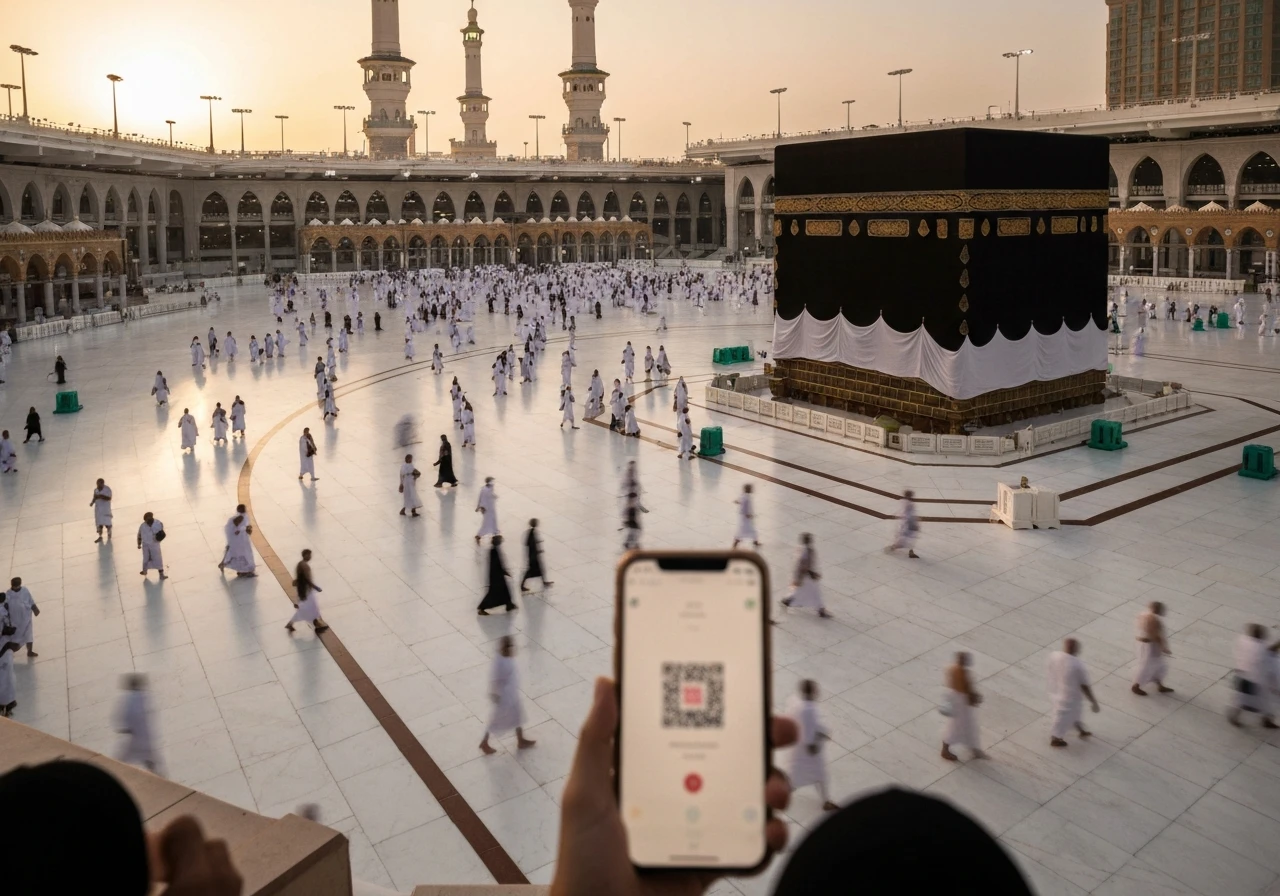
Nusuk Carries the Whole Journey Now
The paper Umrah sticker and the broker who used to arrange it have largely disappeared for eligible nationalities. In their place is the Nusuk pilgrimage permit platform, Saudi Arabia’s centralized system for visas, bookings, and the permits that get scanned at the gates of the Grand Mosque.
One booking carries through the full trip. The visa, the hotel and transport contracting, and the final permit all live in the same place, and a permit is mandatory before entering Makkah to perform Umrah. The app produces a QR (Quick Response, a scannable barcode) that staff check at the entrances to Masjid al-Haram and at the Rawdah in Medina.
The features that make the difference are unglamorous but they are the reason the system can absorb more people:
- Electronic Umrah eVisas issued without a paper sticker for eligible applicants
- Automated contracting for accommodation, transport, and service packages
- QR-code verification at mosque entry points and for Rawdah visit slots
- Time-slotted permits that spread crowds across the day rather than letting them pile up
That last point is the quiet engine of the whole expansion. Slot-based permits let the authorities manage flow at fixed-capacity sites, which is the only way visitor numbers can keep climbing without the holy sites seizing up.
Who Qualifies and When Arrivals Begin
The eVisa route is open to citizens of roughly 66 countries, along with holders of valid United States, United Kingdom, or Schengen visas, who can apply digitally through Nusuk. Pilgrims from countries outside that list still go through approved agents, but the application and permitting steps have moved online for nearly everyone.
Approvals for the new season are landing in about three to seven working days, though that stretches during peak demand. The crunch point every year is Ramadan, which falls inside this season, so applicants planning a Ramadan trip are advised to file three to four weeks before departure rather than days.
Entry itself began June 1, the day after applications opened. From that point the season runs continuously, with no break until the late-March entry cutoff. For a family weighing when to go, the practical read is simple: the door is open for roughly ten months, but the desirable windows around Ramadan will be the most contested for visas, flights, and hotel inventory near the Haram.
The 30 Million Target Driving the Window
Strip away the dates and this is what the season is really about. Under Saudi Arabia’s Vision 2030 pilgrim experience goals, the Kingdom wants to host 30 million Umrah pilgrims a year, a target it has held up as a centerpiece of its plan to diversify away from oil.
A Climb From the 2016 Baseline
The 30 million figure is measured against a 2016 starting point of around 6.2 million Umrah visitors, which makes the goal close to a fivefold rise. The trajectory since the pandemic has been steep. Foreign Umrah numbers grew 101 percent between 2022 and 2024, roughly doubling in two years as restrictions lifted and the digital system came online.
Where the Money Lands
Pilgrims do not just pray; they stay, eat, and travel. Religious tourism already feeds a large slice of the non-oil economy, and the visa expansion is designed to widen that base year after year.
- 16.92 million foreign Umrah pilgrims performed the rite in 2024, beating the interim target of 11.3 million
- 101% growth in foreign Umrah numbers between 2022 and 2024
- $12 billion in annual religious-tourism activity, close to a fifth of the non-oil economy
Seen against those figures, the May visa opening is not a one-off announcement. It is the recurring trigger that keeps the funnel filling, and the digital plumbing behind it is what lets each season carry more people than the one before.
Capacity, Records, and the Strain Ahead
Hitting 16.92 million foreign pilgrims in 2024 cleared the year’s goal, but the gap to 30 million is still wide, and the bottlenecks are physical. The Grand Mosque can only hold so many bodies at once, Medina’s Rawdah is smaller still, and airport and rail throughput cap how fast people can move between cities.
That is why the spending has gone where it has. The Kingdom has signaled more than 320,000 new hotel rooms in the pipeline, alongside expansion at the Two Holy Mosques and continued investment in airports, rail, crowd management, and health systems. The Rawdah alone hosted more than 13 million visitors in 2024, up from around 4 million in 2022, a jump the old paper system could not have managed.
The risk in any expansion this fast is that demand outruns the concrete. Slot-based permits and digital crowd control buy time, but they do not add square meters to a fixed mosque footprint. The next few seasons will test whether the infrastructure build keeps pace with a visa policy explicitly designed to pull in more people each year.
Frequently Asked Questions
When did Umrah visa applications open for the 1448 AH season?
Applications opened on May 31, 2026, the day after this year’s Hajj concluded. Pilgrims were able to enter Saudi Arabia and obtain Umrah permits from June 1, 2026, with the season running through early April 2027.
What is the last date to apply for an Umrah visa this season?
March 9, 2027 (Shawwal 1, 1448 AH) is the final date the Ministry of Hajj and Umrah will issue Umrah visas. No new visas are issued after that, so applications need to be in well before the deadline.
When must Umrah pilgrims leave Saudi Arabia?
All Umrah visitors must exit the Kingdom by April 7, 2027 (Shawwal 30, 1448 AH). The last day a pilgrim can enter the country is March 23, 2027, so the final two weeks of the season are for departures, not arrivals.
How do I apply for an Umrah permit through Nusuk?
Eligible travelers apply through the Nusuk platform, which handles the eVisa, contracting, and the QR-coded permit needed to enter Makkah. Booking a Nusuk Umrah permit is mandatory before performing Umrah, and the same app is used for Rawdah visit slots in Medina.
Who is eligible for the Umrah eVisa?
Citizens of around 66 countries, plus holders of valid United States, United Kingdom, or Schengen visas, can apply for a digital Umrah eVisa through Nusuk. Travelers from other countries typically apply through approved Umrah service agents.
How long does Umrah visa approval take?
Most approvals arrive within three to seven working days. Processing can slow during peak periods such as Ramadan, so applying at least three to four weeks before the planned departure is the safer approach.
