
Cairo’s Nile-view hotels filled before the Eid Al-Adha holiday weekend opened, and Red Sea resort managers are now telling industry associations they expect to clear above 95% occupancy through the six-day public break running 26 to 31 May. The headline number, repeated by association heads in Hurghada, Sharm El-Sheikh and Marsa Alam, is that domestic, expatriate and foreign demand are stacking on one weekend in a way they have not for several years.
Behind the spike sits a quieter problem. Egypt’s working hotel base still totals about 110,000 rooms against a stated 2030 target of 300,000, and the Eid surge has just shown what happens to availability when the country runs at the upper end of its current capacity.
Cairo’s Nile-View Rooms Sell Out by Tuesday
By Tuesday afternoon, Atef Abdel Latif, head of the Travelers Tourism Association and deputy chairman of the Marsa Alam Investors Association, was describing booking levels as highly encouraging across every major destination. Hotels overlooking the Nile in Cairo were already at 100% capacity, with most other properties across Cairo and Giza past 90% occupancy.
On the coasts, the gradient is steep. Hurghada and Sharm El-Sheikh are tracking around 85%, while the North Coast and the city of El Alamein, which Egyptian families use for summer rather than for Eid specifically, are sitting close to 90%. Inside South Sinai, the established resort cluster carries the strongest book and Nuweiba the weakest, with Taba a few points above it.
Yahya Kotb, chief executive of Abu Dhabi Tourism Investments Company, told the same briefing that the Mercure Hurghada and Mövenpick Sharm El-Sheikh hotels, both managed for the Abu Dhabi Fund for Development, were tracking past 95% for the same period after a strong April and May.
| Destination | Eid Al-Adha Occupancy |
|---|---|
| Cairo Nile-view hotels | 100% |
| Cairo and Giza (other) | 90%+ |
| North Coast and El Alamein | ~90% |
| Hurghada | ~85% |
| Sharm El-Sheikh | ~85% |
| Marsa Alam (projected peak) | ~100% |
| Dahab | 72% |
| Taba | 55% |
| Nuweiba | 50% |
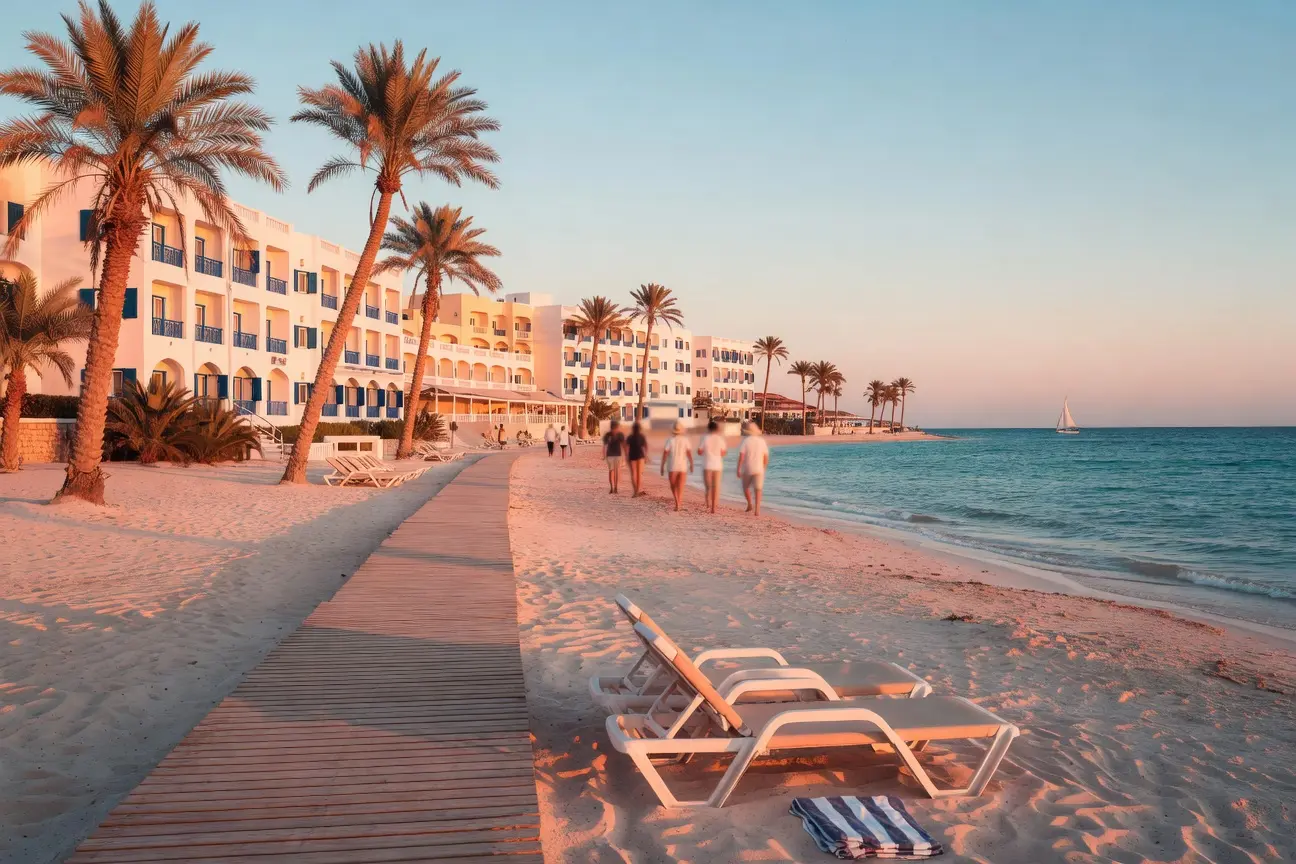
Domestic, Expat and European Demand Stack at Once
Three demand sources are landing on the same calendar week. Each one would push occupancy higher on its own; together they explain the Cairo sellout.
The first is domestic travel. Egypt’s public sector received a six-day break covering the Day of Arafah, the three days of Eid and the bridging weekend, with work resuming on 1 June. The holiday overlaps with the end of the academic year and the first week of summer vacation, which historically lifts North Coast and resort demand by single digits even in a quiet year.
The second is the return of Egyptians working abroad. Industry executives describe a heavier expatriate inflow than the comparable 2025 weekend, with families flying home for the holiday and then dispersing to coastal hotels rather than only to Cairo and the Delta.
The third is foreign arrivals, which are not letting up. The summer mix runs roughly as follows:
- Germany, among the largest source markets after Berlin removed the country from its high-risk travel category and London withdrew negative advice on South Sinai.
- United Kingdom, with charter volumes into Red Sea resorts recovering toward pre-pandemic levels.
- France, a smaller but resilient stream concentrated on diving resorts and Luxor cultural travel.
- Russia, up roughly 21% year-on-year, with tour operator Intourist reporting program demand 188% above last year and average per-trip spending near $942, a 13% rise.
- Latin America, flagged by association heads as small but growing on direct connections via Europe.
Demand Has Caught Up to Egypt’s 110,000 Rooms
The bigger read on this holiday is supply rather than demand. Egypt closed 2025 with nearly 19 million international tourist arrivals and is on track for 18.6 million arrivals in 2026 on the ministry’s conservative forecast, with the government chasing a more aggressive 21 million figure. Both lines run into the same ceiling.
The Egyptian Tourism Authority puts the country’s working hotel inventory at about 110,000 rooms, with another 106,000 housing units that were built as tourism stock but currently sit outside the managed hotel system. Mostafa Mounir, chief executive of the Egyptian Tourism Authority (ETA, the public body that licenses resort-zone land and accredits operators), told an investor conference earlier this month that Egypt wants to reach 300,000 rooms by 2030.
STR’s African pipeline tally shows Egypt with 185 hotels and 45,984 rooms in active development as of the start of this year, the largest pipeline on the continent at 37.1% of the African total.
The Build Pipeline Concentrates on Two Coasts
The geography of that pipeline matters. The Sharm cluster has nine projects in construction averaging around 539 rooms each, and the Marsa Alam Investors Association counts 14 resorts in development with more than half flagged for opening within two years. Hilton has separately committed to 25 additional Egyptian properties, a plan iAqaba traced in earlier coverage of the chain’s Egypt tripling plan. India’s Taj Hotels has also entered the country for the first time, taking over the historic Continental property in central Cairo, as set out in our reporting on Taj’s Cairo heritage relaunch.
Conversion Is the Faster Lever
New build takes years. The faster way to add usable inventory is to bring underused stock into the system.
Converting a portion of the 106,000 underutilized housing units into fully serviced, hotel-managed assets would improve operational efficiency and boost investment returns.
That is Mounir, speaking at the same investor conference. The proposed mechanism is integration into international booking and revenue-management platforms, which would lift those units from informal short-let to accredited hotel inventory and create rooms the ministry can count against the 2030 number.
The Grand Egyptian Museum Adds a Second Demand Curve
Cairo’s hotel performance for this holiday is not only about returning expatriates. The Grand Egyptian Museum (GEM, the billion-dollar Giza Plateau complex housing roughly 100,000 artefacts including the full Tutankhamun collection) opened to the public on 4 November 2025 and has spent six months pulling foreign visitors into Greater Cairo for reasons that have nothing to do with the beach.
Egypt’s State Information Service reported the museum averaging 19,000 visitors a day in its first public week, with weekend volumes between 20,000 and 24,000 by late last year. Authorities project five million annual visitors at steady state. The Ministry of Tourism’s first-quarter 2026 figures show 5.6 million arrivals and $5.1 billion in receipts for the first three months, a record opening to the year that the ministry has explicitly tied to the museum’s pull.
The structural change is that Egypt now runs two demand engines in parallel rather than in sequence. The beach product carries the peak summer months. The cultural product around Cairo, Giza, Luxor and Aswan historically softened in summer heat. With the GEM operating, Cairo room nights now lift in the shoulder months and stay elevated through what used to be the slow season. That is what is showing up in the Cairo Nile-view sellout this week, which would have been unusual for a late-May holiday in earlier years.
What June Through September Looks Like
The next four months will test Egypt’s room supply harder than this holiday weekend will.
The Russian segment is the variable to watch. After Sinai charter flights resumed and stabilised through 2024, Russian inflows ramped through 2025 and into this year. Russia’s largest outbound operator told its own trade press that Egypt programs are running 188% above last year, with average per-trip spending of about $942. That growth tracks faster than coastal four- and five-star inventory can absorb, especially at the property tiers where Russian charters concentrate.
European demand is moving in a similar direction without the same acceleration. UK and German tour operators are running summer 2026 schedules at or slightly above 2019 charter capacity, with the softer South Sinai guidance and the revised German risk rating giving operators room to add seats.
Within the country, this weekend is also functioning as a stress test for the Mediterranean coast. North Coast occupancy near 90% before the school year has formally ended suggests El Alamein and Sidi Heneish are pulling demand earlier in the calendar than in 2024. If that trend holds through July, Cairo hotels start to compete with the coast for the same return-expat traveller rather than capturing the pre- and post-coast room nights.
Kotb framed the outlook bluntly. He said the strong performance underlined the resilience of Egypt’s coastal destinations and ongoing service upgrades. The flip side is pricing. With his two flagship resorts expected to clear 95% for the holiday and tracking between 70% and 90% through April and May, room rates have room to move higher into July and August before they meet any meaningful resistance.
The June to September window will reveal whether the cultural and coastal demand curves can be sustained when room supply is the gating factor. If the 2030 pipeline lands at pace and the conversion plan moves any meaningful share of those 106,000 housing units into the managed inventory, occupancy stays at or above this Eid line while room rates ease. If it slips, the holiday week now in progress is the preview of a summer where Egypt sells out earlier and prices visitors out of the segments it most needs to grow.
