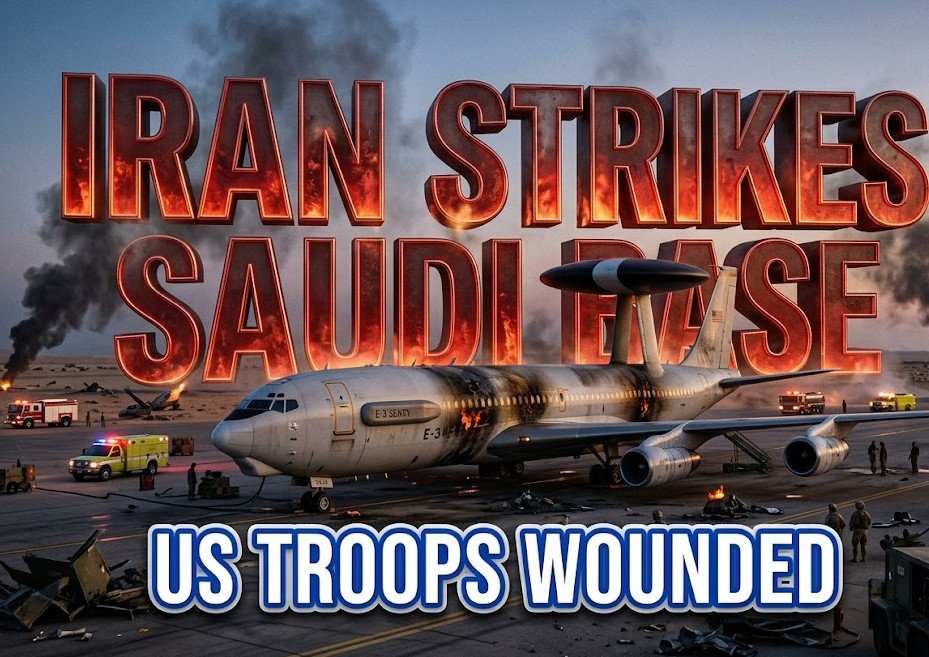
An Iranian missile and drone attack slammed into a major air base in Saudi Arabia. It left more than a dozen American service members wounded and damaged key U.S. surveillance jets. As the war with Iran hits day 31, President Trump is responding with tough new threats that could widen the conflict further.
The strike has raised fresh fears about American vulnerabilities in the region even as both sides edge closer to dangerous new lines.
Attack Hits Prince Sultan Air Base Hard
The strike took place on March 27 at Prince Sultan Air Base outside Riyadh. Iranian forces launched a mix of ballistic missiles and drones at the facility, which hosts U.S. troops and aircraft supporting operations across the Middle East.
U.S. officials say 12 to 20 service members were wounded. Several suffered serious injuries. Two E-3 Sentry aircraft took damage. These planes serve as flying command centers. They track threats across vast distances and direct fighter jets in real time.
One of the E-3s appears badly burned. Photos show significant destruction to its fuselage. The aircraft came from Tinker Air Force Base in Oklahoma. Losing or sidelining even one of these rare planes hurts U.S. air operations.
The base has faced previous attacks during this conflict. This latest hit stands out for its direct impact on American personnel and high-value assets. It shows Iran’s ability to reach U.S. forces despite layered defenses in Saudi Arabia.
Service members at the base work long hours in tough conditions. Many have families back home waiting for news. The wounded troops now face recovery far from the United States.
Trump Expands Threats Against Iran
President Trump continues to say Iran wants a deal to end the fighting. At the same time he has ordered thousands more U.S. troops to the Middle East. He has also floated ideas about seizing or destroying Iran’s oil facilities.
On Monday he sharpened his warnings. If Iran keeps the Strait of Hormuz closed, the U.S. could strike electric plants, oil wells, and Kharg Island. He added the possibility of hitting desalination plants too.
These targets include civilian infrastructure critical for daily life in Iran and neighboring countries.
Kharg Island handles most of Iran’s oil exports. The Strait of Hormuz carries about one fifth of the world’s oil supply. Closing it disrupts global energy flows. Desalination plants turn seawater into drinking water for millions across the Gulf.
Trump made the comments on social media. They come as he pushes for a quick resolution while keeping maximum pressure on Tehran.
Iran Strikes Kuwait Desalination Facility
Iran launched its own attack on a power and water desalination plant in Kuwait. The strike killed an Indian worker and caused significant damage to a service building.
Kuwaiti authorities confirmed the incident happened overnight. Operations at the plant continue but the attack highlights how quickly the conflict can touch civilian areas.
Gulf nations depend heavily on desalination for fresh water. Roughly 100 million people in the region get most of their drinking water this way. Any sustained damage to these facilities could create immediate humanitarian problems.
Iran has denied some strikes or blamed others on false flags. The pattern shows both sides are now hitting energy and water infrastructure. This raises the stakes beyond traditional military targets.
Peacekeepers Die in Lebanon Clashes
Three United Nations peacekeepers died within 24 hours in southern Lebanon. All were Indonesian members of the UNIFIL force. Explosions hit a convoy and a base amid ongoing battles between Israeli forces and Hezbollah.
The incidents involved projectiles of unknown origin. UN officials condemned the deaths and called for investigations. Hezbollah receives backing from Iran. The fighting in Lebanon forms one front in the wider conflict.
These blue helmet deaths add to the growing list of non-combatant losses. Peacekeepers operate in one of the world’s most volatile borders. Their presence aims to prevent escalation but the current violence makes their mission extremely dangerous.
Families in Indonesia and around the world are mourning these soldiers who served far from home to keep the peace.
Oil Prices Climb as Hormuz Tensions Rise
The conflict has already pushed oil prices higher. Disruptions in the Strait of Hormuz have cut supplies and created uncertainty. Brent crude has seen sharp jumps since late February. Gasoline prices in the United States have climbed as well.
Analysts warn that prolonged closure of the strait could send prices much higher. Global markets remain on edge. Businesses and consumers feel the effects through higher energy costs.
The war that began on February 28 has now entered its second month. What started with targeted strikes has grown into a regional struggle involving multiple countries and groups.
Each new attack brings fresh risks. Leaders on all sides must weigh military gains against the chance of a much broader war. The human and economic costs keep mounting.
The coming days will prove critical. Diplomacy still offers a path forward but the military moves and strong rhetoric suggest both sides are prepared for more fighting.
What are your thoughts on how this conflict should end? Share them in the comments below. If you are following developments on social media, use the hashtag #IranWar to discuss with friends and family.