
The UAE’s Ministry of Human Resources and Emiratisation paid out more than AED 832 million through worker protection and unemployment schemes in the first half of 2026, according to figures released in August. More than 44,000 workers received over AED 320 million under the Workers Protection Programme alone, while the Involuntary Loss of Employment insurance scheme distributed AED 512 million since 2024.
Those numbers are not abstract policy. They show two insurance systems that now step in with cash when employers default or jobs vanish, changing the practical risk of hiring and relocating in the Emirates.
Two Schemes Carried Most of the Cash
MoHRE published the MoHRE first-half social protection results as evidence of a functioning safety net. The Workers Protection Programme handled claims for unpaid wages and end-of-service entitlements. The ILOE scheme covered involuntary job loss.
| Scheme | Amount paid | Workers / period | Notes |
|---|---|---|---|
| Workers Protection Programme | Over AED 320 million | More than 44,000 by end-June 2026 | Average roughly AED 7,000 per worker |
| Involuntary Loss of Employment (ILOE) | Over AED 512 million | Since start of 2024 through H1 2026 | Mandatory for most private-sector and federal employees |
| Combined | Over AED 832 million (about US$227 million) | H1 2026 focus plus multi-year ILOE | Part of wider labour stability push |
Dalal Alshehhi, Assistant Undersecretary for Labour Protection at MoHRE, linked the totals to broader goals.
The positive results recorded in the first half of 2026 reflect our commitment at the Ministry of Human Resources and Emiratisation to fostering a safe, stable and sustainable work environment.
She said the ministry works with federal and local entities plus private employers to improve compliance and strike a balance between worker and employer interests under the We the UAE 2031 vision.
- AED 320 million+ went out under WPP in six months
- AED 512 million+ paid under ILOE across roughly 30 months
- 1.3 million workers reached by awareness sessions in 17 languages
- ~2 million workers housed in registered accommodation facilities
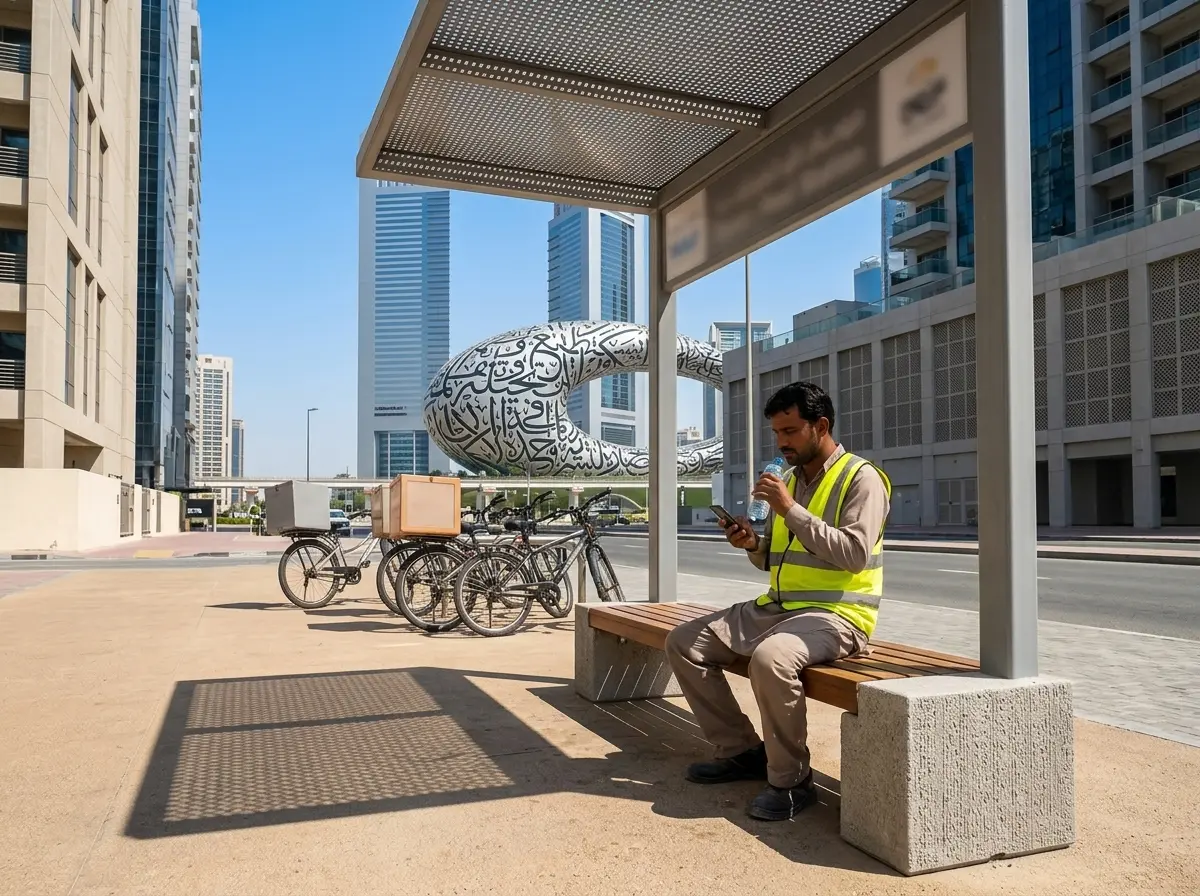
When Employers Default, the Protection Programme Pays
The Workers Protection Programme is the insurance layer that covers unpaid wages, end-of-service benefits and related entitlements if a company fails to pay or ceases operations. MoHRE states the Workers Protection Programme covers around 99% of the workforce across sectors. It replaced the older bank-guarantee model that locked up capital for every hire.
In H1 2026 more than 44,000 workers received support, averaging about AED 7,000 each. Earlier MoHRE observatory data covering a five-year window showed more than 32,000 beneficiaries and AED 289 million paid, with averages above AED 9,000 and individual claims reaching AED 20,000. The half-year volume indicates the system is active and scaled.
For workers the scheme removes the classic fear that an employer disappears with unpaid dues. For companies it converts a large frozen bank guarantee into a low-cost premium, freeing cash while keeping claims funded at pool level.
- Covers unpaid wages
- Covers end-of-service entitlements
- Covers other registered financial claims when the employer cannot pay
ILOE Gives Three Months of Bridge Money After Job Loss
The Involuntary Loss of Employment scheme, launched under Federal Decree-Law No. 13 of 2022, is mandatory for most Emiratis and residents in the federal government and private sector. Investors who own the company they work in, domestic helpers, temporary-contract workers, those under 18 and certain pensioners are exempt.
Premiums are modest. Category A workers (basic salary AED 16,000 or below) pay AED 5 plus VAT per month and can claim up to AED 10,000 monthly. Category B (above AED 16,000) pay AED 10 plus VAT and can claim up to AED 20,000. Compensation equals 60% of average basic salary for up to three months based on the six months before job loss. Lifetime benefits across all claims are capped at 12 months. A worker must usually have paid premiums for at least 12 consecutive months to claim.
By mid-2026 the scheme had paid more than AED 512 million. One industry summary put insured workers at 6.8 million. The design is deliberately cheap and short-term: enough cash to search for the next role without becoming a long-term benefit.
- Confirm active subscription before any job ends
- Job loss must be involuntary (not resignation or disciplinary dismissal)
- Submit claim promptly after termination letter
- Receive 60% of recent average basic salary, capped by category
- Maximum three consecutive months per claim
Some individual posts on X have described delays or disputes over specific claims, a reminder that a live system still processes case by case. The aggregate figures show the money is leaving the fund at scale.
Bank Guarantees Gave Way to Pooled Insurance
The shift began years before the latest payout numbers. In October 2018 an insurance pool under MoHRE supervision launched a low-cost insurance scheme that replaced bank guarantees for many private-sector workers. The old model required employers to post a guarantee (often AED 3,000 per worker) that sat frozen. The insurance alternative cut that capital lock-up while creating a pool large enough to pay real claims.
Improvements in April 2021 added coverages and flexibility. Later cabinet and ministerial decisions kept the option of insurance or guarantee but pushed the market toward the cheaper, scalable insurance path. The H1 2026 volume is the downstream result of that design choice: claims are paid because premiums have been collected and the pool is supervised.
- October 2018: Insurance pool launches as bank-guarantee alternative
- April 2021: Scheme enhanced with more coverages and flexible terms
- 2022: Federal Decree-Law No. 13 creates the ILOE unemployment scheme
- 2023 onward: Enrolment scales; mandatory for most targeted workers
- H1 2026: Combined payouts exceed AED 832 million
Heat Stations, Housing Standards and Mass Awareness
Money is only one layer. MoHRE also reported operational measures that sit alongside the insurance payouts. The Occupational Heat Stress Prevention Policy runs every year from 15 June to 15 September. It includes the midday outdoor work ban and, for 2026, plans for more than 12,000 designated rest stations aimed especially at delivery riders.
By end-June more than 2,800 labour accommodation facilities were registered under the Labour Accommodation System, housing around two million workers. Registered sites must meet health, safety, ventilation, sanitation and related standards. Awareness programmes reached more than 1.3 million workers in 17 languages; all targeted workers completed mandatory orientation. Roughly 800,000 took part in community activities at more than 60 locations.
These pieces turn the insurance schemes from isolated financial products into a broader compliance and welfare system. Employers face both the cost of premiums and the inspection risk if housing or heat rules are ignored. Workers gain multiple channels of protection.
The Quiet Effect on Companies That Hire
The second-order effect is what the payout numbers do to hiring decisions. A company that can show new hires a funded unemployment bridge and a claimable wage-protection scheme faces less resistance from candidates who have watched employers fail elsewhere. The same system audits payroll through the Wage Protection System and accommodation standards, so non-compliant firms carry higher regulatory risk.
Talent attraction is the other side. Global professionals weighing a move to Dubai or Abu Dhabi now see published evidence that the safety net pays real money rather than existing only on paper. That reduces the personal downside of accepting a private-sector role. For Emirati talent development programmes and private-sector growth targets under We the UAE 2031, a labour market that can absorb shocks without mass unpaid claims is infrastructure, not decoration.
Employers still need clean records, active ILOE subscriptions for staff, and WPS compliance. The schemes do not erase every dispute. Yet AED 832 million already paid is harder to dismiss than any ranking. The insurance model that replaced bank guarantees is no longer experimental. It is writing cheques, and that fact changes the cost-benefit arithmetic for anyone building a team in the UAE.
Frequently Asked Questions
How does the UAE ILOE unemployment insurance scheme work?
Eligible employees pay a monthly premium of AED 5 (basic salary AED 16,000 or below) or AED 10 (above that threshold), plus VAT. After at least 12 months of consecutive payments, involuntary job loss triggers compensation at 60% of average basic salary for the prior six months, capped at AED 10,000 or AED 20,000 per month depending on category, for a maximum of three consecutive months per claim and 12 months lifetime.
What does the Workers Protection Programme cover that the old bank guarantee did not?
It is a pooled insurance product that pays unpaid wages, end-of-service entitlements and related claims when an employer defaults, without locking employer capital in a per-worker bank guarantee of roughly AED 3,000. The pool launched in 2018 and was expanded in 2021; it now covers around 99% of the private-sector workforce under MoHRE oversight.
Who is exempt from mandatory ILOE subscription?
Investors who own the companies they work in, domestic helpers, temporary-contract workers, juveniles under 18, and retirees already entitled to a pension who take a new job are listed as exempt categories on the official ILOE site.
What is the average payout under the Workers Protection Programme?
In the first half of 2026 the average was roughly AED 7,000 across more than 44,000 beneficiaries. Earlier multi-year MoHRE data showed averages above AED 9,000 with individual claims reaching as high as AED 20,000.
When does the UAE heat stress prevention policy apply each year?
The policy, including the midday outdoor work ban under direct sunlight, runs annually from 15 June to 15 September. In 2026 MoHRE planned more than 12,000 rest stations focused on delivery riders as part of enforcement and support.
