
Saudi Arabia recorded 30 million international arrivals in 2024, and the kingdom’s tourist eVisa now covers passport holders from more than 60 countries across Europe, the Americas, and Asia. The push is the most ambitious tourism expansion in the region, and the reforms are reshaping what a first-time visitor should expect at immigration, in a souk, and on the road. Most of the travel advice still circulating online describes a Saudi Arabia that did not exist for foreign visitors a decade ago.
What follows is the practical ground a first-time visitor needs in 2026: how to clear immigration, what to wear, when to book, and where to go beyond the two cities most travelers already know. The kingdom has liberalised faster than almost any guidebook has caught up with, and the small cultural and logistical details are where most first-timers stumble. The official currency is the Saudi Riyal, the work week runs Sunday to Thursday, and Friday is the day of rest.
The Visa and the Passport Rule
The Saudi tourist eVisa is the main door, and the application is a one-page form on the official tourism portal. The eVisa is a multi-entry authorisation valid for one year from the date of issue, with a maximum stay of 3 months per visit, and a passport with at least 6 months’ remaining validity is required to apply.
The full terms are spelled out in the Saudi eVisa terms and conditions, and they include a biometric capture on arrival, mandatory travel on the same passport used to apply, and an explicit bar on paid work. The cost is set at the time of application, VAT is added, and there is no refund if the application is rejected or the traveller cancels. Holders of valid Schengen, UK, or US visas that have been used at least once, plus permanent residents of the EU, GCC, UK, and US, can also enter on a separate visitor eVisa channel. SAUDIA and Flynas passengers can apply for a free 96-hour Stopover Visa that lets them break a long-haul connection in Riyadh or Jeddah.
| Visa Type | Eligibility | Validity | Max Stay |
|---|---|---|---|
| eVisa | More than 60 eligible countries | 1 year from issue | 3 months per visit |
| Schengen/UK/US visa route | Valid Schengen, UK, or US visa used at least once | Same as eVisa | Same as eVisa |
| Stopover Visa | SAUDIA or Flynas transit passengers | 96 hours | 96 hours |
Dress Codes Most Visitors Misread
Saudi Arabia’s dress expectations have relaxed dramatically since 2019, and most of the rules Western travellers carry in their heads no longer apply. Women are no longer legally required to wear an abaya, the loose black or navy over-garment, in public, and the change was formalised as part of Crown Prince Mohammed bin Salman’s reform agenda. The abaya itself has not disappeared, and many Saudi and expatriate women still wear one for cultural reasons. Local shops sell abayas for SAR 80 to 200, and the garment is treated as a cultural choice rather than a uniform. What replaced the abaya rule is a single principle, modesty, and the cultural etiquette guide for Saudi Arabia summarises it in two words: “decent and respectful.”
In practice, that means covering shoulders, chest, and knees in public, with maxi dresses, loose trousers, long-sleeve blouses, and tunic tops all appropriate. Men should also keep things conservative, with knee-length shorts preferred in public and sleeveless gym wear best kept for hotel gyms.
In mosques, the bar moves up. Full-length clothing is expected for both sexes, and women should bring a headscarf. Inside private hotel pools, resorts, and compounds, normal swimwear is fine, and most hotels operate international dress standards in their beach and pool areas.
When the Weather Works for You
Saudi Arabia has four distinct seasons, not a single year-round furnace, and the official Saudi climate guide breaks the calendar into spring, summer, autumn, and winter. Spring runs mid-March to mid-June, with cooler northern nights, scattered rain, and the occasional sandstorm known locally as a haboob. Autumn covers mid-September to mid-December, with daytime highs in the low 30s and cooler evenings that suit outdoor walking. Jeddah’s waterfront and the desert springs of Al-Ahsa are at their best in autumn, when the heat has broken but the winter crowds have not arrived.
The window most visitors target is winter, mid-December to mid-March, when Riyadh and Jeddah sit in the low 20s during the day and drop into the teens at night. The trade-off is the desert nights, which can run cold enough for a heavy jacket, especially in the northern regions and the Aseer highlands. Winter also brings the major events calendar, including the Riyadh Season entertainment programme and the Soundstorm Festival.
Summer is the hard season. Average summer highs across most of the country hover around 45°C, with coastal Jeddah and Dammam adding punishing humidity on top of the heat.
The exceptions are the southwestern highlands, where the Asir region around Abha sits in the highlands and stays noticeably cooler in July and August. The khareef, a misty monsoon-like climate, rolls through the Asir mountains between June and August, drawing domestic visitors looking for an escape from the central heat. Travellers who must visit in summer should plan outdoor activities for early morning, schedule afternoon breaks in air-conditioned museums or malls, and consider the highlands as a base. Year-round, the Asir region, the Red Sea coast, and the northwest around Tabuk offer alternatives to the desert furnace.
| Season | Months | Conditions | Best For |
|---|---|---|---|
| Spring | Mid-Mar to Mid-Jun | Mild days, cool nights, sandstorms | Hiking, cultural sites |
| Summer | Mid-Jun to Mid-Sep | 45°C inland, humid on coast | Highlands, indoor sites |
| Autumn | Mid-Sep to Mid-Dec | Daytime 30s, cooler evenings | Walking tours, AlUla |
| Winter | Mid-Dec to Mid-Mar | Low 20s, cold desert nights | Full country, events |
The Places Most First-Timers Skip
First-time visitors to Saudi Arabia often stop in Riyadh and Jeddah and miss the rest of the country. That is a mistake, because the kingdom’s most distinctive destinations sit outside its two largest cities, and the new domestic flight network makes reaching them straightforward.
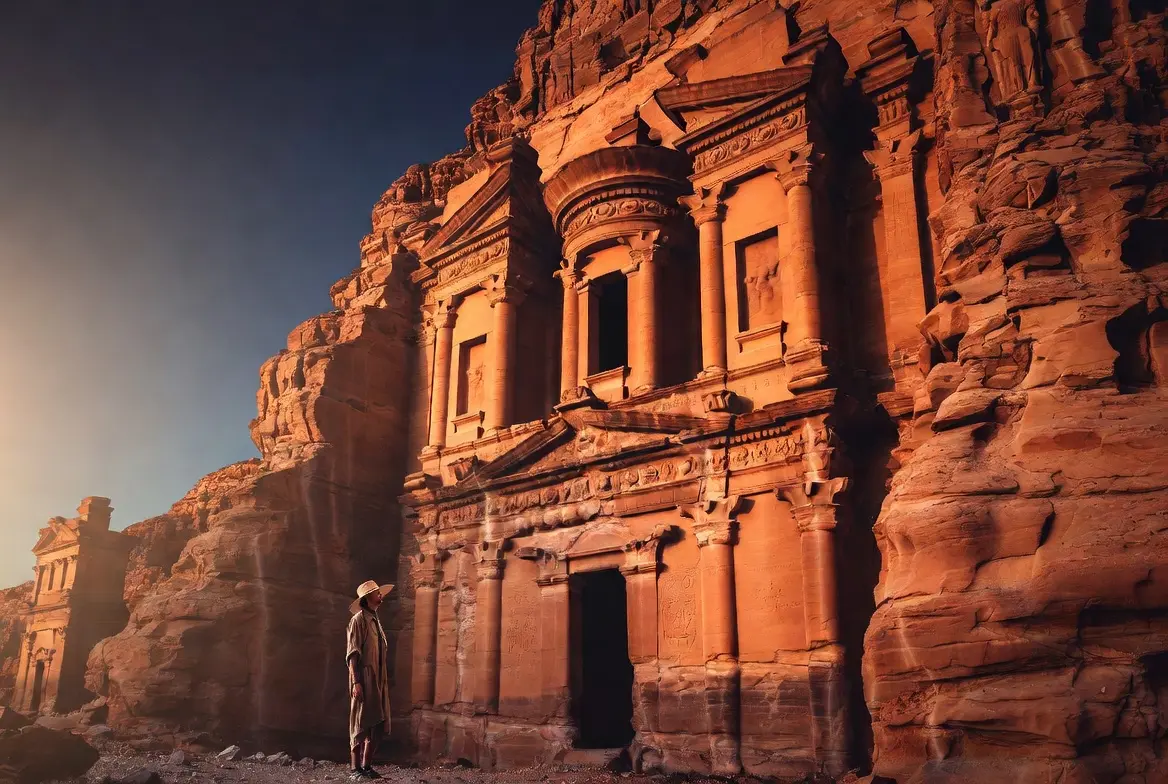
The single most striking site is Hegra, in AlUla, the kingdom’s first UNESCO World Heritage Site, with monumental Nabataean tomb facades carved directly into sandstone between the 1st century BC and the 1st century AD. The same civilisation built Petra, just across the border in Jordan, and Hegra’s carved facades are the best-preserved example of Nabataean funerary architecture outside Petra. The tomb inventory and conservation details are on the official World Heritage listing for Hegra.
The Red Sea coast is being rebuilt around regenerative-tourism resorts, with the Red Sea project spanning 90 islands and an archipelago of luxury hotels opening through 2026. Sindalah, NEOM’s luxury island, opened to its first guests in late 2024, with the resort and its phased opening detailed on the official Sindalah project page. In 2025, Saudi Arabia announced it was pulling back direct government funding for some NEOM developments, with management of Sindalah itself shifting to outside operators. The Asir region around Abha runs cool and green in summer, with terraced villages, juniper forests, and Jebel Sawda, a major peak in the southwest. The kingdom is also still building out Trojena, a planned mountain tourism destination in NEOM.
The northeast offers a different register entirely. Al-Ahsa, a UNESCO-recognised oasis inland from Dammam, is known for its date palms and natural springs. Taif, in the Hejaz mountains above Makkah, is cooler than the Red Sea coast and serves as the kingdom’s rose-growing heartland.
Most major destinations link by air on SAUDIA or Flynas in under two hours, so multi-city itineraries are practical. The kingdom’s transport ministry is also expanding high-speed rail between Riyadh, Jeddah, and Dammam. Far less visited is the northwest around Tabuk, with rock art at Jubbah and a basaltic landscape at Hima that predates the Nabataean period. The F1 Saudi Arabian Grand Prix returns to the Jeddah Corniche Circuit on April 17-19, 2026, anchoring the kingdom’s biggest international event of the year.
- AlUla and Hegra: Nabataean tombs, sandstone canyons, Elephant Rock
- Red Sea coast: regenerative-tourism resorts, diving, Sindalah island
- Asir region and Abha: cool highlands, khareef mist season, terraced villages
- Al-Ahsa: UNESCO-recognised oasis, date palms, natural springs
- Taif: rose farms, Hejaz mountain air above Makkah
- Tabuk and the northwest: Hima rock art, basaltic landscapes
How the New Metro and Ride Apps Work
Saudi Arabia is in the middle of a transport build-out, and the centrepiece for visitors is the 176-kilometre Riyadh Metro, a six-line system that began phased operations in late 2024. The full network is now in service, and the metro is air-conditioned, clean, and the fastest way to move through the capital’s sprawling grid.
Ride-hailing is the workhorse for everything the metro does not reach. Careem, now owned by Uber, dominates alongside Uber itself, and both apps work in Riyadh, Jeddah, Dammam, and most major cities. For tourists, the apps accept international credit cards and set a price up front, removing the need to bargain with taxi drivers.
Driving yourself is possible but not always simple. Foreign visitors can rent cars with a valid international licence, although acceptance rules vary by rental company, and the official advice is to check current terms before booking. Traffic in Riyadh and Jeddah is heavy, and speed cameras and radars are everywhere, so on-the-spot fines for speeding are common. For desert excursions outside the cities, a 4×4 with a driver is the standard, and most tour operators include both as part of the package. The Saudi work week runs Sunday to Thursday, with Friday as the primary day of rest, so plan administrative and government visits accordingly.
Paying for Anything in Saudi Arabia
Saudi Arabia is one of the most cashless societies a first-time visitor will encounter, and cards or mobile wallets work almost everywhere from the airport to the local café. The local digital payment network is Mada, the Saudi national debit system, and it runs through Apple Pay, Google Pay, Samsung Pay, and most bank cards issued in the kingdom. International Visa and Mastercard are accepted in hotels, malls, and chain restaurants, but smaller shops and traditional souks sometimes run Mada-only, so a foreign card can be refused. The currency is the Saudi Riyal, and ATMs are plentiful in cities and airports. Tipping is appreciated but not obligatory: 10 to 15 percent at restaurants, 5 to 10 SAR per bag for hotel porters, and a small tip for housekeeping on multi-night stays.
Mobile data is also worth sorting before arrival. STC, Mobily, and Zain sell tourist SIM cards at the airport, and eSIM plans from Airalo, Revolut, and local resellers are available from around 1.50 for short trips. Google Maps and Apple Maps work in Saudi Arabia, but download offline maps as a backup because signal in the desert and remote regions can drop.
What Has Not Changed
Saudi cuisine centres on a small number of dishes that appear on virtually every traditional table, and none is more central than kabsa, the national dish of spiced rice cooked with chicken, lamb, or camel, often served on a single large platter for sharing. Mandi, smoked rice with meat cooked underground, and matazeez, a tomato-based stew with dough, are close cousins. Arabic coffee, qahwa, served in small cups alongside dates, is offered so often that it functions as a social shorthand for welcome. Accepting the first cup is read as a sign of respect.
Some rules have not changed, and alcohol is the most visible. Alcohol is banned in Saudi Arabia, with no exception for tourists, and the policy is uniformly enforced at customs and at every licensed venue; pork products, recreational drugs, and items made of pigskin are also prohibited, and religious materials for personal use are allowed but cannot be brought in bulk for distribution.
Public displays of affection are discouraged, and even between married couples a brief holding of hands is the upper limit. Loud or rowdy behaviour, especially near mosques or during the call to prayer, is treated as a sign of disrespect, and the Athan is broadcast five times a day from every mosque. Music and television typically pause in public spaces during the call and the prayer itself, and visitors should follow the local lead.
Ramadan transforms the daily rhythm. From dawn to sunset, eating, drinking, and smoking in public are discouraged, and visitors are expected to keep meals and coffee to private spaces such as hotel rooms or designated dining areas. After sunset, the iftar meal becomes the social centre of the day, and visitors are often invited to share the fast-breaking table. A useful app to download is Athan, which shows the prayer schedule for any city. For a parallel set of practical questions covering a neighbouring country across the Red Sea, essential tips for first-time visitors to Egypt cover the same ground with adjustments for local currency and climate.
Frequently Asked Questions
Do I need a visa to visit Saudi Arabia?
Most visitors do. The Saudi tourist eVisa is open to passport holders from more than 60 eligible countries, with a separate channel for holders of valid Schengen, UK, or US visas used at least once. The application runs through the official Visit Saudi portal, the visa is valid for one year from issuance, and each stay can run up to 3 months. A passport with at least 6 months’ remaining validity is required, and biometric data is captured at the border.
Can women skip the abaya in Saudi Arabia?
Yes. The abaya is no longer legally required for any woman in Saudi Arabia, including foreign visitors, and the rule was formalised under Crown Prince Mohammed bin Salman’s reform agenda. Modesty is still expected: cover shoulders and knees in public, and dress more conservatively for mosques. Many Saudi and expatriate women still choose to wear the abaya, and abayas can be bought locally for SAR 80 to 200.
Is alcohol available to tourists in Saudi Arabia?
No. Saudi Arabia prohibits the import, sale, and consumption of alcohol with no tourist exemption, and the rule is enforced at customs and at every licensed venue. Pork products and recreational drugs are also prohibited. The kingdom has developed one of the region’s most active specialty coffee and mocktail cultures as an alternative, and most upscale hotels have invested heavily in non-alcoholic beverage programmes.
Can non-Muslims visit Makkah or Madinah?
Makkah is closed to non-Muslims, with no exceptions under Saudi law. Non-Muslims can visit the city of Madinah but are not allowed to enter the Prophet’s Mosque or its inner precinct. Most other mosques in the kingdom welcome non-Muslim visitors outside of prayer times, with modest dress expected and shoes removed before entering prayer areas.
What is the best time of year to visit Saudi Arabia?
November through February is the comfortable window for most of the country, with daytime temperatures in the 20s and cool nights. Summer is harsh in central and eastern Saudi, with average highs around 45°C and high humidity on the Red Sea coast, though the Asir highlands around Abha stay noticeably cooler. Spring and autumn are also good, with the trade-off of occasional sandstorms in spring.
Is Saudi Arabia safe for tourists?
Saudi Arabia is consistently ranked among the safest countries in the region for foreign visitors, with low crime rates and a heavy security presence in tourist zones. The main risks are traffic, since Riyadh and Jeddah have aggressive drivers, and petty theft in crowded souks, both of which are addressable with standard precautions. Tourism police are present in major destinations, and the kingdom has made visitor safety a stated policy priority.
