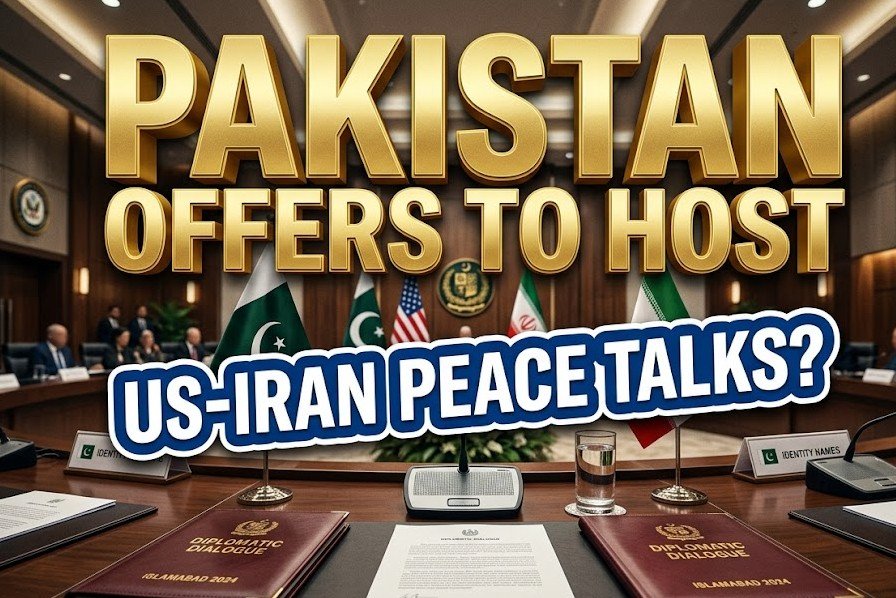
Pakistan has stepped forward with a bold offer to bring the United States and Iran together for peace talks. Prime Minister Shehbaz Sharif announced on March 24 that Islamabad stands ready to host meaningful negotiations aimed at ending the ongoing conflict in the Middle East.
The move comes as the war between US-Israeli forces and Iran enters its fourth week with no clear end in sight. President Donald Trump quickly shared Sharif’s statement on Truth Social, adding fuel to hopes for a diplomatic breakthrough.
Pakistan Positions Itself As Key Mediator
Prime Minister Shehbaz Sharif made the announcement through a post on X. He wrote that Pakistan fully supports efforts to pursue dialogue for peace and stability in the region and beyond.
Pakistan stands ready and honoured to be the host to facilitate meaningful and conclusive talks for a comprehensive settlement of the ongoing conflict.
Sharif tagged President Trump, Iranian Foreign Minister Abbas Araghchi, and US Special Envoy Steve Witkoff in the message. This public offer builds on quiet diplomatic work already underway.
Pakistani sources indicate the country’s powerful army chief, Gen Asim Munir, spoke directly with Trump on Sunday about the Iran war. Sharif himself held a phone call with Iranian President Masoud Pezeshkian on Monday, expressing solidarity with the Iranian people while calling for collective efforts to reduce tensions.
Pakistan brings unique strengths to the table. It shares a long border with Iran and maintains workable relations with Tehran despite differences. At the same time, it has cultivated ties with the Trump administration. Analysts note this dual connection gives Islamabad credibility as a potential go-between that few other nations possess.
Reports suggest Pakistan has been passing messages between the two sides in recent days. Along with Turkey and Egypt, it is emerging as one of the active players trying to bridge the gap. Some sources even point to possible in-person talks in Islamabad involving senior US figures in the coming days.
Trump’s Response Sparks Fresh Hope
President Trump’s decision to repost Sharif’s statement without additional comment has diplomats watching closely. Many see it as a positive signal amid mixed messages from Washington.
Trump has spoken of productive discussions with Iran and claimed progress toward a broader agreement. He delayed threatened strikes on Iranian energy infrastructure, citing ongoing talks. However, Iranian officials have pushed back, denying direct negotiations and accusing the US of using diplomacy as cover for military pressure.
The conflict has already caused significant damage. Strikes have hit thousands of targets across Iran, with reports of heavy civilian impact including damaged structures and casualties. Iran has responded with missile barrages targeting Israel, causing injuries and destruction there as well.
As day 25 of intensified fighting passed, the human cost continues to mount. Families on both sides face uncertainty while global energy markets and shipping routes feel the strain, particularly around the Strait of Hormuz.
Why Pakistan Can Play This Role
Pakistan’s offer reflects careful calculation. The country maintains diplomatic channels with Iran that date back decades. Trade, cultural ties, and shared borders create reasons for both nations to keep communication open even during tough times.
On the US side, Pakistan’s military and intelligence cooperation over the years provides a foundation, even as relations have seen ups and downs. The current outreach shows Islamabad leveraging these links at a critical moment.
Experts highlight that successful mediation could boost Pakistan’s global profile significantly. It would demonstrate the country’s ability to influence events far beyond its region. For Prime Minister Sharif’s government, it also offers a chance to show strong leadership on the international stage during domestic challenges.
Yet risks remain high. The gap between US and Iranian positions appears wide on key issues including nuclear concerns, regional influence, and security guarantees. Any talks would need to address core demands from all parties while navigating deep mistrust built over years.
The Road Ahead For Peace Efforts
The coming days will prove decisive. Reports mention possible involvement of US envoys like Steve Witkoff and even Jared Kushner in potential Islamabad meetings. Vice President JD Vance has also been named in speculation about high-level participation.
For talks to succeed, both sides must show genuine willingness to compromise. Trump has floated ideas around a 15-point plan covering nuclear issues and maritime security. Iran continues to insist on relief from sanctions and respect for its sovereignty.
Pakistan has made clear its offer depends on concurrence from both Washington and Tehran. This careful wording keeps the door open without overcommitting. Foreign ministry officials in Islamabad have reinforced that the country remains willing to host if the parties desire.
The involvement of multiple regional players like Turkey and Egypt suggests a broader push for de-escalation. Gulf states also watch developments closely given their own security concerns and economic stakes in stable energy flows.
As these diplomatic efforts unfold, the world holds its breath. The conflict has already disrupted lives across the Middle East and raised fears of wider instability. A successful hosting role for Pakistan could mark a turning point not just for the current war but for how smaller nations contribute to solving major global crises.
Peace remains possible but fragile. Every conversation, every shared message, and every public statement like Sharif’s adds another thread to the delicate web of negotiations. The coming weeks will show whether these efforts can translate into real progress on the ground or if military actions will continue to dominate.
What happens next could shape the Middle East for years to come. Leaders in Islamabad have placed their country at the center of this high-stakes game. For millions affected by the fighting, the hope is that bold diplomacy will finally prevail over continued conflict.