Jordan’s industrial sector delivered solid results throughout 2025. The latest report from the Jordan Chamber of Industry shows gains in employment, production and exports even as the region faced ongoing challenges. This performance underscores how the sector continues to support the national economy and create opportunities for workers.
Sector Maintains Positive Momentum
The industrial sector posted clear progress last year. It grew by 5.2 percent in the third quarter of 2025, up from 3.3 percent in the same period of 2024. Overall, the sector contributed 45 percent to the country’s GDP growth while making up 24.3 percent of total GDP.
Employment in the sector reached 261,000 workers. This marks a 3 percent increase from 2024 and reflects steady demand for skilled labor across factories and facilities. Many of these jobs support families and help young Jordanians enter the workforce.
The industrial production quantity index rose 1.29 percent for the full year. Six main sub-sectors drove this improvement with different rates of expansion.
Workforce Expansion Creates New Opportunities
More Jordanians found stable work in industry during 2025. The rise in employment comes at an important time when the country works to lower overall unemployment.
Factories and production lines added staff as demand picked up both at home and abroad. This growth helps build skills and supports local communities around industrial areas.
Experts note that the sector’s ability to create jobs shows its strength as an economic engine. It provides a buffer against some of the pressures from regional instability.
Exports Surge and Open New Markets
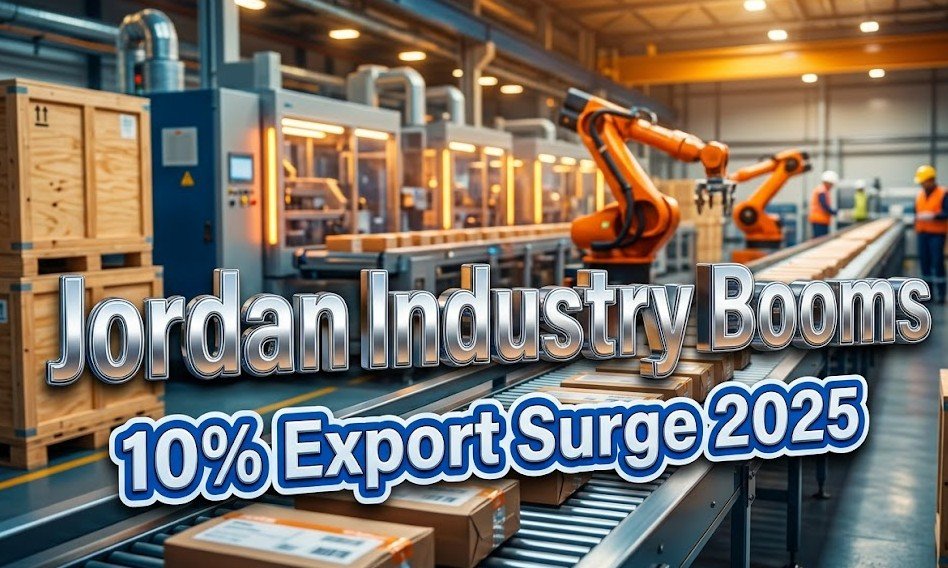
Industrial exports jumped 10.2 percent to reach JD8.893 billion. Manufacturing exports alone grew 9.4 percent. These figures highlight how Jordanian products compete well in global markets.
Industrial goods now cover 43 percent of the country’s imports and make up 92 percent of total national exports. Eight out of ten industrial sectors saw export increases.
Here are the leading performers:
- Construction industries: 830 percent growth
- Mining: 16 percent
- Engineering and electrical: 15 percent
- Plastics and rubber: 14 percent
- Food industries: 13 percent
Packaging, paper, chemicals, cosmetics and pharmaceuticals each posted 5 to 6 percent gains. These results show diversification is working. Jordan now ships to nearly 150 markets, including strong sales to the United States under their free trade agreement and growing volumes to Europe, Asia and Africa.
Key Sub-Sectors Lead the Way
Certain areas stood out clearly in 2025. Construction industries led production growth at 17.4 percent. Pharmaceuticals followed with 7.6 percent expansion, while food industries grew 3.3 percent.
Mining advanced 2.04 percent, packaging rose 1.5 percent and engineering industries increased 1.41 percent. Each sub-sector brings different strengths. Pharmaceuticals, for example, now export to more than 85 countries and generated JD642 million in sales, up 5.1 percent.
Jordanian medicines earn respect for quality and reliability across the region. This success helps the country earn valuable foreign currency and supports healthcare supply chains in neighboring markets.
The construction surge may link to infrastructure projects and rebuilding efforts in some export destinations. Food processing benefits from Jordan’s agricultural base and growing demand for packaged goods.
These varied performances prove the sector is not relying on just one area. Instead, it builds resilience through multiple strengths.
Resilience Shines Amid Regional Pressures
Jordan’s industry showed real toughness in 2025. Regional conflicts affected tourism and some trade routes, yet factories kept producing and expanding markets.
The sector benefits from government efforts under the Economic Modernization Vision. These include streamlining rules, supporting innovation and encouraging investment.
Challenges remain. High energy costs, water scarcity and bureaucracy still test companies. Yet many businesses adapted by improving efficiency and exploring new trade links.
Overall GDP growth for the year stayed around 2.7 to 2.8 percent in key quarters, with manufacturing often leading contributions. This steady pace matters for a country that hosts many refugees and faces tight fiscal limits.
Investors notice this resilience. Credit rating agencies have shown cautious optimism, and foreign direct investment continues to flow into productive areas.
Future Outlook Looks Promising
The strong 2025 results set a good foundation for coming years. Industry leaders talk about further diversification, green technologies and deeper regional cooperation when conditions allow.
Pharmaceuticals and engineering goods have room to grow as global demand rises. Construction materials could benefit from reconstruction projects if stability improves.
Jordan’s strategic location, skilled workforce and trade agreements give it advantages. The key will be turning these strengths into more jobs and higher value production.
Jordan’s industrial achievements in 2025 remind us of the country’s ability to push forward despite difficulties. The gains in jobs and exports bring real hope for families and the wider economy. What do you think about these results? Share your thoughts in the comments below on how industry can help build an even stronger Jordan.