
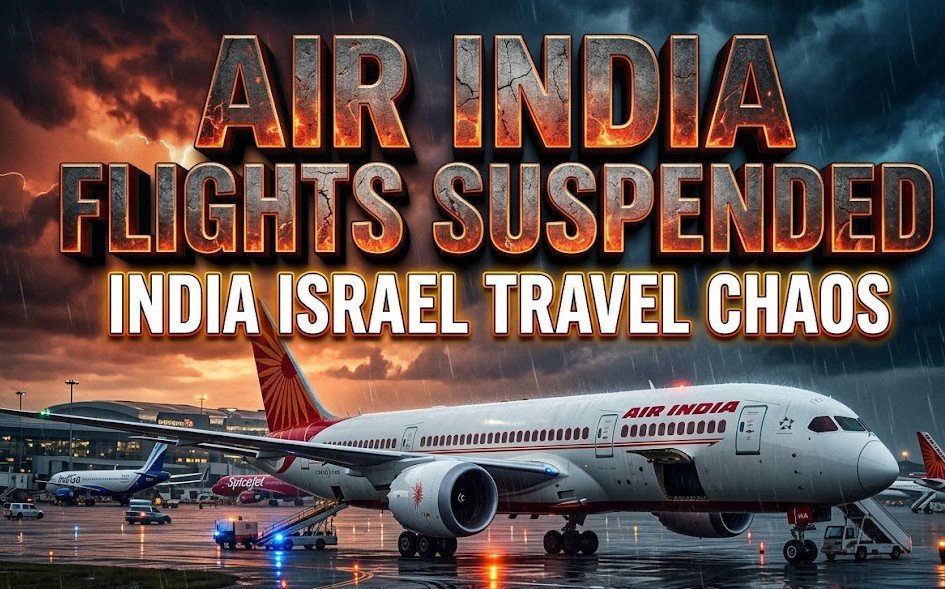
A sudden and far reaching aviation disruption is unfolding for Indian travellers and citizens abroad as Air India has suspended its New Delhi to Tel Aviv flights until May 31 because of rising tensions and expanding conflict in West Asia. This move has left tens of thousands of Indians in Israel scrambling for alternate travel options and has added new layers of worry for families back home.
With direct connectivity cut off, limited international flight options and growing uncertainty about safe exit routes, this aviation decision has rapidly become a central concern in the unfolding regional crisis.
Air India Suspends Flights Amid Escalating Hostilities
Air India confirmed that it is pausing all scheduled services on the New Delhi–Tel Aviv route through the end of May. The airline had relaunched the service earlier this year with modern Boeing 787 Dreamliner aircraft and four weekly flights, but the intensifying conflict prompted the halt. Almost all major international airlines have also suspended flights to Tel Aviv, with only a few Israeli carriers like El Al, Israir and Arkia operating very limited services under tight restrictions.
The suspension directly affects more than 40,000 Indian nationals living or working in Israel, many of whom had relied on the Air India service for travel to India for family visits, work or urgent personal needs. Now, instead of a direct flight home, many are forced to travel overland into neighbouring countries like Jordan or Egypt to catch onward flights.
The conflict that triggered these changes dramatically escalated after military operations involving regional powers intensified late in February, disrupting commercial aviation across the Middle East and forcing airlines to rethink flight routes and safety protocols.
Thousands of Indians Left Navigating New Exit Routes
With direct flights unavailable, Indians in Israel now face complex travel challenges. Passengers must cross borders into Jordan or Egypt on land to access airports there. These overland transfers often mean long bus or taxi rides through unfamiliar territory, visa complications, and added financial stress.
The Indian Embassy in Tel Aviv has stepped up its efforts in response. Diplomatic officials have launched a 24 hour emergency helpline and are encouraging Indians to register with the mission so they can be reached with safety updates and travel guidance. Indian Ambassador to Israel J P Singh and the embassy team have also conducted virtual meetings with students and workers to hear their concerns and promise support during the crisis.
For many stranded families, this assistance has offered some reassurance amidst uncertainty. But with direct air travel suspended and regional tensions unpredictable, concerns persist about how safely and quickly people can reach home.
Broader Impact on Travel and Indian Aviation
The suspension of flights between India and Israel is just one part of a wider aviation shockwave across Indian carriers. Restrictions on airspace over key West Asian countries have forced airlines to cancel thousands of flights since February. With Iranian and Pakistani skies also affected by the conflict, carriers have had to slash services to Gulf destinations and find alternate routes for connecting international traffic.
Some Indian airlines have tried to adapt by deploying additional flights on other international routes that avoid conflict zones. For instance, earlier in March, Air India and Air India Express operated several additional flights to cities in Europe and the United States to help passengers bypass West Asian airspace altogether. Indian carrier IndiGo also announced extra services connecting cities in the Middle East like Dubai, Muscat and Jeddah with Indian destinations.
Despite these efforts, the ongoing disruptions have had a major impact on passengers, airline schedules, and travel plans globally. The unpredictable nature of the conflict means carriers must constantly reassess routes based on airspace safety advisories and geopolitical developments.
Government and Embassy Efforts to Protect Citizens
As Indian citizens continue to grapple with the fallout, the Government of India has been mobilising resources to protect people stranded across West Asia. In addition to embassy helplines, India has been organising evacuation and repatriation efforts in other conflict affected areas.
In recent weeks, special flights have brought home hundreds of Indians who were stuck in Iran after weeks of uncertainty. These operations were coordinated with help from Indian missions abroad and partner countries to ensure safe passage. Thousands of Indians in the broader region have already returned home since late February, and officials have stressed that they will do everything possible to assist those still abroad.
The government’s efforts extend beyond air travel support. In some cases, Indian authorities and diplomatic missions are helping people secure transit visas for alternate countries and guiding them through complex travel restrictions that have emerged due to sudden land border and airspace closures.
What Travellers Should Know Right Now
For Indians trying to leave Israel or planning travel to and from the region, here are some key points to understand:
Travel Options:
- Direct flights between India and Tel Aviv remain suspended until at least May 31.
- Only limited flights by select Israeli carriers are operating to and from Tel Aviv under severe limitations.
- Travellers may need to cross into neighbouring countries like Jordan or Egypt by land to reach alternative flight hubs.
Embassy Support:
- The Indian Embassy in Tel Aviv has set up round the clock support for stranded Indians.
- Indians abroad are encouraged to register with the embassy for updates and travel assistance.
Flight Alternatives:
- Indian airlines are maintaining services to other international destinations outside the conflict zone where possible.
- Some carriers are offering rebooking or refunds without extra charges for passengers affected by the suspended routes.
This situation remains fluid, and travellers are advised to stay in regular contact with their airline and the Indian diplomatic mission to get the latest travel advisories and assistance options.
As conflict rages in West Asia and aviation disruptions persist, the anxieties of thousands of Indian families continue to grow. For many, the journey home has become a complicated, emotionally charged odyssey involving dangerous land crossings, a patchwork of international routes, and reliance on government and embassy support to navigate one of the most challenging travel crises in recent memory.
We want to hear from you. If you have been affected by these flight suspensions or are tracking loved ones trying to return home, please share your thoughts and experiences in the comments below.
