
Confidential documents obtained by Politico detail recurring concrete defects, safety culture breaches and alleged progress inflation at Egypt’s El Dabaa nuclear plant, the same VVER-1200 design Rosatom is building for Hungary’s Paks II. A June 4 letter from Egypt’s Nuclear Power Plants Authority to Rosatom leadership, plus the company’s own 2025 draft audit, now feed a live Hungarian review and a fresh Ukrainian call for EU sanctions.
The timing lands as Rosatom still markets itself as a reliable export partner across the Global South and parts of Europe. The documents do not allege a nuclear accident. They describe construction and reporting practices on a project that still has no fuel on site, yet already carries diplomatic weight far beyond Matrouh Governorate.
What the Egyptian Letter Lists Unit by Unit
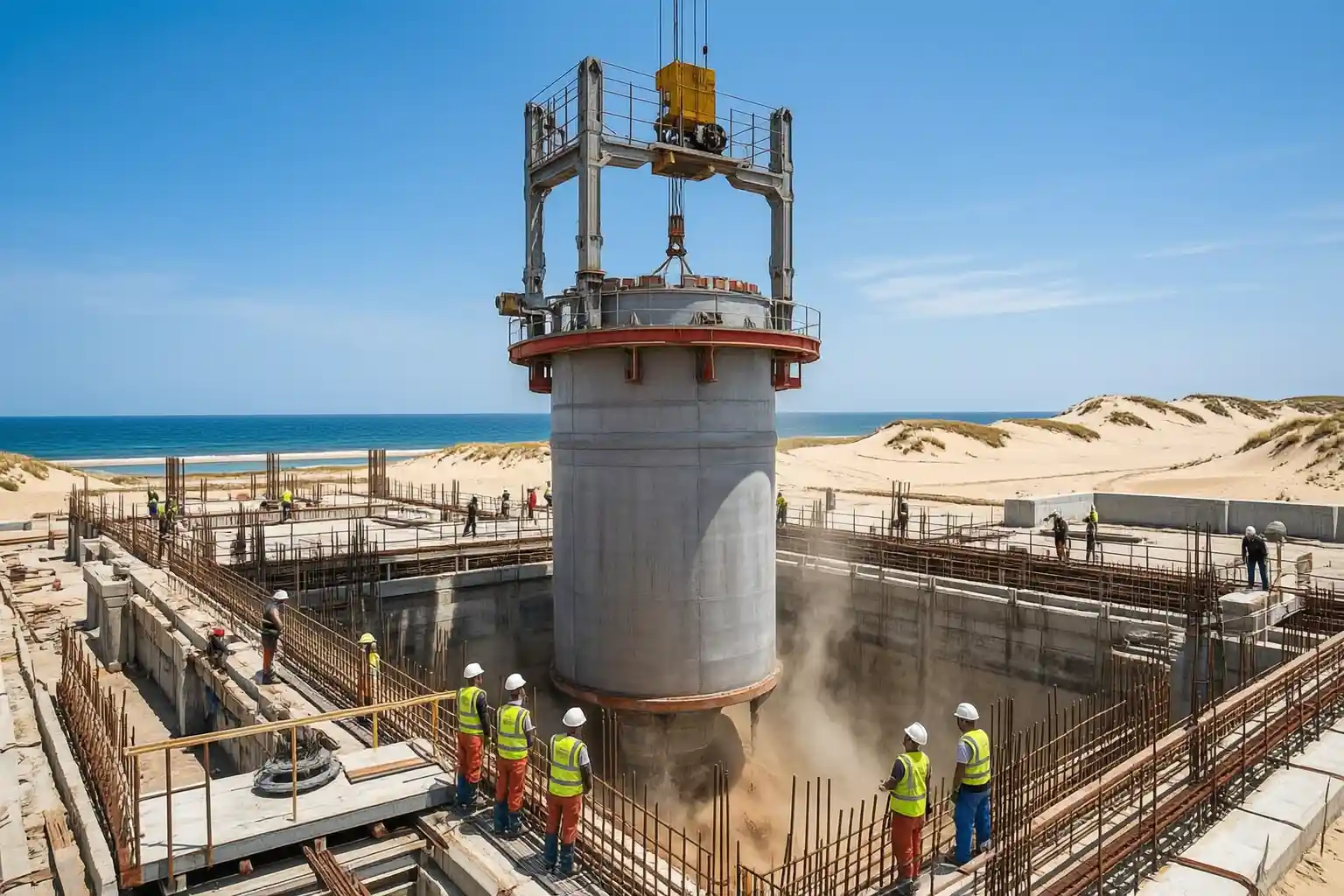
The letter, dated 4 June and translated for internal Russian circulation, catalogues physical problems that reappeared after earlier fixes. It describes voids behind the metal cladding at Unit 4, defects in the foundation slabs of Units 1, 2 and 3 that required roughly a year to repair, and flaws in the cellular structure of the cylindrical wall of the Unit 4 reactor building.
| Unit | Defect described | Remediation note |
|---|---|---|
| 1, 2, 3 | Foundation slab defects | Took approximately one year to repair |
| 4 | Voids behind metal cladding | Re-emerged after earlier work |
| 4 | Cellular structure flaws in cylindrical reactor building wall | Cited as recurring |
The pattern the authority stressed was recurrence. Fixes did not always hold. Foundation work alone absorbed about a year across three units, stretching the early civil phase before major nuclear-island assembly could proceed cleanly.
Beyond concrete, the authority accused the Russian contractor of “misleading methods” and “fictitious work.” Progress was reported as exceeding 50 percent while visual checks showed main nuclear island buildings still largely in the underground phase. The same letter flagged alcohol on site, forged access permits, unauthorized photos and videos posted online, and a worker with a severe open fracture moved in a private vehicle instead of an ambulance. Egyptian officials called the last action intentional concealment and a gross violation of workplace safety and reporting rules.
Taken together, the concrete defects and the site-conduct claims form a single complaint: that reporting upward did not match conditions on the ground. That gap is what later readers in Budapest and Brussels have seized on.
Rosatom and Cairo Push Back Hard
Rosatom rejected the charges in a statement to Politico. It said work at El Dabaa meets the highest international nuclear safety standards, receives continuous political attention from both governments, and benefits from regular IAEA visits. None of the allegations, the company added, had been confirmed through the project’s contractual, technical and oversight procedures.
Egypt’s Nuclear Power Plants Authority issued its own press release after the Politico story. It called circulating reports “inaccurate and unbalanced” for drawing safety conclusions without the proper regulatory context. Technical observations and non-conformities, especially in concrete, are handled through formal non-conformance reports. No stage is accepted until corrective work and testing finish. The authority stressed multi-layer industrial safety systems, ENRRA regulatory oversight, and a recent IAEA Integrated Regulatory Review Service mission in June 2026 that praised Egypt’s framework.
- Rosatom: highest standards affirmed by political leaders and IAEA attendance at milestones
- Egypt NPPA: observations are normal on a project of this scale and get corrected before acceptance
- Both sides: no nuclear fuel on site yet; Generation III+ design with core catcher and double containment
- European Commission: unaware of the documents; nuclear safety remains an EU priority and a member-state responsibility
Prime Minister Mostafa Madbouly said in July he still expects first power in 2028 and all four units finished by 2030. Cairo’s public line therefore holds two points at once: non-conformances occur and are corrected, and the political schedule has not moved.
Rosatom’s defense rests on process. If contractual and technical channels have not confirmed the letter’s charges, the company treats them as outside the formal record. Critics counter that the letter itself is an official Egyptian channel, written to Rosatom leadership and later circulated internally in Russian.
The Same Reactor Design Now Under Review in Budapest
El Dabaa uses the VVER-1200 technology at the heart of Hungary’s Paks II expansion. Work on Paks II foundations began in February 2026 under a deal originally green-lit by Viktor Orbán. Hungary’s newly elected government under Prime Minister Péter Magyar has opened a formal review of financing, timelines and cooling arrangements. Low Danube water levels have already constrained the existing Paks plant, sharpening questions about once-through cooling.
Former Hungarian Green MEP Benedek Jávor told Politico the Egypt information “will definitely be part of the evaluation.” Magyar has publicly doubted adherence to the original contract and described the site as little more than depots and concrete pits after heavy spending. The review covers classified contracts the new government says it has not yet fully seen.
They’ve already decided to reconsider the contract, and this was already communicated during the election campaign. This information from Egypt will definitely be part of the evaluation.
Jávor said that of Magyar’s government. Ukraine’s foreign minister Andrii Sybiha separately urged the EU to sanction Rosatom hours after the Politico report, linking the Egypt allegations to the company’s broader role.
The Hungarian review now has a documented parallel on the same reactor type: foundation defects that took roughly a year to repair, recurring cladding and wall flaws, and a dispute over whether progress figures matched visible work. Cooling and financing were already on Magyar’s agenda. Construction quality and schedule discipline join that list with specific Egyptian paper behind them.
Rosatom’s Wider Export Book Carries Parallel Exposure
Rosatom still holds the largest foreign reactor order book, with active construction in Turkey, China, Bangladesh and elsewhere, plus fuel and service deals. The corporation has long presented nuclear exports as both hard-currency revenue and geopolitical reach. A 2024 RUSI commentary by Darya Dolzikova and Jack Watling warned of the company’s deep connections to Russian intelligence and Zaporizhzhia role, arguing Western customers should decouple on energy-security grounds.
Any sustained doubts about construction quality or schedule discipline raise commercial and diplomatic costs across that portfolio. Germany’s recent green light for a Rosatom-linked fuel-rod project in Lower Saxony already drew criticism; fresh Egypt material adds weight to calls for tighter scrutiny.
Export customers buy more than steel and concrete. They buy a schedule, a safety culture claim, and a political relationship with Moscow. When a host authority’s letter and a contractor’s own draft audit both surface in public, those softer assets take damage even if every non-conformance is later closed on paper.
Egypt’s Energy Timeline and the 4800 MW Stakes
El Dabaa sits on the Mediterranean coast in Matrouh Governorate, about 300 km northwest of Cairo. Under 2015 and 2017 agreements, Rosatom is building four VVER-1200 units totaling 4800 MW. A Russian state loan covers most of the roughly $25-30 billion cost, with repayments timed after commissioning. Once online the plant is meant to supply around 10 percent of Egypt’s electricity and support desalination.
Construction permits rolled out from 2022. First concrete for Unit 1 poured in July 2022; Unit 4 followed in early 2024. The reactor pressure vessel for Unit 1 installed in November 2025 with presidents of both countries and an IAEA video message. Rosatom reported more than 25,000 to 30,000 workers on site through 2025. An internal draft audit from that year still projected significant risk of missing contractual obligations and an 18-month delay for the first unit, from September 2028 into early 2030.
- 2015-2017: Intergovernmental and commercial contracts signed for four units plus fuel and training
- 2019-2022: Site approval, construction permits issued, first concrete Unit 1
- 2023-2024: Units 3 and 4 licensed and concrete poured
- October-November 2025: Unit 1 RPV delivered and installed
- June 2026: Egyptian letter on defects; IAEA IRRS mission completed
- August 2026: Politico publication; Egypt and Rosatom public responses
Egypt has also floated plans for two extra El-Dabaa reactors beyond the original four, raising the long-term stakes of any quality or schedule questions.
The loan structure ties Egyptian payments to commissioning. Delay therefore shifts both power delivery and the start of repayment. At 4800 MW and roughly a tenth of national electricity, slippage is not only a contractor problem. It is a grid and fiscal problem for Cairo.
How the Leak Travels Beyond the Construction Fence
On X, reactions split along familiar lines. Some Egyptian voices framed the observations as routine non-conformances that the regulatory system already catches, while noting the gap between a Brussels leak and domestic reporting. Pro-Ukraine accounts treated the alcohol, forged passes and injury cover-up claims as confirmation of a broader pattern of corner-cutting. The political-objective charge from Cairo, that the story serves European aims against Russian nuclear presence, circulated quickly.
The second-order path is already visible. Hungary’s review now has concrete Egyptian documentation on the exact reactor type. Ukraine has fresh material for its sanctions campaign. Other Rosatom clients, including those watching engineers returning to Bushehr under pause, gain another data point on execution risk. For Moscow the episode tests whether nuclear exports can keep delivering both revenue and influence when internal quality records surface in public.
Official Targets Collide With the Draft Audit
Public schedules and the internal draft audit do not line up. Madbouly still points to first power in 2028 and four units by 2030. The 2025 draft audit, written inside the same project system, flagged a serious risk of missing contractual obligations and pushed the first unit about 18 months, into early 2030.
| Milestone or claim | Public or reported position | Counterpoint in the documents |
|---|---|---|
| First unit power | 2028 (Madbouly; contract path from September 2028) | Draft audit: risk of slip into early 2030 |
| Full four-unit finish | 2030 | First-unit slip would compress or extend later units |
| Construction progress | Reported above 50 percent | Letter: main nuclear island buildings still largely underground |
| Safety and quality posture | Highest international standards; IAEA milestone presence | Letter: recurring concrete defects and site-conduct breaches |
An 18-month move on unit one would land first electricity near the date Cairo still quotes for completing the whole plant. That arithmetic is why the audit matters to outsiders even before any regulator rewrites a license condition.
Rosatom and the NPPA both stress that non-conformances are closed before acceptance and that fuel is not yet on site. The Generation III+ design features, including the core catcher and double containment, remain part of their reassurance package. Schedule risk and quality-reporting risk are still separate questions from design basis. The documents speak to the former.
Shared Technology Pulls More Capitals Into the File
Paks II and El Dabaa share the VVER-1200. That single fact turns an Egyptian construction dispute into European political material. Magyar’s government was already reopening financing, timelines and cooling. Jávor’s comment places the Egypt letter inside that review. Sybiha’s sanctions appeal, issued hours after publication, ties the same paper to a wider campaign against Rosatom.
- Hungary: formal review of Paks II contracts, cost and cooling; Egypt file cited as evaluation input
- Ukraine: immediate call for EU measures against Rosatom after the Politico report
- European Commission: no prior awareness of the documents; safety left primarily to member states
- Other host states: additional execution-risk data point beside existing projects and pauses
Germany’s fuel-rod decision in Lower Saxony had already drawn fire. The Egypt letter and audit give opponents of deeper Rosatom ties a fresh, dated set of particulars rather than general geopolitical argument alone.
None of this settles whether El Dabaa’s concrete will ultimately meet code or whether 2028 remains reachable after corrective work. It does mean the project’s internal arguments are no longer internal. Classified Hungarian contracts, Egyptian non-conformance practice, and Rosatom’s export brand now sit in the same open file.
Egypt still targets first electricity in 2028. Rosatom insists the project remains on the highest standards. The documents and the responses to them are now part of the official record that other governments will read.
