
EU sanctions against Israeli National Security Minister Itamar Ben-Gvir failed on Monday as the bloc’s 27 foreign ministers gathered in Luxembourg and could not produce the unanimous vote the move required. EU foreign policy chief Kaja Kallas said “many” member states had proposed restrictions on Ben-Gvir, “but no consensus on that was reached today.” The vote is the bloc’s first formal test on Ben-Gvir since the May flotilla affair.
Three weeks after Ben-Gvir filmed himself taunting detained activists from a Gaza-bound aid flotilla, the failed vote is the most concrete measure yet of Europe’s willingness to act against the far-right minister. Italy and France have already moved on their own, with criminal probes now running in Rome and Paris. The unanimity rule inside the EU’s common foreign and security policy has not. It left Kallas with a settlement-trade track she says “many” member states now want Brussels to open.
The Foreign Affairs Council Verdict
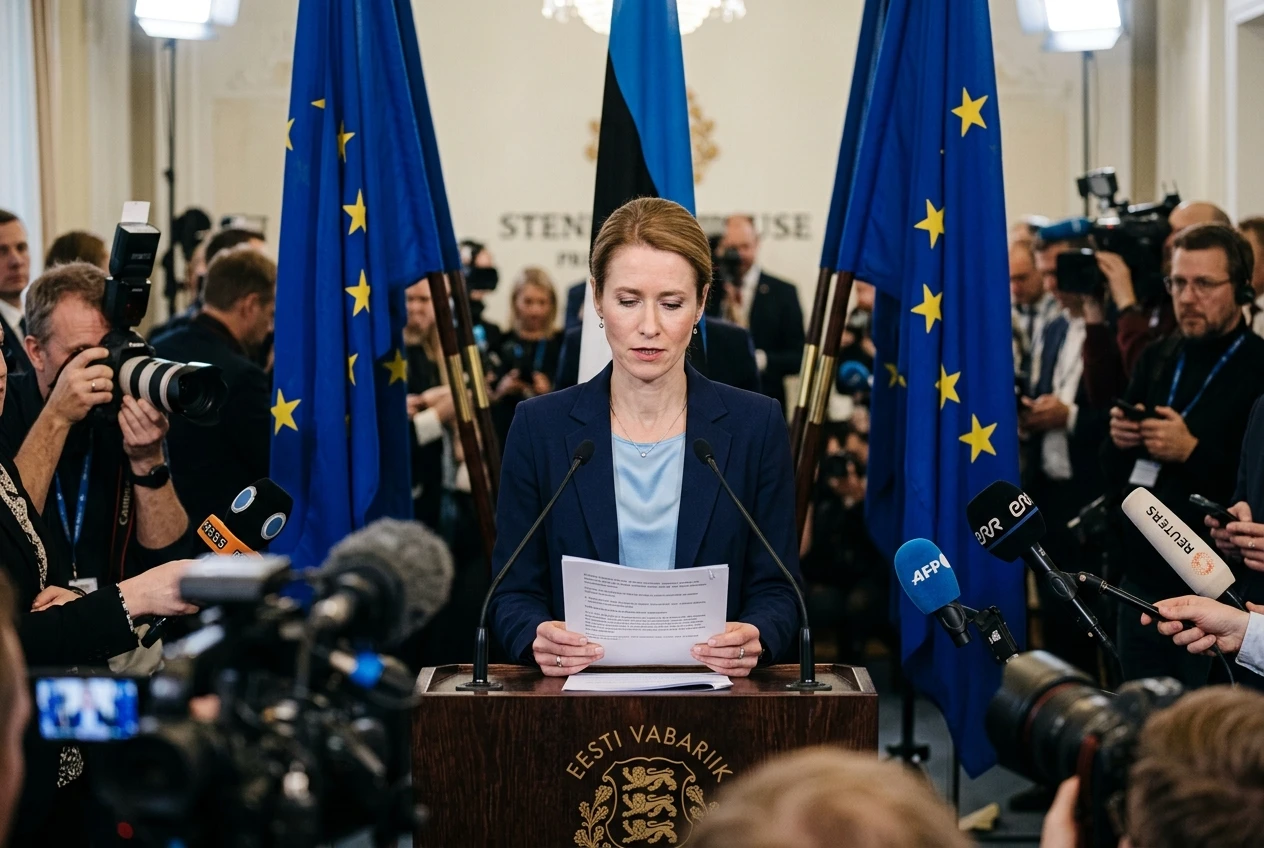
Speaking at a press conference after the Foreign Affairs Council meeting, Kallas framed the result as a near-miss rather than a defeat. “Many member states have also proposed to sanction Minister Ben Gvir, but no consensus on that was reached today,” she said.
The High Representative for Foreign Affairs did not name the states that refused to back the proposal. Reporting from the meeting identified Germany, Austria and the Czech Republic as understood to be in opposition. Kallas added that “many” member states also asked the European Commission to prepare a list of options on limiting trade with illegal settlements across the occupied West Bank, ahead of the next Foreign Affairs Council.
Why Three States Said No
Under the EU’s common foreign and security policy, sanctions require the agreement of all 27 member states. That rule has not changed.
Czech Foreign Minister Petr Macinka has made the case against sanctions publicly in recent days. He described Ben-Gvir as “a terrible person, an unbearable individual” whose behavior, in his words, “really goes beyond the pale.” He then argued the EU should stay out. Sanctions, Macinka warned, would turn Ben-Gvir and Finance Minister Bezalel Smotrich into “victims of some anti-Zionist conspiracy by the West” ahead of Israeli elections in late October.
Paradoxically, we would actually help them by doing this.
Czech Foreign Minister Petr Macinka, speaking in Prague, warned EU partners “not even try or we will block” any such move. Other capitals are also uncomfortable. The split, as far as it has been disclosed publicly, looks like this:
| Member state | Reported stance on EU Ben-Gvir sanctions |
|---|---|
| Czech Republic | Opposed; Macinka publicly threatened to block |
| Germany | Understood to be in opposition |
| Austria | Understood to be in opposition |
| Bulgaria | Reported as prepared to block |
| Hungary | Reported as prepared to block |
| France | Supports |
| Italy | Supports |
| Spain | Supports |
| Ireland | Supports |
The May 18 Video That Started It
The trigger for the EU push is a clip Ben-Gvir posted on social media in the days after Israeli naval commandos intercepted the Global Sumud Flotilla in international waters west of Cyprus. The interception on May 18 led to the detention of some 430 activists from about 40 countries. The video, captioned “Welcome to Israel,” shows Ben-Gvir walking through the Ashdod port detention facility past dozens of activists kneeling on the ground with their hands bound behind their backs. He is waving a large Israeli flag. The Israeli national anthem is audible in the background.
As he passes, he tells them in Hebrew: “Welcome to Israel. We are the landlords.” One activist, a woman shouting “Free, Free, Palestine,” is pushed back to the ground by a security officer as he walks past. The footage drew rare criticism from inside the Israeli cabinet.
Foreign Minister Gideon Sa’ar addressed Ben-Gvir on X to say he had “knowingly caused harm to our state.” Prime Minister Benjamin Netanyahu then issued a public rebuke, calling Ben-Gvir’s actions “not in line with Israel’s values and norms.”
Criminal Probes in Rome and Paris
While the EU vote was failing in Luxembourg, two of its largest members were opening criminal files. Italian prosecutors in Rome launched a formal inquiry into allegations of kidnapping, torture and sexual assault against Italian citizens among the detained activists. The investigation follows reports of strip searches, beatings, and what one returning activist described as public exposure in handcuffs and chains.
France went further. The national counterterrorism prosecutor’s office (PNAT) said on Friday it had opened a preliminary investigation into suspected “torture” and “war crimes” over the alleged mistreatment of French activists on the flotilla. France has also banned Ben-Gvir from entering its territory, with Foreign Minister Jean-Noël Barrot posting on X that France “cannot tolerate that French nationals can be threatened, intimidated or brutalized in this way.” The same week the last detainees flew home, the United Nations added Israel to the sexual violence blacklist for the first time in the monitoring system’s 15-year history.
Poland followed with a five-year entry ban on Ben-Gvir, the country’s foreign minister, Radosław Sikorski, calling him “a chauvinist and attention-seeker” and a threat to public order. The United Kingdom, Canada, Australia, New Zealand and Norway had already imposed travel bans on Ben-Gvir last year, accusing him and Smotrich of inciting violence against Palestinians in the occupied West Bank.
A Parallel Track on Settlement Goods
With sanctions blocked, Kallas opened a second front. She said “many” member states had asked the European Commission to prepare a list of options for possible trade measures aimed at preventing imports of goods originating from illegal settlements in the occupied West Bank. The Commission will return with options ahead of the next Foreign Affairs Council.
The economic stakes explain why that file has its own momentum. Total EU trade in goods with Israel grew to 43.3 billion euros in 2025, up from 42.6 billion in 2024, despite the Gaza war. The EU is Israel’s biggest trading partner, accounting last year for more than 30 percent of Israel’s total trade in goods with the world. EU officials have privately estimated trade from the settlements themselves at less than 250 million euros a year, a marginal figure commercially. It carries strategic weight, diplomats argue, because ending it is one of the few economic levers not blocked by the unanimity rule.
- About 430 activists from 40 countries were detained after the May 18 interception.
- EU trade with Israel grew to 43.3 billion euros in 2025.
- The EU is Israel’s largest single trading partner in goods.
- France and Italy have opened criminal probes, not EU sanctions.
What the Bloc Has Already Done
The unanimity wall on Ben-Gvir stands in contrast to what the EU managed a month earlier. On May 11, foreign ministers unanimously agreed to sanction both Hamas leaders and Israeli settler organizations and individuals responsible for human rights abuses in the West Bank. It was the first such consensus since the height of the Gaza crisis. The package cleared only after Hungarian Prime Minister Viktor Orbán was ousted in an April election.
Haaretz reported the draft list of settlers and groups that could face measures: the Amana and Nachala settlement movements, Hashomer Yosh, Regavim, and individuals including Daniella Weiss, Meir Deutsch and Avichai Suissa. Ben-Gvir and Smotrich were on the original list, diplomats told NPR, but were removed to broaden support. The May 11 package did not include a ban on settlement goods, and ministers left Brussels without endorsing stronger economic measures against the Israeli government. Earlier sanctions packages targeting settlers had been blocked for months by Orbán’s government before the April vote that removed him from power.
The Unanimity Trap
The same rule that let the EU sanction violent settlers now blocks it from sanctioning the minister who oversees the police force that holds the West Bank. Kaja Kallas has made clear she will keep trying.
National governments are running ahead of the bloc. France, Italy, Poland, the UK, Canada, Australia, New Zealand and Norway have all taken action Ben-Gvir’s own government has not. The Czech position is unlikely to soften before Israel’s late-October election.
Hungary’s new government has yet to show it will move as far on the Israeli file as it did on Ukraine. The settlement-trade track now has a Commission deadline. Whether any of it changes the political cost Ben-Gvir faces inside Israel is a question his own coalition will answer at the ballot box. Italy’s separate move to suspend its bilateral defence agreement with Israel in April, after warning shots at Italian UN peacekeepers in Lebanon, has already drawn the line of where European patience now sits.
Frequently Asked Questions
Why did the EU fail to sanction Ben-Gvir?
EU sanctions require a unanimous vote of all 27 member states. Reporting from Monday’s Foreign Affairs Council named Germany, Austria and the Czech Republic as understood to be in opposition. Czech Foreign Minister Petr Macinka argued publicly that sanctions would backfire ahead of Israel’s October elections.
What did Ben-Gvir do to trigger the sanctions push?
He posted a video to social media after Israeli forces intercepted the Global Sumud Flotilla on May 18, showing himself walking past detained activists at Ashdod port while waving an Israeli flag and telling them “Welcome to Israel. We are the landlords.”
What action has been taken against Ben-Gvir outside the EU?
France has banned him from entry and its prosecutors have opened a war crimes and torture probe. Italy has opened a kidnapping and torture investigation. Poland has imposed a five-year entry ban. The UK, Canada, Australia, New Zealand and Norway sanctioned him last year.
What is the EU’s next move on Israel?
Kallas has asked the European Commission to prepare a list of options for trade measures targeting illegal Israeli settlements in the occupied West Bank, due ahead of the next Foreign Affairs Council.
