
The Middle East’s skies have turned eerily quiet and unpredictable as the United States and Israel’s military operations against Iran trigger widespread airspace closures and flight cancellations across the Gulf region. Tens of thousands of passengers are stranded, major airports sit largely empty, and global travel networks are scrambling to adjust. In a crisis that is now disrupting travel far beyond the region, airlines, governments and travellers are confronting one of the most severe aviation shutdowns in recent history.
Airspace Shutdowns and Flight Cancellations Hit Hard
Travel across the Middle East has been severely disrupted after the conflict between the United States, Israel and Iran intensified at the end of February 2026. Multiple countries, including the United Arab Emirates, Qatar, Kuwait and Bahrain, closed their airspace or imposed strict restrictions due to ongoing military exchanges and concerns over missile or drone attacks. This unprecedented shutdown left commercial flights grounded and forced airlines to cancel or reroute tens of thousands of services.
Major hubs like Dubai International Airport, Hamad International Airport in Doha and others, which normally handle hundreds of thousands of travellers daily, saw drastic reductions in operations. The absence of regular air traffic has created ripple effects globally, as flights between continents that normally transit through Gulf airspace have been delayed or cancelled, affecting passengers from North America to Asia.
According to aviation analytics, more than 27,000 flights have been cancelled since the crisis began, amounting to more than half the scheduled services in and out of the region. Thousands of travellers have been left in airports or cities waiting for any available connection out of the conflict zone.
Limited Corridors and Repatriation Efforts Begin
In recent days, some limited steps have been taken to reopen parts of the region’s airspace. The United Arab Emirates introduced safe air corridors, allowing up to 48 flights per hour on restricted routes, aimed at helping stranded passengers reconnect with international services.
Meanwhile, Qatar Airways has begun operating limited repatriation flights from Doha to major European destinations such as London, Paris and Frankfurt. These flights are intended to help people leave the Middle East after days of uncertainty. However, normal commercial operations remain suspended, and many routes are still unavailable.
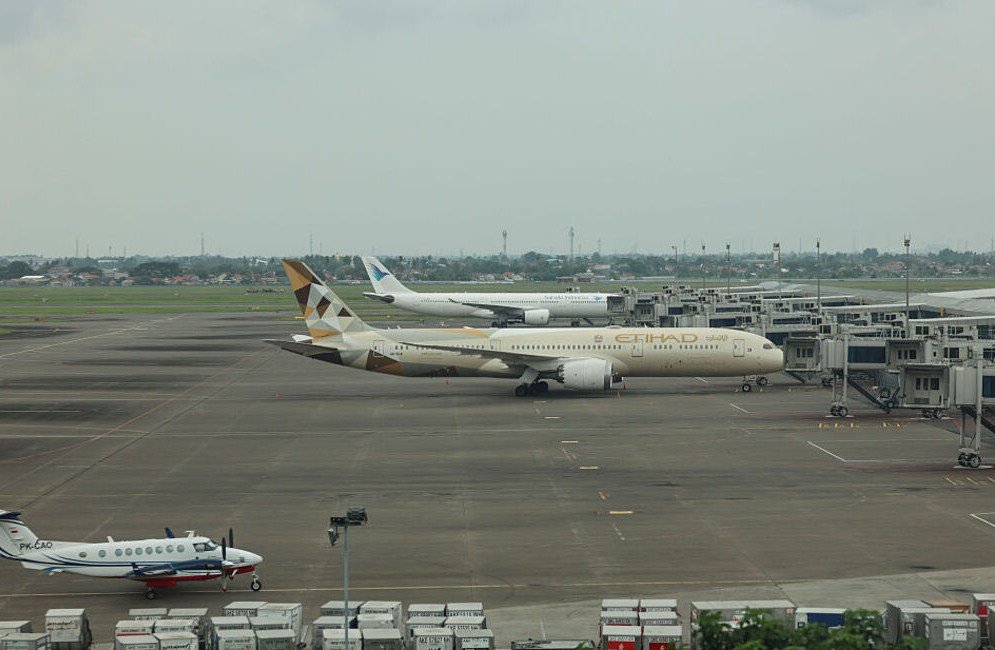
Across the region, some airports are reopening on a reduced basis, with Emirates and Etihad resuming limited flights. But for many travellers, these efforts are not nearly enough yet to restore confidence or capacity to pre‑crisis levels.
Passengers Stranded and Travel Plans in Flux
Thousands of travellers from around the world say they are stuck in Middle Eastern cities with few options to reach home. Stories emerging from crowded terminals describe long waits, uncertainty over flight schedules and frantic efforts to find any route out of the region.
Some passengers, unable to secure commercial flights, are opting for private jet charters at significant cost just to escape. Others are waiting for government‑organised repatriation services, which are being arranged by various countries, including the United States.
The United States State Department issued urgent warnings for Americans in the Middle East, telling many to “depart now” using commercial means while it organises additional evacuation options through military and chartered aircraft. Efforts have helped bring back significant numbers of citizens, but many still await flights.
Impact on Tourism, Business and Global Travel
The travel crisis is not only affecting air passengers. The broader tourism industry in the Middle East, especially in Gulf Cooperation Council countries, is facing potentially billions in losses due to suspended travel and cancelled trips. Forecasts suggest millions fewer international visitors in 2026 than anticipated, with serious implications for economies that rely heavily on international tourism and air connectivity.
Business travel has also taken a hit, with many corporate trips postponed indefinitely and executives forced to abandon regional meetings. Airlines like Air India and IndiGo have announced flexible waivers and refund options for passengers affected by Middle Eastern flight disruptions, highlighting how far the impact has spread even beyond the immediate conflict zone.
Global carriers have responded with a mix of cancellations and operational changes. Lufthansa, United, American Airlines and others have suspended flights to affected destinations or issued waivers that allow passengers to reschedule flights without penalty, recognising the uncertainty that the airspace closures have created.
What Travellers Need to Know Right Now
For anyone planning travel to or through the Middle East, the situation remains fluid and constantly changing:
-
Check flight status frequently with your airline before heading to the airport.
-
Expect longer travel times due to rerouting around restricted airspace.
-
Prepare for higher costs if flights are available or if private alternatives are needed.
-
Many governments and airlines are offering waivers, refunds, or rebooking options for cancelled trips.
Travel advisories from embassies worldwide, including the Indian Embassy in Abu Dhabi, urge residents and visitors under their protection to avoid non‑essential travel and follow local safety instructions as the conflict continues to unfold.
In the coming days, the aviation picture may improve if safe corridors expand and hostilities subside. But for now, air travel in the Middle East remains profoundly restricted and unpredictable.
The unfolding travel crisis underscores how interconnected global air travel has become and how vulnerable it is to geopolitical unrest. As airlines and governments work to restore some normalcy, passengers are left navigating not just flight disruptions but deep uncertainty in deciding when and how they can safely reach their destinations.
