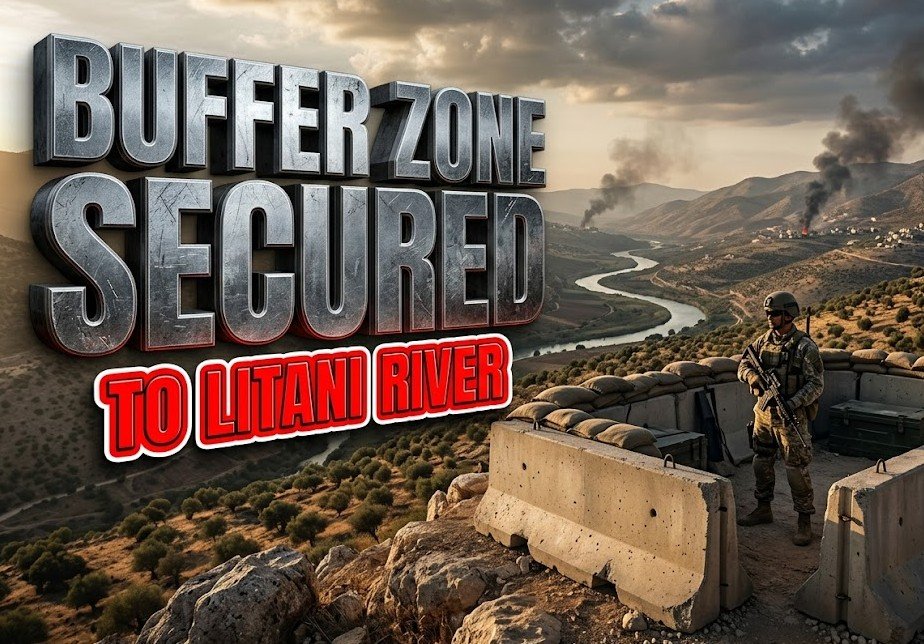
Israel’s defense minister says his country will hold security control over a large part of southern Lebanon even after the fighting with Hezbollah ends. The plan reaches all the way to the Litani River, about 30 kilometers from the Israeli border. Houses in nearby villages will be demolished as part of the strategy.
This announcement has triggered sharp criticism from Lebanon and several countries around the world. Many see it as a sign of long-term occupation in a region already scarred by weeks of heavy fighting.
Katz Reveals Details of Israel’s Security Strategy
Defense Minister Israel Katz made the statement after reviewing military operations on the ground. He described the area up to the Litani River as a necessary buffer zone to protect northern Israel from future attacks.
Israel will maintain full security control in this swathe of Lebanese territory once the current war concludes.
Katz added that all homes in Lebanese villages close to the border will be torn down. The reason given is to prevent Hezbollah from using civilian structures to hide weapons, rockets, and tunnels. He pointed to the approach used in Gaza as a model for creating a cleared security area.
More than 600,000 residents who fled southern Lebanon northward will not be allowed to return until Israeli officials decide the north is safe. This could mean a long wait for families displaced by the conflict. Israeli forces entered southern Lebanon on March 2 after Hezbollah launched rockets into northern Israel.
The rockets came in response to the assassination of Iran’s supreme leader in late February. That event helped ignite the latest round of fighting and broke a ceasefire that had held since late 2024.
Lebanon and World Powers Condemn the Announcement
Lebanon’s Defense Minister Maj Gen Michel Menassa called the remarks a clear sign of Israel’s plan for a new occupation of Lebanese land. He said the statement shows bad intentions toward his country’s territory.
European nations, Canada, and the United Nations quickly voiced their opposition. They warned that such moves could violate international law and make peace harder to achieve. Critics argue that keeping control of foreign territory after active combat raises serious questions about sovereignty.
On social media and in news reports, people across the Middle East and beyond expressed worry. Some fear this could turn into a frozen conflict that lasts for years, similar to past occupations in the region.
The Heavy Human Cost on Both Sides
The fighting has taken a terrible toll since early March. Lebanese health authorities report more than 1,200 people killed in the country during this period. The dead include many civilians, with at least 124 children among them.
Health workers have also suffered greatly. The UN says 52 of them have lost their lives. Three Indonesian peacekeepers serving with the UN force in Lebanon were killed in recent days. It remains unclear who was responsible for their deaths.
Three Lebanese journalists also died in the south. The Israel Defense Forces confirmed killing two of them, calling them terrorists embedded with Hezbollah, though no public evidence was provided at the time. Reports of a female journalist’s death are still under investigation.
On the Israeli side, authorities say 10 soldiers and two civilians have been killed by Hezbollah actions since the ground operation began.
Here are key numbers from the conflict so far:
- Over 1,200 Lebanese killed since March 2
- More than 600,000 displaced from southern Lebanon
- 30 kilometers deep buffer zone proposed
- Houses in border villages targeted for demolition
These figures show how quickly the situation worsened after the ceasefire collapsed. Hospitals in Lebanon struggle to treat the wounded while many medical facilities have been damaged in strikes.
How the Conflict Reignited So Fast
The roots go back to the fragile 2024 ceasefire between Israel and Hezbollah. That deal had paused major fighting for over a year. Israel continued limited strikes on Hezbollah targets during that time, saying they were needed to stop rearmament.
Everything changed in late February with the killing of Iran’s supreme leader. Hezbollah responded with rocket fire into northern Israel, which had already seen tens of thousands of its residents displaced earlier. Israel then launched broader airstrikes and sent ground troops across the border on March 2.
The goal, Israeli officials say, is to push Hezbollah away from the border and destroy its ability to threaten Israeli communities. Hezbollah, backed by Iran, has long used southern Lebanon as a launchpad for attacks.
This round of fighting echoes the 2006 war but with faster escalation and higher daily casualties. Both sides have traded blows with advanced weapons, causing destruction in towns and villages on either side of the border.
What This Buffer Plan Means for the Future
Many analysts worry that a permanent or long-term Israeli presence in southern Lebanon could complicate any future peace efforts. It might also fuel more anger among Lebanese people and strengthen support for groups like Hezbollah.
The plan raises practical questions too. Who would administer the buffer zone? How long would the restrictions on residents last? And could this lead to new diplomatic talks involving the United States and other powers to prevent a wider war?
On one hand, Israel argues the move is purely defensive after years of cross-border threats. On the other, Lebanon and its supporters see it as land grab that ignores international borders.
The humanitarian situation grows more urgent by the day. Over a million people in Lebanon have been displaced overall. Aid groups call for immediate access to help civilians caught in the middle.
As plumes of smoke continue to rise from southern villages, the human stories behind the numbers remind us what is really at stake. Families separated, children losing parents, and entire communities wondering if they will ever go home.
This announcement comes at a time when the region remains tense following the events in Iran. The coming weeks will show whether this buffer strategy brings the security Israel seeks or plants seeds for the next round of conflict.